
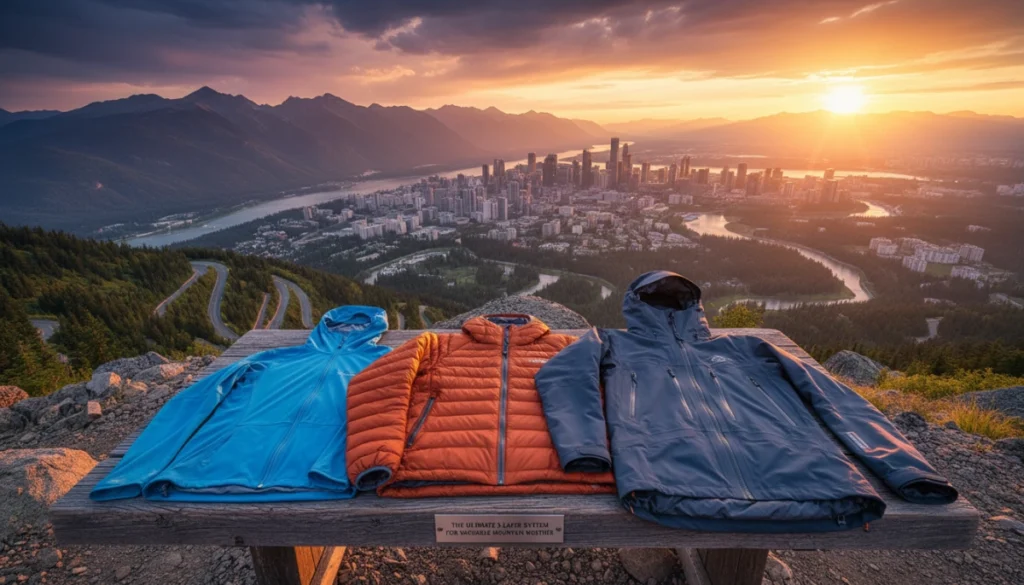
Why Variable Mountain Weather Demands the 3-Layer Approach
Mountain weather moves fast: sun at the trailhead, sleet on the ridge, biting wind on the summit, damp shade in the trees on the way down. That’s exactly why a 3-layer clothing system for variable mountain weather isn’t a luxury—it’s non-negotiable.
Why Mountain Weather Is So Brutal
In the mountains, you’re dealing with:
- Rapid temperature swings (20–40°F shifts in a day)
- Sudden storms: rain, graupel, wet snow, and hail
- Strong, gusty wind on ridgelines and passes
- Intense sun that flips to cold shade in minutes
If your mountain layering system can’t adapt as fast as the weather, you get cold, soaked, and tired—and that’s when mistakes happen.
Why Single Layers and Cotton Fail
A single “do-it-all” hoodie or heavy jacket can’t handle:
- Sweat buildup: You overheat on the climb, then freeze in your own moisture when you stop.
- Slow drying: Cotton and cheap fashion fabrics hold water and stay wet.
- No wind or storm backup: Once you’re wet and exposed, you have no way to recover heat.
Cotton kills is more than a slogan. In the mountains, cotton:
- Absorbs sweat and rain
- Dries painfully slow
- Loses almost all insulation when wet
That’s why I never allow cotton in any serious alpine weather dressing setup we build.
Benefits of a Modular 3-Layer Mountain Clothing System
A true 3-layer clothing system is modular and adaptable:
| Layer | Primary Job | Key Benefit in Variable Weather |
|---|---|---|
| Base Layer | Moisture wicking | Keeps skin dry, reduces chill |
| Mid Layer | Insulation | Traps heat, manages breathability |
| Outer Shell | Wind/water barrier | Blocks rain, snow, and wind |
With this adaptable clothing system for mountains, you can instantly:
- Strip to base + wind layer for hot, sweaty climbs
- Add or swap mid layers for cold wind or evening temps
- Throw on a waterproof breathable outer shell for sudden storms
How the 3-Layer System Boosts Safety, Comfort, and Performance
Dialed correctly, the three layer principle outdoors isn’t about comfort alone—it’s a safety system:
- Safety: Stay warm even when wet, block wind, avoid hypothermia.
- Comfort: Manage sweat in the mountains so you’re not shivering at every break.
- Performance: Hike, climb, or ski harder without overheating or getting bogged down in heavy, soggy gear.
In my own kits and the systems we design, the goal is simple:
Stay just cool enough while moving, and instantly warm when you stop.
The 3-layer system is the only reliable way to hit that target in real mountain weather.
Layer 1: Base Layer for Variable Mountain Weather
Why the base layer matters in variable mountain weather
In variable mountain weather, the base layer is the piece that keeps you from getting soaked in your own sweat. Its main job is moisture management and sweat control:
- It pulls sweat off your skin (moisture wicking)
- It spreads moisture so it dries fast
- It keeps you from getting chilled when the wind picks up or a storm rolls in
If your base layer fails, the rest of your mountain layering system has to work overtime – and you still end up cold, clammy, and uncomfortable.
Merino vs synthetic base layers
For a 3-layer clothing system in the U.S. mountains, I stick to two main base layer materials:
Merino wool base layers (great for most hikers and ski tourers):
- Pros:
- Excellent moisture wicking
- Stays warm when damp
- Naturally odor resistant (huge for multi-day trips)
- Comfortable next to skin
- Cons:
- Costs more
- Can wear out faster if you’re rough on gear
Synthetic base layer shirts (polyester / blends):
- Pros:
- Fastest drying option
- Usually cheaper
- More durable for rough use (scrambling, climbing, heavy packs)
- Cons:
- Builds up odor faster
- Can feel clammy if you run hot and sweat a lot
Simple rule:
- If you run cold or do multi-day trips: lean merino wool base layers.
- If you run hot or go hard and fast (trail running, steep ascents): lean synthetic base layer shirts.
Thickness and weight for changing mountain temperatures
For changing mountain weather, I think in three weights:
-
Lightweight (150–170 gsm merino / ultra-light synthetic)
- Summer alpine hiking, trail running, fast-and-light missions
- High-output ski touring on mild days
-
Midweight (190–220 gsm merino or standard synthetics)
- Shoulder seasons (spring/fall)
- Chill mornings that warm up fast
- Everyday layering for mountain hiking variable weather
-
Heavyweight (250+ gsm merino or grid fleece base)
- Cold winter mountaineering, resort skiing, snowshoeing
- Low-output days where you’re standing around a lot
In the Rockies, Sierra, Cascades, or Northeast, I like lightweight or midweight tops and adjust warmth with my mid layer instead of going too heavy on the base.
Fit and comfort for active mountain movement
For a high-performing mountain layering system, base layer fit matters:
- Trim, athletic fit – close to skin for better wicking, but not compression tight
- Long enough hem so it doesn’t pull out of your waistband when you reach or bend
- Raglan or offset shoulder seams to avoid pack-strap hot spots
- Flatlock seams to prevent chafing on long days
- Bit of stretch so it moves with you when scrambling or skiing
If you’re in the U.S. West or Northeast doing long climbs and ridge walks, that clean, non-baggy fit makes a huge difference under a pack and shell.
Matching base layers to sports and seasons
Here’s how I dial my base layer for variable mountain weather by activity:
-
Summer alpine hiking / trekking:
- Lightweight synthetic or light merino short-sleeve
- Prioritize quick drying hiking clothes and sun protection
-
Shoulder-season hiking and backpacking:
- Light or midweight merino long-sleeve
- Good balance of warmth, breathability, and odor control
-
Winter mountaineering & ski touring layering system:
- Lightweight or midweight merino or synthetic long-sleeve
- Half-zip for easy venting on climbs
-
High-output activities (trail running, steep uphill pushes):
- Ultralight synthetic base layer shirts
- Fast drying and breathable; pair with a lightweight windbreaker for peaks
Dialing your base layer moisture wicking to your sport, sweat level, and local conditions is what makes the 3-layer clothing system actually work in real mountain weather.
Layer 2: Mid Layer Insulation for Mountain Adventures
Why the Mid Layer Matters in a Mountain Layering System
Your mid layer is your mobile furnace. Its job is to:
- Trap heat in small air pockets close to your body
- Stay breathable so sweat can move out through your 3-layer clothing system
- Work with your base layer moisture wicking and outer shell waterproof breathable jacket
If I’m heading into variable mountain weather, I always plan my mid layers more carefully than anything else. That’s what keeps me warm on the ridge and not soaked in sweat on the climb.
Types of Mid Layer Insulation (Fleece, Synthetic, Down, Softshell)
Here’s how I break it down when I build a mountain layering system:
1. Fleece (Grid or Standard)
- Best for: Active hiking, ski touring, alpine climbing
- Pros: Super breathable, dries fast, affordable, great warmth-to-weight
- Cons: Not windproof, bulky under a tight shell if too thick
- Tip: I like light grid fleece (like a hoodie) as my default mid layer for most U.S. mountain trips.
2. Synthetic Insulation (Puffy Jackets)
- Best for: Wet, unpredictable weather, PNW, Rockies shoulder season
- Pros: Keeps insulating when damp, packs small, great for rest stops and windy ridges
- Cons: Slightly heavier than down for the same warmth
- Think: Synthetic puffy for wet conditions and high sweat output
3. Down Insulation
- Best for: Cold, dry conditions, high altitude, winter in the Rockies, Sierra
- Pros: Very warm for the weight, super packable
- Cons: Loses performance when wet, needs a good outer shell in storms
- I treat down as my summit / camp layer, not my main “sweat-in-it” climbing layer.
4. Softshell Jackets
- Best for: Cool, breezy days where you’re moving a lot
- Pros: Breathable, stretchy, some wind and light weather protection
- Cons: Not fully waterproof, can be too warm with a big pack and steep climbs
- Great as a mid layer under a hardshell or as your main outer in dry, windy conditions.
Choosing Mid Layers for Wet vs Dry, Cold vs Cool
I keep it simple for layering for mountain hiking in variable weather:
Wet & Mild (PNW, East Coast shoulder season)
- Base: Synthetic or merino blend
- Mid: Light fleece jacket mid layer + synthetic insulated mid layer jacket in the pack
- Outer: Breathable waterproof shell
- Why: You need fast drying, no drama if everything gets damp.
Dry & Cold (High Rockies, Sierra in winter)
- Base: Warm merino or heavier synthetic
- Mid: Grid fleece + down puffy (packable down jacket mid layer)
- Outer: Durable hardshell
- Why: Max warmth-to-weight, less worry about moisture soaking your insulation.
Cool & Windy, Not Super Wet
- Base: Light synthetic
- Mid: Softshell jacket for hiking or light fleece
- Outer: Lightweight wind shirt or shell in the pack
- Why: You want breathability first, then quick windproof protection when needed.
Layering Combinations with Multiple Mid Layers
For adaptable clothing systems in the mountains, I like stackable mid layers instead of one thick piece. That gives you real range on long days with big vertical gain.
Good combos for U.S. mountain trips:
- Fleece + Synthetic Puffy
- Move in fleece, throw the synthetic on at windy passes and breaks
- Light Grid Fleece + Softshell
- Grid fleece for warmth, softshell for wind and light precip
- Fleece + Down Puffy (Winter / High Altitude)
- Fleece for uphill, down puffy for cold summit pushes and long transitions
Rule: Thin + thin beats one thick layer. More options, better temperature regulation outdoors.
Avoiding Overheating and Bulk with Smart Mid Layer Choices
Most people in the U.S. mountains mess this up by going too warm, too early. I design my backcountry clothing system around staying slightly cool while moving.
Here’s how I avoid overheating and bulk:
- Start colder than you want at the trailhead
- If you’re comfy standing still, you’re probably overdressed for the climb
- Choose one active mid layer and keep the big puffy in your pack
- Use zippers and vents: full zip fleece or puffy > pullover if you run hot
- Prefer light to mid-weight fleece over heavy fleece for movement
- Pack one real insulating layer (synthetic or down), not three “kinda warm” layers that just add bulk
Quick cheat sheet:
| Goal | Mid Layer Strategy |
|---|---|
| Fast-and-light missions | Light grid fleece + synthetic puffy |
| High-output uphill (ski touring, steep hiking) | Thin fleece or light softshell, big puffy stays in pack |
| All-day variable weather | Fleece + packable insulated jacket (synthetic or down) |
If I can’t move freely, vent heat fast, or stuff my mid layer into the top of my pack in seconds, it doesn’t make the cut for my ultimate 3-layer mountain system.
Layer 3: Outer Shell Layer for Mountain Weather Protection
Your outer shell is your mountain weather protection line of defense. In variable mountain weather, I treat it like a safety tool, not just a jacket.
Role of the Outer Shell: Wind, Rain, and Snow
A good 3-layer clothing system lives or dies on the shell:
- Blocks wind: Cuts chill on ridgelines, summits, and ski tours.
- Stops rain and wet snow: Keeps your mid layer insulation dry so it can actually stay warm.
- Manages sweat: A waterproof breathable shell lets moisture escape so you don’t soak from the inside.
If I’m above treeline or in exposed terrain in the U.S. West or Rockies, I always pack a real shell, even on “nice” days.
Hard Shell vs Soft Shell vs Wind Shirt
Know what each does best before you buy:
| Shell Type | Best For | Pros | Cons |
|---|---|---|---|
| Hard shell jacket | Storms, all-day rain, high wind, alpine | Fully waterproof, durable, protective | Less breathable, louder, stiffer |
| Softshell jacket | Cool, dry, windy days, high-output climbs | Very breathable, stretchy, comfy | Only water-resistant, not storm gear |
| Wind shirt / windbreaker | Running, fast hiking, summit pushes, backup | Ultra light, packable, great wind block | Minimal rain protection, fragile |
For most U.S. mountain use, I run:
- Hard shell for real storms, winter, and big objectives.
- Softshell or wind shirt for day hikes, dry cold, and high-output days.
Waterproof & Breathable Ratings (Real-World Use)
You don’t need lab knowledge, just basics:
- Waterproof rating (mm):
- 10,000 mm: OK for light rain, shorter storms.
- 15,000–20,000+ mm: Better for mountaineering, ski touring, nasty PNW-style weather.
- Breathability (g/m²/24h):
- 10,000+: Fine for easy hiking.
- 15,000–20,000+: Better for high-output climbs and ski touring.
If you sweat a lot or climb hard, prioritize breathability and venting over the absolute highest waterproof number.
Key Shell Features for Mountain Weather
When I design and pick outer shell waterproof breathable jackets, I focus on:
- Hood:
- Helmet-compatible for climbing/skiing.
- Rear and front adjustments so it doesn’t block your vision.
- Zippers & vents:
- Pit zips are non-negotiable for real mountain use.
- Two-way front zip for venting with a harness.
- Adjustability:
- Hem drawcord to seal out drafts.
- Velcro cuffs to tighten over gloves.
- High collar to block wind and spindrift.
- Pockets:
- Chest/hand pockets that sit above a hipbelt or harness.
- One inner pocket for phone/skin track snacks.
These small details are what turn a shell into a true mountain layering system piece.
Full Shell vs Light Wind Layer in the Mountains
I keep this decision simple:
Wear a full hard shell when:
- Forecast calls for rain, snow, or thunderstorms.
- You’re in exposed alpine with strong wind and no shelter.
- It’s winter: ski touring, mountaineering, snowshoeing.
Use a light wind layer (softshell or wind shirt) when:
- It’s dry, just windy and cool, like a Colorado or Utah fall day.
- You’re moving hard: steep climbs, alpine climbing, trail runs.
- You want just enough protection without cooking inside your jacket.
If I’m going fast-and-light in the U.S. Rockies or Sierra, my standard kit is:
- Wind shirt on me most of the day
- Hard shell in the pack as “oh-crap” protection when mountain weather flips
That combo keeps weight down, stays comfortable, and still respects how quickly the weather can turn.
Building Your Ultimate 3-Layer System for Variable Mountain Weather
Dialing in a mountain layering system is personal. Two people in the same storm can be dressed totally differently and both be right. The goal is simple: stay warm enough, dry enough, and light enough to move safely in variable mountain weather.
Step-by-step: Dial in your 3-layer clothing system
Use this simple process before you trust your kit on a big mountain day:
-
Start with your “default” setup
- Base layer: lightweight synthetic or merino top, no cotton.
- Mid layer: light fleece or thin synthetic puffy.
- Outer shell: breathable waterproof jacket or windproof softshell, depending on forecast.
-
Match layers to the plan
- High-output day (big climb, fast hiking, ski touring) → thinner base, lighter mid, more breathable shell.
- Slower pace (photo missions, guiding, casual hiking) → warmer mid, heavier shell.
-
Lay it all out
- Make sure you can build the full 3-layer clothing system:
- Dry, wicking base layer
- Warm, packable mid layer
- Windproof, waterproof outer shell
- Make sure you can build the full 3-layer clothing system:
-
Do a quick “trailhead” try-on
- Can you reach all zips, adjust your hood, and move freely?
- Any tight spots at shoulders, hips, or under a pack?
Adapting to your body temp and sweat level
In the U.S., most of us fall into one of three types:
- Run hot / sweat a lot
- Go thinner on base layers (lightweight synthetic).
- Choose very breathable mid layers (grid fleece, light fleece).
- Shell: look for big pit zips, mesh pockets, and real ventilation.
- Run cold
- Slightly warmer base (mid-weight merino).
- Add a puffy mid layer (synthetic or down) for stops and summits.
- Carry a backup hat and gloves; they change comfort fast.
- In-between
- Default to light base + medium mid and adjust with zippers, vents, and hats.
Rule of thumb: You should feel a little cool at the trailhead. If you’re cozy when you start, you’ll be soaked in sweat after 10–15 minutes.
Balancing weight, packability, and protection
For variable mountain weather, I treat clothing like a gear puzzle: every piece has to earn its spot.
Prioritize:
- Weight:
- One good mid layer beats three bulky ones.
- Pick a lighter base and let the mid do most of the warmth work.
- Packability:
- Mid layer should compress into your pack without a fight.
- Shell should pack down but still be durable enough for rock, trees, and pack straps.
- Protection:
- For wet climates (Pacific Northwest, Rockies shoulder season):
- Prioritize a bombproof waterproof breathable shell.
- For drier climates (High Sierra, Colorado high country in summer):
- You can go lighter on the shell, but keep windproofing.
- For wet climates (Pacific Northwest, Rockies shoulder season):
Ask yourself: If the weather flips hard at 12,000 feet, am I okay standing still in what’s in my pack? If not, adjust.
Test and tweak on short trips
Before a big objective in the Cascades, Rockies, Sierra, or Whites, I always “beta test” my 3-layer system on smaller days:
-
Use local day hikes and ski tours
- Try your full mountain layering system on a 2–4 hour mission.
- Pay attention: where do you sweat, where do you freeze, where do you fuss with zippers?
-
Keep quick notes
- “Too hot in fleece on uphill, need lighter mid.”
- “Shell felt clammy, need more breathable or better venting.”
- “Base layer stayed wet too long, try synthetic instead of heavy merino.”
-
Make one change at a time
- Swap just the base, or just the mid, not everything at once.
- That’s how you actually learn what works for your body in variable mountain weather.
Over a few short trips, you’ll end up with a dialed 3-layer mountain clothing system that matches how you move, how you sweat, and where you adventure in the U.S.—whether that’s wet Washington trails, windy Colorado ridges, or hot–cold swings in the Utah desert mountains.
Mountain Layering Setups for Different Seasons and Activities
When I build a mountain layering system for variable weather, I always start with the same 3-layer clothing system and then tweak weight, fabric, and packability for the season and activity.
Summer Alpine Hiking & Trekking 3-Layer Examples
Hot in the sun, chilly in wind and at elevation. The goal: light, fast-drying, super breathable.
Typical summer 3-layer mountain layering system:
| Layer | What I Actually Wear | Why It Works in Summer |
|---|---|---|
| Base | Lightweight synthetic or merino T-shirt (short or long sleeve) | Fast drying, manages sweat on steep climbs |
| Mid | Thin grid fleece or ultralight synthetic puffy (stays in pack most of the day) | Just enough warmth for ridgelines, evenings, and rest stops |
| Shell | Ultralight breathable rain jacket / windbreaker | Blocks wind and surprise thunderstorms without overheating |
Notes:
- For U.S. Rockies, Sierra, Cascades: I always pack a real waterproof breathable shell, even on “bluebird” days.
- For desert high country (Utah, Arizona): focus on sun protection — long-sleeve base layer, light colors, hooded sun shirt.
Shoulder-Season Mountain Layering (Spring & Fall)
Spring and fall in the U.S. mountains = cold mornings, warm climbs, surprise storms. This is where the 3-layer clothing system really shines.
Shoulder-season layering setup:
| Layer | Go-To Options | Key Benefits |
|---|---|---|
| Base | Lightweight or midweight merino / synthetic long sleeve | Handles sweat + cooler temps |
| Mid | Medium-weight fleece or light synthetic insulated jacket | Adds reliable warmth, still breathable for moving |
| Shell | Full-featured hardshell or softshell, depending on forecast | Softshell for drier, windy days; hardshell for rain/snow risk |
Tips:
- If the trailhead is cold, I start slightly cool and warm up as I move.
- I keep a hat and light gloves handy to “micro-layer” instead of throwing on a big jacket too early.
Winter Mountaineering, Ski Touring, Snowshoeing 3-Layer Systems
Winter in the mountains across the U.S. (Colorado, Wyoming, New England, PNW) means wind, snow, and big output on the uphill. You need strong weather protection but smart heat control.
Winter 3-layer mountain clothing system:
| Layer | Active Ascent | Cold Transitions / Rest |
|---|---|---|
| Base | Midweight merino or synthetic; top + bottom | Wicks sweat, keeps you warm when damp |
| Mid | Breathable grid fleece or light synthetic puffy | Good warmth-to-weight while moving |
| Shell | Durable hardshell (helmet-compatible hood, pit zips) | Full wind/snow protection and venting |
Extra winter pieces (not a 4th layer, but essential):
- Belay / summit puffy (synthetic or down) to pull over everything.
- Softshell pants or hardshell pants depending on snow and wind.
- Multiple glove systems (liner + insulated + shell).
Layering for Mixed Conditions: Sun, Clouds, Wind, Sudden Storms
Mountain weather in the U.S. loves to flip from sun to hail in 10 minutes. I set up my 3-layer system so I can switch modes fast.
My mixed-conditions strategy:
- Sunny, light wind:
- Base layer only, or base + very light wind shirt.
- Clouds + stronger wind on ridges:
- Add mid layer or shell (usually shell first, mid in the pack).
- Brief storm or squall:
- Shell on, hood up; mid layer ready if temp drops hard.
- After the storm:
- Shell off as soon as I stop getting hit by wind/rain to avoid sweating inside.
Key rule:
If I’m sweating hard, I vent or strip layers instead of “toughing it out.” Staying dry from the inside is as important as blocking rain.
Sample Packing Lists: Fast-and-Light vs Comfort-Focused Trips
Different trips call for different versions of the same 3-layer system. Here’s how I pack for typical U.S. mountain missions.
Fast-and-Light Setup (day climbs, speed hikes, light ski tours)
- Base:
- 1x lightweight synthetic / merino top
- Optional: ultralight long-sleeve sun hoodie
- Mid:
- 1x thin grid fleece or very light synthetic puffy
- Shell:
- 1x ultralight waterproof breathable jacket or wind shirt (if forecast is stable and dry)
- Accessories:
- Thin beanie, light gloves, buff
- Emergency space blanket or ultralight emergency bivy
Focus: low weight, high versatility, just enough warmth.
Comfort-Focused Setup (slower pace, overnights, chillier conditions)
- Base:
- 1x main base layer top
- 1x backup dry top for camp or emergencies
- Mid:
- 1x fleece + 1x synthetic or down puffy (flexible double-mid system)
- Shell:
- 1x robust hardshell with real storm features (pit zips, strong hood, good zippers)
- Accessories:
- Warm hat, multiple glove weights
- Warm sleep socks, camp pants/shorts depending on season
Focus: comfort at camp, margin for bad weather, backup warmth in case something goes sideways.
No matter the season or sport, the core idea stays the same:
Dial in a base layer that manages sweat, a mid layer that matches your output, and a shell that actually handles your local mountain weather.
Adjusting Layers on the Move in Variable Mountain Weather
In variable mountain weather, the ultimate 3-layer system only works if I actually adjust it on the move. I treat my mountain layering system like a set of “gears” I’m constantly shifting through, especially in the Rockies, Sierra, Cascades, or White Mountains where conditions flip fast.
Reading Weather and Terrain to Time Layer Changes
I don’t wait until I’m cold or soaked in sweat to move layers. I watch for “triggers”:
-
Before steep climbs
- Strip a mid layer or open up the outer shell before the grade kicks up.
- If I’m already warm at the bottom, I’m going to overheat halfway up.
-
Before exposed ridgelines
- Add a windproof hiking layer or full outer shell right before I hit the ridge.
- Wind chills fast, especially above treeline.
-
Before long breaks or summit stops
- As soon as I stop moving, I throw on an insulated mid layer (fleece, synthetic puffy, or down) over my base layer.
- Don’t wait until you feel cold – you’re already losing heat.
-
When clouds build or wind shifts
- Dark clouds, dropping temps, or stronger gusts? I swap to my waterproof breathable outer shell or add a lightweight windbreaker.
I think in simple rules: “Add layers when stopping, remove layers when starting, adjust layers when the terrain or weather clearly changes.”
Venting Strategies: Zippers, Cuffs, Collars, and Hoods
A good 3-layer clothing system isn’t just about putting on or taking off jackets; it’s about venting smart so I don’t sweat out my base layer.
-
Main zippers
- Half or full unzip the outer shell and mid layer on climbs.
- Open from the top and bottom for better airflow.
-
Pit zips
- If my breathable waterproof shell has pit zips, those are the first thing I open when I start heating up.
- Pit zips = big temperature control without losing weather protection.
-
Cuffs
- Loosen cuffs on my shell or mid layer to dump heat from my wrists.
- Tighten cuffs when it’s cold, wet, or windy to seal the system.
-
Collars and front neck
- Open the neck on my base layer and mid layer to vent heat.
- Zip it up snug when wind picks up, especially on ridges and summits.
-
Hoods
- Hood up in wind, rain, or blowing snow for full weather protection.
- Hood down and partially unzipped when climbing hard in milder conditions.
Think of your outer shell and mid layer as having “built-in AC” through vents and zippers. I use that before I fully strip a layer.
Quick Layer Add/Remove Tactics on Climbs, Ridges, and Rests
In the mountains, especially in the U.S. backcountry where weather and terrain change constantly, I want fast, simple moves—no wrestling with gear for 5 minutes in a gust.
On climbs (uphill pushes):
- Start a bit cool with:
- Base layer + light mid layer or
- Base layer + wind shirt
- Within the first 5–10 minutes:
- If I’m sweating hard, I stop for 30 seconds, drop the mid layer, and keep moving.
- I’d rather be slightly cool than soaked.
On ridgelines and exposed sections:
- Right before exposure:
- Add a windproof or waterproof shell over whatever I’m wearing.
- Zip everything up (hood, cuffs, collar) to trap heat and block wind.
- If I start to overheat:
- Crack the front zip slightly or open pit zips, but keep the shell on for wind protection.
During rests, food breaks, and summit photos:
- Stop = insulation time.
- Add:
- Insulated mid layer jacket (down or synthetic puffy) over my base and current layers.
- When I start moving again:
- Strip the puffy and store it where I can reach it fast (top pocket or just under the lid of the pack).
I keep changes fast and minimal: one layer on, one layer off, no drama.
Managing Sweat and Staying Dry From the Inside Out
The real secret of a good mountain layering system is sweat management. If my base layer is soaked, it doesn’t matter how good my outer shell is—I’m going to get cold.
Here’s how I deal with it:
-
Aim to be “slightly cool” when moving
- If I’m feeling toasty warm while climbing, I’m overdressed.
- The right point: cool face and hands, core not shivering.
-
Use moisture wicking base layers
- I stick to merino wool base layers or synthetic base layer shirts—no cotton, ever.
- These fabrics move sweat off my skin and dry fast.
-
Regulate early, not late
- Open vents and adjust layers as soon as I feel hot, not when I’m already drenched.
-
Protect from outside, vent from inside
- In wet, windy mountain weather:
- Keep the outer shell waterproof breathable layer closed enough to block the elements.
- Work the zippers, cuffs, and hood to keep sweat under control.
- In wet, windy mountain weather:
-
Dry on the move, if possible
- If conditions allow, I’ll:
- Hike in my base layer with a wind shirt instead of a full shell.
- Let sweat evaporate without losing too much heat or exposing myself to wind.
- If conditions allow, I’ll:
The goal is simple: stay dry against the skin as much as possible, even in variable mountain weather.
What I Keep in My Pack’s Top Pocket for Fast Access
Fast, clean access is everything when the weather flips. In my own mountain layering system, my pack’s top pocket is “mission control” for variable conditions.
In the top pocket, I keep:
-
Lightweight windbreaker / wind shirt
- First choice for breezy ridgelines, quick protection on the move.
- Packs tiny, weighs almost nothing.
-
Insulated mid layer (usually a synthetic puffy)
- My “oh-crap” warmth layer for breaks, sudden storms, or someone in the group slowing down.
-
Thin gloves and a warm hat or beanie
- Micro-layers that radically change comfort.
- Easy to throw on without unpacking anything else.
-
Buff or neck gaiter
- Works as a neck warmer, light hat, or face cover in wind and blowing snow.
-
Lightweight waterproof shell (if it’s not already on)
- For mountain storms, cold wind, or longer exposed sections.
- I keep it stuffed at the very top or in the outer pocket so I can grab it fast.
If I have to dig deep in my pack for a critical layer, I’ve already lost time and body heat. I set up my 3-layer clothing system so my wind layer, shell, and puffy are always quick-draw.
Dialing this in takes practice, but once you get used to adjusting layers on the move in variable mountain weather, everything gets easier: less sweating, less shivering, better safety, and more energy left for the actual climb.
Common 3-Layer System Mistakes in the Mountains
Even with the ultimate 3-layer system for variable mountain weather, most people mess up the basics. Here’s where things usually go wrong and how I avoid it in my own mountain layering system.
Starting Too Warm at the Trailhead
If you feel cozy in the parking lot, you’re about to overheat.
- Start a little cool, not comfy
- Hike in your base layer and maybe a light wind shirt, not your full shell
- Keep your mid layer insulation in the pack until you actually need it
Overheating early means sweat, then chills when the wind picks up higher on the mountain.
Wearing Cotton Next to Skin
Cotton in the mountains is a bad bet. It holds sweat, stays wet, and chills you fast.
- Use merino wool base layers or synthetic base layer shirts
- Aim for quick-drying hiking clothes with real moisture wicking
- Save cotton for the drive home, not the climb
Your base layer moisture wicking is what keeps you safe and comfortable when the weather flips.
Wrong Mid Layer for Hard Climbs
On steep climbs, the wrong mid layer insulation turns you into a sauna.
- Skip heavy, bulky fleece or big puffies during high-exertion climbs
- Go lighter: grid fleece, thin softshell jacket, or breathable synthetic
- Think “just warm enough” while moving, not “campfire cozy”
Your 3-layer clothing system should match your output, not just the temperature at the trailhead.
Non‑Windproof Outer Layer in Exposed Terrain
Above treeline or on ridgelines, wind kills warmth faster than cold air.
- Use a real windproof hiking layer: hardshell jacket, good softshell, or at least a lightweight windbreaker
- Don’t rely on a mid layer alone in strong wind
- Look for a breathable waterproof shell with a helmet compatible hood for alpine terrain
In exposed terrain, your outer shell waterproof breathable layer is your life jacket.
Not Using Vents and Zips
A good mountain layering system has vents for a reason. If you don’t use them, you’ll soak yourself from the inside.
- Open pit zips, front zippers, cuffs, and hems as soon as you start to heat up
- Dump heat before you sweat through everything
- Close things back down fast when you stop or hit wind
Smart venting is the difference between temperature regulation outdoors and hiking in your own personal rain cloud.
Fixes and Pro Tips for a Better Mountain Layering System
Pre-trip checks: don’t leave the house guessing
Before any mountain day, I run a quick 3-layer clothing system check:
- Weather: Hour-by-hour forecast, freezing level, wind speeds, storm chances.
- Layers:
- Base layer: no cotton, only merino wool base layers or synthetic base layer shirts.
- Mid layer: fleece or synthetic puffy packed and dry.
- Outer shell: waterproof breathable shell (DWR in good shape, zippers working).
- Fit test: Put everything on once. Can I move, reach, and lift my arms without binding?
- Backup: One extra insulated mid layer jacket or warm top in a dry bag if things go sideways.
If something feels “iffy” at home, it will fail in variable mountain weather. I swap it before I drive to the trailhead.
Simple rules of thumb for adding or stripping layers
I keep my mountain layering system simple with a few rules:
- Start slightly cold at the trailhead. If I’m cozy standing still, I’ll overheat in 10 minutes.
- If I’m sweating hard for more than 5–10 minutes → strip a layer.
- If I’m shivering at rest → add a layer immediately.
- Wind picks up or I hit a ridge → throw on a windproof or shell layer.
- Long break (10+ minutes) → add a warm mid layer before I sit down.
These habits keep the 3-layer clothing system working instead of fighting me.
Staying “just cool enough” on the climb
On the uphill, my goal is comfortable but slightly cool:
- Hike in a moisture wicking base layer + light mid layer insulation or softshell jacket.
- Use zippers, pit zips, and cuffs before removing a full layer. Vent first, strip second.
- If my back is soaked under the pack, I:
- Open hip belt and sternum strap for a minute.
- Crack the shell or take it off if there’s no heavy wind or rain.
- I avoid wearing my full outer shell on big climbs unless it’s actually raining or nuking wind.
Dry from the inside out is the real temperature regulation outdoors.
Backup layer strategies for worst-case mountain weather
For U.S. mountain trips (Colorado 14ers, Cascades volcanoes, Adirondacks, etc.), I always plan for worse than the forecast:
- Emergency puffy: A synthetic puffy for wet conditions or packable down jacket mid layer in a dry bag, only for rest stops, summit, or emergency.
- Spare base layer: Lightweight quick drying hiking clothes top so I can swap out a soaked base if needed.
- Hard shell backup: Full hardshell jacket for mountaineering or alpine use, even if I start in a softshell jacket for hiking.
- Gloves + hat backup: Extra lightweight gloves and beanie live in my pack year-round.
When mountain weather flips from sun to sleet, this backup is what keeps the day safe instead of sketchy.
Using accessories as micro-layers
Accessories are the easiest way to fine-tune a 3-layer mountain clothing system without constant full changes:
- Hats:
- Thin running cap for sun and light sweat.
- Warm beanie for ridges, evenings, and winter.
- Gloves:
- Light liner gloves for cool mornings.
- Waterproof or windproof shell gloves for storms and snow.
- Buffs/neck gaiters:
- Cover neck, face, or ears when wind spikes.
- Easy to pull down when I heat up.
- Socks:
- Dry spare pair for the hike out or camp when temps drop.
These “micro-layers” let me adapt to variable mountain weather clothing fast, without constantly tearing apart my pack.
Gear Selection for the Ultimate 3-Layer Mountain System

Dialing in a 3-layer mountain clothing system is all about picking the right piece for each job: base, mid, and shell. Here’s how I choose gear that actually works in real U.S. mountain weather—Rockies, Cascades, Sierra, Adirondacks, all of it.
Mountain Base Layer: Fit, Fabric, Drying Time
For the base layer moisture wicking piece, I look for:
-
Fit
- Snug, not tight: Touches the skin everywhere, but doesn’t pinch.
- No shoulder seams that dig under pack straps.
- Long enough to stay tucked under a hipbelt.
-
Fabric
- Merino wool base layers (150–200 gsm): Best for odor control, great for multi-day trips, cooler temps.
- Synthetic base layer shirts (polyester blends): Faster drying, cheaper, tougher for high-sweat days.
- Blend fabrics if you want some of both.
-
Drying Time
- Should feel mostly dry within 30–60 minutes hanging in a car, cabin, or tent.
- I avoid anything heavy, cottony, or “stretchy fashion” fabrics—they stay wet and cold.
Bottom line: For variable mountain weather, I keep one merino long-sleeve and one synthetic short-sleeve ready as my go-to mountain layering system base options.
Mid Layer: Warmth-to-Weight and Breathability
The mid layer insulation is where I fine-tune warmth:
-
Warmth-to-Weight
- Grid fleece (like lightweight technical fleece): Best all-around for hiking, ski touring, and fast missions.
- Synthetic puffy: Great in wet conditions (PNW, Northeast storms).
- Packable down jacket mid layer: Ideal for cold and dry high-altitude or winter trips.
-
Breathability
- If I’m climbing uphill a lot (14ers, skin tracks, steep trails), I favor:
- Fleece or light softshell jackets over solid puffies.
- Mesh panels or lighter fabric under the arms.
- If I’m climbing uphill a lot (14ers, skin tracks, steep trails), I favor:
-
Use Cases
- High-output (trail running, fast-and-light, ski touring): Light fleece + wind shirt.
- Stop-and-go (mountaineering, winter hiking): Fleece + synthetic or down puffy ready in the pack.
Outer Shell: Durability and Weatherproofing
The outer shell waterproof breathable layer is your lifeline when the mountain flips on you:
-
Durability
- For regular use with rock, trees, and pack straps, I look for:
- 30D+ fabric for a real hardshell jacket for mountaineering.
- Reinforced shoulders and elbows if I’m guiding or out a lot.
- For summer day hikes, a lighter breathable rain jacket for mountains (15–25D) is usually enough.
- For regular use with rock, trees, and pack straps, I look for:
-
Weatherproofing
- True waterproof-breathable membrane (Gore-Tex, eVent, or strong in-house options).
- Fully taped seams, storm flap or good water-resistant zippers.
- Key features:
- Helmet-compatible hood with real brim and adjustment.
- Pit zips ventilation jacket for dumping heat.
- Waist and hem drawcords for windproof hiking layers.
-
Wind Layers
- I also carry a lightweight windbreaker for peaks on many trips:
- Not fully waterproof, but insanely useful in strong wind, light snow, or quick squalls.
- Packs down tiny and layers great over fleece.
- I also carry a lightweight windbreaker for peaks on many trips:
Budget vs Premium Trade-Offs (Base, Mid, Shell)
I don’t overspend where it doesn’t pay off:
-
Base Layer
- Budget synthetics work well and dry fast.
- I spend more on merino if I’m doing longer trips, travel + trail, or I want less stink.
-
Mid Layer
- Fleece is the best value: cheap, durable, dependable.
- Premium down or high-end synthetics matter if:
- I’m going light and fast.
- I need max warmth-to-weight for winter or big alpine days.
-
Outer Shell
- This is where premium often pays off in the mountains:
- Better breathable waterproof shell performance.
- More reliable in high wind, heavy snow, and all-day rain.
- For casual weekends and lower peaks, a mid-range shell is fine; for serious mountaineering or ski touring layering systems, I go higher-end.
- This is where premium often pays off in the mountains:
Longevity, Repairability, Sustainability
In the U.S., gear gets expensive fast, so I treat my backcountry clothing system like long-term tools, not disposables:
-
Longevity
- Double stitching, solid zippers, strong face fabrics.
- I’d rather carry one reliable shell for years than buy a new cheap one every season.
-
Repairability
- I like fabrics that can take:
- Patch tape on small tears.
- Simple sewing repairs on seams or cuffs.
- Try to pick gear with replaceable zipper pulls and standard hardware.
- I like fabrics that can take:
-
Sustainability
- Recycled fabrics and PFC-free DWR when possible.
- Brands that offer:
- Repair programs.
- Take-back or recycling options.
- I keep older pieces as “loaner gear” or backup layers instead of trashing them early.
If you build your 3-layer clothing system around solid base, mid, and shell choices like this, you’ll have a weather-adaptive outdoor gear kit that actually keeps up with real variable mountain weather across U.S. ranges—without constantly buying new stuff.
Caring for Your 3-Layer Mountain Clothing System
Clean base layers to keep them wicking
Your base layer is the engine of your mountain layering system. If it’s clogged with sweat and skin oils, it stops wicking.
- Wash often: every 1–3 uses for merino wool base layers, every 1–2 uses for synthetic base layer shirts.
- Use mild detergent: no fabric softener, no bleach. Those kill moisture-wicking and odor control.
- Cold or warm water: gentle cycle, then tumble dry low or hang dry.
- Turn inside out: helps sweat and salt rinse out faster and keeps the outside looking good.
Wash and store mid layers right
Mid layer insulation (fleece, synthetic puffy, down jacket) is your main warmth in a 3-layer clothing system. Take care of that loft.
Fleece mid layers (including grid fleece):
- Machine wash cold, mild detergent.
- Tumble dry low or hang; avoid high heat to prevent melting fibers.
- Skip fabric softener to keep breathability.
Synthetic insulated mid layer:
- Gentle wash, cold water, tech-wash detergents if you have them.
- Tumble dry low with clean tennis balls to restore loft.
- Store hanging or loosely folded, not crushed in a stuff sack.
Down mid layers (down jacket, down hoodie):
- Use a down-specific wash; front-load washer is best.
- Rinse twice to clear soap.
- Tumble dry low with dryer balls until fully dry and fluffy (can take hours).
- Store loose on a hanger or in a big bag, never compressed long-term.
Maintain your outer shell for storm protection
Your outer shell is your main waterproof breathable barrier in variable mountain weather. If you don’t maintain it, you lose storm protection fast.
- Regular rinse: after dirty or salty trips, rinse or wash to keep pores from clogging.
- Use tech wash: no regular detergent, no fabric softener—those wreck waterproofing.
- Close all zips/Velcro before washing so they don’t chew up the fabric.
- Air dry or low heat: some shells need low dryer heat to reactivate the DWR (check the tag).
Refresh DWR and inspect seams
DWR (durable water repellent) helps water bead up on your hardshell or softshell jacket so the face fabric doesn’t soak out.
- How often to refresh DWR:
- Heavy mountain users (ski touring, mountaineering): every 1–2 months of active use.
- Casual hikers: a couple times a year or when water stops beading.
- Quick test: run water on the shell. If it wets out instead of beading, it’s time to reproof.
- Use spray-on or wash-in DWR: I prefer spray-on for hardshell jackets to keep the inside lining clean.
- Inspect seams and high-wear zones: shoulders (under pack straps), hood, cuffs, and zippers. Look for peeling seam tape, abrasion, or pinholes.
Repair, retire, and recycle old layers
I design my mountain layering system to last, but nothing survives forever.
When to repair:
- Small tears or burn holes: patch with repair tape or send to a gear repair shop.
- Loose seams, popped stitches, or small zipper issues: fix early before they blow out.
- DWR failure on an otherwise solid shell: reproof, don’t replace.
When to retire:
- Shell fabric is delaminating or seam tape keeps peeling everywhere.
- Mid layer insulation is permanently flat and won’t loft, even after a good wash and dry.
- Base layers stay funky, thin, or stretched out even after cleaning.
How to recycle:
- Use worn base layers as sleep clothes or backup layers for car camping.
- Turn old fleece into camp towels, dog gear, or shop rags.
- Many US outdoor shops and brands run textile recycling programs—drop off dead shells, puffies, and fleece instead of trashing them.
Take care of your 3-layer mountain clothing system and it’ll take care of you when the weather turns on you in the high country.
Advanced Layering Tips for Extreme Mountain Weather
When the forecast looks ugly and you’re still going, your 3-layer clothing system has to be dialed. Here’s how I set up my mountain layering system for truly nasty conditions.
High Altitude and Strong Wind
At elevation, wind and cold hit harder. I tighten up my three layer principle outdoors like this:
- Base layer: Midweight merino wool base layer or synthetic, snug fit for solid temperature regulation outdoors. No gaps.
- Mid layer: High-loft grid fleece or light synthetic puffy for warmth-to-weight. I skip cotton, always.
- Outer shell: Full hardshell jacket for mountaineering with a helmet-compatible hood, stiff brim, and windproof hiking layers.
- Micro-adjust:
- Zip collar up early on ridgelines
- Add a light wind shirt if it’s cold but not storming
- Throw on goggles or glacier glasses when the wind really kicks
Wet, Heavy Snow and Freezing Rain
Nothing kills a day like being soaked. For variable mountain weather clothing in wet snow and rain:
- Base layer: Fast-drying synthetic base layer shirts (not cotton, not heavy merino). Focus on sweat management in mountains.
- Mid layer: Synthetic mid layer insulation (Primaloft, similar fills). It stays warmer when damp than down.
- Outer shell:
- True outer shell waterproof breathable jacket (no “water-resistant only”)
- Fresh DWR waterproof coating so snow and water bead off
- Backup: Thin, dry base layer in a dry bag for camp or the drive home.
Emergency Layers and Vapor Barriers in Severe Cold
For brutal cold snaps or high-altitude overnights, I add “just in case” pieces to my backcountry clothing system:
- Emergency layers:
- Ultralight synthetic puffy that always lives in my pack
- Packable down jacket mid layer in a dry bag for camp and long stops
- Vapor barrier (advanced use):
- Thin vapor barrier liner socks or a VB shirt between base and mid layer in deep cold
- Keeps sweat out of insulation so it stays warm and doesn’t freeze
- Rule: Anything that’s “emergency only” never gets worn on the climb unless things go sideways.
Multi-Day Alpine Trips With Limited Drying Time
On multi day trekking layers or alpine missions where nothing really dries, I simplify the adaptable clothing system:
- Base layers:
- One synthetic base layer for moving
- One dry merino wool base layer for sleeping only
- Mid layers:
- One fleece jacket mid layer (dries fast)
- One light synthetic puffy for nights and cold mornings
- Outer shell: Durable breathable waterproof shell that can take abuse and constant use.
- Drying hacks:
- Sleep with slightly damp base layer to finish drying
- Air out gear whenever the sun pops out, even for 10 minutes
Balancing Uphill Pushes and Cold Summit Rests
This is where most people blow their 3-layer clothing system. I plan for both uphill sweating and cold summit hangs:
- On the climb (uphill):
- Light base layer moisture wicking + thin mid layer insulation
- Often no full shell, just a lightweight windbreaker for peaks or a softshell jacket for hiking
- Use pit zips ventilation jacket, open cuffs, and front zip to dump heat
- At breaks and summits:
- Before you stop: throw on a synthetic puffy or packable down jacket mid layer
- Add the full outer shell waterproof breathable over everything to trap heat and block wind
- Simple rule of thumb: If you’re comfortable standing still at the trailhead, you’re overdressed for the climb.
Dial your mountain layering system like this, and you’ll be ready for almost anything the Rockies, Cascades, or High Sierra throw at you.