
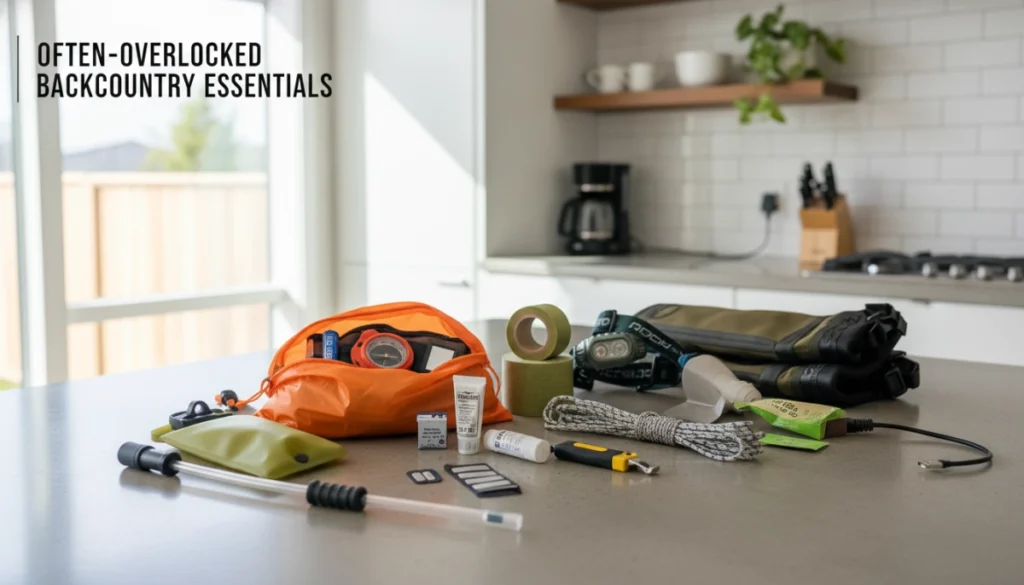
Why Overlooked Accessories Make or Break Backcountry Trips
If you’ve ever sat in a cold, flapping tent thinking, “How did I forget tape?” you already know: it’s not the big-ticket gear that usually fails you. It’s the overlooked accessories—the tiny, ultralight pieces of underrated backcountry gear—that quietly make or break a trip.
Minimalist… but Not Stupid-Light
I’m a big believer in minimalist backpacking gear. But there’s a hard line between smartly light and dangerously underprepared. You can trim ounces by:
- Cutting duplicate clothing
- Choosing ultralight, multi-use gear
- Ditching luxury extras you never touch
You should not cut:
- Backup fire (a lighter plus a ferro rod and tinder)
- A repair tape mini-roll and tiny sewing kit
- A signal whistle and basic emergency bivy or space blanket
These “forgotten backpacking accessories” weigh almost nothing, but they protect you when something small goes wrong in a big way.
How Small Gear Failures Become Big Problems
Most backcountry horror stories don’t start with a bear. They start with:
- A ripped pack strap miles from the trailhead
- A leaking sleeping pad on a freezing night
- A dead headlamp in steep, loose terrain
- A broken buckle on your hip belt or chest strap
With a lightweight repair kit for camping—duct tape, tenacious tape, spare cord, a mini multi-tool—you patch, improvise, and keep moving. Without it, you’re soaked, cold, slowed down, or forced to bail early.
The Classic “I Wish I’d Packed…” Moments
Ask anyone who’s done a few multi-day trips and you’ll hear the same regrets:
- “I wish I’d packed blister tape and a foot care kit on day one.”
- “I wish I had a backup water treatment when my filter clogged.”
- “I wish I carried a satellite communicator when we lost the trail.”
- “I wish I brought a real camp towel instead of using my shirt.”
These aren’t luxury camp comfort accessories; they’re the difference between grinding through misery and actually enjoying the route.
Why the Ten Essentials Aren’t Enough for Multi-Day Trips
The Ten Essentials are a great baseline, but they’re built around day trips and basic emergencies. On a multi-day backcountry route, you also need:
- Wilderness first aid upgrades (stomach meds, allergy meds, blister care)
- A true backpacking repair kit (for tents, zippers, poles, and pads)
- Backcountry hygiene essentials (wipes, bidet bottle, sanitizer)
- Ultralight emergency accessories (backup light, signal mirror, extra fire)
Think of the Ten Essentials as your foundation; your overlooked accessories kit is the custom add-on that actually fits how you travel.
Leave No Trace, Self-Reliance, and Smart Backups
Real backcountry self-reliance isn’t just about being tough. It’s about planning so you don’t turn your problems into the wilderness’s problems:
- Trash bags and odor-proof bags keep your camp clean and wildlife safe
- A tiny repair patch keeps a torn tent or pad out of the landfill
- A personal locator beacon or satellite messenger prevents a risky rescue
- Proper sanitation tools support Leave No Trace and keep water sources clean
The goal is simple: carry a lean set of minimalist camping accessories that let you fix your own issues, stay safe, and respect the places you love. These small, often ignored items are the real insurance policy in your pack.
Navigation and Safety Accessories You Probably Skip
When I’m dialing in my kit, navigation and safety are where most people cut corners—and that’s exactly where trips fall apart. These often-overlooked accessories weigh almost nothing but matter a lot when the weather turns or the trail disappears.
Low-Tech Backup Navigation Tools
Phones die, GPS glitches, apps crash. Old-school still wins.
- Spare compass (simple baseplate, not a gimmicky one)
- Paper topo map in a zip-top bag or small dry bag
- Mirrored signal device (doubles as a backup mirror and emergency signal)
- Keep these on your body, not buried in your pack
These are underrated backcountry gear pieces that keep you from being that person lost two ridges over.
Simple Signaling Gear You Forget
If you’re injured or socked in by fog, you want to be heard and seen fast.
- Signal whistle on a lanyard or your sternum strap
- Small signal mirror or mirrored rescue card
- Bright bandana or buff as a quick visual signal
These backcountry safety accessories are cheap, ultralight, and way more reliable than yelling.
Ultralight Emergency Fire Starters
Fire is heat, morale, and a backup rescue signal.
- 2–3 Bic lighters (in different pockets/bags)
- Ferro rod + striker as a fail-safe
- Pre-made tinder tabs, cotton balls in petroleum jelly, or commercial fire cubes
I treat fire as a system: redundant, dry, and idiot-proof, especially on cold or wet trips.
On-Trail Fixes: Tape You Actually Need
A lightweight repair kit is one of those forgotten backpacking accessories that saves entire trips.
- Tenacious Tape patches for tents, jackets, pads
- A small duct tape mini-roll (wrapped around a trekking pole or water bottle)
- Thin athletic tape that can double for gear and skin
Ripped shelters or busted pads in the rain go from disaster to minor annoyance with a few strips of tape.
PLBs and Satellite Messenger Add-Ons
For remote Western US routes, shoulder-season trips, or solo travel, I treat a satellite communicator as standard, not luxury.
- Personal Locator Beacon (PLB) for pure emergency SOS
- Satellite messenger (Garmin inReach, Zoleo, etc.) for:
- Two-way texting
- Weather updates
- Real-time tracking for folks at home
These satellite messenger add-ons turn a sketchy situation into a controlled one when you’re far from cell service.
When Visibility and Route-Finding Go Bad
Fog, snow, smoke, or dense forest are where this ultralight emergency accessories list earns its keep:
- Off-trail travel: backup compass + map keep you on bearing when game trails and cairns vanish
- Bad visibility: whistles, mirrors, and bright gear cut through fog and trees
- Injury or immobilization: PLB/satellite messenger + whistle combo gives rescuers a real chance of finding you fast
This isn’t about fear—it’s about backcountry self-reliance. A handful of smart, light navigation and safety accessories can turn a potential rescue story into just another solid trip.
Repair and Maintenance Must-Haves (The Often-Overlooked Accessories Every Backcountry Camper Needs)
When something breaks 15 miles from the trailhead, your whole trip depends on what’s in your repair kit. This is where a lot of underrated backcountry gear earns its keep.
Lightweight repair kit camping basics
Keep a small, dedicated backpacking gear repair kit that always lives in your pack:
- Duct tape mini-rolls or wrapped on a trekking pole/water bottle
- Tenacious Tape or similar backpacking repair tape for tents, jackets, and sleeping pads
- A couple zip ties and gear ties
- A few extra buckles and webbing clips
These forgotten backpacking accessories weigh almost nothing but fix most “trip-ending” problems.
Fixes for poles, zippers, and pads
I always plan for the most common failures:
- Tent poles / trekking poles
- Short aluminum repair sleeve
- Duct tape + a spare stake or stick to splint a broken section
- Zippers
- Small replacement zipper slider
- Mini needle-nose multi-tool for backpacking to crimp and realign teeth
- Sleeping pads
- Alcohol wipe, patch, and glue or stick-on pad patch
- Tiny sponge or cloth to prep surfaces
If you camp in the Rockies, Sierras, or Northeast, bad weather plus a broken pole or pad can turn into a legit safety issue.
Paracord, guyline, and cord tensioners
Paracord uses in backcountry are almost endless:
- Rig a backup guyline when a tent line snaps
- Hang a tarp or emergency shelter
- Replace a broken pack strap in a pinch
- Lash gear to a pack or bear hang food (use proper systems for bears)
Combine paracord and lightweight guyline with:
- Cord tensioners for fast, glove-friendly adjustments
- A couple smart knots (truckers hitch, bowline, taut-line hitch) you’ve practiced at home
This is ultralight emergency accessories done right—tiny parts that save you time and frustration in wind, rain, and dark.
Multi-tools and compact sewing kits
Skip the giant toolbox. Go with:
- Backpacking-ready multi-tool or mini plier set
- Pliers for bent stakes and pole repairs
- Small blade for cutting cordage and tape
- Scissors for tape, blister care, and patches
- Compact sewing kit
- Heavy-duty thread
- A few strong needles (one big enough for packs/straps)
- Small fabric patches for packs and clothing
I treat this as part of my backcountry self-reliance gear, not an add-on.
Real-world failure scenarios
In the U.S., weather swings hard—especially in the mountains and desert. These are real situations I plan for:
- Broken tent pole in a thunderstorm
- Splinted with a stake + duct tape + repair sleeve = shelter saved
- Ripped shoulder strap on a pack
- Paracord + needle and heavy thread = reinforced carry to the trailhead
- Leaking water bladder in hot, dry conditions
- Tenacious Tape + duct tape edge seal = enough to limp to the next water source
These minimalist camping accessories don’t look sexy on a gear list, but they keep you moving, dry, and safe when things go sideways.
Comfort and Hygiene in the Wild: The Often-Overlooked Accessories Every Backcountry Camper Needs
When you’re three days into a trip, comfort stops being a luxury and turns into risk management. The often-overlooked accessories every backcountry camper needs are usually the small comfort and hygiene items that keep you moving, sleeping, and thinking clearly.
Why comfort gear matters on day three
By day three, grit, sweat, and friction add up. A few camp comfort accessories can be the difference between finishing your route or bailing early:
- Less chafing = fewer forced stops
- Better sleep = safer decisions
- Cleaner body = fewer rashes and infections
Quick-dry camp towels & microfiber cloths
I always pack a quick-dry camp towel and a small microfiber cloth because they:
- Dry fast on a pack strap
- Double as a pot holder, sweat rag, or mini sit pad
- Help you get clean without carrying bulky cotton
Backcountry hygiene essentials
Basic backcountry hygiene essentials that actually earn their weight:
- Biodegradable wipes: Use sparingly, pack out every single one
- Backcountry bidet (screw-on bottle bidet): Cuts down TP use, cleaner long-term
- Hand sanitizer + tiny soap shard: Real soap for dishes/hands away from water sources
Focus on smart sanitation habits: wash hands before food, keep “kitchen” and “bathroom” zones separate, always follow Leave No Trace.
Foot care kit: blister prevention and repair
A small backpacking foot care kit has saved more trips than any fancy gadget. I keep mine in a zip bag with:
- Blister tape (Leukotape or KT tape)
- Moleskin for hot spots
- A few alcohol wipes to clean skin before taping
- Anti-friction balm or petroleum jelly
- A spare pair of liner socks
Use this stuff early—at the first hot spot, not after the blister pops.
Managing chafe, hotspots, and damp socks
On long mileage days, especially in the U.S. South, Rockies, or desert:
- Swap into dry socks at midday
- Air out feet at breaks; insoles out, shoes open
- Use anti-chafe balm on thighs, under pack straps, and under sports bras
- Sleep in a dedicated dry sock pair you never hike in
Camp sandals for backpacking
A pair of lightweight camp sandals or Crocs might feel extra, but they’re clutch:
- Let your feet dry and breathe in camp
- Safer river crossings than barefoot rock-hopping
- Useful “bathroom shoes” at night
I treat them as part of my foot health system, not a luxury.
Sleep helpers: earplugs and eye masks
Noise from wind, snoring, or nearby camps can wreck you. Simple ultralight emergency accessories for sleep:
- Foam earplugs: Weigh nothing, huge payoff
- Soft eye mask or buff over the eyes: Sunrise doesn’t have to wake you up
Better sleep = better miles, better decisions, and less risk.
Staying clean without overpacking
To avoid a bathroom-scale toiletry kit, I stick to:
- Travel toothbrush + tiny toothpaste or tabs
- Mini floss (also works as emergency thread)
- One small dropper of concentrated soap
- 8–10 wipes max on shorter trips, then bidet + bandana for longer trips
The goal with forgotten backpacking accessories like these isn’t luxury—it’s staying functional, healthy, and sharp when the miles, weather, and terrain get real.
Weather and Illumination Extras Every Backcountry Camper Needs
When I’m dialing in underrated backcountry gear, weather and lighting accessories are where most people in the U.S. cut too deep. These often-overlooked accessories are what turn a sketchy night into a controlled situation.
Emergency bivy & space blanket
For ultralight emergency accessories, I always pack at least one of these:
- Emergency bivy for backpacking – Warmer and more durable than a basic blanket; a legit backup if you’re forced to sleep out or your bag gets soaked.
- Space blanket camping uses – Groundsheet, wind block, quick shelter, or wrap for a hypothermic partner. Costs almost nothing, weighs almost nothing, but can save a life.
Backup light sources that just work
Relying on one headlamp is asking for trouble on multi-day trips:
- Backup light sources – Tiny button-cell keychain light, or a micro flashlight clipped to your sternum strap.
- Extra headlamp batteries – Store in a tiny dry bag so they’re usable in cold, wet conditions.
- Hand-crank lights – Slightly heavier than button cells, but they don’t die. Great for longer, remote trips.
These backcountry safety accessories matter when your main light fails in rain, fog, or steep terrain.
Micro-layers for surprise cold snaps
Weather in the U.S. mountains and deserts flips fast. I always keep:
- Light gloves (or liner gloves) for cold mornings and surprise storms
- Buff or neck gaiter for wind, sun, and quick warmth
- Micro-layers – ultralight fleece or synthetic puffy that lives in its own dry bag
These small camp comfort accessories punch way above their weight on long mileage days.
Waterproof stuff sacks and pack liners
A basic pack rain cover isn’t enough in sustained rain or river crossings:
- Pack liner vs dry bags – I use a trash-compactor bag or purpose-built liner as my main waterproof barrier.
- Waterproof stuff sacks – Separate dry bags for electronics protection, warm layers, and sleep system.
- Critical items to keep absolutely dry:
- Sleeping bag / quilt
- Insulated jacket and spare base layers
- Phone, satellite communicator, power bank
- Map, permits, and first aid
This is simple insurance. A few dry bag organization tweaks keep your kit functional even after an all-day downpour or a sketchy creek crossing.
These often-overlooked accessories every backcountry camper needs don’t add much weight, but they dramatically increase your margin of safety when the weather turns and the sun is gone.
Kitchen and Hydration Helpers Every Backcountry Camper Needs
Ultralight sporks and multi-use utensils
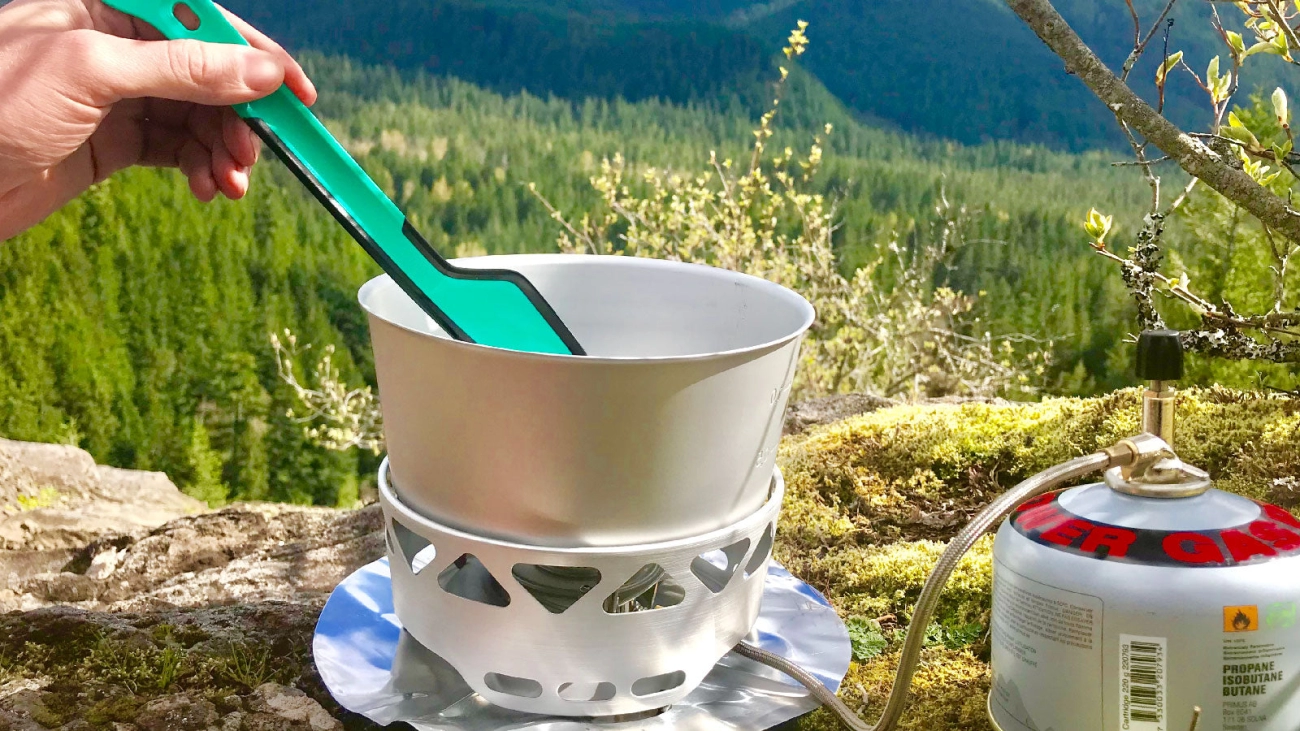
For backcountry cooking, I stick to one ultralight spork or titanium utensil that does it all. It cuts weight, doesn’t snap like cheap plastic, and handles freeze‑dried meals, one‑pot dinners, and trail “soups” without bending. Multi-use tools (spork + scraper, or utensil + can opener) are exactly the kind of underrated backcountry gear that keeps your kit simple and efficient.
Collapsible bottles and camp water storage
In a lot of U.S. backcountry zones, water sources are either everywhere or miles apart. That’s why I pair a hard bottle (for daily drinking) with collapsible bottles or soft water containers for camp and dry stretches. They:
- Pack down tiny when empty
- Let you haul extra liters through desert or high ridge sections
- Work great as dirty-water bags for filters
This is one of those forgotten backpacking accessories that pays off on day one.
Backup water purification that weighs nothing
I never rely on just one filter. A cracked housing or frozen cartridge will ruin your trip. I always carry:
- Extra purification tabs as an ultralight backup
- A tiny squeeze filter or backup straw in case my main system fails
Redundant backcountry hydration essentials don’t weigh much, but they’re critical for self‑reliance.
Pot cozies and windscreens for fuel efficiency
If you cook with a canister or alcohol stove, a simple windscreen and pot cozy can save a shocking amount of fuel:
- Faster boil times in wind
- Hot meals that stay warm longer
- Less fuel to pack (or worry about running out)
These are true fuel‑efficient camping kitchen hacks that most people skip until they see the difference in the field.
Small stove accessories that speed up meals
I keep my backpacking stove kit dialed in with:
- A stable stove base or canister stand
- A lightweight lighter plus a backup spark (ferro rod or piezo)
- A small heat-resistant pot grabber if my pot doesn’t have a good handle
These tiny add-ons make cooking faster, safer, and way less annoying in bad weather.
Trash bags, odor-proof bags, and LNT food storage
For Leave No Trace camping, I always pack:
- Heavy‑duty trash bags for all waste and dirty packaging
- Odor-proof bags for food and trash in bear country or rodent-heavy sites
- A system that pairs with a bear can, Ursack, or proper hang
Smart trash management in the backcountry keeps smells down, wildlife wild, and your camp safe and legal in U.S. parks and forests.
Organization and Packing Smart: The Often-Overlooked Accessories Every Backcountry Camper Needs
Staying organized in the backcountry matters more every day you’re out. By day three of a multi-day trek, underrated backcountry gear like packing cubes, compression sacks, and dry bags do more for your sanity than almost any “cool” gadget.
Why organization matters
On real trips, disorganized packs mean:
- Wasted time digging for layers, snacks, or your backcountry hygiene essentials
- Wet electronics and maps after one storm
- Critical items buried when you actually need them fast
A clean system keeps your minimalist backpacking gear list actually usable.
Compression sacks and packing cubes
I treat organization like load management:
- Compression sacks:
- Use for sleeping bag, puffy, spare clothes
- Tighten them to keep weight close to your spine and improve balance
- Packing cubes:
- One for clothes, one for camp comfort accessories, one for lightweight repair kit camping
- Makes daily packing faster and stops gear from exploding into chaos
Dry bags for important stuff
A simple pack liner isn’t enough for long, wet trips in the U.S. (Pacific Northwest, Appalachians, Rockies):
- Use small dry bags for:
- Phone, power bank, cords
- Maps, permits, IDs, insurance card
- First aid + meds
- Go with bright colors so you can ID them fast and keep your backpacking electronics protection dialed in.
Color-coding and labeling
Color-coding is a quiet superpower for backcountry packing checklists:
- Example setup:
- Red = first aid and wilderness first aid upgrades
- Blue = water + filters, electrolyte tablets
- Green = food + odor-proof bags for camping
- Orange = emergency kit (bivy, space blanket camping uses, whistle, fire starters)
- Add simple labels (Sharpie on tape, or tag) so everyone in your group knows what’s what.
Trekking pole baskets and tips
Most people ignore pole accessories until they’re post-holing in slush:
- Pack extra trekking pole baskets for:
- Mud season in the Northeast and Midwest
- Spring snow in the Rockies and Sierra
- Loose scree and sand in desert routes
- Swap or tighten tips at home so you’re not dealing with spinning or lost tips mid-hike.
Zipper pulls, cord locks, and gloves-friendly tweaks
Small backcountry self-reliance gear upgrades make cold, wet camps way less painful:
- Add paracord zipper pulls to:
- Tent doors
- Sleeping bag
- Pockets you use a lot
- Swap cheap cord locks for better ones on:
- Guy lines
- Stuff sacks
- Bear hangs or food bags
Being able to adjust things with gloves on is a big deal in shoulder season and winter.
Build a simple, repeatable system
I run the same system on every trip so nothing gets buried:
- Top of pack / outer pocket:
- Rain jacket, snacks, map, small backcountry safety accessories
- Mid-layer (easy access):
- Warm layer, first aid, repair kit, toilet kit
- Bottom:
- Sleeping bag, sleep clothes only
Once you dial in your ultralight backpacking accessories and organization system, you pack faster, move smoother, and stop losing time (and patience) to a messy pack.
Health and First Aid Upgrades Every Backcountry Camper Needs
Even the best backcountry trips go sideways fast without real health and first aid upgrades. A pre-made kit is a start, but for serious U.S. backcountry travel, I always build out my own “overlooked accessories” module.
Go Beyond the Basic First Aid Kit
Most store kits are:
- Light on meds
- Weak on blister care
- Missing repair and maintenance tools for water treatment
I treat that kit as a base, then upgrade it for real backcountry use.
Tweezers, Tick Removers, Splinter Tools
In tick-heavy and brushy areas in the U.S., these are non-negotiable:
- Fine-tip tweezers (not the cheap flat ones)
- Tick remover card or tool (especially in the Northeast, Midwest, Mid-Atlantic)
- Needle or splinter probe for cactus, thorns, and glassy splinters
These are tiny, weigh nothing, and solve problems you can’t just “walk off.”
Allergy, Pain, and Stomach Meds
I always pack a small “comfort meds” pouch:
- Antihistamine (for allergies, mild reactions, bug bites)
- Pain relief (ibuprofen or acetaminophen)
- Anti-diarrheal tablets
- Antacid or stomach relief
- Electrolyte-friendly pain meds strategy for hot days
On a multi-day trip, these can be the difference between hiking out and bailing early.
Blister-Specific Foot Care Kit
Your backpacking foot care kit should live outside the generic first aid pouch. I keep it ready-access in a hip belt pocket:
- Blister tape (Leukotape, KT tape, or similar)
- Moleskin and small scissors or a knife with fine blade
- Alcohol wipes to dry and clean skin
- Friction/anti-chafe balm for heels, toes, and straps
Blister control is one of the most underrated backcountry self-reliance gear moves you can make.
Water Filter Maintenance Tools
Your water system is life-support, not an accessory:
- Backflush syringe or squeeze adapter for your specific filter
- O-rings or small gaskets for common failure points
- A tiny toothbrush or soft brush for scrubbing threads and caps
- Backup purification tabs in case your filter cracks, clogs, or freezes
This is the kind of wilderness first aid upgrade that doesn’t feel important—until your only filter fails 15 miles from the trailhead.
Electrolytes and Hydration Helpers
On long, hot, high-mileage days in the U.S. West or humid Southeast, plain water isn’t enough:
- Electrolyte tablets or powders (single-serve packets are ideal)
- Salt tablets or salty snacks for heavy sweaters
- A dedicated “hot day” zip bag so it’s easy to grab from your pack
These ultralight backcountry accessories help prevent cramping, headaches, and that drained, bonked feeling late in the day.
Pack First Aid by Trip, Season, and Group Size
I always adjust my minimalist backpacking gear list for:
- Trip type: day hike, overnight, multi-day, off-trail
- Season: more tick/tick tools in summer, more meds/cold care in shoulder seasons
- Group size: more people = more meds, more blister gear, bigger water maintenance kit
Build a small, organized backcountry packing checklist just for health and first aid. It keeps your kit light, focused, and ready for real problems—not just paper cuts.
How to Build and Pack Your Overlooked Accessories Kit
Dedicated “oh-shit” pouch or stuff sack
For overlooked accessories every backcountry camper needs, I keep one dedicated “oh-shit” kit:
- Use a bright, waterproof stuff sack (orange, yellow, or red stands out).
- Size sweet spot: 1–3 liters – big enough for safety, repair, and emergency gear.
- Pick something with a zipper or roll-top so small items don’t spill in your pack.
- Label it: “Emergency / Repair” so you and your partners know what it is.
This becomes your grab-and-go hub for ultralight emergency accessories, repair tools, and backup safety gear.
Keep it under 1–2 pounds
You want real function without turning it into a brick:
- Start with your core list (repair, fire, backup light, whistle, mini first aid upgrades).
- Weigh the full kit on a kitchen scale; aim for 16–32 oz total.
- Skip duplicates: you don’t need three knives, four lighters, and a giant roll of duct tape.
- Favor mini sizes: small tubes, sample packs, micro tools, trimmed-down repair tape.
If it doesn’t meaningfully solve a likely problem, it doesn’t make the cut.
Prioritize multi-use and dual-purpose gear
To keep your minimalist backpacking gear list tight, lean hard on multi-use items:
- Paracord: guyline, clothesline, shoelace backup, splint support, bear hang.
- Bandana or buff: towel, prefilter for water, pot grabber, sun protection.
- Repair tape (Tenacious Tape, duct tape): tent, sleeping pad, jacket, pack fixes.
- Multi-tool for backpacking: pliers, scissors, knife, screwdriver in one.
- Space blanket: emergency bivy backup, groundsheet, windbreak, signal panel.
This is how you build a strong backpacking repair kit and safety kit without blowing your weight budget.
Seasonal swaps: bug, shoulder, and winter
Keep a small seasonal add-on bag next to your core kit at home so you can swap fast:
-
Bug season (late spring–summer)
- Headnet
- Extra insect repellent wipes
- After-bite or hydrocortisone packet
-
Shoulder season (spring/fall)
- Extra micro-layer (thin gloves, buff, beanie)
- Small chemical hand warmers
- Extra fire starter (more tinder tabs / cotton + Vaseline)
-
Winter conditions
- Heavier emergency bivy for backpacking
- Extra space blanket camping uses (sitting pad, wind block)
- Bigger repair tape section for skis/snowshoes/poles
- Extra electrolyte tablets for long cold days
Store these modules in clearly labeled bags so you’re just swapping, not rebuilding your kit every trip.
Regional tweaks: desert, rainforest, mountains, coast
I always adjust my underrated backcountry gear based on where I’m headed in the U.S.:
-
Deserts (Utah, AZ, SoCal)
- Extra water purification tabs as backup
- Collapsible bottle or soft flask for long dry stretches
- More electrolyte tablets and salt packets
-
Rainforests / wet PNW
- Extra backpacking repair tape for soaked gear
- Redundant fire starters (ferro rod + reliable tinder)
- More dry bags / pack liner for critical gear
-
High mountains (CO, Sierra, Rockies)
- Extra gloves and buff for surprise cold snaps
- Better emergency bivy or heavier space blanket
- Backup navigation tools (map, spare compass, signal whistle)
-
Coastal trips
- Extra corrosion-resistant gear (stainless, not cheap steel)
- More waterproof stuff sacks for electronics and clothes
- Stronger odor-proof bags if camping near critter-heavy areas
Where to stash accessories for fast access
If you can’t reach it when things go sideways, it’s not helping you:
- Keep the main overlooked accessories kit:
- Near the top of your pack, or
- Right behind the front zipper panel
- Stash whistle, small knife, and mini light on your chest strap or hip belt.
- Repair tape can go on trekking poles or wrapped around a lighter.
- Blister tape and a couple electrolytes live in the hip belt pocket.
The rule: emergency = on your body or top of pack, not buried under your sleeping bag.
Turn it into a checklist (print or digital)
To keep this backcountry packing checklist dialed:
- Make a simple Google Doc, Notes app list, or spreadsheet with:
- Core oh-shit kit items
- Seasonal add-ons
- Regional tweaks
- Print a one-page checklist and keep it with your gear bins.
- After each trip, add notes:
- “Used this a lot”
- “Never touched this”
- “Needed X, didn’t have it”
Over a few trips, you’ll end up with a lean, proven list of overlooked accessories every backcountry camper needs that actually fits how you hike, where you go, and how you deal with problems on trail.
Common Mistakes to Avoid with Often-Overlooked Accessories
Even the best backcountry setup can get wrecked by a few bad decisions with “small” gear. Here’s how I keep underrated backcountry gear and forgotten backpacking accessories working for me, not against me.
Overpacking Tiny Items
It’s way too easy to let lightweight accessories turn into dead weight.
- Set a weight cap for your ultralight emergency accessories kit (1–2 lbs max).
- Cut duplicates: you don’t need three multitools, four extra lighters, and five rolls of backpacking repair tape.
- Keep only what solves real problems: repairs, safety, navigation, hygiene, and comfort.
Not Testing New Gear at Home
Relying on new gear in the field is how trips go sideways.
- Test your ferro rod fire starter, camp towel, mini multi-tool, water filter, and emergency bivy in your backyard or local park.
- Make sure your paracord setups, pot cozy, stove windscreen, and pack liner vs dry bags system all work before a big trip.
- If something feels clunky at home, it’ll be worse at 10,000 feet in bad weather.
Ignoring Compatibility with Main Gear
Forgotten backpacking accessories are useless if they don’t match your setup.
- Check repair kits match your tent poles, zippers, sleeping pad valves, and hose sizes.
- Make sure your satellite communicator, power bank, and headlamp use compatible cords and plug types.
- Verify your dry bag organization fits inside your pack without killing access to essentials.
Forgetting the Ten Essentials Link
Your accessories should support, not replace, your Ten Essentials.
- Pair navigation accessories (backup compass, whistle, signal mirror) with your map and GPS/satellite messenger.
- Match first aid add-ons (blister kit, meds) to your core wilderness first aid upgrades.
- Tie repair items into your shelter and clothing systems so a failure doesn’t end your trip.
Upgrade vs DIY: When to Spend
I DIY a lot, but I don’t cheap out on critical stuff.
Worth upgrading:
- Emergency bivy for backpacking and space blanket camping gear
- Satellite communicator for hikers and PLBs
- Key multi-tool for backpacking and cutting tools
- Backpacking electrolyte tablets and proven meds
Fine to DIY:
- Duct tape mini-rolls
- Simple pot cozy for backpacking meals
- Basic cordage wraps and gear organizers
Learn from Your Own Trips
Your best gear list comes from your own mistakes.
- After each trip, write a quick backcountry packing checklist debrief:
- What saved the day?
- What stayed buried and unused?
- What did you say “never again” about?
- Adjust your minimalist camping accessories and comfort items based on season, mileage, and region (desert, PNW rain, Rockies, etc.).
Real-World Pro Tips from Experienced Hikers
A few patterns I see over and over on U.S. trails:
- Keep whistle, lighter, small knife, and a mini light on your body, not just in your pack.
- Put your blister prevention kit and backcountry hygiene essentials where you can grab them fast—hip belt or top lid.
- Use color-coded dry bags: one for first aid, one for repair, one for kitchen, one for electronics.
- Practice paracord uses in the backcountry (clothesline, guyline, emergency strap) before you actually need them.
- Never leave the trailhead without:
- A real backpacking gear repair kit
- A solid backpacking foot care kit
- At least one ultralight emergency accessory for shelter or warmth
Dial these in, and your “tiny” accessories become the stuff that keeps your trip safe, efficient, and way more comfortable.