
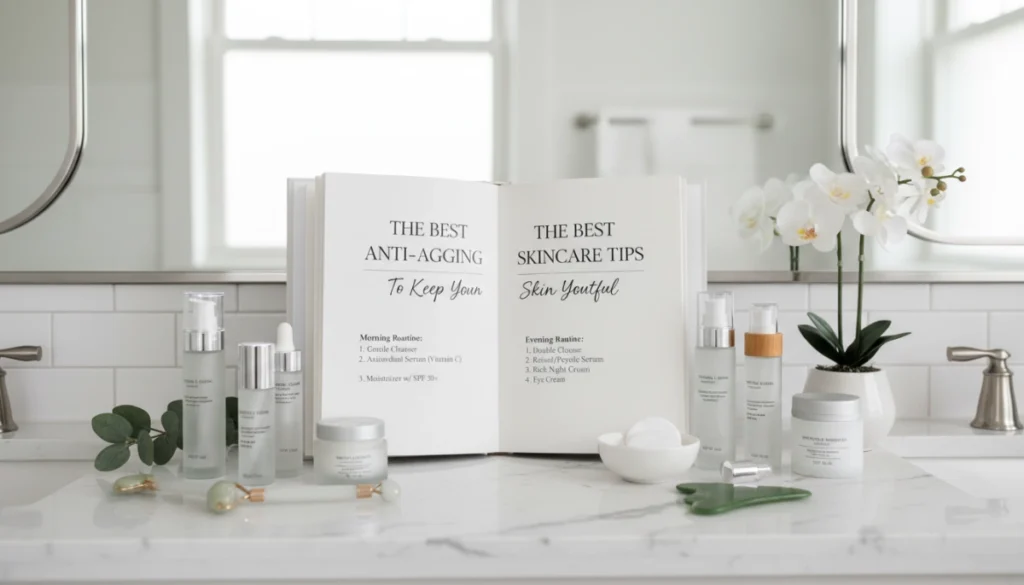
If you’ve ever looked in the mirror and wondered when those fine lines, dullness, or dark spots snuck up on you, you’re not alone. The truth is, visible aging starts earlier than most people think—and the right anti-aging skincare routine can dramatically slow it down.
In this guide, you’ll learn the best anti-aging skincare tips to keep your skin youthful—the same science-backed strategies dermatologists rely on, broken down in simple, practical steps. We’ll cover the three real game changers: daily sunscreen, targeted collagen-boosting ingredients (like retinol and vitamin C), and easy lifestyle shifts that help prevent premature aging from the inside out.
Whether you’re in your 20s and want to prevent wrinkles naturally, or you’re already seeing fine lines and want to firm sagging skin, this is your roadmap to smoother, brighter, more resilient skin—without chasing hype or miracle claims.
At megapickly, we focus on what actually works. Let’s get straight into how to build a simple, powerful routine that keeps your skin looking younger, longer.
Understanding Skin Aging Over Time
If you’re starting to notice fine lines, dullness, or early wrinkles, you’re not imagining it—skin aging is real, and it starts earlier than most people think. The good news: with the right anti-aging skincare routine, you can slow it down and keep your skin looking youthful much longer.
What Actually Happens As Skin Ages
On the inside, two main “youth” fibers start to break down:
-
Collagen – keeps skin firm and bouncy.
- After your mid‑20s, you naturally lose about 1% of collagen per year.
- Less collagen = more wrinkles, fine lines, and sagging skin.
-
Elastin – lets your skin snap back into place.
- Damage to elastin makes skin look loose and less tight, especially around the eyes, jawline, and neck.
This is why collagen-boosting ingredients, like retinol, peptides, and vitamin C, are so important in any serious anti-aging skincare routine.
How UV Rays and Free Radicals Speed Up Aging
Most premature aging comes from the sun and environmental stress:
-
UV rays (even on cloudy days and indoors through windows):
- Break down collagen and elastin faster.
- Cause dark spots, age spots, and uneven tone.
- Lead to deep wrinkles, especially on the forehead, around the eyes, and on the neck.
-
Free radicals (from UV, pollution, smoking, stress):
- Attack skin cells and speed up visible aging.
- Make skin look dull, rough, and tired.
This is why daily sunscreen for anti-aging and antioxidants for skin (like vitamin C, vitamin E, and green tea) are non‑negotiable if you want youthful skin long-term.
Dehydration and Slower Cell Turnover
As you age, your skin doesn’t renew itself as quickly:
-
Slower cell turnover = dead skin cells sit on the surface longer
- Skin looks dull, rough, and uneven.
- Pores and fine lines appear more obvious.
-
Dehydration:
- Skin loses water more easily, especially if your skin barrier is weak.
- Dehydrated skin looks crepey, tight, and older than it really is.
Hydrating ingredients like hyaluronic acid, glycerin, and ceramides for dry aging skin help restore plumpness and support skin barrier repair so your skin feels smoother and bouncier.
Visible Signs of Aging You’ll Notice
Over time, you’ll start to see:
- Fine lines and wrinkles (forehead, eyes, mouth)
- Sagging skin (jawline, cheeks, neck)
- Dark spots and age spots from past sun damage
- Rough texture and enlarged pores
- Dull skin that’s lost its glow
These changes don’t happen overnight. They build slowly, which is why consistent youthful skin tips and smart habits matter more than any single “miracle” product.
Why Starting in Your 20s and 30s Matters
If you’re in your 20s or 30s, this is your prime time to prevent wrinkles naturally and reduce fine lines before they’re etched into your skin:
- You can prevent premature aging instead of trying to erase deep damage later.
- Early use of broad-spectrum SPF 30, vitamin C, gentle retinol for youthful skin, and niacinamide for aging skin protects collagen and keeps your skin firm longer.
- Think of it as “skin retirement savings”—the earlier you start, the more youthful “interest” you earn.
You don’t need a 10-step routine. You need a simple skincare routine that protects during the day, repairs at night, and supports your skin barrier. That’s how you keep your skin looking youthful, smooth, and healthy for the long haul.
Daily Sun Protection for Youthful Skin
Why sunscreen is the #1 anti-aging skincare step
If you want youthful skin long-term, daily sunscreen is non‑negotiable. In the U.S., most visible skin aging on the face—wrinkles, dark spots, sagging—is from UV exposure, not just age. A solid anti-aging skincare routine without SPF is basically wasted effort.
I treat SPF as a daily habit like brushing your teeth:
- It prevents wrinkles and fine lines before they start
- It helps fade dark spots and age spots and keeps new ones from forming
- It protects collagen and elastin, keeping skin firmer and bouncier
- It keeps your skin barrier stronger and less reactive over time
If you’re using retinol, vitamin C, AHAs/BHAs, or other anti-aging ingredients, SPF isn’t optional—it’s your insurance policy.
How UV damage causes wrinkles, dark spots, and sagging skin
UV rays (UVA + UVB) speed up premature aging in a few key ways:
-
Break down collagen and elastin
- UVA goes deeper into the skin and damages collagen, causing sagging skin and deeper wrinkles
- Over time, skin loses firmness and looks deflated, especially around the eyes, mouth, and jawline
-
Trigger dark spots and uneven tone
- UV stimulates pigment cells, which leads to dark spots, age spots, melasma, and blotchy skin
- Even minimal daily sun (like driving or sitting by a window) adds up over years
-
Increase free radicals and inflammation
- UV light creates free radicals that damage skin cells
- This weakens the skin barrier, makes skin dull, and slows repair
Even on cloudy days, indoors, and in the car, UVA still gets through. That’s why daily sunscreen for anti-aging matters, not just “beach days.”
How to choose the right broad-spectrum SPF for your face
For U.S. customers, I recommend you look for these on the label:
-
Broad-spectrum SPF 30 or higher
- SPF 30 is the minimum for daily anti-aging protection
- Broad‑spectrum = protection from UVA (aging) and UVB (burning)
-
Texture based on your skin type
- Oily or acne-prone skin:
- Lightweight, non-greasy face sunscreen, gel, or fluid
- Look for “oil-free,” “non-comedogenic,” or “matte finish”
- Dry or mature skin:
- Creamy SPF with hyaluronic acid, ceramides, or glycerin
- Doubles as a lightweight daily moisturizer
- Combination skin:
- Fluid or lotion SPF that’s hydrating but not heavy
- You can layer more moisturizer only on dry zones
- Sensitive skin:
- Mineral sunscreen (zinc oxide, titanium dioxide)
- Fragrance-free, alcohol-free, minimal ingredient list
- Oily or acne-prone skin:
-
Finish that fits your lifestyle
- Work, school, or office: weightless, invisible finish under makeup
- Outdoor, sports, or beach: water-resistant formulas
Pick a formula you actually like using. The best sunscreen for anti-aging is the one you’ll wear every single day.
How to apply and reapply sunscreen the right way
Most people in the U.S. simply don’t use enough sunscreen, so they never get full SPF protection.
How much to use for the face and neck:
- About 2–3 finger-lengths of sunscreen (index + middle finger) for face + neck
- Or roughly ½ teaspoon if you prefer measuring
How to apply:
- AM skincare routine: Cleanser → treatments (vitamin C, serums) → moisturizer (optional) → SPF last
- Apply sunscreen to face, ears, neck, and the back of the neck
- Blend gently; don’t rub so hard that you wipe it off
Reapplication tips:
- Every 2 hours if you’re outdoors, sweating, or in direct sun
- For office or indoor days: at least once in the afternoon if you sit near windows or go in and out
- Over makeup:
- Use a powder SPF or SPF setting spray for quick top-ups
- Or gently press a small amount of liquid SPF on with a sponge
If you’re at the pool, beach, or playing sports, reapply every 80 minutes or right after swimming/toweling off.
Extra sun protection tips (hats, sunglasses, shade, clothing)
Sunscreen is your base layer. For serious anti-aging and wrinkle prevention, especially in the U.S. where sun is strong in many states, I always add physical protection:
-
Hats
- Wear a wide-brim hat (not just a baseball cap) to protect face, ears, and neck
- Look for UPF-rated hats for better coverage
-
Sunglasses
- Choose UV-blocking sunglasses to protect the eye area
- Helps prevent crow’s feet, under-eye wrinkles, and squint lines
-
Clothing
- When possible, wear long sleeves, UPF shirts, and sun-protective fabrics
- Great for outdoor work, sports, hiking, and beach days
-
Shade and timing
- Avoid peak sun when possible: roughly 10 a.m. to 4 p.m.
- Sit under umbrellas, awnings, or trees when outdoors
-
Everyday habits
- Keep SPF in your car, gym bag, or work desk for easy reapplication
- Don’t forget hands, chest, and neck—they age fast and show sun damage early
If you want to prevent premature aging, reduce fine lines, and keep skin firm, consistent broad-spectrum SPF 30+ plus smart sun habits will do more for your skin than any fancy product.
Simple Daily Anti-Aging Skincare Routine
Keeping skin youthful doesn’t need a 12-step routine. In the U.S., most of my customers stick to 4–6 smart steps, morning and night, with a few proven anti-aging ingredients built in. Here’s exactly how I’d set it up.
Morning routine for youthful, glowing skin
Your AM routine is all about protection and glow. Think: prevent wrinkles, protect collagen, brighten dull skin.
Step-by-step AM anti-aging skincare routine
1. Gentle cleanser (or just rinse)
- Use a non-stripping, low-foam cleanser to remove oil and sweat.
- If your skin is dry or sensitive, you can just rinse with lukewarm water some mornings.
2. Vitamin C serum for brightening and firming
This is one of the best youthful skin tips I give. A good vitamin C serum helps:
- Fade dark spots and age spots
- Brighten dull skin
- Boost collagen and help prevent premature aging
Apply a few drops to dry skin, neck included.
3. Lightweight daily moisturizer
Look for:
- Hyaluronic acid for hydration and plump skin
- Ceramides for skin barrier repair
- Non-greasy, quick-absorbing texture (especially for humid U.S. climates or oily skin)
4. Daily sunscreen (non-negotiable)
For real anti-aging skincare, this is the step that matters most:
- Use broad-spectrum SPF 30+ every day (yes, even indoors and on cloudy days)
- Choose a non-greasy face sunscreen that works under makeup and doesn’t leave a white cast
- Apply about 2 finger lengths of product to face and neck
- Reapply every 2 hours if you’re outside or near windows
Night routine for repair and renewal
Your PM routine is where the anti-aging work really happens: retinol, barrier support, and deep hydration.
Step-by-step PM anti-aging skincare routine
1. Double cleanse (if you wear sunscreen or makeup)
- Oil or balm cleanser first to melt makeup, SPF, and city pollution
- Gentle water-based cleanser second to actually clean the skin
If you don’t wear much makeup, one gentle cleanse is fine.
2. Treatment step (retinol or alternatives)
This is where you use retinol for youthful skin or other actives:
- Start with a beginner retinol routine: 1–2 nights per week
- Use a pea-size amount for the whole face, avoid eye corners and sides of nose
- On non-retinol nights, you can use niacinamide, peptides, or just focus on hydration
3. Eye area care (optional but helpful)
For crow’s feet, fine lines, and puffiness:
- Use a light eye cream for crow’s feet with peptides, caffeine, or hyaluronic acid
- Tap gently with your ring finger, don’t rub
4. Night cream or moisturizer
At night, I like a richer texture to support repair:
- Look for ceramides, niacinamide, and hyaluronic acid
- If your skin barrier is sensitive or dry, skip multiple actives and lean into moisturizer and barrier repair
How to adjust your routine by skin type
Everyone in the U.S. deals with different climates—dry heat, humidity, cold winters—so anti-aging skincare routines have to flex.
Dry or mature skin
Goal: Deep hydration and barrier repair
- Creamy, non-foaming cleanser
- Hydrating toner or essence (optional)
- Hyaluronic acid + ceramides for dry aging skin
- Richer night cream, maybe a humidifier by the bed in winter
- Introduce retinol slowly and buffer with moisturizer
Oily or acne-prone skin
Goal: Prevent wrinkles naturally without clogging pores
- Gentle foaming cleanser
- Lightweight gel moisturizer with niacinamide
- Use oil-free, non-comedogenic sunscreen
- Consider BHA (salicylic acid) 1–2x per week to smooth texture
- Use a low-strength retinol and avoid heavy creams
Combination skin
Goal: Balance oil and dryness
- Gentle cleanser, no harsh scrubs
- Use lighter lotions on T-zone and richer cream on dry areas
- Spot-treat oily zones with BHA if needed
- Retinol over the whole face, but buffer dry areas with extra moisturizer
Sensitive skin
Goal: Calm skin and protect barrier
- Fragrance-free, sulfate-free cleanser
- Focus on niacinamide, ceramides, and gentle hydration
- Use low-dose retinol or a retinol alternative (like bakuchiol) 1x per week to start
- Avoid over-exfoliating and don’t layer too many actives
- Always patch test new skincare on a small area first
Anti-aging routine tips by age (20s, 30s, 40s, 50+)
You don’t need the same anti-aging routine at 25 and 55. Here’s a simple breakdown.
In your 20s: Prevent premature aging
Focus on:
- Daily sunscreen for anti-aging
- Basic cleanser–moisturizer–SPF
- Add vitamin C in the morning
- Optional: very low-strength retinol 1–2 nights per week if you want to prevent fine lines early
In your 30s: Build a solid anti-aging routine
Skin starts showing fine lines and dullness more easily.
- Keep vitamin C every morning
- Commit to retinol at night (2–3x per week then work up)
- Use hyaluronic acid and peptides to support firmness
- Pay attention to neck, chest, and eye area
In your 40s: Firm sagging skin and boost collagen
You’ll want more support for elasticity and texture.
- Stay consistent with retinol or a prescription retinoid (if your derm agrees)
- Look for peptide skincare and richer moisturizers
- Add niacinamide for aging skin to help with tone, pores, and barrier
- Hydration and barrier repair become non-negotiable
In your 50s and beyond: Strengthen and deeply nourish
With hormonal shifts and drier skin, focus on comfort + repair:
- Creamy cleansers, no harsh foaming
- Thicker night cream with ceramides, cholesterol, fatty acids
- Gentle retinoid use, adjusted to what your skin can handle
- Exfoliate lightly 1x per week to brighten, not strip
- Pay extra attention to neck, chest, and hands anti-aging care
The bottom line: a simple anti-aging skincare routine that you actually stick to will beat a complicated routine you never use. Start with cleanser, vitamin C, moisturizer, and SPF in the morning, then double cleanse, retinol, and night cream at night, and tweak based on your skin type and age. Consistency is what keeps your skin looking youthful in the long run.
Anti-aging ingredients that actually work
When I build an anti-aging skincare routine, I stick to ingredients that are proven, easy to use, and give real results over time—not hype.
Retinoids and retinol for wrinkles and fine lines
Retinoids are still the gold standard for youthful skin.
What they do:
- Boost collagen to reduce fine lines and wrinkles
- Smooth rough texture and help prevent premature aging
- Fade mild dark spots and acne marks
How I use it:
- Start with retinol 1–3 nights a week (beginner retinol routine)
- Use a pea-sized amount on dry skin, then follow with a hydrating night cream
- Always pair with daily sunscreen for anti-aging (SPF 30+), or you’ll undo the benefits
Vitamin C for brightening and fading dark spots
Vitamin C serum is a must in a simple anti-aging skincare routine.
Key benefits:
- Brightens dull skin and boosts glow
- Helps fade dark spots and age spots
- Works with SPF to fight UV damage and prevent premature aging
How I use it:
- Apply a vitamin C serum in the morning after cleansing
- Follow with lightweight daily moisturizer and a non-greasy face sunscreen
Hyaluronic acid and humectants for hydration
If you want plump, bouncy, youthful-looking skin, you need water in the skin—not just heavy cream.
Why I like hyaluronic acid:
- Pulls water into the skin for deep hydration
- Instantly makes skin look smoother and more plump
- Great for dry skin anti-aging tips and also for oily skin because it’s lightweight
Look for:
- Hyaluronic acid serums
- Glycerin, panthenol, aloe (other solid humectants)
- Pair with a humidifier for dry skin if you live in a dry climate or use indoor heating/AC a lot
Peptides to support collagen and firm skin
Peptide skincare is a good “supporting actor” in an anti-aging skincare routine.
Benefits:
- Help firm sagging skin over time
- Support collagen and skin repair
- Work well with retinol, niacinamide, and ceramides
I like peptides in:
- Moisturizers for 30s, 40s, and 50+ routines
- Eye cream for crow’s feet and fine lines
Niacinamide for barrier, redness, and pores
Niacinamide is one of the most flexible anti-aging ingredients out there.
What it helps with:
- Strengthens the skin barrier and reduces redness
- Minimizes the look of pores and smooths texture
- Balances oil, so it’s great for oily skin anti-aging tips and men’s anti-aging skincare
You’ll see it in:
- Serums (4–10%)
- Moisturizers for sensitive skin anti-aging routines
Antioxidants for environmental damage
Think of antioxidants as your daily shield.
Top options:
- Vitamin E
- Green tea extract
- Resveratrol, CoQ10, ferulic acid
Why I use them:
- Help protect against free radicals from UV, pollution, and stress
- Support brighter, more even-toned skin
- Pair well with vitamin C serum benefits in the morning
Ceramides to repair the skin barrier
Ceramides are key for dry, aging skin and anyone who’s over-exfoliated or using strong actives.
Benefits:
- Repair and strengthen the skin barrier
- Lock in moisture and reduce irritation
- Perfect for ceramides for dry aging skin and sensitive users
Use ceramides in:
- Night creams
- Simple skincare routine moisturizers
- Products to recover after too much retinol or acids
How to layer active ingredients safely
With all these actives, order and balance matter. I keep it simple:
AM (prevent damage + brighten):
- Cleanser
- Vitamin C serum (plus other antioxidants)
- Niacinamide serum (optional, if your skin tolerates it)
- Lightweight daily moisturizer
- Broad-spectrum SPF 30+ (non-greasy face sunscreen, even on indoor and cloudy days)
PM (repair + renew):
- Gentle cleanser (or double cleanse if you wear makeup/sunscreen)
- Retinol or retinoid (2–3 nights a week to start)
- Hydrating serum (hyaluronic acid, peptides, niacinamide)
- Ceramide-rich night cream
Layering rules I follow:
- Start one new active at a time (retinol, vitamin C, acids, etc.)
- Don’t pile on everything in one night—avoid too many actives at once
- Always patch test new skincare on a small area for a few days
- If your skin is dry, irritated, or stinging, cut back and focus on skin barrier repair
Used consistently, these anti-aging ingredients help reduce fine lines, brighten dull skin, smooth texture, and prevent premature aging—without overcomplicating your routine.
Lifestyle habits for younger-looking skin
Hydration habits for smoother, bouncier skin
If you want youthful skin, staying hydrated is non‑negotiable.
- Aim for 60–80 oz of water a day (more if you’re active or live somewhere hot).
- Add electrolytes or a pinch of sea salt if plain water runs right through you.
- Focus on water-rich foods: cucumbers, berries, oranges, melon, tomatoes.
- Use a humidifier in winter or if you’re running heat/AC all day – it helps dry, aging skin stay plump.
- Pair internal hydration with hyaluronic acid and a ceramide-rich moisturizer to lock water into the skin barrier.
These hydration habits support smooth, bouncy, youthful-looking skin and help your anti-aging skincare routine work better.
Anti-aging diet basics (antioxidant-rich foods)
What you eat shows on your face. For an everyday anti-aging diet in the U.S., I keep it simple:
- Antioxidant-rich foods:
- Berries, cherries, grapes
- Leafy greens (spinach, kale, arugula)
- Colorful veggies (peppers, carrots, sweet potatoes)
- Green tea, matcha, black tea
- Healthy fats for firm, glowing skin:
- Salmon, sardines, tuna (omega‑3s)
- Avocado, walnuts, chia and flax seeds
- Extra-virgin olive oil
- Protein for collagen support: eggs, chicken, Greek yogurt, tofu, beans, lentils.
Think: half your plate plants, a palm of protein, a thumb of healthy fat. That combo supports collagen, reduces inflammation, and helps prevent premature aging.
Foods and habits that speed up skin aging
Some things just age skin faster, no matter how good your serums are:
- High sugar and refined carbs (soda, candy, pastries, white bread) → speed up glycation, which stiffens collagen and makes skin look dull and wrinkled.
- Ultra-processed foods (chips, fast food, frozen junk) → more inflammation, puffiness, breakouts.
- Constantly “yo-yo” dieting → skin looks deflated, less firm.
- Living on coffee and energy drinks without water → dehydration, fine lines look deeper.
- Screen time + late-night snacking → poor sleep, more cortisol, more breakouts, more dullness.
You don’t have to be perfect, but cutting back on these speeds up results from your anti-aging skincare routine.
Sleep and “beauty rest” for skin repair
Your skin does its repair and renewal work at night. If you’re serious about youthful skin:
- Aim for 7–9 hours of real sleep, not doomscrolling in bed.
- Keep your bedroom cool and dark to support deep sleep (blackout curtains help).
- Use a silk or satin pillowcase to reduce friction on your face and help prevent sleep creases.
- Try to sleep on your back to avoid one side of your face aging faster.
- Avoid heavy, salty dinners, alcohol, and screens close to bedtime – they all mess with sleep quality.
Consistent, quality sleep boosts skin repair, collagen production, and glow far more than any “quick fix.”
Exercise for better circulation and glow
Regular movement might be the most underrated natural anti-aging tip:
- Cardio (walking, jogging, cycling, dance, sports) → improves circulation, brings nutrients and oxygen to your skin.
- Strength training → supports muscle under the skin so your face and body look firmer as you age.
- Sweating a few times a week helps your skin look clearer and more radiant.
Aim for 150 minutes of moderate exercise a week. You don’t need a fancy gym – walks, home workouts, and outdoor activities are enough to support a healthy, glowing complexion.
How smoking and alcohol age your skin
If there’s any “cheat code” to look younger longer, it’s no smoking and less alcohol:
Smoking:
- Breaks down collagen and elastin → more wrinkles and sagging.
- Narrows blood vessels → dull, gray, “tired” skin.
- Deep lip lines and crow’s feet show up faster.
Alcohol:
- Dehydrates skin → more fine lines, less bounce.
- Can trigger redness, puffiness, and broken capillaries.
- Heavy, frequent drinking speeds up visible aging and dark circles.
Cutting back (or quitting) gives your skin a real chance to bounce back and makes your anti-aging skincare routine work harder for you.
Stress, cortisol, and skin aging
Chronic stress quietly ages your skin from the inside out:
- High cortisol breaks down collagen and slows repair.
- More stress = more inflammation, breakouts, flushing, and flare-ups (especially if you have sensitive or rosacea-prone skin).
- Stress often leads to poor sleep, more sugar, more caffeine, and skipped skincare.
Build simple, realistic stress habits into your day:
- 10–15 minutes of walking outside
- Short breathing exercises or meditation
- Logging off social media at a set time
- Saying “no” more often and protecting your evenings
Lower stress levels support firmer, calmer, younger-looking skin and help everything else—retinol, vitamin C, peptides, ceramides, sunscreen—deliver better long-term results.
Targeted anti-aging tips by skin concern

When I build anti-aging skincare routines for customers in the U.S., I don’t overcomplicate it. I target one skin concern at a time and keep it consistent.
Gentle exfoliation to smooth texture & boost radiance
To brighten dull skin and smooth skin texture, I always start with gentle chemical exfoliation instead of harsh scrubs.
How I like to do it:
- Use a mild AHA (like lactic or mandelic acid) for dry/normal skin
- Use a BHA (salicylic acid) for oily, acne-prone, or combo skin
- Start with 1–2x per week at night, then slowly increase if your skin tolerates it
- Always pair with a simple moisturizer and daily sunscreen (SPF is non-negotiable)
This kind of exfoliation helps reduce fine lines, fade mild discoloration, and gives that “glow” without wrecking your skin barrier.
How often to use AHA & BHA exfoliants safely
To prevent over-exfoliating and burning your face out:
- Sensitive skin: 1x per week AHA or BHA
- Normal/combination: 2–3x per week max
- Oily, acne-prone: up to 3x per week, alternate with hydrating nights
- Never mix strong AHA/BHA with retinol on the same night if your skin is easily irritated
- If you feel burning, stinging, or peeling, back off for a week and rebuild with ceramides and skin barrier repair products
Anti-aging for eyes (crow’s feet, dark circles, puffiness)
The eye area is thin and where crow’s feet and fine lines show first.
Here’s how I like to handle it:
- Use a lightweight eye cream with peptides, niacinamide, or low-dose retinol (if you’re not too sensitive)
- Tap, don’t rub—especially if you deal with puffiness
- For dark circles:
- Look for vitamin C, niacinamide, and caffeine
- Get 7–9 hours of sleep and cut late-night salty snacks
- Wear sunglasses + sunscreen around the eyes daily to prevent new wrinkles
- At night, seal with a simple, non-greasy moisturizer if you don’t like dedicated eye creams
Neck, chest & hands anti-aging care
If you’re in the U.S., you know the sun hits your neck, chest, and hands daily—especially driving.
My basic rule: Treat them like your face.
- Take leftover vitamin C, niacinamide, and peptide skincare down to your neck and chest
- Use broad-spectrum SPF 30+ on neck, chest, and hands every single morning
- At night, apply retinol or retinoid (if tolerated) to neck and chest 2–3x per week
- For hands:
- Keep a hand cream with ceramides, niacinamide, and SPF in your car or bag
- Reapply after washing your hands
This combo helps firm sagging skin and prevent those classic sun spots that show your age fast.
How to deal with age spots & uneven skin tone
To fade dark spots and age spots and brighten uneven skin tone, I focus on a few proven actives:
- Vitamin C serum in the morning to brighten and fight free radicals
- Niacinamide (great for redness, pores, and discoloration)
- Gentle AHA exfoliation 1–3x per week to boost cell turnover
- Targeted spot serums with:
- Alpha arbutin
- Licorice root
- Tranexamic acid (popular in newer U.S. formulas)
But none of this works if you skip daily sunscreen. UV will undo all your progress.
Realistic timelines & tracking progress (4–12 weeks)
Anti-aging skincare is long game. I always set expectations clearly:
- Weeks 0–4:
- Skin may just feel a bit smoother and more hydrated
- Mild glow, less dullness if you’re consistent with exfoliation and hydration
- Weeks 4–8:
- Early changes in fine lines, texture, and brightness
- Some fading of newer dark spots
- Weeks 8–12+:
- More noticeable improvement in wrinkles, firmness, and discoloration
- Better overall skin tone and bounce
To track it:
- Take bare-face photos every 4 weeks in the same lighting
- Note changes in:
- Fine lines and wrinkles
- Dark spots and redness
- Texture and glow
- Don’t keep adding products every few days. Pick a simple anti-aging skincare routine and stick to it for at least 8–12 weeks before judging results.
If you stay consistent with retinol for youthful skin, vitamin C serum, hyaluronic acid hydration, and daily sunscreen for anti-aging, your skin will show it.
Anti-Aging Skincare Mistakes to Avoid
Even the best anti-aging skincare routine can backfire if you’re making a few common mistakes. Here’s what I see most often with U.S. customers and how to fix it fast.
Over-Exfoliating = Damaged Skin Barrier
Overdoing scrubs or AHA/BHA peels is one of the fastest ways to wreck youthful skin.
Watch for:
- Burning, stinging, or tightness
- Redness, flaking, or sudden breakouts
Do instead:
- Use chemical exfoliants (AHA/BHA) 1–3x per week max
- Avoid using scrubs + acids + retinol on the same night
- Add ceramides, niacinamide, and hyaluronic acid to repair and support your skin barrier
Too Many Active Ingredients at Once
Layering every “anti-aging” product you see on TikTok is a shortcut to irritation, not younger skin.
High-risk combos (especially for beginners):
- Retinol/retinoids + AHA/BHA in the same routine
- Vitamin C + strong acids
- Multiple exfoliating toners and serums stacked together
Keep it simple:
- Build a simple anti-aging skincare routine: cleanser, one active, moisturizer, SPF
- Add one new active (retinol, vitamin C, niacinamide, acids) every 2–4 weeks
- If your skin burns, peels, or feels raw, scale back right away
Skipping Sunscreen with Retinol or Acids
Retinol, AHAs, and BHAs can make your skin more sensitive to UV, which means faster wrinkles and dark spots if you skip SPF.
Non‑negotiable rules:
- Use a broad-spectrum SPF 30+ every morning (even on cloudy or indoor days)
- Reapply every 2 hours if you’re outside
- Look for non-greasy face sunscreen that fits your skin type so you’ll actually wear it
Daily sunscreen for anti-aging is what really prevents premature aging, fine lines, and age spots—not the fancy serum you only use sometimes.
Harsh Cleansers That Strip Your Skin
If your face feels “squeaky clean,” it’s probably stripped—and that speeds up aging.
Signs your cleanser is too harsh:
- Tight, dry feeling after washing
- Flakiness, redness, or more oil later in the day
Better approach:
- Use a gentle, low‑pH cleanser that doesn’t foam aggressively
- Look for ceramides, glycerin, and mild surfactants
- For dry or mature skin, consider a cream or milky cleanser
A healthy skin barrier is one of the best natural anti-aging tools you have.
Chasing Quick Fixes and Overnight Results
Real anti-aging results in the U.S. market are often overhyped. No cream erases deep wrinkles overnight.
Reality check:
- Retinol and vitamin C usually need 8–12 weeks to visibly reduce fine lines and fade dark spots
- Collagen-boosting ingredients and peptides work slowly and steadily
- Constantly switching products delays results
Smart move:
- Pick a simple skincare routine and stick with it
- Track progress with monthly photos in natural light
- Expect small changes first: smoother texture, brighter tone, less dullness
Skipping Patch Tests With New Skincare
Especially with retinol, vitamin C, AHA/BHA, and strong antioxidants, you need to patch test before going all in.
How to patch test:
- Apply a small amount behind the ear or on the side of the neck for 2–3 nights
- If there’s no burning, rash, or intense redness, start using it 1–2x per week on your face
- Increase slowly as your skin adjusts
Patch testing protects you from allergic reactions, unexpected irritation, and barrier damage, especially if you’ve got sensitive or reactive skin.
Avoid these mistakes, and your anti-aging skincare routine will work harder for you—helping you prevent wrinkles naturally, reduce fine lines, brighten dull skin, and keep your skin firm and youthful long term.
Anti-Aging Skincare FAQs
When to start an anti-aging skincare routine
You don’t need to wait for wrinkles.
For most people in the U.S., I recommend:
- Teens–early 20s: Focus on daily sunscreen, gentle cleanser, light moisturizer. This already prevents premature aging.
- Mid–late 20s: Add a vitamin C serum and maybe a low-strength retinol 1–2x/week.
- 30s and beyond: Lock in a consistent anti-aging skincare routine with retinol, antioxidants, and broad-spectrum SPF 30+ every day.
The earlier you protect collagen and your skin barrier, the fewer lines and dark spots you’ll fight later.
How to start retinol safely without irritating your skin
Retinol for youthful skin works, but it’s strong. To avoid redness and peeling:
- Start with 0.25–0.3% retinol or a gentle retinal/retinol serum.
- Use 2 nights per week for 2–3 weeks, then slowly move to every other night as your skin tolerates it.
- Always apply on dry skin after cleansing, then follow with a moisturizer or use the “moisturizer sandwich” (moisturizer → retinol → moisturizer).
- Never mix your first retinol routine with strong AHA/BHA exfoliants on the same night.
- Use daily sunscreen for anti-aging, because retinol makes skin more sun-sensitive.
If you have very sensitive skin, try retinol 1x/week at first and patch test along the jawline.
How much skincare do you really need for anti-aging?
You don’t need a 12-step routine. A simple skincare routine is enough if it hits the right boxes:
Morning (3–4 steps):
- Gentle cleanser
- Vitamin C serum or other antioxidant
- Lightweight daily moisturizer
- Broad-spectrum SPF 30+ (non-greasy face sunscreen)
Night (3–4 steps):
- Cleanser (or double cleanse if you wear makeup/SPF)
- Retinol (2–5 nights per week)
- Moisturizer with ceramides or hyaluronic acid
That’s it. Consistency matters more than owning every trendy product.
How diet and lifestyle changes impact skin aging
Anti-aging skincare isn’t just products. Lifestyle shows up on your face, especially for U.S. customers dealing with stress, long work hours, and takeout:
Habits that help:
- Eat antioxidant-rich foods for skin: berries, leafy greens, olive oil, avocado, nuts, fatty fish.
- Drink enough water and use a humidifier for dry skin, especially in winter or if you blast indoor heat/AC.
- Sleep 7–9 hours – this is when your skin repairs collagen.
- Move your body – exercise for glowing skin improves circulation and gives a natural glow.
- Manage stress – high cortisol breaks down collagen and can trigger breakouts.
Habits that speed up skin aging:
- Smoking (or vaping nicotine) – kills collagen, dulls skin, deepens wrinkles.
- Too much alcohol – dehydrates, inflames skin, worsens redness and lines.
- Lots of sugar and ultra-processed foods – can damage collagen and elastin over time.
Small changes in diet and lifestyle plus a smart anti-aging skincare routine will always beat any “quick fix.”
Best type of sunscreen for daily anti-aging protection
Sunscreen is the #1 anti-aging skincare step. For daily use in the U.S., I look for:
- Broad-spectrum SPF 30 or higher (UVA + UVB protection)
- Non-greasy, lightweight texture that works under makeup
- Water-resistant if you sweat or are outdoors a lot
- Mineral (zinc oxide) if you have sensitive or reactive skin
- Chemical or hybrid formulas if you want a more invisible, no-white-cast finish
Key tips:
- Use about 2–3 fingers’ length of sunscreen for face and neck.
- Reapply every 2 hours if you’re outside, sweating, or at the beach.
- Wear it every single day, even indoors and on cloudy days – UVA passes through windows and drives most visible aging.
If you only change one thing for youthful skin, make it daily broad-spectrum SPF 30+.