

Why Choose Natural Skincare Remedies at Home?
If your skin is freaking out, your routine feels expensive, or you’re tired of long ingredient lists you can’t pronounce, natural skincare remedies you can try at home are a smart reset.
At megapickly, we treat DIY as a tool, not a trend: simple, budget-friendly, and grounded in what actually works.
DIY Natural vs Store-Bought: What’s the Real Difference?
DIY natural skincare remedies can’t replace every product, but they can cover a lot of your basic needs:
| DIY Natural Skincare | Store-Bought Products |
|---|---|
| Fewer ingredients | Longer ingredient lists |
| Customizable | One-formula-fits-many |
| Very budget-friendly | Can be pricey |
| Minimal packaging | More plastic + waste |
Best uses for homemade skincare recipes:
- Soothing irritated skin (aloe, oatmeal, honey)
- Gentle exfoliation (yogurt, oatmeal, rice water)
- Simple masks and toners using kitchen ingredients
Budget-Friendly, High-Impact Beauty
Building a budget-friendly skincare routine at home means using what you already have:
- Multi-use ingredients: honey, oatmeal, yogurt, aloe vera
- Low cost per use: a jar of honey can last for dozens of masks
- No impulse buys: you control what you make and when
If you’re trying to save money without wrecking your skin, at-home skin treatments are a strong place to start.
Fewer Harsh Chemicals, Fewer Surprises
“Natural” doesn’t always mean “safe,” but it often means:
- Shorter ingredient lists → easier to spot what bothers your skin
- Less alcohol, fragrance, and dyes (common irritants in some products)
- You can skip what you know triggers you (like strong acids or heavy fragrances)
Natural skincare remedies shine when you want a gentler, chemical-free skincare routine with fewer wildcards.
Eco-Friendly, Low-Waste Habits
Homemade skincare recipes support a more eco-friendly skincare routine:
- Use what’s already in your kitchen
- Reuse glass jars and small containers
- Cut down on plastic packaging, shipping, and extra boxes
Small swaps—like a DIY oatmeal mask instead of a single-use sheet mask—add up over time.
Be Realistic: What Natural Remedies Can and Can’t Do
I’m all for natural remedies for glowing skin, but I’m also honest:
Natural remedies CAN:
- Calm mild redness and dryness
- Support a healthy moisture barrier
- Give short-term glow and smoothness
- Help with very mild acne or occasional blemishes
Natural remedies CAN’T:
- Replace prescription treatment for serious acne, rosacea, or eczema
- Erase deep wrinkles or major sun damage
- Guarantee “overnight” results
Use DIY face masks (natural) and homemade toners as support, not magic. Start slow, patch test, and let your skin tell you what actually works.
Know Your Skin Type First
Before you try any natural skincare remedies at home, you need to know what you’re working with. Your skin type decides which homemade skincare recipes will help and which might backfire.
Dry vs Oily vs Combination vs Normal Skin
Here’s a simple at-home check (do it on clean, bare skin, no products, after 1 hour):
-
Dry skin
- Feels tight or rough
- Flakes or looks dull, especially around cheeks
- Fine lines look more noticeable
- Natural remedies that help: creamy DIY face masks, oils, honey, avocado, oatmeal
-
Oily skin
- Shiny all over (especially T‑zone)
- Larger, visible pores
- Breakouts and blackheads show up often
- Natural remedies that help: clay masks, green tea, witch hazel toners, lightweight aloe-based gels
-
Combination skin
- Oily T‑zone (forehead, nose, chin)
- Drier or normal cheeks
- Pores larger in the center of the face
- Natural remedies that help: spot-treating—clay only on T‑zone, hydrating masks on cheeks
-
Normal skin
- Feels comfortable, not tight or greasy
- Few breakouts, smooth texture
- Handles most products well
- Natural remedies that help: most DIY face masks and gentle exfoliation as long as you don’t overdo it
Signs You Have Sensitive or Reactive Skin
You might have sensitive skin if:
- Your face stings or burns easily with products
- You flush red with heat, wind, or spicy foods
- You get bumps or rashes from “regular” skincare
- Fragrance, essential oils, or strong actives irritate you
If this is you, your DIY skincare for sensitive skin needs to be extra gentle: think oatmeal, aloe vera, cucumber, chamomile, honey, and fragrance‑free oils.
How Skin Type Changes Your Home Remedies
Your at-home skin treatments should match your skin type:
-
Dry skin
- Focus on hydrating face remedies at home: honey, yogurt, avocado, oat, gentle oils
- Avoid: harsh clay all over, drying citrus, strong scrubs
-
Oily or acne‑prone skin
- Use clay masks, green tea, aloe vera, diluted tea tree oil as spot treatment
- Avoid: heavy oils on the face, thick coconut oil on acne‑prone areas, sugar scrubs on active breakouts
-
Combination skin
- Multi‑mask: oil‑absorbing clay on T‑zone, moisturizing natural remedies on dry areas
- Avoid: treating your whole face like it’s oily
-
Sensitive skin
- Stick with simple, few‑ingredient recipes and always patch test
- Avoid: lemon, undiluted essential oils, strong spices (like a lot of cinnamon), rough scrubs
Adjusting Oils, Clays, and “Actives” Naturally
You can customize chemical-free skincare routines with a few swaps:
-
Carrier oils
- Oily/acne‑prone: jojoba, grapeseed, hemp seed, rosehip
- Dry: sweet almond, avocado, squalane, argan
- Sensitive: jojoba, oat oil, or rosehip in small amounts
-
Clays
- Oily/acne: bentonite or green clay (stronger oil-absorbers)
- Combination: kaolin + green clay mix only on T‑zone
- Dry/sensitive: white kaolin clay, mixed with yogurt or honey so it doesn’t over-dry
-
Natural “actives”
- For glow: yogurt or milk (lactic acid), rice water toner, green tea, small amounts of turmeric
- For acne: green tea, aloe vera, diluted tea tree oil, honey face masks
- For sensitive skin: keep actives weak and used less often; go slow
If you’re in the U.S. building a budget-friendly skincare routine, dial in your skin type first. Once you know that, your natural skincare remedies will work better, feel better, and you’ll waste less time and money experimenting.
Top Natural Skincare Ingredients to Keep at Home
If you want a simple, natural skincare routine at home, a small set of multi‑use ingredients can cover most needs. Here are the top natural skincare remedies I always recommend keeping on hand in the U.S. for a budget-friendly, chemical-free skincare routine.
Aloe Vera: Soothing & Calming Irritated Skin
Why I keep it: Aloe vera is my go-to for red, irritated, or sun-exposed skin. It’s light, cooling, and works for almost every skin type.
Best uses:
- Light gel moisturizer for oily or combination skin
- After-sun soothing gel for face and body
- Calming layer after shaving or waxing
- Gentle base for DIY masks and homemade skincare recipes
Tips:
- Choose pure aloe gel (short ingredient list, no heavy fragrance).
- Patch test if you have very sensitive or reactive skin.
Honey: For Acne-Prone & Dehydrated Skin
Why I keep it: Raw honey (especially manuka or local raw honey) is one of the easiest natural remedies for glowing skin and breakouts.
Best uses:
- Honey face mask for acne – thin layer on clean skin for 10–15 minutes
- Spot treatment on small pimples (not cystic acne)
- Gentle, hydrating cleanser when mixed with a little water or yogurt
Benefits:
- Draws in moisture (great for dehydrated skin)
- Helps calm angry, red spots
- Safe for most skin types if you’re not allergic to bee products
Turmeric: Brightening & Dark Spot Support
Why I keep it: Turmeric is a classic natural remedy for brightening skin and helping with uneven tone.
Best uses:
- Mixed with yogurt and honey as a DIY face mask
- Tiny amount added to aloe or honey for dull areas
Key tips:
- Use very small amounts to avoid staining skin and towels.
- Always rinse well and avoid leaving it on overnight.
- Skip if your skin is extremely sensitive or you’re reacting to spices easily.
Coconut Oil: Body Moisturizer & Makeup Remover
Why I keep it: For body care, coconut oil is a great natural moisturizer and part of a budget-friendly skincare routine.
Best uses:
- Overnight body treatment for dry, flaky skin (arms, legs, feet)
- Makeup remover for long-wear or waterproof formulas
- Lip treatment for dry, cracked lips
Important:
- I don’t recommend coconut oil on acne-prone faces; it can clog pores.
- Use it mostly on body, not as your main everyday face cream.
Oatmeal: Gentle Exfoliation & Redness Relief
Why I keep it: Oatmeal (especially colloidal oatmeal) is amazing for sensitive, reactive, or dry skin.
Best uses:
- Mixed with water, honey, or yogurt as a gentle exfoliation DIY mask
- Soothing bath for itchy or irritated body skin
- Soft scrub for people who can’t handle harsh exfoliants
Benefits:
- Calms redness and dryness
- Non-stripping and very skin-friendly
Yogurt & Milk: Mild Lactic Acid Exfoliation
Why I keep it: Plain yogurt and milk give you very gentle chemical-free exfoliation thanks to natural lactic acid.
Best uses:
- Yogurt face mask 1–2 times a week for smoother, softer skin
- Mix with honey, oatmeal, or turmeric for at-home skin treatments
- Great for normal, dry, or combination skin needing a mild glow boost
Tips:
- Always use plain, unsweetened yogurt/milk.
- If your skin stings more than a mild tingle, rinse off right away.
Green Tea: Antioxidant & Anti-Inflammatory Care
Why I keep it: Green tea is a powerful antioxidant ingredient that fits perfectly in any natural skincare routine.
Best uses:
- Brewed, cooled tea as a homemade toner
- Ice-cold pads/soaked cotton for puffy eyes and irritation
- Mixed with clay or aloe for acne-prone, oily skin masks
Benefits:
- Helps fight free-radical damage (early aging support)
- Calms redness and mild inflammation
Cucumber & Chamomile: Cooling & Calming
Why I keep them: These are ideal natural remedies for redness and irritation when your skin just needs to chill out.
Cucumber uses:
- Slices over eyes for puffiness
- Blended and mixed with aloe as a cooling gel
Chamomile uses:
- Chamomile tea compress for stressed, reactive skin
- Add cooled tea to DIY toners or masks
Good for:
- Sensitive skin, after-sun care, and general calming at-home skin treatments.
Lemon & Citrus: When to Use & When to Skip
Where I stand: Lemon and other citrus can be tempting in DIY face masks, but they’re high risk if used wrong.
If you use them at all:
- Only very diluted and never straight on skin
- Only at night, and always rinse off fully
- Follow with broad-spectrum sunscreen the next day
When to skip:
- If you have sensitive, reactive, or acne-prone skin
- If you’re out in the sun a lot (common in many U.S. states year-round)
For most people, I prefer milder brightening options like yogurt, honey, turmeric, or rice water instead of citrus.
Carrier Oils: Jojoba, Sweet Almond, Rosehip
Why I keep them: Carrier oils are the base of many DIY natural skincare remedies and give you a lot of flexibility.
Top picks:
- Jojoba oil: Great for oily and combination skin; feels lightweight and similar to skin’s natural oils.
- Sweet almond oil: Moisturizing for normal to dry skin; nice for body massage and hand care.
- Rosehip oil: Popular for anti-aging natural remedies, dark spots, and uneven tone (use mostly at night).
Best uses:
- Blend a few drops into aloe for a simple custom moisturizer
- Massage oil for face (if it doesn’t clog your pores) and body
- Dilution base for essential oils (always diluted, never straight on skin)
Keeping these natural skincare ingredients at home makes it easy to build a simple, eco-friendly, and budget-friendly routine. With aloe, honey, turmeric, oatmeal, yogurt, green tea, and a couple of good carrier oils, you can create most of the DIY face masks, toners, and body treatments you’ll ever need—without overcomplicating things.
DIY Remedies for Glowing, Brighter Skin
When I build a natural skincare routine at home, I focus on simple, brightening DIY face masks that are easy to mix with kitchen ingredients and safe for most skin types when used correctly.
Turmeric, Honey, and Yogurt Brightening Face Mask
This is one of my go-to natural remedies for glowing skin.
You’ll need:
- 1 tsp plain yogurt (or unsweetened Greek yogurt)
- 1 tsp raw honey
- 1/4 tsp turmeric powder (small amount to avoid staining)
How to use it:
- Mix into a smooth paste.
- Apply a thin layer on clean, dry skin.
- Leave on 10–15 minutes, then rinse with lukewarm water.
- Follow with a gentle moisturizer.
Best for:
- Dull, uneven skin
- Normal, combo, or oily skin
- Use 1–2x per week max.
Tip: Apply with a brush and keep away from white towels to avoid turmeric stains.
Gentle Lemon and Honey Spot Treatment (Diluted)
Lemon is strong, so I only use it diluted and as a spot treatment, never all over my face.
You’ll need:
- 1 tsp raw honey
- 3–4 drops fresh lemon juice
- Optional: 1 tsp water or aloe to dilute more for sensitive skin
How to use it:
- Mix well and test on a small area first.
- Dab lightly on dark marks or spots only.
- Leave on 5–10 minutes, then rinse off completely.
- Use only at night. Never use before going out in the sun.
Use:
- Up to 2x per week, spot-only, not for full-face use.
- Always follow with sunscreen during the day.
Aloe Vera and Green Tea Glow-Boosting Gel
This is a light, at-home skin treatment that feels clean and soothing.
You’ll need:
- 2 tbsp aloe vera gel (pure, no color added)
- 1 tbsp cooled brewed green tea
How to use it:
- Blend until smooth.
- Apply a thin layer as a serum or light gel moisturizer.
- Let it absorb; no need to rinse.
Best for:
- Oily, combo, or sensitive skin
- Redness and mild irritation
- Use daily or every other day.
Store the mix in the fridge and use within 3–4 days.
Simple Rice Water Toner for Smoother-Looking Skin
Rice water is a budget-friendly toner that many people in the U.S. now use as part of their chemical-free skincare routine.
You’ll need:
- 1/4 cup white rice (rinsed once)
- 1/2–3/4 cup filtered water
How to make it:
- Soak the rinsed rice in water for 20–30 minutes.
- Swirl, then strain the water into a clean jar.
- Keep in the fridge and use within 3–4 days.
How to use it:
- After cleansing, apply with a cotton pad or clean hands.
- Let dry, then follow with moisturizer.
- Start with 2–3x per week; if your skin likes it, you can use it up to once daily.
How Often to Use Brightening Remedies Safely
To keep your natural skincare remedies safe and effective:
- Turmeric masks: 1–2x per week
- Lemon spot treatment: Up to 2x per week, night only
- Aloe + green tea gel: Daily or every other day
- Rice water toner: 2–7x per week depending on your skin
Always:
- Patch test new recipes on your inner arm or behind your ear.
- Stop using immediately if you feel burning, intense stinging, or see a rash.
- Pair all brightening DIY face masks with daily sunscreen, especially in the U.S. where UV exposure is strong in many states year-round.
Used smartly, these homemade skincare recipes can give you a steady, natural glow without blowing your budget.
Natural Acne and Blemish Remedies at Home
When I build natural skincare remedies for acne, I keep it simple, gentle, and consistent. Here are a few DIY options that work well for most people in the U.S. when used the right way.
Honey and Cinnamon Spot Mask for Breakouts
This is a classic natural skincare remedy for the odd pimple, not a full-face mask.
- Mix 1 tsp raw honey + a tiny pinch of cinnamon
- Apply only on individual blemishes, not all over
- Leave on 5–10 minutes, then rinse with lukewarm water
- Use 1–3 times a week max
Why it works:
Honey can help with acne-prone and inflamed skin, while cinnamon is more intense and can irritate, so go light. If you feel burning, wash it off right away.
Aloe Vera and Tea Tree Oil Gel for Pimples
This works well if you’re building a more natural acne and blemish treatment routine.
- Use pure aloe vera gel (no heavy fragrance)
- Add 1–2 drops of tea tree oil per 1 tbsp aloe (never more; essential oils must be diluted)
- Dab on pimples with clean hands or a cotton swab
- Use once a day at night to start
Good for:
- Oily or combo skin
- Mild, recurring breakouts
If your skin is sensitive, patch test this first on your jawline.
Clay Mask with Yogurt or Green Tea for Oily, Acne-Prone Skin
Clay masks are great at-home skin treatments to clear out pores without harsh chemicals.
- Choose a gentle clay: kaolin (mild) or bentonite (more oil-absorbing)
- Mix 1–2 tsp clay with either:
- Plain yogurt for light exfoliation, or
- Cooled green tea for extra calming and antioxidants
- Apply a thin layer to the T-zone or oily areas
- Let it dry about 10 minutes (don’t let it crack hard)
- Rinse, then moisturize with a light, non-comedogenic oil or gel
Use 1 time a week if you’re dry or sensitive, up to 2 times if you’re very oily.
Green Tea and Witch Hazel Toner for Clogged Pores
This is a simple homemade toner recipe that fits into a chemical-free skincare routine pretty easily.
- Brew strong green tea, let it cool completely
- Mix 1 part alcohol-free witch hazel with 1–2 parts green tea
- Store in a clean glass bottle in the fridge for up to 5–7 days
- Apply with a cotton pad after cleansing, once a day
This can help with:
- Clogged pores
- Light oil control
- Calming redness after cleansing
When to Skip DIY and See a Dermatologist for Acne
Natural skincare remedies are great for mild breakouts, but they’re not enough for everyone. In the U.S., I always recommend seeing a derm when:
- You have painful, deep cystic acne or full-face breakouts
- You’re getting acne scars or dark marks that won’t fade
- Over-the-counter and DIY options haven’t helped after 8–12 weeks
- Your skin is constantly red, burning, or peeling from home treatments
- Acne is affecting your confidence or daily life
Use DIY as support, not a replacement, for real medical care when you need it. A good dermatologist can combine professional treatments with your budget-friendly, natural at-home routine so you get the best of both worlds.
Hydrating Remedies for Dry or Dehydrated Skin
Dry and dehydrated skin need moisture and oil. I keep my natural skincare remedies simple and affordable so they’re easy to use at home.
Avocado + Olive Oil Face Mask (Deep Nourishment)
This DIY face mask is perfect when your skin feels rough, tight, or flaky.
How to use:
- Mash ½ ripe avocado
- Add 1–2 tsp extra virgin olive oil
- Optional: 1 tsp honey for extra hydration
- Apply to clean face for 10–15 minutes, then rinse with lukewarm water
Best for:
- Very dry, mature, or winter skin
- Not ideal for oily or acne-prone faces (use on dry patches instead)
DIY Honey and Yogurt Hydrating Mask
This is a go-to natural skincare remedy for dehydrated, dull, or stressed skin.
How to use:
- Mix 1 tbsp plain yogurt (full fat works best)
- Add 1 tsp raw honey
- Apply a thin layer for 10–15 minutes, rinse gently
Why it works:
- Yogurt: gentle lactic acid to smooth and hydrate
- Honey: humectant that pulls water into the skin + soothing
Great for most skin types, including mildly sensitive and acne-prone, as long as you patch test.
Coconut Oil Overnight Body Treatment
For flaky body skin (legs, arms, feet), coconut oil can be a solid, budget-friendly moisturizer.
How to use:
- Apply a thin layer of virgin coconut oil after a shower on damp skin
- Focus on heels, elbows, knees, shins
- Slip on socks or loose cotton pajamas to avoid staining sheets
- Use 2–3 nights a week or as needed
Tip: I don’t recommend coconut oil on acne-prone faces—it can clog pores for a lot of people.
Aloe Vera and Glycerin Hydrating Spray
This is one of the easiest at-home skin treatments to keep skin feeling fresh and bouncy during the day.
How to make:
- 3 tbsp pure aloe vera gel (no dyes, minimal additives)
- 3 tbsp distilled water
- ½–1 tsp vegetable glycerin
- Optional: a few drops of rosewater for scent (no essential oils near eyes)
- Pour into a clean spray bottle and store in the fridge for up to 5–7 days
How to use:
- Mist onto clean skin before moisturizer
- Use anytime skin feels tight, especially in heated or air-conditioned rooms
Best Natural Oils for Dry vs. Dehydrated Skin
Knowing the difference keeps your chemical-free skincare routine more effective:
| Skin Issue | What It Means | Best Natural Oils / Ingredients |
|---|---|---|
| Dry skin | Lacks oil | Olive oil, avocado oil, sweet almond oil, shea butter, coconut oil (body) |
| Dehydrated skin | Lacks water (can still be oily) | Aloe vera, glycerin, honey, hyaluronic acid (store-bought), rosewater + a light oil to seal |
For most people in the U.S. dealing with heaters, AC, and seasonal changes, I recommend:
- A water-based layer first (aloe, glycerin spray, light gel)
- Then a thin oil layer (jojoba, squalane, or sweet almond) to lock it in
Keep it simple, patch test every new remedy, and stick to what your skin actually responds well to.
Gentle Exfoliation and Smoothing Treatments at Home
Oatmeal and Honey Face Scrub (Sensitive Skin)
This is one of the safest natural skincare remedies if your skin is easily irritated.
How to make it:
- 1 tbsp finely ground oatmeal
- 1 tsp raw honey
- A few drops of lukewarm water or yogurt to loosen
How to use:
- Apply to clean, damp skin
- Gently massage for 30–60 seconds
- Rinse with cool or lukewarm water, pat dry
Oatmeal calms redness, and honey helps hydrate and support acne-prone or reactive skin without being harsh.
Sugar and Coconut Oil Body Scrub
For smooth arms and legs, this DIY body scrub hits fast.
Basic recipe:
- 1/2 cup white or brown sugar
- 1/3 cup coconut oil (melted but not hot)
- Optional: a few drops vanilla or lavender essential oil (well diluted)
How to use:
- Use in the shower on damp skin
- Massage in small circles, focusing on rough spots (elbows, knees, back of arms)
- Rinse well; no extra body lotion is usually needed right after
This is great if you deal with dry, flaky body skin, but avoid if you’re prone to body acne or folliculitis (coconut oil can clog pores for some people).
Coffee Grounds Scrub for Body (Not Face-Friendly)
Coffee grounds are strong exfoliators and can help with rough, dull body skin.
How to make:
- 1/2 cup used coffee grounds (softer than fresh)
- 1/4 cup olive oil or coconut oil
Use on:
- Legs, thighs, butt, arms
Avoid on:
- Face
- Neck
- Any active breakouts or very sensitive areas
The particles are too rough for facial skin and can cause micro-tears, especially if you already use actives like retinoids or acids in your routine.
How Often to Exfoliate by Skin Type
Use these as a general guide for DIY scrubs and exfoliating natural remedies:
- Oily / Combination:
2 times per week max (face) • 2–3 times per week (body) - Normal:
1–2 times per week (face and body) - Dry:
1 time per week (face) • 1–2 times per week (body with more oil, less scrub) - Sensitive / Reactive:
Every 10–14 days (face) • 1 time per week or less (very gentle body scrub like oatmeal)
When in doubt, exfoliate less. In the U.S., most people overdo scrubs, especially when chasing “glass skin.”
Signs You’re Over-Exfoliating with Natural Remedies
Even “chemical-free skincare” and kitchen ingredients can push your skin too far. Stop exfoliating and switch to soothing, hydrating care if you notice:
- Burning, stinging, or tightness that lasts after rinsing
- Redness that doesn’t fade within an hour
- Shiny but tight, uncomfortable skin (not a healthy glow)
- More breakouts than usual or tiny red bumps
- Peeling or flaking that wasn’t there before
If that happens:
- Take a break from all scrubs and strong DIY masks for at least a week
- Focus on simple cleanser, moisturizer, and SPF
- If skin is cracked, painful, or very inflamed, reach out to a dermatologist instead of trying more at-home skin treatments.
Soothing Remedies for Redness and Irritated Skin
When your skin is angry, red, or stinging, natural skincare remedies can help calm things down fast—as long as you keep it gentle and simple. Here’s how I handle redness and irritation at home using easy, low-risk, natural options.
Cucumber and Aloe Vera Calming Toner
This is one of my go-to natural skincare remedies for hot, flushed, or sun-exposed skin.
Why it works:
- Cucumber: cooling, hydrating, and soothing
- Aloe vera: calming, lightweight, and great for sensitive or reactive skin
How to make a simple calming toner:
- 2–3 tbsp pure aloe vera gel (no added fragrance or color)
- 2–3 tbsp cucumber juice (blend and strain a peeled cucumber)
- Optional: a few drops of rosewater for extra soothing
How to use:
- Store in the fridge in a clean glass bottle for up to 3–4 days.
- Apply with clean hands or a cotton pad after cleansing.
- Use 1–2 times a day when skin feels irritated or overheated.
Good for:
- Redness after the gym
- Mild windburn
- Sensitive, easily flushed skin
Chamomile Tea Compress for Inflamed or Stressed Skin
Chamomile is a classic natural remedy for redness and irritation that most U.S. households already have in the pantry.
Why it helps:
- Naturally calming and anti-inflammatory
- Great for stressed, tight, or reactive skin
How to make a chamomile compress:
- Brew 1–2 chamomile tea bags in 1 cup hot water for 5–10 minutes.
- Let it cool to room temp or slightly cool it in the fridge.
- Soak a clean cotton pad or soft washcloth in the tea.
- Press gently onto the irritated area for 5–10 minutes.
Use this when:
- Your skin feels hot or prickly
- You’ve overused a product and feel mild irritation
- You want a calming step in your DIY skincare routine
Skip if:
- You’re allergic to ragweed or plants in the daisy family (chamomile can trigger a reaction).
Colloidal Oatmeal Bath for Itchy or Dry Body Skin
For full-body irritation, a colloidal oatmeal bath is one of the safest and most effective at-home skin treatments.
Why it’s so good:
- Oatmeal helps calm itchiness and dryness
- Creates a light, soothing film on the skin
- Ideal for dry climates and winter in many parts of the U.S.
How to do a simple oatmeal bath:
- Use store-bought colloidal oatmeal or blend plain oats into a very fine powder.
- Add 1 cup to a lukewarm (not hot) bath.
- Soak for 10–15 minutes, then gently pat dry—don’t rub.
Best for:
- Dry, itchy legs and arms
- Mild eczema-prone skin (with doctor approval)
- Post-shave irritation on the body
Avoid using hot water—it strips moisture and makes redness worse.
Cool Green Tea Pads for Puffy Eyes and Irritation
Green tea is packed with antioxidants and is a solid natural skincare remedy for puffiness and mild irritation around the eye area (but never inside the eye).
Why it works:
- Caffeine helps reduce puffiness
- Anti-inflammatory benefits calm mild swelling and redness
How to make green tea eye pads:
- Brew 2 green tea bags in hot water for a few minutes.
- Let them cool completely, then chill in the fridge.
- Place closed tea bags over your closed eyes for 5–10 minutes.
You can also:
- Soak cotton pads in cooled green tea and use as a soothing compress on red patches on the face.
Use this for:
- Morning under-eye puffiness
- Tired, stressed skin from long work days or screen time
When Irritation Means You Should Stop All DIY Treatments
Natural or not, irritated skin needs a break. Here’s when to stop every DIY skincare remedy and keep things ultra-basic:
Stop immediately if you notice:
- Burning, stinging, or sharp discomfort
- Sudden intense redness that doesn’t fade
- Swelling, hives, or a rash
- Peeling, oozing, or blistering
What to do next:
- Rinse the area with cool (not icy) water.
- Skip all masks, scrubs, essential oils, citrus, and strong DIY face masks.
- Stick to:
- A very gentle, fragrance-free cleanser
- A simple, bland moisturizer (no fragrance, no actives)
- Avoid heat, hot water, and direct sun.
Call a professional (dermatologist or urgent care) if:
- The reaction keeps getting worse over a few hours.
- You have trouble breathing, facial swelling, or feel lightheaded (call 911).
- The irritation lasts more than a few days or gets painful.
Natural skincare can be powerful, but safety comes first. When in doubt, pull back, simplify your routine, and get medical advice rather than pushing more home remedies on already stressed skin.
Simple Everyday DIY Skincare Routine
A natural skincare routine at home doesn’t need 10 steps. I keep it simple, affordable, and easy to stick with.
Minimalist Morning Routine With Natural Products
AM routine (5 minutes):
-
Cleanse (optional):
- Normal/oily: Rinse with cool water or use a gentle DIY honey cleanser.
- Dry/sensitive: Just lukewarm water to avoid stripping.
-
Tone (light + natural):
- Rice water toner or green tea toner on a cotton pad or mist bottle.
- Helps with smoother-looking skin and a more balanced, chemical-free skincare routine.
-
Hydrate:
- Aloe vera gel mixed with a few drops of carrier oil (jojoba for oily, sweet almond for dry, rosehip for uneven tone).
-
Protect (non‑negotiable):
- Broad-spectrum SPF 30+ (store-bought). Natural skincare remedies can’t replace sunscreen.
Simple Evening Cleanse And Nourish Routine
PM routine (5–10 minutes):
-
Remove makeup / sunscreen:
- Coconut oil or jojoba oil as a makeup remover, then wipe with a warm, damp cloth.
-
Cleanse:
- Gentle cleanser (store-bought) or a mild DIY cleanser like honey + a bit of water.
-
Tone:
- Witch hazel (alcohol‑free) + green tea, or simple rice water toner.
-
Treat (if needed):
- Spot treat with diluted tea tree oil, honey spot mask, or aloe vera gel.
-
Moisturize:
- Dry skin: Avocado or olive oil blend, or thicker natural cream.
- Oily skin: Lightweight aloe + a drop of jojoba oil.
- Sensitive: Plain aloe vera or a simple fragrance‑free cream.
Where To Add Masks, Scrubs, And Spot Treatments
Keep at-home skin treatments low-frequency to protect your barrier:
- Masks (DIY face masks natural):
- 1–2x per week (turmeric + yogurt, honey + oatmeal, clay mask for oily skin).
- Scrubs (gentle exfoliation DIY):
- 1x per week for sensitive/dry, up to 2x for oily (sugar or oatmeal scrubs).
- Spot treatments:
- As needed, once a day max (honey, diluted tea tree oil, green tea + aloe).
Always patch test before using any new homemade skincare recipe.
Combining DIY Remedies With Store‑Bought Skincare
I don’t rely on 100% kitchen ingredients. In the U.S. market, the sweet spot is mixing DIY with proven products:
- Use DIY for: masks, scrubs, simple toners, soothing and hydrating remedies.
- Use store‑bought for:
- Sunscreen
- Strong actives (retinol, exfoliating acids)
- Serious acne or anti-aging treatments
Layer this way:
- Cleanser
- DIY toner
- Targeted treatment (store-bought serum if you use one)
- DIY or store-bought moisturizer
- SPF in the morning
Sample Natural Skincare Routines By Skin Type
Oily / Acne‑Prone Skin
- AM:
- Rinse with water → rice water or green tea toner → aloe + jojoba → SPF
- PM:
- Oil cleanse → gentle cleanser → witch hazel + green tea toner → diluted tea tree spot treatment → light gel moisturizer or aloe
- Weekly:
- 1–2x clay mask with yogurt or green tea, 1x gentle oatmeal scrub
Dry / Dehydrated Skin
- AM:
- Lukewarm water rinse → hydrating toner (rice water or rosewater + glycerin) → aloe + sweet almond or avocado oil → SPF
- PM:
- Oil cleanse with olive or coconut oil → gentle cleanser → honey + yogurt mask (1–2x/week) → richer natural oil blend → optional overnight coconut oil body treatment
- Weekly:
- 1x very gentle sugar scrub on dry areas
Sensitive / Reactive Skin
- AM:
- Water rinse only → chamomile or cucumber toner → aloe vera + a few drops of jojoba → SPF for sensitive skin
- PM:
- Very gentle cleanser → colloidal oatmeal or aloe mask (1x/week) → plain aloe or simple fragrance‑free cream
- Avoid:
- Citrus, strong essential oils, rough scrubs, spicy ingredients like cinnamon on the face
Keep it simple, patch test everything, and let natural skincare remedies support your skin—not overwhelm it.
Safety Rules for DIY Natural Skincare Remedies at Home
When I talk about natural skincare remedies you can try at home, safety comes first. “Natural” doesn’t automatically mean “gentle” or “risk‑free,” so I treat my homemade skincare recipes with the same respect as store-bought products.
How to Do a Patch Test (Step by Step)
Before you put any DIY face mask or homemade skincare recipe all over your face, patch test it. Here’s the simple way I do it:
- Pick a small area
- Inner forearm or behind the ear works well.
- Clean the spot
- Wash with mild cleanser and pat dry.
- Apply a thin layer
- Use the new natural skincare remedy exactly how you plan to use it (undiluted vs diluted).
- Wait 15–20 minutes
- If it stings, burns, or itches hard, rinse off right away.
- Rinse and observe
- Pat dry and watch the area over the next 24–48 hours.
- Red flags after testing
- Redness, bumps, itching, burning, tightness, or rash = do not use that mix on your face or body.
I never skip a patch test on sensitive skin, especially for citrus, essential oils, spices, or strong exfoliating DIYs.
Ingredients to Be Extra Careful With
Some natural skincare ingredients need strict rules. I always dilute or limit these:
-
Citrus (lemon, lime, orange, grapefruit)
- Use only heavily diluted (like a few drops in yogurt or honey).
- Never use straight lemon juice as a full-face mask.
- Can cause burning, irritation, and serious sun sensitivity.
-
Essential oils (tea tree, lavender, peppermint, eucalyptus, etc.)
- Never apply undiluted directly to skin.
- For face: stay around 0.5–1% (about 1–3 drops in 2 tablespoons of carrier oil/gel).
- For body: up to 2% for most adults, if skin tolerates it.
- Avoid around eyes and broken skin.
-
Spices (turmeric, cinnamon, nutmeg, clove, ginger)
- Turmeric: Use small amounts, mix into a base (yogurt, honey, aloe). Can stain skin, towels, and clothes.
- Cinnamon, nutmeg, clove: Higher risk of irritation and allergies. I only use them as short, targeted spot treatments if at all, never as a full-face mask.
- If you feel heat, burning, or strong tingling, rinse it off.
If a natural remedy smells too strong, burns, or feels wrong, I stop using it. Comfort is a good safety signal.
Sun Safety With Lemon, Turmeric, and Exfoliating Remedies
In the U.S., the sun is strong in many states year-round, so I treat sun safety as non-negotiable, especially when I use brightening natural remedies.
Be extra careful with:
-
Citrus (especially lemon and lime)
- Can cause phototoxic reactions (dark patches, burns) when exposed to sun.
- I only use citrus-based DIYs at night, and I rinse them off well.
- I never go outside with citrus on my skin.
-
Turmeric face masks
- Turmeric can make skin slightly more sensitive for some people.
- I use SPF during the day and avoid direct sun right after any brightening turmeric face pack.
-
Exfoliating remedies (sugar scrubs, oatmeal scrubs, rice water, yogurt, milk, AHA-style DIYs)
- They remove dead skin cells and can make skin more sun-sensitive.
- I do my DIY exfoliation at night.
- I always use broad-spectrum sunscreen SPF 30+ every morning and reapply if I’m outside.
If you’re using retinoids, chemical exfoliants, or prescription treatments along with DIY remedies, talk to your dermatologist before layering scrubs, lemon, or any strong mask.
Safe Storage and Shelf Life of Homemade Skincare
Homemade skincare usually doesn’t have preservatives, so I treat it like fresh food. In my own routine, I stick to these basic rules:
-
Use immediately (single-use only)
- Masks with fresh fruit, yogurt, milk, egg, avocado, cucumber.
- I make just enough for one use and toss the rest.
-
Fridge storage (short term)
General guideline, not absolute:- Aloe vera gel mixes, honey masks, oil-based serums (with carrier oils): up to 3–7 days in a clean, airtight container in the refrigerator.
- If it smells off, changes color, or separates weirdly, I throw it out.
-
Dry ingredients
- Oatmeal, dry clays, coffee, sugar, rice: keep them dry in sealed containers and mix with liquid right before use.
- I never store wet scrubs in the shower; water + warmth = bacteria.
Basic storage tips I follow:
- Use clean spoons and bowls, not fingers in the jar.
- Label jars with the date.
- When in doubt, throw it out. A couple of dollars of ingredients isn’t worth a skin infection.
When to Stop and Call a Professional
DIY natural skincare has limits. I always draw the line here:
Stop using the remedy immediately and rinse with cool water if:
- Your skin burns, stings, or itches more than a mild tingle.
- You see hives, swelling, or intense redness.
- You get blisters, open sores, or peeling.
- Your skin feels hot to the touch long after rinsing.
Call a dermatologist or medical professional if:
- A reaction lasts longer than 24–48 hours.
- You have swelling around eyes or lips.
- Your skin is painful, oozing, or looks infected.
- Acne suddenly gets much worse after a new DIY treatment.
- You have a history of allergies, eczema, or rosacea and your skin flares up badly.
If you already see a dermatologist, I always recommend telling them about any natural remedies for glowing skin or acne you’re using at home. That way you can build a chemical-free skincare routine that still respects your skin’s health and works with your prescriptions, not against them.
By keeping these safety rules for DIY natural skincare in mind—patch testing, careful use of citrus and essential oils, sun protection, safe storage, and knowing when to stop—you can enjoy at-home skin treatments with much less risk and a lot more confidence.
Common DIY Skincare Mistakes to Avoid
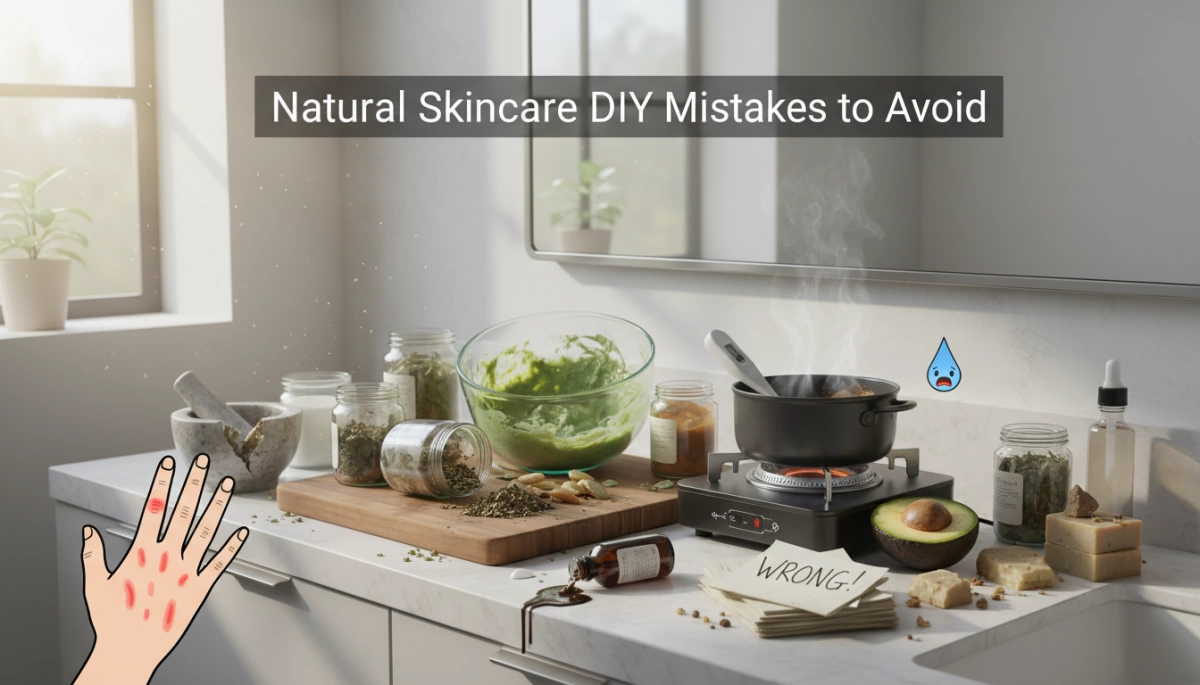
Even the best natural skincare remedies can backfire if you use them wrong. Here’s what I see people mess up the most with homemade skincare recipes and at-home skin treatments in the U.S.
Using Too Many New Remedies at Once
With DIY face masks and natural remedies for glowing skin, more is not better.
Stick to:
- Test one new natural skincare remedy at a time
- Use it 1–2x a week before adding another
- Track how your skin reacts for at least 7 days
If your skin freaks out, you won’t know what caused it when you throw 5 new kitchen ingredients on your face in one week.
Overusing Scrubs, Masks, and Actives
Gentle exfoliation DIY recipes (like an oatmeal scrub or sugar body scrub) are great—until you overdo it.
Basic rule of thumb (face):
- Oily skin: 2–3x/week max
- Normal/combination: 1–2x/week
- Dry/sensitive: 1x/week or less
Overdoing natural scrubs, clay masks, lemon, turmeric, or rice water toners can lead to:
- Redness and burning
- Flaky, tight skin
- More breakouts and irritation
Applying Essential Oils Directly to Skin
This is a big one. Essential oils (tea tree, lavender, peppermint, etc.) are not meant to go straight on your skin.
Always:
- Dilute in a carrier oil (jojoba, sweet almond, coconut, or rosehip)
- Keep face blends around 0.5–1% essential oil
- Avoid using them around the eyes and on broken skin
Undiluted essential oils can cause chemical burns, rashes, and long-term sensitivity.
Ignoring Allergies, Burning, or Stinging
Natural doesn’t mean your skin has to “push through” the burn. If a DIY face mask or homemade toner hurts, wash it off immediately.
Stop using the remedy if you notice:
- Burning, stinging, or strong itching
- Hives or raised bumps
- Swelling or hot, red patches
If a reaction doesn’t calm down within a few hours—or gets worse—call your doctor or dermatologist. Don’t try to “fix” it with more DIY skincare.
Believing “Natural” Always Equals Safe
A chemical-free skincare routine sounds great, but natural ingredients can be strong and irritating, especially for sensitive or acne-prone skin.
Keep in mind:
- Lemon and citrus can burn and increase sun sensitivity
- Spices like turmeric and cinnamon can irritate or stain
- Honey, dairy, oats, and botanicals can trigger allergies
Use natural skincare remedies with the same respect you’d give store-bought products: patch test, go slow, and pay attention to your skin’s feedback.
FAQs About Natural Skincare Remedies at Home
How long can I keep homemade skincare recipes?
For most homemade skincare recipes with water, milk, yogurt, aloe, or fruit:
- Fridge: 3–5 days max in a clean, airtight container
- Oil-only mixes (carrier oils + a little essential oil): usually 1–3 months, stored cool and dark
- No water = longer, with water = shorter
If it smells off, changes color, separates weirdly, or grows anything visible, throw it out. Natural skincare remedies don’t have strong preservatives, so I always err on the safe side.
Can I use DIY remedies on sensitive or acne-prone skin?
Yes, but you need to be careful and keep it simple.
Usually safer for sensitive/acne-prone skin:
- Aloe vera gel
- Honey (raw, if your skin tolerates it)
- Oatmeal (colloidal or finely ground)
- Green tea (cooled, as a toner or compress)
- Gentle carrier oils: jojoba, hemp seed, squalane (for many acne-prone folks)
Be very cautious with:
- Lemon/citrus
- Undiluted essential oils
- Strong spices (turmeric, cinnamon, clove, etc.)
- Scrubs with big grains (sugar, salt, coffee) on the face
Always patch test first (inner arm or behind ear for 24 hours). If your skin is very reactive or you have cystic acne, talk to a dermatologist before you experiment.
Are natural skincare remedies better than store-bought products?
Not always. They’re just different tools.
Natural skincare remedies at home can be better when:
- You want simple, short ingredient lists
- You’re building a budget-friendly, chemical-free-ish routine
- You like eco-friendly, low-waste skincare habits
- You’re targeting mild dryness, dullness, or temporary irritation
Store-bought products are often better when:
- You’re treating moderate to severe acne, melasma, rosacea, or strong hyperpigmentation
- You want stable, tested actives (retinoids, vitamin C serums, chemical exfoliants)
- You need consistent results and long shelf life
I like using a mix of both: solid store-bought basics + a few safe DIY face masks and gentle at-home skin treatments.
Can I mix multiple natural ingredients in one treatment?
Yes, but don’t throw the whole kitchen in one bowl.
Smart combos for DIY face masks (natural):
- Honey + yogurt + oatmeal (gentle, hydrating, soothing)
- Aloe vera + green tea (cooling, calming, antioxidant)
- Turmeric (a pinch) + honey + yogurt (brightening face pack)
Rules I follow:
- Stick to 3–4 ingredients max
- Avoid mixing too many “strong” things: lemon, essential oils, spices, vinegar
- If your skin is sensitive, keep it boring and gentle
More ingredients ≠ better results. Often it just raises your chance of irritation.
How often should I do DIY face masks and scrubs?
For most people in the U.S. with typical routines:
- Hydrating/soothing masks (honey, aloe, yogurt, avocado):
2–3x per week - Brightening or exfoliating masks (turmeric, yogurt, rice water, mild acids):
1–2x per week - DIY scrubs (oatmeal, sugar, coffee for body):
- Face: 0–1x per week, if at all
- Body: 1–2x per week
If you see redness, burning, tightness, or flaking, you’re likely over-exfoliating. Pull back and focus on moisturizing and barrier repair.
Can I use kitchen ingredients around my eyes safely?
Around the eyes, I stay very conservative.
Generally okay to use (carefully, not inside the eye):
- Cool green tea bags
- Cucumber slices
- A little aloe vera (pure, no alcohol, not too close to the waterline)
Avoid near the eyes:
- Lemon and other citrus
- Salt, sugar, coffee scrubs
- Cinnamon, turmeric, and strong spices
- Essential oils (even diluted, keep far from eyes)
If anything gets in your eye and stings, rinse with lots of cool water immediately. Don’t push through irritation.
What to do if a home remedy causes a reaction?
If a DIY natural skincare remedy goes wrong:
- Rinse it off right away with cool or lukewarm water
- Stop all actives and scrubs (no lemon, turmeric, acids, retinoids, or strong toners)
- Switch to bland care for a few days:
- Gentle cleanser
- Simple moisturizer (no fragrance, no strong actives)
- Sunscreen during the day
- For mild irritation, a cool compress (plain cool water or cool green tea) can help
Get medical help or see a dermatologist if:
- You have swelling, hives, blistering, or severe burning
- The irritation worsens over 24–48 hours
- You notice eye involvement or trouble breathing (emergency)
“Natural” doesn’t automatically mean safe for everyone. Pay attention to your skin and stop using anything that stings, burns, or causes a rash.