
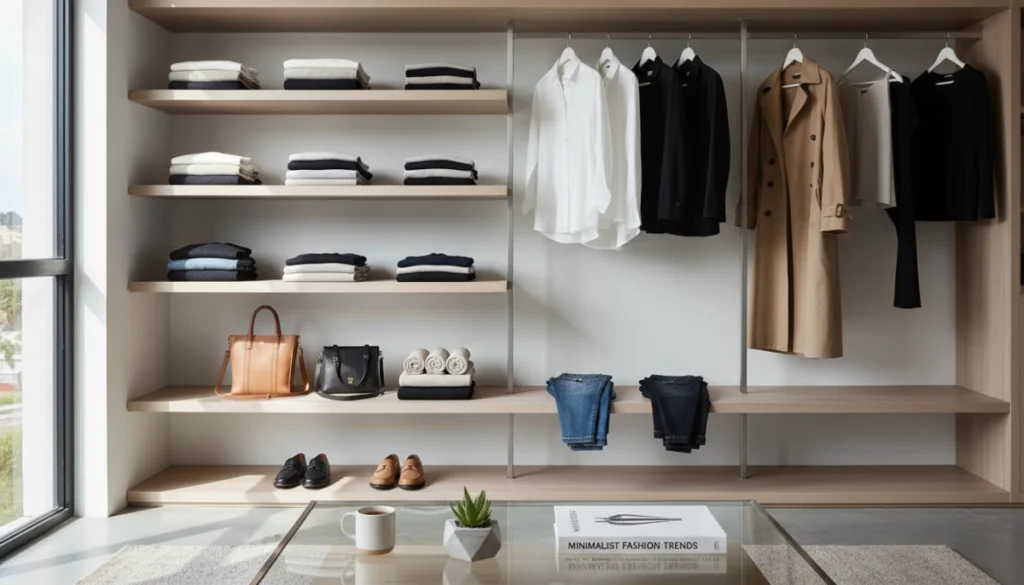
What Is a Capsule Wardrobe and Why It Works in 2026
If your closet is packed but you still feel like you have “nothing to wear,” a capsule wardrobe is exactly what you need in 2026.
What a Capsule Wardrobe Really Is
A capsule wardrobe is a small, carefully curated collection of versatile clothing staples that all mix and match to create a maximum number of outfits with a minimum number of pieces.
It’s different from a regular closet because:
- A regular closet = random buys, duplicates, impulse trends, and clutter.
- A capsule wardrobe = intentional, edited, mix-and-match pieces you actually wear on repeat.
- Every item has a clear purpose and works with at least 3–5 other pieces.
Think of it as a small wardrobe, big style system: fewer items, more outfits, less stress.
A Quick History of Capsule Wardrobes
Capsule wardrobes aren’t a TikTok trend; they’ve been around since the 1970s:
- 1970s: The term “capsule wardrobe” was popularized by London boutique owner Susie Faux.
- 1980s–2000s: Magazine editors and stylists used the idea to help women build classic wardrobe staples.
- 2010s–2020s: Minimalism, slow fashion, and French minimalist style made capsules mainstream.
- 2026: Capsules are now a core part of minimalist fashion trends and quiet luxury wardrobes as people move away from fast fashion hauls.
Why Capsule Wardrobes Work So Well
A well-built capsule wardrobe gives you:
-
Less decision fatigue
- Fewer, better options means getting dressed in seconds, not 30 minutes.
- You know every piece fits, flatters, and works with your lifestyle.
-
Less clutter
- No more overflowing drawers and chaotic racks.
- You see everything you own at a glance, so you actually wear it.
-
More outfit options
- A tight edit of timeless fashion pieces = endless mix and match outfits.
- Example: 10 tops + 8 bottoms + 3 jackets can easily create 100+ minimalist outfit ideas.
How Capsules Support Sustainable, Slow Fashion
A capsule wardrobe is one of the most practical sustainable fashion tips you can apply:
- You buy less but better (quality over quantity wardrobe).
- You focus on evergreen wardrobe essentials, not fleeting trends.
- You wear what you own more often, lowering cost-per-wear.
- You naturally move toward a slow fashion wardrobe instead of constant impulse buys.
This isn’t just about looking chic; it’s about consuming smarter and respecting your budget and the planet.
Why Minimalist Fashion and Quiet Luxury Are Huge in 2026
In the US market in 2026, people are tired of loud logos and micro-trends that die in three months. Quiet luxury fashion and minimalist fashion trends 2026 are winning because they offer:
- Clean lines, neutral color palettes, and simple silhouettes.
- Pieces that look polished and expensive without screaming for attention.
- Clothing that fits work, weekends, travel, and events with minor tweaks.
A capsule wardrobe fits perfectly into this quiet luxury mindset: subtle, refined, and confident.
How a Timeless Capsule Outlasts Fast Fashion
Fast fashion is designed to feel old after a season. A timeless capsule wardrobe is designed to:
- Stay relevant year after year with classic wardrobe staples.
- Survive trend cycles because it’s built on core wardrobe pieces and minimalist wardrobe basics.
- Adapt to new trends with small updates, not a full closet overhaul.
When you build a capsule wardrobe, you’re not just clearing space; you’re building a curated wardrobe that works hard for your life in 2026 and beyond.
How to Define Your Minimalist Style Before You Shop
Before you buy a single “minimalist” piece, you need to know what actually works for your real life. This is the step that makes a capsule wardrobe feel effortless instead of restrictive.
Know Your Daily Lifestyle and Clothing Needs
Ask yourself:
- Work:
- Do I work remote, in an office, or on-site?
- Do I need business casual, smart casual, or more polished corporate looks?
- Weekends:
- Am I mostly at home, running errands, at kids’ activities, or going out?
- Events:
- How often do I go to dinners, dates, weddings, work events, or parties?
- Climate (very key in the U.S.):
- Do I deal with hot, humid summers? Harsh winters? Mild year-round weather?
- Do I need layers, rain protection, or mostly breathable fabrics?
Your answers tell you what capsule wardrobe essentials you actually need: more blazers vs more hoodies, more boots vs more sandals, more dresses vs more jeans.
Let Your Lifestyle Shape Your Capsule Wardrobe
Think in simple percentages:
- Workwear: ~40–60% of your minimalist wardrobe basics
- Casual/Weekend: ~30–40%
- Events/Going Out: ~10–20%
Adjust for your life. If you’re a nurse, teacher, tech worker, or parent at home, your mix will look different—but it still needs to be intentional.
Find Your Minimalist Style Vibe
Minimalist doesn’t mean one look. Pick your main “vibe” so you don’t buy random pieces:
- Classic Minimalism: button-down shirts, straight-leg jeans, trench coat, loafers
- Sporty Minimalism: high-quality leggings, joggers, clean sneakers, structured hoodies
- Edgy Minimalism: all-black looks, leather jacket, chunky boots, sharp cuts
- Quiet Luxury Minimalism: neutral color palette, tailored trousers, cashmere knits, simple gold jewelry
You can mix two (like classic + sporty), but choose a clear direction so your core wardrobe pieces all work together.
Create a Simple Style Mood Board
You don’t need to overcomplicate this. Use:
- Pinterest boards
- Instagram or TikTok saves
- Screenshots of outfits you like
- Photos of your own outfits you felt great in
Save 20–40 looks you’d actually wear in your real life, not just what looks cool online.
Spot Patterns in Your Favorites
Look through your mood board and ask:
- Colors:
- Do I lean black/white/gray? Navy/beige/camel? Soft earth tones?
- Cuts:
- Do I prefer relaxed fits or tailored, structured lines?
- Do I like high-rise jeans, wide-leg trousers, oversized blazers?
- Fabrics:
- Do I gravitate toward cotton, linen, denim, wool, silk-like fabrics?
- Do I like smooth, clean textures or more cozy knits?
These patterns become your minimalist color palette and your go-to silhouettes. This is how you build a quality over quantity wardrobe you’ll actually wear.
Avoid the “Fantasy Self” Wardrobe Trap
Be brutally honest:
- Don’t shop for the version of you that goes to 3 galas a month, runs errands in heels, or lives in Paris.
- Shop for the you that works, commutes, drives, cooks, goes to Target, hits the gym, meets friends.
Before you add anything to your capsule wardrobe checklist, ask:
- “Would I wear this on a random Tuesday?”
- “Does this match at least 3 things I already own?”
- “Does this fit my real schedule in the U.S.—work, weather, commuting, kids, errands?”
If the answer is no, it’s probably a fantasy self piece. Leave it out, and your minimalist capsule wardrobe will stay tight, versatile, and actually useful.
How to Declutter Your Closet for a Capsule Wardrobe
If you want a real minimalist wardrobe and not just a Pinterest board, the first move is a ruthless closet clean out. This is where your future capsule wardrobe really starts.
Step‑by‑step minimalist closet clean‑out
Use this simple process:
- Empty everything
- Take all clothes out of your closet and drawers.
- Wipe shelves, vacuum, and reset the space so it feels fresh.
- Sort by category
- Tops, bottoms, dresses, outerwear, shoes, accessories.
- This makes it easier to see duplicates and gaps.
- Try‑on session (non‑negotiable)
- Stand in front of a mirror with good light.
- Try on every piece you’re unsure about.
Try‑on method: keep, maybe, donate/sell
As you try things on, make three clear piles:
- Keep (capsule material)
- Fits your current body.
- Works with at least 3 other items.
- You’d wear it this week, not “someday.”
- Maybe
- You like it, but something feels off.
- You’re not sure about fit, color, or style.
- Donate/Sell
- Poor fit or uncomfortable.
- Worn out beyond repair.
- You haven’t worn it in 12+ months (outside of special occasion pieces) and don’t want to.
Bag up the donate/sell pile right away so it doesn’t creep back into your closet.
Questions to ask before something stays
To decide what earns a spot in your capsule wardrobe essentials, ask:
- Fit: Does it fit now without pinching, pulling, or constant adjusting?
- Comfort: Could you wear this all day in real life, not just for a photo?
- Versatility: Can you style it at least 3 ways with items you already own?
- Confidence: Do you feel like your best, most put‑together self in it?
If the answer isn’t a clear “yes” to at least three of these, it’s probably not a core wardrobe piece.
How to handle the “maybe” pile (so it doesn’t linger)
Don’t let the maybe pile turn into a second closet. Use these rules:
- Put maybes in a separate bin/box and label it with today’s date.
- Set a deadline (60–90 days works well).
- If you don’t reach for an item even once during that time:
- It’s not part of your real life.
- Move it to donate/sell without overthinking.
- For expensive pieces you’re unsure about:
- Try styling them in 3–5 outfits.
- If you still avoid wearing them, they’re resale candidates.
Ethical ways to let go: donate, resell, recycle
To keep your minimalist wardrobe aligned with sustainable fashion:
- Donate
- Local shelters and community centers.
- Organizations that focus on workwear for job seekers.
- Resell
- Platforms like Poshmark, eBay, Depop, or local resale stores.
- Great for higher‑quality or quiet luxury fashion pieces.
- Recycle/Upcycle
- Textile recycling programs (many US cities and some retailers offer drop‑offs).
- Turn old tees into cleaning rags or DIY projects.
Letting pieces go responsibly supports your slow fashion wardrobe and keeps clothes out of landfills.
Spotting hidden capsule wardrobe gems you already own
Before you buy anything new, look for:
- High‑quality basics in neutral colors (black, white, navy, gray, beige, camel).
- Classic wardrobe staples:
- A well‑cut blazer
- Straight‑leg jeans
- Tailored trousers
- Simple tees and button‑downs
- Timeless shoes like white sneakers, loafers, ankle boots.
- Minimalist accessories: a leather belt, simple jewelry, a structured bag.
These “quiet” pieces are often hiding behind loud, trendy items. Pull them to the front. They’re the backbone of your capsule wardrobe and the key to small wardrobe, big style.
Choosing a Neutral Color Palette That Always Looks Chic
A neutral color palette is the backbone of any minimalist wardrobe and capsule wardrobe. Neutrals make it easy to mix and match outfits, keep you out of “I have nothing to wear” mode, and instantly feel more quiet luxury than trend‑chasing prints.
Why neutrals are the base of a minimalist wardrobe
Neutrals work so well because they:
- Pair with almost everything you own
- Look polished for work, weekends, and events
- Don’t scream a specific year or trend (hello, timeless)
- Make even affordable pieces look more elevated
If you want small wardrobe, big style, this is where you start.
Pick 3–5 core neutrals
Choose 3–5 core neutral colors you’ll build most of your capsule wardrobe essentials around. Common minimalist options:
- Black – Sharp, slimming, city, great for work and nights
- White / Off‑white – Fresh, clean, great for tees, shirts, sneakers
- Navy – Softer than black but just as classic; perfect for workwear
- Gray – Great for knits, trousers, sweatshirts; hides wear better
- Camel / Beige / Tan – Feels rich and “quiet luxury,” especially in coats and bags
For most people in the U.S., a solid starting combo is:
Black, white, navy, and camel or beige.
Add 1–2 timeless accent colors
To keep your minimalist outfits from feeling flat, add 1–2 accent colors that still read classic:
- Deep olive
- Burgundy or wine
- Soft blue
- Muted forest green
- Dusty rose (if you like a feminine touch)
Use these accent shades mostly in:
- Knits and tops
- Scarves and bags
- One standout coat or dress
They should blend smoothly with your core neutrals, not fight them.
Match colors to your skin tone and lifestyle
Your neutral color palette should work with both your coloring and your real life in the States:
- Fair / cool skin: Navy, gray, charcoal, crisp white, cool beige
- Medium / warm skin: Camel, warm beige, cream, olive, chocolate, off‑white
- Deep skin tones: Rich browns, camel, pure white, black, navy, deep olive
Lifestyle matters too:
- If you commute, have kids, or live in a city like NYC or Chicago → lean into darker neutrals that hide stains.
- If you’re in warmer, sunnier states (California, Florida, Texas) → more light neutrals like white, cream, beige will feel natural and cooler to wear.
Balance light vs dark pieces
A strong minimalist color palette has a mix of light, medium, and dark pieces so outfits stay balanced:
- Light tops + dark bottoms (white tee + black jeans)
- Dark top + light bottoms (navy sweater + beige chinos)
- Medium outerwear ties it all together (camel trench, gray blazer)
Aim for:
- More light tops (brighten your face on Zoom or in meetings)
- More dark bottoms (practical for everyday wear)
How neutrals support quiet luxury in 2026
In 2026, quiet luxury fashion and French minimalist style are still about looking put‑together without loud logos. Neutrals make that easy because they:
- Highlight fit, fabric, and tailoring instead of branding
- Make high‑street pieces look more expensive
- Help you wear the same evergreen wardrobe essentials on repeat without anyone noticing
If your goal is a timeless, minimalist capsule wardrobe that never looks dated, commit to a neutral base, add a couple of smart accent colors, and keep everything easy to mix, match, and rewear.
Best fabrics for a timeless minimalist wardrobe
When I build a minimalist wardrobe, fabric quality matters more than trends. In the U.S., where we move between AC, heating, and busy commutes, the wrong fabric feels cheap fast. The right one looks polished for years and makes every capsule wardrobe essential work harder.
Core fabrics for a capsule wardrobe
These are the timeless fashion pieces of the fabric world:
-
Cotton
- Pros: breathable, easy to wash, everyday-friendly, great for tees, shirts, and chinos.
- Cons: can fade and lose shape if it’s thin or low quality.
-
Linen
- Pros: light, airy, perfect for hot U.S. summers, gives that effortless, quiet luxury vibe.
- Cons: wrinkles easily (I treat the wrinkles as part of the look).
-
Wool (including merino)
- Pros: warm but breathable, resists odors, ideal for sweaters and coats, great for a year-round capsule wardrobe.
- Cons: can be itchy if it’s low quality; needs gentler care.
-
Cashmere
- Pros: soft, warm, lightweight, instantly elevates a minimalist outfit idea.
- Cons: higher price; cheap cashmere pills quickly.
-
Silk (or silk-like)
- Pros: drapes beautifully, feels luxe, perfect for blouses, slip dresses, and capsule evening pieces.
- Cons: can be delicate; some weaves show sweat more in hot, humid cities.
Natural vs blended materials
You’ll see a lot of natural + synthetic blends in U.S. retail. Here’s how I look at them:
-
Natural fibers (cotton, linen, wool, silk)
- Pros: breathable, comfortable, better for slow fashion wardrobes.
- Cons: can wrinkle more, costs more up front.
-
Blends (cotton + elastane, wool + nylon, etc.)
- Pros: more stretch, less wrinkling, can be more durable in knees, elbows, and seat.
- Cons: may trap heat and odors; can look worn faster if over-synthetic.
I aim for mostly natural with a bit of stretch (like 95% cotton, 5% elastane) for everyday capsule wardrobe basics.
How to check fabric quality fast when shopping
When I’m in a U.S. store or scrolling online, I do a quick quality check:
-
Read the label:
- Look for high natural fiber content.
- Avoid pieces that are mostly polyester for “everyday” unless it’s performance wear.
-
Do the feel test:
- Does it feel substantial, not thin and scratchy?
- Does it bounce back after you gently scrunch it?
-
Hold it up to the light:
- Super sheer when it shouldn’t be = probably won’t last.
-
Check seams and stitches:
- Straight seams, no loose threads, tight stitching around buttons and zippers.
These quick checks help you build a quality over quantity wardrobe instead of a pile of throwaways.
Breathable, season-proof fabrics for everyday wear
For a year-round capsule wardrobe in the U.S., I lean on:
- Cotton + a bit of stretch: for tees, tanks, and everyday pants.
- Merino wool: thin sweaters that work from office AC to winter layering.
- Linen and linen blends: summer pants, shirts, and dresses that still look polished.
- Tencel / lyocell: soft, drapey, breathable; great for workwear and minimalist dresses.
These fabrics let you mix and match outfits across seasons without feeling stuck to one weather scenario.
Fabrics that age well and look expensive longer
If I want my quiet luxury wardrobe to hold up over years, I focus on:
- Tightly woven cotton poplin and twill: for shirts, chinos, and trench-style pieces.
- High-quality wool and cashmere: for coats and sweaters (I comb pills instead of tossing).
- Heavyweight knit cotton: for tees and sweatshirts that don’t sag.
- Matte finishes over shiny synthetics: matte almost always reads more expensive.
The payoff: your minimalist fashion trends 2026 pieces still look sharp in 2028, and your investment wardrobe pieces actually feel like investments.
Minimalist Capsule Wardrobe Essentials for Women
When I build a women’s capsule wardrobe for U.S. clients, I keep it tight, versatile, and realistic. You don’t need a giant closet—just smart, timeless fashion pieces that actually work for your life.
How Many Pieces You Really Need (20–40 Range)
For a starter minimalist wardrobe:
- 20–30 pieces if you love a small wardrobe and repeat outfits
- 30–40 pieces if you want more variety for work, social events, and weather
- This number usually includes clothing + shoes, but not workout gear, lounge, underwear, or special-occasion gowns
Focus on quality over quantity wardrobe: pieces you can wear multiple times a week without anyone noticing repeats.
Minimalist Wardrobe Basics: Essential Tops
These are your core wardrobe pieces you’ll keep on rotation:
- 3–5 tees – black, white, gray, or striped (crew or V-neck)
- 2–3 tanks – for layering under blazers, sweaters, or on their own in summer
- 2–3 shirts – white Oxford or poplin, maybe a light blue or stripe
- 2 blouses – soft drape, neutral color, easy to dress up or down
- 2–3 sweaters – one lighter knit, one thicker; crewneck or turtleneck in camel, gray, or navy
Stick to a neutral color palette so everything can mix and match.
Timeless Fashion Pieces: Essential Bottoms
Choose versatile clothing staples that work for office and weekends:
- 2 pairs of jeans – one dark, one light or black; straight or slim fit
- 1–2 tailored trousers – black, navy, or beige for minimalist work outfits
- 1–2 skirts – midi pencil or A-line for desk-to-dinner outfits
- 1–2 shorts (if your climate allows) – denim or tailored, mid-thigh to knee length
Aim for clean lines, no heavy distressing, and cuts you feel confident in.
Core Outerwear: Small Wardrobe, Big Style
Outerwear makes a minimalist capsule wardrobe feel polished fast:
- 1 blazer – black, navy, or beige; works over tees, tanks, and dresses
- 1 trench coat – perfect for spring/fall, very quiet luxury fashion
- 1 wool coat – camel, gray, or black for winter
- 1 light jacket – denim, bomber, or minimalist utility jacket
With these four, you’re covered for almost every U.S. season and event.
Key Dresses: Evergreen Wardrobe Essentials
I always add a few classic wardrobe staples in dress form:
- 1 slip dress – bias cut, midi length, neutral color; layers under blazers or knits
- 1 shirt dress – effortless for work or brunch
- 1 day-to-night dress – simple black or deep navy, can handle office, dates, or events
These are your go-to minimalist outfit ideas when you “have nothing to wear.”
Shoes That Anchor a Minimalist Wardrobe
Shoes can make or break a quiet luxury wardrobe:
- 1 pair white or neutral sneakers – everyday casual, airport, weekends
- 1 pair loafers or flats – work-appropriate, but still comfortable
- 1 pair ankle boots – black or brown, works with jeans, dresses, and skirts
- 1 pair heels – block or kitten heel in nude or black for events or meetings
That’s enough to cover most U.S. lifestyles without feeling limited.
Minimalist Accessories: Small Details, Big Impact
Accessories keep mix and match outfits from feeling boring:
- 2 belts – black and brown or tan
- Everyday jewelry – small hoops, studs, a simple necklace, one bracelet or watch
- 2–3 bags – a structured tote, a crossbody, and a small evening bag
- 1–2 scarves – silk or lightweight wool, neutral or subtle print
- 1 pair sunglasses – classic shape (wayfarer, aviator, or cat-eye)
Think subtle, not flashy branding—very French minimalist style and quiet luxury.
How to Adapt Your Capsule for Work, Casual, and Dressy
You can use the same minimalist capsule wardrobe essentials and shift the balance based on your lifestyle:
If you work in an office (corporate or business casual):
- Add: 1 extra blazer, 1 extra pair of tailored trousers, 1 more blouse
- Stick with: closed-toe loafers, ankle boots, and low heels
If your life is mostly casual or remote work:
- Add: 1 more pair of jeans, 1 casual knit, 1 extra tee
- Prioritize: sneakers, flats, and light jackets
If you go out a lot (events, dinners, social life):
- Add: 1 more “going out” dress, 1 statement blouse, 1 dressier heel
- Keep accessories: more polished—gold jewelry, structured bags
The goal is simple: curated wardrobe, maximum wear, no clutter. Once these capsule wardrobe essentials are in place, getting dressed becomes fast, easy, and consistent with your style.
Minimalist Capsule Wardrobe Essentials for Men
A men’s minimalist capsule wardrobe doesn’t need much. If you’re in the U.S. and want small wardrobe, big style, aim for 25–35 core pieces you can wear on repeat for work, weekends, and nights out.
Core number of pieces
Use this as a rough minimalist wardrobe checklist (not counting gym clothes or suits):
- 8–10 tops
- 5–7 bottoms
- 3–5 outerwear pieces
- 4–6 pairs of shoes
- 5–8 accessories
Minimalist wardrobe basics: tops
Stick to neutral colors like white, black, navy, gray, and taupe so everything mixes and matches.
Capsule wardrobe essentials – tops:
- 3–4 tees (2 white, 1 black, 1 gray/navy) – good quality cotton or heavyweight jersey
- 2 Oxford shirts (white + light blue) – for the office, dates, and events
- 1–2 polos – clean, fitted, great for business casual in most U.S. offices
- 2–3 sweaters – a crewneck and a v‑neck or zip sweater in merino or cotton
Minimalist wardrobe essentials: bottoms
Choose versatile clothing staples that work with every top.
Core wardrobe pieces – bottoms:
- 2 chinos (tan + navy or olive)
- 2 jeans (one dark wash, one medium wash)
- 1–2 tailored trousers (charcoal, navy, or black)
- 1–2 shorts if your climate/lifestyle needs them (chino shorts in a neutral color)
Outerwear: small wardrobe, big style
You don’t need a ton of jackets to look sharp.
Outerwear capsule wardrobe essentials:
- 1 casual jacket (denim jacket, bomber, or Harrington)
- 1 blazer (navy or gray) – dress up jeans or chinos instantly
- 1 smart coat (camel, navy, or charcoal wool coat) for fall/winter in most U.S. cities
- Optional: lightweight jacket (field jacket or unlined chore coat) for transitional weather
Minimalist shoes for men
Think quality over quantity wardrobe: fewer pairs, better materials.
Shoes to anchor a men’s minimalist wardrobe:
- White or neutral sneakers – everyday, casual Fridays, travel
- Leather or suede loafers – work, dinners, events
- Leather boots (Chelsea or lace‑up) – great for fall/winter and jeans
- Simple dress shoes (oxfords or derbies in black or dark brown) – for formal events and office wear
Minimalist accessories: quiet luxury wardrobe
Accessories are where that quiet luxury fashion feel shows up without logos.
Evergreen wardrobe essentials – accessories:
- 2 belts (one black, one brown, matching your shoes)
- 1 watch (clean, minimal face; leather or metal band)
- 1–2 bags (a sleek backpack or tote + a weekender/duffel for travel)
- 1–2 sunglasses (classic shapes like Wayfarer or aviator in black or tortoise)
How to keep men’s outfits sharp with very few pieces
To make a minimalist capsule wardrobe for men look sharp, focus on details, not quantity:
- Fit first:
- Get jeans and chinos hemmed.
- Tailor shirts and blazers so they skim your body, not squeeze it.
- Stick to a neutral color palette:
- Black, white, navy, gray, and tan all work together, so you always have mix and match outfits.
- Repeat simple outfit formulas:
- Work: Oxford shirt + chinos + loafers + blazer.
- Casual: Tee + jeans + sneakers + casual jacket.
- Smart casual: Polo + chinos + loafers + watch.
- Upgrade fabrics:
- Choose better cotton, merino wool, and quality leather so your timeless fashion pieces look expensive without trying.
With these minimalist capsule wardrobe essentials, you can build a tight, curated wardrobe that works for almost any U.S. lifestyle—office days, casual weekends, and nights out—with very few pieces and zero stress.
Outfit formulas that make your capsule wardrobe work hard
A good capsule wardrobe isn’t about owning more. It’s about having a few outfit formulas you can repeat on autopilot, so getting dressed in the U.S. for work, weekends, and nights out is easy.
Simple capsule wardrobe outfit formulas
Lock in 3–5 go‑to combos you can wear every week:
-
Formula 1: Smart casual
- Top: neutral tee or knit
- Bottom: straight‑leg jeans or chinos
- Shoes: white sneakers or loafers
- Layer: blazer or light jacket
-
Formula 2: Office ready
- Top: button‑down shirt or silk blouse
- Bottom: tailored trousers
- Shoes: loafers, ankle boots, or low heels
- Finish: belt + simple jewelry/watch
-
Formula 3: Easy weekend
- Top: relaxed tee or crewneck sweater
- Bottom: jeans or soft joggers (clean, structured ones)
- Shoes: minimalist sneakers
- Add: cap or sunglasses, crossbody bag
These minimalist outfit ideas keep your capsule wardrobe essentials in rotation all week.
Minimalist work outfit ideas (jeans, trousers, blazers)
For a minimalist work outfit in the U.S. (office or hybrid):
-
Jeans + blazer combo
- Dark or black straight‑leg jeans
- White or striped button‑down
- Navy or black blazer
- Loafers or block‑heel pumps
-
Trousers + knit combo
- Tailored black or camel trousers
- Fine‑gauge crewneck sweater
- Belt in matching leather
- Leather flats, loafers, or ankle boots
-
“Meeting day” uniform
- Tucked silk blouse
- High‑waist trousers
- Structured blazer
- Simple gold/silver jewelry
This is quiet luxury fashion without the logos: clean lines, good fit, neutral color palette.
Minimalist casual outfits for weekends
When you’re running errands, grabbing coffee, or hitting a casual brunch:
-
Off‑duty formula
- White tee
- Mid‑wash straight jeans
- Sneakers
- Light trench or denim jacket
-
Cozy weekend
- Neutral knit
- Leggings or soft joggers
- Clean sneakers
- Cap + crossbody bag
-
Sporty minimal
- Fitted tank
- Wide‑leg jersey pants or shorts (seasonal)
- Sleek trainers
- Lightweight overshirt
All of these rely on versatile clothing staples so your small wardrobe = big style.
Evening and event looks with minimalist pieces
You don’t need a separate “party closet.” Use your evergreen wardrobe essentials:
-
Slip dress formula
- Black or champagne slip dress
- Blazer or cropped cardigan
- Strappy heels or pointed flats
- Dainty jewelry + clutch
-
Day‑to‑night dress formula
- Simple shirt dress or knit dress
- Day: loafers + tote
- Night: swap to heels + structured bag + bolder jewelry
-
Tailored evening look
- Black trousers
- Silk cami or fitted tee
- Sharp blazer
- Heels or sleek boots
These timeless fashion pieces cover weddings, date nights, and work events without extra clutter.
How to mix and match without looking repetitive
To keep mix and match outfits fresh:
- Change one main element: top, shoes, or outer layer.
- Rotate silhouettes: straight jeans one day, tailored trousers the next.
- Swap color balance: light top + dark bottom one day, reverse it the next.
- Use accessories (belt, bag, jewelry) to shift the vibe from casual to polished.
You’re repeating formulas, not exact outfits—this is the backbone of a quality over quantity wardrobe.
Use layers and textures to keep minimalist looks interesting
When you keep a minimalist color palette, texture does the heavy lifting:
- Mix matte + shiny: cotton tee with silk skirt.
- Mix smooth + chunky: slip dress with a chunky cardigan.
- Add structured pieces: blazer over soft tee and jeans.
- Layer thin to thick: tank → shirt → blazer or coat.
This is how a quiet luxury wardrobe looks elevated even in all‑neutrals.
Quick styling tricks to polish any basic outfit
Small details make your curated wardrobe feel intentional:
- Tuck smartly: full tuck for tailored looks, front tuck for casual.
- Show the ankle: slightly cropped pants or a small cuff on jeans.
- Add one “hero” accessory: a good watch, structured bag, or clean sunglasses.
- Match leather tones: shoes + belt + bag in the same family.
- Steam or iron: crisp fabric instantly reads expensive.
With a few minimalist wardrobe basics and these styling moves, your 2026 capsule wardrobe works harder than a packed closet ever could.
How to Build Your Capsule Wardrobe on a Budget
You don’t need a big bank account to build a minimalist, quiet luxury wardrobe. You just need a clear plan and discipline.
Set a realistic budget
Start with what actually fits your life in the U.S. right now.
- Decide a total capsule wardrobe budget (example: $300, $500, or $1,000 spread over a few months).
- Break it into categories:
- Tops: 25–30%
- Bottoms: 25–30%
- Shoes: 25–30%
- Outerwear & accessories: 10–20%
- Give yourself a monthly cap so you don’t wipe out your savings in one haul.
Where to save vs where to invest
Not everything needs to be premium. Focus on quality over quantity where it matters.
Invest in (buy higher quality):
- Everyday shoes (sneakers, loafers, boots)
- Core outerwear (trench, wool coat, blazer)
- Evergreen wardrobe essentials (jeans, tailored trousers, classic bags)
Save on (buy mid/low price but decent quality):
- Basic tees, tanks, casual tops
- Trend‑leaning items you’re testing
- Simple accessories (belts, scarves, sunglasses)
Use the cost‑per‑wear rule:
If a $180 blazer is worn 90 times, that’s $2 per wear. That beats a $40 trendy piece worn twice.
Use secondhand, vintage & resale apps smartly
In the U.S., secondhand is your best friend for building a cheap, minimalist capsule wardrobe.
- Check thrift stores, consignment shops, and buy/sell groups in your city.
- Use apps like Poshmark, Depop, Mercari, eBay, The RealReal, Vestiaire for quiet luxury fashion at a discount.
- Search by exact item (e.g., “Everlane black wool coat XS”) instead of scrolling endlessly.
- Filter by condition: “like new” or “new with tags” for long‑lasting pieces.
- Stick to your minimalist wardrobe checklist so you don’t buy random stuff just because it’s cheap.
Prioritize cost‑per‑wear, not sale prices
A minimalist, slow fashion wardrobe only works if you actually wear what you buy.
- Ask: “Will I wear this 30+ times?” If not, skip it.
- Ignore fake deals: a $19 top you never wear is more expensive than a $120 coat you wear for years.
- Focus on versatile clothing staples that work for work, weekends, and going out.
Simple shopping rules to avoid impulse buys
Treat shopping like a system, not a hobby.
- Keep a wishlist on your phone (by category: jeans, white shirt, black boots).
- Use a 48–72 hour waiting period before buying anything non‑essential online.
- One‑in, one‑out: if you bring something in, something else must leave.
- Shop by outfit formulas (jeans + tee + blazer + sneakers) instead of random items.
Build your capsule wardrobe in stages
You don’t need a full 2026 capsule wardrobe in one weekend.
Stage 1 – Core basics (month 1–2)
- Neutral tops, one good pair of jeans, 1–2 bottoms, 1 jacket, 1–2 pairs of everyday shoes.
Stage 2 – Work or weekend upgrades (month 3–4)
- Add tailored trousers, a blazer, better sneakers or loafers, simple jewelry or a watch.
Stage 3 – Seasonal & special pieces (month 5+)
- Add a coat, boots or sandals, a versatile dress or smart shirt, depending on your climate.
This way, you build a curated, minimalist wardrobe that stays on budget, feels intentional, and gives you small wardrobe, big style without the chaos.
Seasonal Capsule Wardrobes That Still Feel Minimalist
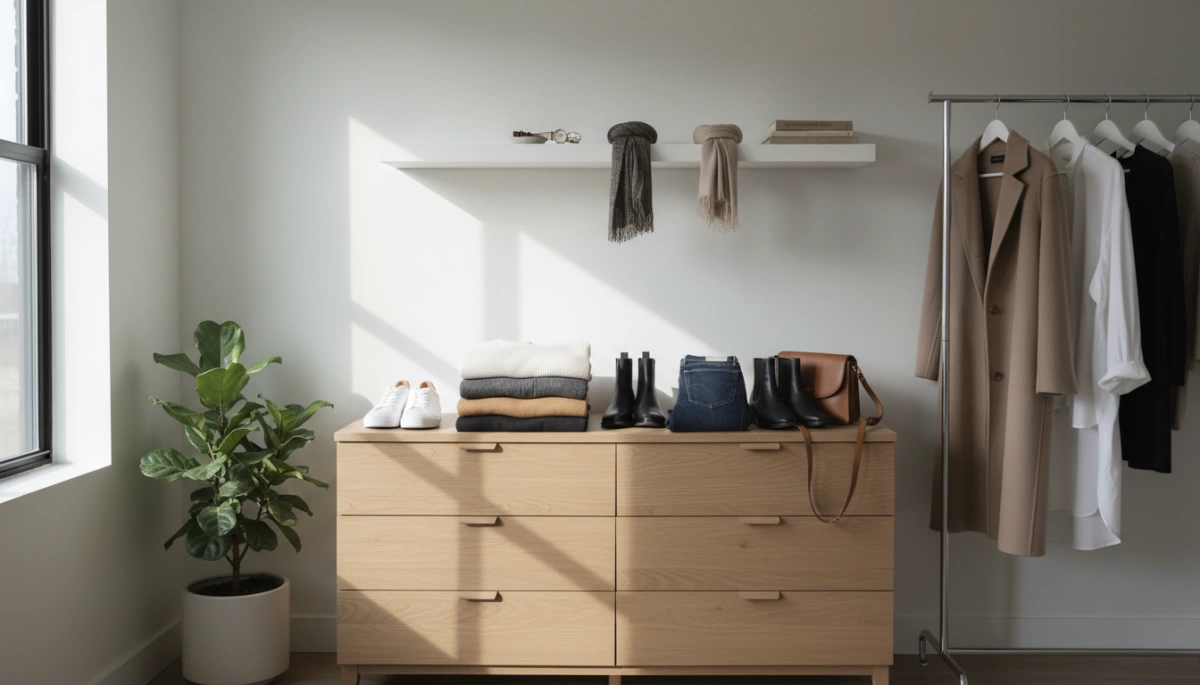
Year‑round core capsule wardrobe
I always start with a year‑round core capsule wardrobe that barely changes, no matter the season. These are your evergreen wardrobe essentials:
- Tops: white/black tees, striped tee, classic button‑down, lightweight sweater
- Bottoms: straight‑leg jeans, black trousers, relaxed chinos
- Outer layer: neutral blazer, denim or utility jacket
- Shoes: white sneakers, black or tan loafers
- Bags: one structured everyday bag, one small crossbody
Stick to a neutral color palette (black, white, navy, gray, camel, beige) so everything can mix and match easily. This is the backbone of a minimalist wardrobe and keeps your style consistent all year.
Swapping seasonal capsule wardrobe pieces
For a seasonal capsule wardrobe, I keep the core and just rotate a few pieces for summer, winter, and transitional seasons:
- Spring/Fall swaps:
- Add: light trench coat, mid‑weight cardigan, long‑sleeve tees
- Remove: heavy coats, extra‑thick knits
- Summer swaps:
- Add: linen shirt, tank tops, tailored shorts, lightweight dress, sandals
- Remove: heavy sweaters, wool trousers
- Winter swaps:
- Add: wool coat, puffer, cashmere sweater, thermal layer, leather boots
- Remove: most shorts, thin summer dresses you can’t layer
This way your minimalist capsule wardrobe stays small, but still works for real U.S. weather—whether that’s East Coast winters or SoCal heat.
Layering basics for cold weather minimalism
For cold weather minimalist fashion, I rely on layering basics instead of buying tons of bulky pieces:
- Base layer: fitted tee, thin merino or heat‑tech top
- Middle layer: crewneck sweater, cardigan, hoodie (if your style leans casual)
- Outer layer: wool coat, puffer, or tailored overcoat
- Extras: cashmere scarf, leather gloves, beanie in a neutral color
Stick to slim, clean lines so you still get that quiet luxury wardrobe feel—no bulky, sloppy layers. This keeps your minimalist winter outfits sharp but warm.
Lightweight fabrics and colors for warm weather capsules
For a summer capsule wardrobe, I keep it breathable and simple:
- Fabrics: linen, cotton poplin, lightweight jersey, TENCEL
- Pieces: linen trousers, tank dresses, airy button‑downs, relaxed shorts
- Colors: off‑white, tan, soft gray, navy, muted blue or olive as accent
These lightweight fabrics look effortless in the heat and still align with a minimalist color palette. You get small wardrobe, big style without overheating.
Storing off‑season clothes without clutter
To keep things minimalist in a typical U.S. home or apartment, I store off‑season clothes smart:
- Use under‑bed bins or low, flat containers with lids
- Store in breathable garment bags for coats and special pieces
- Always wash or dry clean before storing to avoid odors and damage
- Group by category and color so it’s fast to swap seasons
- Label bins: “Winter knitwear,” “Summer dresses,” etc.
This keeps your current closet lean, which is key for a quality over quantity wardrobe.
Keeping your style consistent across all seasons
To make your capsule wardrobe essentials feel like you year‑round, I keep a few things consistent:
- Same core neutrals every season (for example: black, white, camel, navy)
- Same silhouettes you love: straight‑leg, relaxed, tailored—just in different fabrics
- Same “signature” touches:
- Gold hoops, simple watch, or a certain bag shape
- Clean sneakers or loafers as your go‑to shoes
When your seasonal capsule wardrobes share the same vibe, your outfits look intentional and elevated, whether it’s January or July. That’s how you build a 2026 capsule wardrobe that stays minimalist, flexible, and actually works for everyday life.
Quiet Luxury Fashion in Real Life
Quiet luxury isn’t about logos. It’s about clean lines, great fabrics, and clothes that fit perfectly. In everyday outfits, quiet luxury looks like:
- A crisp white button‑down + tailored jeans + leather loafers
- A black knit dress + trench coat + simple gold hoops
- A gray crewneck sweater + trousers + sleek sneakers
Nothing screams for attention, but everything looks intentional, polished, and expensive.
French Minimalist Style and Capsule Wardrobes
French minimalist style is a cheat code for a 2026 capsule wardrobe in the U.S.:
- Fewer pieces, better quality
- Neutral color palette: black, navy, white, beige, gray
- Mix of sharp tailoring and relaxed basics
- Repeating outfits without caring what people think
Think stripe tee, blazer, straight‑leg jeans, ballet flats. It’s all about effortless, not perfect.
Fit, Tailoring, and Simple Lines
Quiet luxury and French minimalist fashion both live or die on fit:
- Choose straight, clean silhouettes over fussy designs
- Tailor jeans, trousers, and blazers so they sit just right
- Check shoulders, sleeve length, and pant length every time
Simple cuts + sharp tailoring = instant expensive energy, even with a small minimalist wardrobe.
Elevated Basics Without Logos
To build a quiet luxury capsule wardrobe that feels timeless:
Focus on logo‑free basics like:
- Tees & tanks: thick cotton, not see‑through
- Shirts: crisp poplin or smooth silk, no visible branding
- Knitwear: merino, cashmere, or quality cotton
- Outerwear: trench coats, wool coats, minimal hardware
- Shoes & bags: smooth leather, clean shapes, subtle metal
If a piece screams brand name, skip it. If it looks expensive without anyone knowing where it’s from, you’re on the right track.
Small Styling Upgrades That Matter
Quiet luxury is in the tiny details. Easy upgrades:
- Tuck or half‑tuck your shirt or sweater
- Cuff jeans or chinos to show ankle or boots
- Swap bulky bags for structured leather totes or crossbodies
- Add one or two pieces of jewelry: small hoops, a thin chain, or a simple watch
- Keep shoes clean, nails tidy, and clothes pressed
These micro details make minimalist outfits look thought‑through, not basic.
Blending Quiet Luxury With Your Own Style
You don’t need to dress like a Parisian to nail this look in the U.S. I keep it simple:
- Start with the formula: neutral basics + great fit + low branding
- Layer in your vibe:
- Sporty? Add sleek sneakers, baseball cap, nylon crossbody
- Edgy? Add leather, darker colors, chunkier boots or jewelry
- Ultra‑feminine? Add silk, soft colors, ballet flats, delicate jewelry
The goal is a quiet luxury wardrobe that feels like you, not a copy‑and‑paste French girl Pinterest board.
Common Minimalist Fashion Mistakes to Avoid
Even a well‑planned capsule wardrobe can flop if you slip into a few common traps. Here’s what I avoid in my own minimalist wardrobe and with customers in the U.S. market.
1. Buying “Minimalist” Pieces That Aren’t Timeless
A beige cut‑out dress with weird seams isn’t a timeless fashion piece just because it’s neutral.
Skip:
- Super cropped tops you can’t wear to work or family events
- Overly trendy cuts (ultra‑low rise, extreme shoulder pads, weird asymmetry)
- Viral “IT” items that scream a specific year
Choose capsule wardrobe essentials:
- Clean lines, simple shapes, solid colors
- Classic wardrobe staples: straight‑leg jeans, tailored trousers, simple knits
- Pieces you’d still wear 5+ years from now
2. Too Many Statement Pieces, Not Enough Basics
A strong capsule wardrobe is 80–90% basics, 10–20% statement.
Red flag:
- Closets full of printed pants, bold tops, funky shoes… but “nothing to wear”
Fix it:
- Prioritize minimalist wardrobe basics: plain tees, button‑downs, neutral pants, simple dresses
- Add one statement item per outfit max (a bold bag, a cool jacket, or standout shoes)
3. Ignoring Fit and Tailoring
Minimalist fashion and quiet luxury live or die on fit.
Don’t keep:
- Waistbands that dig in
- Blazers that pull at the shoulders
- Jeans that sag or gape
Do this instead:
- Budget for tailoring on key core wardrobe pieces (trousers, blazers, coats)
- Size up if needed and tailor down for a sharp, expensive look
- Aim for comfort + clean lines, not “I can’t breathe but it looks chic”
4. Going So Strict It Feels Boring
If your capsule wardrobe feels like a uniform you hate, it’s not sustainable.
Common mistake:
- Forcing yourself into only black/white/gray when you actually love warm tones or sporty looks
Better approach:
- Keep a tight color palette, but allow 1–2 accent colors
- Mix textures (denim, wool, silk, cotton) so minimalist outfits don’t feel flat
- Let your style vibe (sporty, classic, French minimalist style, quiet luxury) show up in small details
5. Using “Capsule” as an Excuse to Keep Shopping
“Just one more perfect basic” can turn into constant hauls.
Watch out for:
- Rebuying the same black sweater every season
- Calling every purchase an “investment” to justify it
Guardrails:
- Keep a minimalist wardrobe checklist and buy against it only
- Use a wishlist + 7–30 day wait rule before purchasing
- Track what you actually wear; don’t shop just because it’s on sale
6. Forgetting Comfort and Real Life
If it doesn’t work for your actual lifestyle in the U.S.—commutes, weather, kids, errands—it’s clutter.
Avoid:
- All‑white sneakers when you live in a rainy city and walk everywhere
- Only dry‑clean pieces when you rely on a shared laundry room
- Heels you can’t wear longer than an hour
Prioritize:
- Versatile clothing staples that fit your climate (layers for the Northeast, breathable fabrics for the South, practical outerwear for the Midwest and West Coast)
- Shoes you can walk in, fabrics that match your laundry habits, silhouettes you feel confident in
When you avoid these minimalist fashion mistakes, your capsule wardrobe becomes what it should be: small wardrobe, big style, with mix and match outfits that actually work for your real life.
How to Maintain and Evolve Your Capsule Wardrobe Over Time
A minimalist wardrobe only works long-term if you actually maintain it. I treat my capsule wardrobe like a small business: review it, fix what’s broken, and upgrade slowly.
Simple maintenance habits (laundry, storage, repairs)
Keep your capsule wardrobe essentials looking new with a few non-negotiables:
- Laundry care
- Wash on cold when you can to protect fabric and color.
- Use gentle detergent and skip heavy fabric softeners that break fibers down.
- Air‑dry jeans, sweaters, and quiet luxury pieces instead of using high heat.
- Storage
- Use slim, non-slip hangers so clothes don’t stretch or slip.
- Fold knits and heavy sweaters to avoid shoulder bumps.
- Store off‑season pieces in clear bins or breathable bags so you can actually see them.
- Repairs
- Keep a simple repair kit: needle, thread, spare buttons, fabric shaver.
- Fix loose buttons, small holes, and loose hems right away.
- Use a steamer to refresh pieces and keep your minimalist outfits sharp.
These habits keep your timeless fashion pieces and evergreen wardrobe essentials in rotation longer.
Yearly or seasonal capsule wardrobe review
I like to do a quick wardrobe audit twice a year (spring and fall):
- Pull everything out and ask:
- Did I wear this in the last season?
- Does it still fit my lifestyle (work, weekend, events)?
- Does it match my minimalist color palette and style?
- Make 4 piles:
- Keep – core wardrobe pieces you reach for weekly.
- Tailor/Fix – worth saving with small tweaks.
- Store – off‑season but still part of your year round capsule wardrobe.
- Let go – donate, resell, or recycle.
This keeps your capsule tight instead of slowly turning into a regular cluttered closet.
When to replace capsule wardrobe essentials
Minimalist fashion is “quality over quantity,” but nothing lasts forever. Replace pieces when:
- Fabric is pilled, thin, or see‑through beyond repair.
- The fit is off and tailoring won’t fix it.
- Shoes have flattened soles or cracked leather.
- Whites are permanently dingy even after stain treatments.
Use a cost‑per‑wear mindset: if an item was worn dozens of times, it earned its place. Replace with similar versatile clothing staples instead of experimenting with random trends.
Adding small 2026‑friendly updates (without chasing trends)
To keep your 2026 capsule wardrobe guide fresh without blowing it up:
- Update in micro ways:
- Swap one pair of jeans for a more current cut (but still classic).
- Add a modern but simple sneaker, loafer, or boot.
- Introduce one new accent color that still works with your neutral color palette.
- Keep your base:
- Don’t touch your best black trousers, white shirts, classic knits, and neutral coats.
- Use newer items as layers or accents, not the foundation.
This lets your wardrobe nod to minimalist fashion trends 2026 and quiet luxury fashion without becoming disposable.
Track what you wear most
Data beats guesswork, even in style. To guide future purchases:
- Use a simple notes app or planner:
- Write what you wear each day for 30–60 days.
- Notice your most-worn pieces, colors, and shoes.
- Ask:
- What do I actually live in for my US lifestyle (commute, WFH, kids, social stuff)?
- What sits untouched, no matter the season?
Then build a minimalist wardrobe checklist based on reality, not fantasy. Double down on what you repeat, not what you wish you wore.
Keep your wardrobe minimalist as your life changes
Your capsule wardrobe should evolve with you, not fight you:
- Major life shifts (new job, move, baby, more travel) = re-balance the mix:
- More minimalist work outfits if you’re back in the office.
- More minimalist casual outfits if you’re WFH or parenting.
- Set boundaries:
- Decide on a rough item cap (for example, 35–45 pieces total).
- If something new comes in, something old should go out.
- Keep the mindset:
- Curated wardrobe over chaos.
- Small wardrobe, big style.
- Slow fashion wardrobe instead of constant hauls.
When you maintain and evolve your capsule wardrobe with intention, it stays minimalist, modern, and actually works for your real life in the States—year after year.
Sustainable fashion habits inside a minimalist wardrobe
How a capsule wardrobe supports sustainable fashion
A minimalist capsule wardrobe is one of the most practical sustainable fashion tips you can follow in real life. When you stick to evergreen wardrobe essentials and versatile clothing staples, you:
- Buy less and wear each piece more
- Cut down on returns, impulse buys, and clutter
- Reduce waste from fast fashion hauls and trend cycles
In a US lifestyle where shipping is fast and sales are constant, a quality over quantity wardrobe is a real way to slow down and shop with intention.
Buy fewer, better pieces
My rule is simple: buy less, but buy better. That’s the core of a slow fashion wardrobe.
Focus on:
- Timeless fashion pieces over trends
- Investment wardrobe pieces like great denim, a sharp blazer, and solid leather shoes
- Cost-per-wear, not just the sale price
If a piece doesn’t work with at least 3–5 mix and match outfits in your capsule, it doesn’t earn a spot.
Care for clothes so they last longer
Good care turns a minimalist wardrobe into a long-term, sustainable system:
- Wash on cold, skip the dryer when you can
- Use gentle detergent and fabric bags for knits and delicates
- Hang or fold properly instead of dumping clothes on a chair
- Spot clean instead of washing after every wear
Small habits add years to your classic wardrobe staples.
Repair, tailor, and refresh instead of replace
Before you toss anything, ask: can I fix this?
- Repair: buttons, loose seams, small holes
- Tailor: adjust waist, hem length, sleeves to get a perfect fit
- Refresh: shave pilling, steam wrinkles, polish shoes
A quick tailor visit or a $10 repair can save a $150 coat and keep your curated wardrobe feeling new.
Resell, donate, or recycle responsibly
When you outgrow things or your style shifts, move pieces on thoughtfully:
- Resell: Poshmark, Depop, eBay, ThredUp for solid brands and quiet luxury wardrobe pieces
- Donate: local shelters, community closets, church drives, Dress for Success
- Recycle: textile recycling programs at brands or city drop-offs for worn-out items
The goal is to keep clothes in circulation, not in landfills.
Mindset shift: re-style what you own
The biggest sustainable shift is mental: stop needing a new outfit for every event.
Instead:
- Re-style your core wardrobe pieces with different shoes, bags, and minimalist accessories
- Rotate layers and textures to create minimalist outfit ideas that still feel fresh
- Treat repeat outfits as a signature, not a fashion fail
A small wardrobe, big style mindset is what makes a 2026 capsule wardrobe guide truly sustainable.