
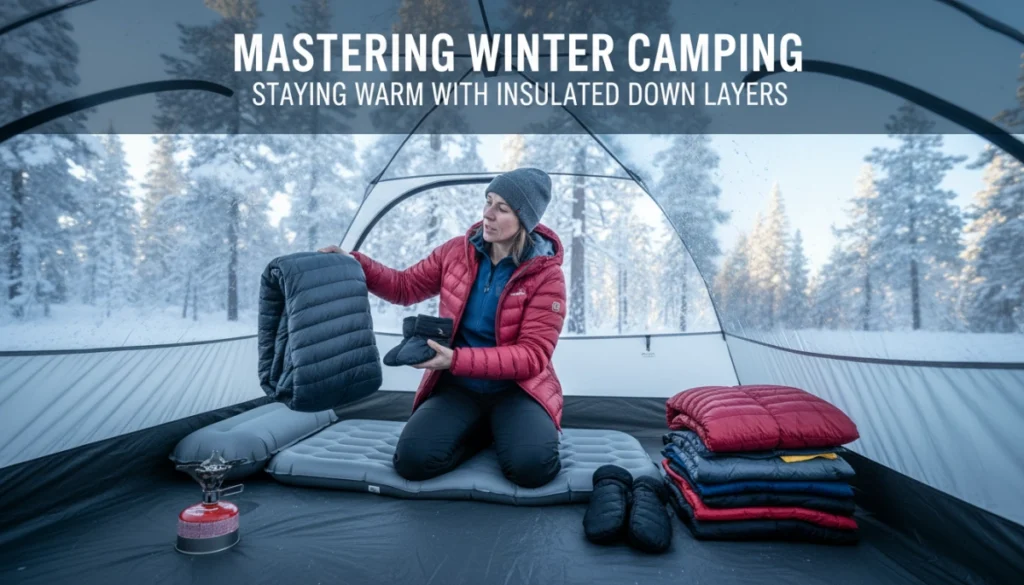
Understanding Down Insulation for Winter Camping
If you’re serious about mastering winter camping, insulated down layers are one of the most powerful tools you can carry. Used right, a good down jacket or down pants can be the difference between shivering all night and actually enjoying camp in sub-freezing temps.
Fill Power Basics (And Why It Matters)
Fill power is simply a measure of how “fluffy” the down is. The higher the number, the more loft it creates and the more air it traps for warmth.
- 650–700 fill power – Solid, budget-friendly for most cold weather camping.
- 750–850 fill power – Excellent warmth-to-weight for winter backpacking.
- 900+ fill power – Premium, ultralight, very warm but more expensive.
In real-world terms: if two jackets have the same weight of down, the one with higher fill power will be warmer, lighter, and more compressible. That’s what you want when you’re dialing in your winter camping layering system.
Why Down Excels in Sub-Freezing Temps
Down has an incredible warmth-to-weight ratio. For winter camping and winter backpacking, that means:
- You carry less weight for the same warmth.
- You get massive loft that traps heat effectively in a winter tent.
- It’s ideal as an insulated down mid layer or static layer when you’re not moving much.
Once temps drop well below freezing and the air is dry, a down jacket for cold weather camping usually outperforms synthetic insulation for pure warmth and packability.
Compressibility and Packability
One of the biggest perks of using insulated down layers is how small they pack:
- A lightweight down jacket can compress into a grapefruit-sized bundle.
- Perfect for backpacking when every cubic inch in your pack matters.
- Easy to stash a packable down layer in your daypack for unexpected cold.
For car camping in winter, compressibility is still useful because it keeps your gear organized and easy to grab when temps crash.
Moisture Vulnerability (And How to Protect Down)
Down’s main weakness: moisture. If it gets soaked, it clumps, loses loft, and stops insulating. That’s a serious problem in wet snow or mixed conditions.
Here’s how I protect my down in winter:
- Always pair down with a windproof, water-resistant shell.
- Keep your down jacket in a dry bag or waterproof stuff sack inside your pack.
- Avoid hiking hard in your heavy down layer; save it for breaks and camp to limit sweat.
- Look for DWR-treated shell fabrics and hydrophobic treated down for extra insurance.
Down vs Synthetic Insulation for Camping
Both down and synthetic insulation have a place in a smart winter camping layering system:
Down insulation (go-to for cold and dry):
- Best thermal efficiency and warmth-to-weight.
- Packs smaller and lighter.
- Ideal for sub-zero temps, high-elevation trips, and dry snow.
Synthetic insulation (better for wet or mixed conditions):
- Keeps more warmth when damp or wet.
- Dries faster, more forgiving if you sweat or get rained on.
- Often cheaper and more durable for hard use.
When to Choose Synthetic Over Down
I switch to or add synthetic insulation in a few situations:
- Forecast calls for wet snow, sleet, or freezing rain.
- I’m doing high-output activities (like steep winter hiking) where I know I’ll sweat.
- Shoulder-season trips where temps bounce around freezing and everything stays damp.
- As a synthetic mid layer under my down puff jacket, so the piece closest to my sweat is more moisture-tolerant.
In short: for cold, dry winter camping, down is hard to beat. For wet, unpredictable, or mixed conditions, I either run synthetic insulation as my main layer or pair synthetic with down to get the best of both worlds.
Mastering Winter Camping Layering Systems
What a complete winter camping layering system looks like
For a solid winter camping layering system, I always build around three main layers:
- Base layer: next-to-skin, manages sweat.
- Mid layer: adds warmth (fleece/synthetic), then an insulated down mid layer for real cold.
- Shell layer: windproof and water-resistant to protect everything underneath.
On a typical winter backpacking or car camping trip, I want the flexibility to move from hiking in the teens to standing around camp at night without freezing or soaking myself in sweat.
Cold weather base layers: staying dry and warm
Your cold weather base layers are the foundation of your winter camping clothing checklist:
- Go merino wool or synthetic (no cotton, ever).
- Choose midweight for most U.S. winter camping, heavyweight for sub-zero or low-activity trips.
- Top and bottom both matter – if your legs are cold, your whole system feels colder.
A good winter camping layering system starts with a base layer that keeps you dry first, warm second. Sweat is your enemy in freezing temps.
Using insulated down mid layers for warmth
The insulated down mid layer is what makes winter camping in the U.S. actually feel comfortable:
- Use a lightweight down jacket or down hoodie while hiking in very cold, dry conditions.
- Use a warmer down puff jacket or down parka for static use: in camp, cooking, glassing, or sitting around a fire (careful with sparks).
- Add insulated down pants if you’re standing on snow or in extreme cold—game changer for staying warm in a winter tent.
Down excels at static warmth—those times when you stop moving and your body heat drops fast.
Fleece or synthetic mid layers under your down jacket
I like a fleece or synthetic jacket as my “always on” mid layer under the down:
- Fleece mid layer: breathable, cheap, great for high-output winter hiking.
- Synthetic puffy/jacket: warmer than fleece, still works if damp, better for wet snow or mixed conditions.
This mid layer builds a buffer so your down jacket for cold weather camping doesn’t have to work as hard, and it keeps you warm even when you stash the down in your pack.
Outer shell layers: windproof and water-resistant protection
Your shell protects your whole winter camping layering system:
- Go for a windproof, water-resistant shell (softshell) for dry, cold winter backpacking.
- Use a breathable waterproof shell jacket (hardshell) when you expect blowing snow, sleet, or freezing rain.
- Make sure it’s roomy enough to fit base + mid + down jacket without compressing the insulation.
A good shell makes a light down jacket feel like a heavier one by blocking wind and spindrift.
How down layers fit into active vs static winter setups
I treat down differently depending on whether I’m moving or standing still:
- Active (hiking, snowshoeing, skinning):
- Base layer + fleece/synthetic mid layer + breathable shell.
- Keep the down jacket in the pack to avoid sweating into it.
- Static (camp, breaks, in the winter tent):
- Throw your down puff jacket or down parka over everything the moment you stop.
- Add insulated down pants for long periods sitting on snow or in freezing stadium-style cold around camp.
This is the core of any smart winter camping layering system:
- Stay just cool enough when moving.
- Go full down armor when you stop.
Choosing Insulated Down Layers for Winter Camping
When I’m dialing in insulated down layers for winter camping, I look at specs first, then how the piece actually feels and moves in real life.
Key specs for a down jacket for cold weather camping
For any winter camping layering system, I focus on:
- Fill power
- 650–700: solid for most U.S. winter camping
- 750–850: warmer and more packable for winter backpacking
- 900+: premium, ultralight, best warmth-to-weight
- Fill weight (not just fill power)
- 3–5 oz: light puffy for hiking and mild winter
- 6–10 oz: serious cold weather camping, most people’s sweet spot
- 10+ oz: extreme cold camping / long static use
- Shell fabric
- 10–20D nylon: light, great for packable down layers
- 20D+: tougher for bushwhacking, camp chores, firewood runs
- DWR finish helps shed light snow and frost
- Total weight & durability
- Backpacking: 8–16 oz jacket is ideal
- Car camping / basecamp: I don’t mind heavier, burlier fabric that can take abuse
Best down insulation ratings for winter camping
For most U.S. winter tent camping (teens–20s °F):
- 650–750 fill with 6–8 oz fill weight works for most folks
- 800–850 fill with 5–7 oz for lighter pack weight and strong warmth
- For sub-zero temps or mountain winter camping, I step up to a down parka with 8–12 oz of 800+ fill.
Packable down layers for backpacking
For winter backpacking warmth tips, I want layers that disappear in the pack:
- Compressible lightweight down jacket (800+ fill, under 16 oz)
- Packs into its own pocket or a small dry bag
- Great as an insulated down mid layer under a shell or as a camp puffy
Types of insulated down pieces
I build my winter camping clothing checklist with:
- Down jackets / puffies – main workhorse for camp and rest breaks
- Down hoodies – better heat retention around the head and neck
- Down vests – nice for core warmth over cold weather base layers during high-output hiking
- Insulated down pants – game changer for staying warm in a winter tent and around camp chairs
Down puff jacket vs heavy parka
I choose based on how cold and how static I’ll be:
- Down puff jacket
- Lighter, more breathable
- Best for winter hiking clothing systems and mixed moving/rest days
- Heavy down parka
- Longer cut, more fill, often tougher shell
- Best for extreme cold camping gear, long nights in camp, and low movement
Fit and mobility for winter camping
A good winter down jacket for cold weather camping should:
- Fit over a base layer + mid layer without feeling tight
- Allow full arm movement for camp chores, cooking, setting up the tent
- Be long enough to cover the lower back when you bend or sit
- Not so tight that it crushes loft (loft = warmth)
Useful features that matter in the cold
I build or buy insulated down mid layers with:
- Insulated hood with good adjustment
- Elastic or Velcro cuffs to seal out drafts
- Hem adjustments to trap heat and block wind
- Handwarmer pockets (ideally fleece-lined)
- Internal stash pockets for drying gloves or keeping water filters warm
- Two-way zippers on longer parkas for venting while sitting or hiking
If I’m staying warm in a winter tent or out on a windy ridge, the right insulated down layer isn’t just about fill power—it’s about the full package: specs, fit, and details that actually work in the field.
How to Layer Down Jackets and Insulated Pieces
Layering order for winter camping days and nights
For a simple winter camping layering system, I stick to this order:
- Base layer: Merino or synthetic, snug, moisture-wicking
- Mid layer: Fleece or light synthetic jacket for active warmth
- Insulated down mid layer / puffy: Your main warmth piece for stops and camp
- Shell: Windproof/water-resistant shell jacket on top when it’s windy, stormy, or snowing
At night, I use basically the same setup inside the winter tent and inside the sleeping bag if needed.
Using a down jacket over base and mid layers while hiking
For hiking in cold weather, I treat a down jacket for cold weather camping as a “stop-and-go” layer:
- Hike in base layer + fleece/synthetic mid layer + shell
- Keep the packable down jacket in an easy-access pocket or lid
- When you stop (break, lunch, navigation), throw the down puff jacket on over everything to trap heat before you chill
- When you start moving again, strip the down layer and stash it fast
This keeps the down insulation dry and avoids overheating on climbs.
When to add or remove down to prevent sweating
Managing moisture is everything in winter:
- Add down:
- As soon as you stop moving
- When you feel yourself starting to get chilled at rest
- Remove down:
- Before big uphill pushes
- When you feel “too warm” or sticky under the arms
- If snow is wet or it’s above 32°F, use synthetic mid layers more and keep the down mostly for camp and sleep
If your base layer is damp, swap it out at camp. Moisture management in cold weather is how you avoid hypothermia.
Using insulated down layers at camp and around the fire
At camp, I build a static setup with more loft:
- Base layer (dry)
- Light fleece / synthetic mid layer
- Insulated down jacket or parka
- Insulated down pants for camping if temps are legit cold
- Shell jacket over down if windy or snowing
Around a campfire, I avoid putting my best down right next to sparks. I’ll:
- Wear an old synthetic or flannel over my down jacket as a “sacrificial” layer
- Or wear a cheaper synthetic puffy near the fire and keep the high-fill-power down for later in the tent
Staying warm in a winter tent with down jackets and pants
In a winter tent on snow or frozen ground, I treat down layers as part of my camp sleep system:
- Sit on your sleeping pad or foam pad, not bare ground
- Wear down pants and a down hoodie or parka while cooking and hanging out
- Throw your shell jacket over your down if there’s condensation or wind sneaking in
- Keep a dry pair of wool socks just for sleeping
This “down suit” setup is common on extreme cold camping trips in the Rockies, Sierra, and Northern states.
Combining down layers with your sleeping bag or quilt
Down clothing is a legit way to boost a sleeping bag rating:
- Wear your down jacket, hood up, inside the bag or quilt
- Use down pants to warm your legs and reduce cold spots
- Use a hot water bottle trick: Nalgene with hot water tossed in a sock and placed near your core or feet
- Make sure your bag isn’t over-compressed by bulky layers; loft is what matters
This can easily bump you 5–15°F warmer with the same bag on a sub-zero night.
Practical layering examples: mild, cold, extreme cold
Here’s how I usually run how to layer down jackets camping for different conditions in the U.S.:
Mild winter (25–35°F, dry, light wind)
- Hiking: Base + light fleece + light shell
- Breaks/Camp: Add lightweight down jacket
- Sleep: Light down jacket inside a 20°F bag
Cold winter (5–25°F, typical Rockies/Northeast)
- Hiking: Base + mid (fleece or synthetic) + shell
- Breaks: Throw medium-weight down puff jacket over shell
- Camp: Base + mid + down jacket + shell if windy
- Sleep: Down jacket + possibly down pants in a 0–15°F bag
Extreme cold (below 0°F, high Rockies/upper Midwest trips)
- Hiking: Base + heavy fleece/synthetic + shell (no down while moving unless very slow)
- Breaks: Heavy down parka for sub zero temps over everything
- Camp: Full kit – base + mid + down parka + down pants + shell
- Sleep: Down parka + pants inside a -10°F or lower bag, plus high-R-value pad setup
Dialing this system in is what keeps you staying warm in a winter tent without hauling a ridiculous amount of weight.
Winter Camping Warmth Strategies Beyond Down
Staying warm in winter camping is about your whole system, not just your down jacket. If you dial in the ground insulation, your sleeping setup, and your camp routine, you stay comfortable even when temps drop hard.
Ground Insulation & High R-Value Sleeping Pads
If you’re cold from below, no amount of insulated down layers will save you.
- Use a winter pad: Aim for a sleeping pad R-value of 4.5+ for snow, 5+ for true sub-freezing and mountain winter camping.
- Double up pads: Cheap foam pad on the ground + inflatable pad on top = big warmth jump.
- Cover cold spots: Put extra clothing under hips/shoulders and under your feet.
- For car camping in winter, I like: foam pad + thick inflatable + blanket on top.
Winter Camping Sleeping Warm With Proper Bag Ratings
Your sleeping bag rating matters more than your jacket once you’re in the tent.
- Look for a true 0°F or -10°F bag for serious cold (not a “comfort at 32°F” bag).
- Stick with EN/ISO rated bags and focus on the comfort rating, not just the limit.
- For winter tent camping tips, size your bag right: too big and you waste body heat, too tight and it crushes loft.
Sleeping Bag Liners & Clothing Inside the Bag
You can boost warmth without buying a new bag.
- Sleeping bag liners:
- Fleece or thermal liners can add around 5–15°F of warmth.
- Also keep your bag cleaner and protect loft.
- Clothing in the bag:
- Wear dry base layers, warm socks, and a light insulated down mid layer or fleece if it’s truly cold.
- Avoid bulky, tight layers that compress the insulation.
- Toss next-day clothes in the bottom of the bag so they’re not frozen in the morning.
Tent Choice, Pitch Location & Wind/Snow Protection
A smart camp setup is a big part of staying warm in a winter tent.
- Use at least a solid 3–4 season tent with good wind resistance.
- Pitch location:
- Avoid valley bottoms and rivers (cold sinks).
- Stay off ridgelines that take full wind.
- Look for natural windbreaks: trees, boulders, snow walls.
- Pack down the snow where you sleep so you don’t sink and lose warmth overnight.
Hot Water Bottle Tricks for Freezing Nights
The hot water bottle sleeping bag trick is still one of the best winter backpacking warmth tips.
- Use a hard Nalgene-style bottle, fill with boiling water, close tight.
- Wrap it in a sock and drop it:
- At your core (stomach/chest) to warm blood fast, or
- Near your feet if you get cold toes.
- In a winter tent, this bottle is still warm in the morning and drinkable.
Food, Hydration & Movement for Body Heat
Your body is the furnace; your gear just traps the heat.
- Eat before bed: A high-calorie, fatty snack (nuts, peanut butter, cheese, ramen with extra oil) gives your body fuel to burn.
- Hydrate well: Dehydrated = colder. Sip warm drinks in camp but don’t overdo caffeine if it keeps you up.
- Move before sleep:
- Do light jumping jacks, squats, or a quick walk before you get in your bag.
- You want to get slightly warm, not sweaty.
- If you wake up cold, eat a snack, move a little, then get back in the bag.
Dialing in these winter camping warmth strategies beyond down means your down jacket, insulated pants, and sleeping bag all work better. When your pad, bag rating, tent setup, food, and hydration are on point, staying warm in a winter tent stops being a fight and starts feeling controlled.
Avoiding Common Winter Camping Mistakes with Down
Don’t Rely Only on Down in Wet Snow
Down insulation is awesome in cold, dry conditions, but it’s weak in wet snow, slush, or freezing rain.
To stay safe and warm:
- Always pair your down jacket for cold weather camping with:
- A waterproof or highly water-resistant shell
- A synthetic mid layer as backup (stays warmer when damp)
- If the forecast calls for mixed or wet conditions, lean more toward down vs synthetic insulation camping by:
- Wearing synthetic for active use
- Saving your insulated down mid layer for dry, static times (in camp, in the tent)
Don’t Wear the Wrong Base Layers
The fastest way to get cold is sweating in cotton.
For cold weather base layers:
- Skip cotton. It holds moisture and chills you.
- Go with merino wool or synthetic base layers (they wick sweat and dry fast).
- Adjust layers:
- If you’re sweating hard, drop a layer before you soak your base.
- Use zip necks or front zippers to vent while moving.
Don’t Ignore Leg and Core Insulation
Most people over-focus on jackets and ignore legs and core. That’s how you end up cold in a winter tent.
Dial in your lower body:
- Use insulated down pants for camping or warm synthetic pants for camp.
- Keep a strong core system:
- Wicking base layer
- Warm mid layer
- Down puff jacket or parka for static time
- Remember: If your core is cold, your hands and feet will never fully warm up.
Don’t Underestimate Ground Cold
In the U.S., a lot of people try to winter camp on summer pads and freeze from underneath.
Key winter camping sleeping warm tip:
- Snow and frozen ground suck heat fast.
- Use:
- At least R-4.5 to R-5+ sleeping pad for snow
- Two pads (foam + inflatable) for real extreme cold camping
- Your down layers can’t fight ground cold if your pad is weak.
Don’t Neglect Hands, Feet, and Head
Your down jacket won’t save you if your extremities are underdressed.
Cover the small stuff:
- Hands:
- Liner gloves + insulated mitts
- Extra dry pair just for camp
- Feet:
- Thick wool socks (sleep socks stay dry)
- Roomy boots for winter so blood can circulate
- Head & neck:
- Insulated hood design on your down jacket is huge
- Add a beanie + neck gaiter or balaclava
Don’t Ruin Your Down by Packing It Wrong
Down only works if it can loft.
Avoid these packing mistakes:
- Don’t keep packable down layers compressed in a stuff sack long-term.
- At home: store them loose or hanging.
- On trips:
- Compress while hiking, loft as soon as you get to camp.
- Never throw your down jacket or down parka for sub zero temps into a wet corner of the tent.
- If it gets damp:
- Sleep with it lightly on or near your body
- Let body heat help dry it (but don’t soak your sleeping bag in the process)
By avoiding these common cold weather camping mistakes, your winter camping layering system will actually work the way it should—and your down will perform all the way through the trip.
Safety and Cold-Related Risk Management
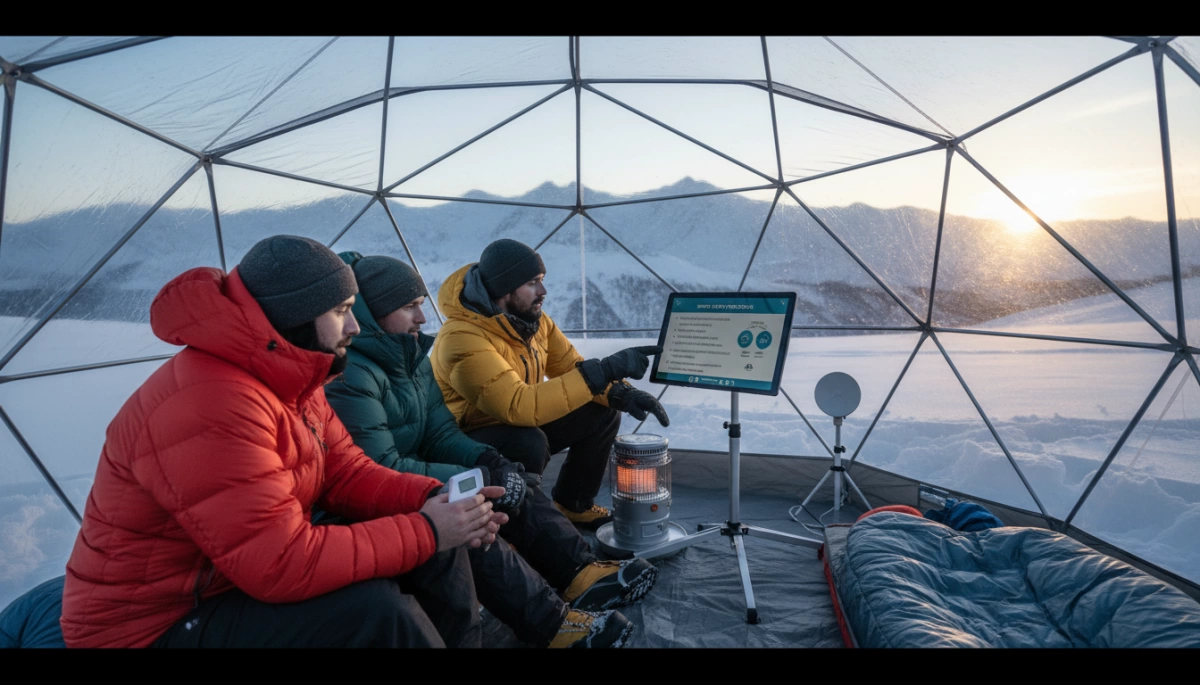
Winter camping isn’t just about staying comfy—it’s about staying safe. When I plan any winter camping layering system with insulated down layers, I treat cold-related risks like hypothermia and frostbite as seriously as navigation or food.
Recognizing Early Hypothermia in Winter Camping
Catch hypothermia early, before it gets dangerous. Watch for:
- Mild signs:
- Uncontrollable shivering
- Slurred or slow speech
- Clumsy hands, dropping gear
- “I feel tired, I just want to sit”
- Moderate signs:
- Confusion, weird decisions (like taking layers off)
- Stumbling, can’t clip buckles or zippers
- Shivering starts to slow down
If you see this in yourself or anyone in your winter tent camping crew, you act now, not “after dinner.”
Frostbite Risk on Fingers, Toes, and Face
Extreme cold camping and strong wind put your fingers, toes, nose, ears, and cheeks at real risk:
- Early frostnip:
- Skin feels numb, then tingling
- Looks pale, white, or waxy
- Higher risk times:
- Handling metal gear with bare hands
- Standing still at camp in wind
- Wet gloves or boots in sub-freezing temps
Fix it fast with dry, warm gloves, insulated boots or down booties, a balaclava, and a hooded down jacket for cold weather camping.
What to Do If Someone Starts Losing Warmth Fast
If you or a partner suddenly can’t stay warm in camp:
- Get out of the wind and snow: tent, vehicle, or windbreak
- Swap wet for dry: base layers, socks, gloves, and hats
- Add insulation: down jacket, insulated down pants, extra mid layer
- Feed and hydrate: warm drink, high-calorie snacks
- Use body heat: huddle, share a sleeping bag in serious situations
If they get more confused or can’t stop shivering, you’re in hypothermia territory. Treat it as an emergency and be ready to bail out.
Using Down Layers as an Emergency Warming System
Insulated down mid layers and parkas are your emergency heater:
- Throw on every down layer you have: jacket, hood, vest, pants
- Get them off the snow: high R-value sleeping pad, extra foam, packs under legs
- Put them inside a winter-rated sleeping bag or quilt
- Add a hot water bottle (in a hard Nalgene-style bottle, inside a sock) to the core
This setup can stabilize someone fast while you decide if you’re staying or hiking out.
Backup Plans if Your Down Gets Wet
Down vs synthetic insulation camping matters when things get wet. Down loses loft when soaked, especially in wet snow or slush:
Have backups ready:
- Synthetic mid layer (jacket or hoodie) that still insulates when damp
- Fleece as a reliable, quick-drying mid layer
- A breathable, waterproof or windproof shell to keep snow and sleet off your down
- Dry bag or compression sack for your main down jacket and sleeping bag
If your main down piece gets wet, switch to synthetic and keep moving to stay warm until you’re in shelter.
Winter Backpacking Group Checks and Communication
In U.S. backcountry winter trips, I treat warmth like a team project:
- Do regular warmth checks:
- “How are your hands and feet?”
- “Anyone chilled or lightheaded?”
- Make it normal to speak up early if you’re getting cold
- Set simple rules:
- No one stands around in camp without a warm layer
- No one goes to sleep cold—do a quick warm-up first
- Agree on a bail-out plan: what temp or condition makes you turn back or hike out
When you combine smart insulated down layers with honest group communication, you massively cut your risk of hypothermia and frostbite on any winter camping or winter backpacking trip.
Dialing In Your Personal Winter Camping System
When I dial in a winter camping layering system, I treat it like testing gear for business: small experiments, clear notes, steady upgrades.
Test Your Insulated Down Setup Locally
Before driving to the Rockies or Sierra, I always shake down my insulated down mid layer close to home.
Do this:
- Run one‑night trips at a local state park or national forest
- Test down jacket, down pants, and sleeping bag together
- Try different cold weather base layers (merino vs synthetic)
- Note where you get cold: neck, lower back, feet, or hips
I keep simple notes in my phone:
- Low temp
- Wind
- Layers I wore
- How I slept (too cold / just right / sweaty)
That’s how I know if my down jacket for cold weather camping actually matches its advertised rating.
Adjust Layers for Climate and Elevation
Winter in Minnesota is not winter in North Carolina, and 8,000 ft in Colorado hits way harder than sea level.
Adjust for:
- Wet coastal cold (PNW, Northeast):
- Lean more on synthetic mid layers under your down
- Prioritize breathable waterproof shell jackets
- Dry, high-elevation cold (Rockies, interior West):
- Higher fill power down (800+) is worth it
- Bring down parka for sub-zero temps if wind is strong
- Windy plains / Midwest:
- Heavier focus on windproof shell for winter hiking
- Extra insulated down pants for camping at night
I always check both temp and wind before a trip. Wind decides if I pack a lightweight down jacket or my big down puff jacket for winter use.
Build a Versatile Kit: Backpacking and Car Camping
I design my lineup so it works for both winter backpacking and car camping without buying ten different jackets.
My base kit:
- Lightweight down jacket (packable down layer)
- For hiking, shoulder seasons, backup warmth
- Heavier down parka
- For sub-freezing nights, long camps, low movement
- Fleece or light synthetic mid layer
- For high-output hiking and sweat management
- Insulated down pants (or heavy fleece bottoms)
- For in-camp and staying warm in a winter tent
Car camping: I’ll bring everything plus backups.
Backpacking: I strip it down to best warmth-to-weight pieces and a high R-value sleeping pad so I don’t need to overpack clothing.
Balance Weight, Warmth, and Budget
For US customers, I build my gear offering around realistic priorities: not everyone needs an $800 expedition parka.
Where I spend more:
- Sleeping system: high R-value pad + legit winter bag
- Primary down jacket: high fill power down (800+), solid shell
- Shell jacket: reliable wind and water protection
Where I save:
- Mid layers: solid fleece or mid-range synthetic
- Accessories: good, not fancy, hats, buffs, liners
If you’re mostly doing car camping in winter, weight matters less—lean into comfort. If you’re doing long winter backpacking trips, high-quality packable down layers and lighter pieces pay off fast.
Track What Works on Each Cold Weather Trip
Every winter trip teaches you something. I treat it like product testing.
Right after a trip, jot down:
- Nighttime low & conditions (wind, wet snow, clear, etc.)
- What you wore to sleep (base, mid, down, socks, hat)
- If you were:
- Cold
- Comfortable
- Too hot / sweaty
- Any cold spots (shoulders, hips, feet, face)
- Gear issues: down lost loft, shell soaked out, zipper failure
Over a few trips, patterns show up:
- “I always get cold below 15°F in this jacket.”
- “My current pad isn’t enough for snow camping.”
- “I never use my second fleece—dead weight.”
That’s how you fine-tune a winter camping clothing checklist that actually matches your body, your trips, and your budget—and you stop guessing what to bring on the next winter tent camping weekend.