
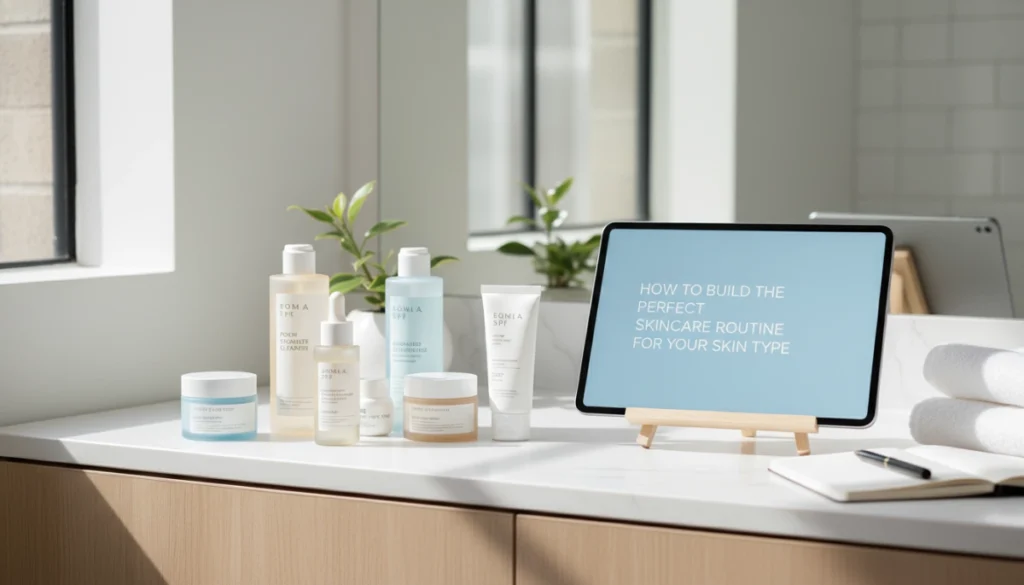
How to Determine Your Skin Type (At Home)
If you feel overwhelmed by skincare advice, start here. You can’t build the perfect skincare routine for your skin type until you know what your skin actually needs.
Step-by-Step At-Home Skin Type Test
You don’t need gadgets or a facial scanner. Here’s a simple at-home skin type test:
-
Cleanse
- Wash your face with a gentle, non-stripping cleanser.
- Pat dry with a clean towel.
-
Wait 30–60 minutes
- Don’t apply anything: no toner, no moisturizer, no serum.
- Let your skin sit at room temperature.
-
Observe and feel
- Look in the mirror under natural light.
- Pay attention to your T-zone (forehead, nose, chin) and your cheeks.
-
Blotting paper check (optional)
- Press blotting paper or a clean tissue on your forehead, nose, and cheeks.
- See how much oil transfers.
Use what you see and feel to place yourself in one of the main skin types.
Signs of Each Skin Type
Use these quick checklists to identify your skin type at home:
Normal Skin Routine Candidate (Balanced)
- Skin feels comfortable, not tight or greasy
- Minimal visible pores
- Occasional small breakouts, but nothing constant
- Makeup sits evenly without patchiness or sliding off
Dry Skin Skincare Routine Candidate
- Skin feels tight after washing
- Rough or flaky patches, especially around nose or mouth
- Fine lines look more obvious when you’re dehydrated
- Pores look small and almost invisible
Oily Skin Control Routine Candidate
- Skin looks shiny within a few hours of washing
- Makeup slides or separates during the day
- Larger-looking pores, especially on the nose and cheeks
- Congestion and blackheads are common
Combination Skin Tips Candidate
- Oily T-zone (forehead, nose, chin)
- Normal or dry cheeks
- Some areas get shiny while others feel tight or flaky
- Different parts of your face react differently to the same product
Sensitive Skin Routine Steps Candidate
- Skin stings or burns easily with new products
- Redness, flushing, or visible irritation
- Feels tight or itchy with fragrance or harsh cleansers
- Reacts quickly to weather changes, hot water, or over-exfoliation
Acne-Prone Skin as a Layer on Top
Acne-prone isn’t a type by itself. It’s a skin condition overlay that can sit on top of oily, combination, normal, or even dry skin.
Signs you have acne-prone skin:
- Frequent whiteheads, blackheads, papules, or cystic breakouts
- Breakouts in the same zones repeatedly (jawline, cheeks, forehead, back)
- Spots that linger, leave marks, or scar easily
You’ll still want a skincare routine by skin type (oily, dry, etc.), but with acne-prone skin care steps layered in: non-comedogenic products, salicylic acid, and spot treatments like benzoyl peroxide.
When Your Skin Type Might Shift Over Time
Your skin type is not a life sentence. It can change with:
- Age (teenage oily skin can become dry or combination with time)
- Hormones (pregnancy, birth control, menopause, testosterone)
- Climate (moving from humid to dry environments, seasonal changes)
- Medications (like acne or blood pressure meds)
- Overuse of harsh products (stripping oily skin can make it reactive and dehydrated)
If your usual routine suddenly stops working, it may be a sign your skin type and needs have shifted and it’s time to reassess.
When to See a Dermatologist for Skin Assessment
You can do a solid skin type test at home, but a dermatologist-approved routine starts with clarity. See a professional if:
- You have painful, deep, or cystic acne
- Redness, burning, or rashes show up regularly
- Products that “work for everyone” constantly irritate your skin
- You’re unsure if you’re dealing with acne, rosacea, eczema, or allergies
- Over-the-counter routines don’t help after 8–12 weeks of consistent use
A board-certified dermatologist can confirm your skin type, diagnose conditions, and recommend a safer, more targeted plan.
Common Myths About Skin Types
Let’s clear up a few things that hold people back from building a simple skincare routine that actually works:
-
Myth: Oily skin doesn’t need moisturizer.
Truth: Skipping moisturizer can make oily skin more dehydrated and even oilier. You just need a lightweight moisturizer for oily skin, not none. -
Myth: Dry skin just needs to drink more water.
Truth: Hydration helps, but dry skin lacks oil and barrier lipids. It needs creamy moisturizers, ceramides, and face oils, not just water. -
Myth: Sensitive skin can’t use any active ingredients.
Truth: Sensitive skin can use actives like niacinamide or low-strength hyaluronic acid, introduced slowly with a strong barrier repair skincare base. -
Myth: Acne-prone skin must be scrubbed and dried out.
Truth: Over-cleansing and stripping is one of the biggest skincare mistakes to avoid. Acne-prone skin needs gentle cleanser for skin, non-comedogenic products, and consistent care—not aggression. -
Myth: Your skin type never changes.
Truth: Skin evolves with lifestyle, environment, and age. A routine that worked at 18 might fail you at 30 or 45. Re-check your skin type regularly.
Knowing how to build the perfect skincare routine for your skin type starts with understanding your skin honestly, without myths. Once you know your type, everything else—your morning skincare routine, evening skincare routine, and product choices—becomes much easier and more sustainable.
Skincare Routine Basics for Every Skin Type
If you want to build the perfect skincare routine for your skin type, the core steps are always the same: cleanse, treat, moisturize, protect. Then you tweak products based on whether you’re normal, dry, oily, combination, sensitive, or acne‑prone.
Core Steps: Cleanse, Treat, Moisturize, Protect
No matter your skin type, keep this simple framework:
- Cleanse – Use a gentle cleanser to remove oil, sweat, sunscreen, and makeup without stripping your skin.
- Treat – Apply targeted products:
- Hydrating serum (like hyaluronic acid)
- Niacinamide (great for almost all skin types)
- Acne treatments (salicylic acid, benzoyl peroxide)
- Anti-aging basics (vitamin C in the morning, retinol at night)
- Moisturize – Lock in hydration with:
- Lightweight moisturizer for oily skin
- Richer cream or face oil for dry skin
- Non-comedogenic products if you’re acne-prone
- Protect – Finish with broad-spectrum sunscreen SPF 30 or higher every morning.
- For oily skin, go oil-free sunscreen or gel textures.
- For dry or sensitive skin, look for hydrating, fragrance-free sunscreen.
This is your simple, minimalist skincare routine that works for beginners and busy people.
Morning vs Evening Skincare Routine Goals
Morning skincare routine steps focus on protection and light hydration:
- Remove sweat/oil with a non-stripping face wash or just water (if your skin is dry or sensitive).
- Add a hydrating serum and/or niacinamide.
- Use a light moisturizer that fits your skin type.
- Finish with SPF for daily use (non-negotiable if you’re using actives like retinol, AHAs, BHAs, or vitamin C).
Evening skincare routine steps focus on cleansing, repair, and gentle exfoliation:
- Double cleanse if you wear makeup or heavy sunscreen.
- Apply your treatment step:
- Retinol for beginners (2–3 nights a week to start)
- AHA/BHA exfoliants on alternate nights
- Acne treatments (spot treat with benzoyl peroxide or sulfur)
- Seal everything in with a barrier repair moisturizer to support your microbiome and skin barrier overnight.
How to Layer Skincare: Thinnest to Thickest
To avoid pilling and get the most out of your products, follow this order:
- Cleanser
- Toner or essence (optional)
- Watery serums (hyaluronic acid, niacinamide, vitamin C)
- Treatment serums (AHA/BHA, retinol, targeted acne products)
- Creams and moisturizers
- Face oils (if you use them, usually at night)
- Sunscreen (last step in the morning)
Rule of thumb: water-based → gel → lotion → cream → oil → sunscreen (AM only).
How Often to Change or Swap Products
In the U.S. I see people constantly chasing “the next best” product. That usually backfires.
- Keep a stable base routine for at least 6–8 weeks before judging results.
- Only change one product at a time, especially if you have sensitive or acne-prone skin.
- Adjust for:
- Seasonal changes (richer in winter, lighter in summer)
- New skin concerns (more breakouts, more dryness, more sensitivity)
- If a product:
- Burns, stings, or gives you a rash → stop immediately
- Breaks you out badly for more than 2–3 weeks → pull it out and reassess
You don’t need a huge starter skincare kit by skin type. You need a few dermatologist-approved, microbiome-friendly, non-irritating basics that you actually stick with.
How to Patch Test Skincare Products Safely
Patch testing saves your skin barrier, especially if you’re using actives like retinol, AHA/BHA exfoliants, vitamin C, or salicylic acid.
Simple patch test method:
- Apply a small amount of the new product:
- Behind your ear, or
- On the side of your neck, or
- On a small area of your cheek or jawline
- Use it once daily for 3 days on that small area.
- Watch for:
- Burning or strong stinging
- Red, raised rash
- Hives or swelling
- If all looks fine, slowly work it into your full routine:
- 2–3 times a week at night for retinol or strong acids
- Daily use is usually fine for hydrating serums and niacinamide (unless you react)
For very sensitive skin, look for fragrance-free skincare, minimal-ingredient formulas, and always patch test new products before going all-in.
This basic structure—cleanse, treat, moisturize, protect—is how you build a simple skincare routine by skin type that actually works and is easy to stick to in real life.
Daily Skincare Routine for Normal Skin
If you’ve got normal skin, your routine can stay simple and consistent. The goal is to maintain balance, glow, and barrier health without overdoing it.
Simple Morning Skincare Routine for Normal Skin
Here’s a minimalist morning skincare routine by skin type for normal skin that works for most people in the U.S.:
-
Gentle Cleanser (non-stripping)
- Use a gentle cleanser for skin (gel or light cream).
- Lukewarm water only, 30–45 seconds.
- Skip cleansing in the morning if your skin feels tight or dry.
-
Hydrating Serum
- Go for hyaluronic acid for hydration or niacinamide for all skin types.
- This keeps your skin plump and helps with texture and pores.
-
Light Moisturizer
- Use a simple skincare routine moisturizer: lightweight cream or lotion.
- Look for ceramides and glycerin for easy, daily barrier support.
-
Broad-Spectrum Sunscreen SPF 30+
- Use broad-spectrum sunscreen SPF 30 every single morning.
- For U.S. daily life (commuting, screens, errands), SPF 30–50 is the sweet spot.
- If you have normal-to-oily: pick an oil-free sunscreen for oily skin texture; normal-to-dry: go for a creamier SPF.
Night Routine for Normal Skin
Your evening skincare routine steps can help repair and lightly treat without being complicated.
-
Cleanser
- Use the same non-stripping face wash as morning.
- Double cleanse (oil/balm + gel) if you wear makeup or mineral sunscreen.
-
Treatment (Optional)
- 2–4 nights a week:
- Retinol for beginners for anti-aging and texture, or
- Niacinamide for brightening and barrier support.
- On non-active nights, just use hydrating serum.
- 2–4 nights a week:
-
Moisturizer
- Slightly richer texture at night than morning.
- Look for barrier repair skincare with ceramides, fatty acids, and cholesterol.
Weekly Extras: Exfoliation and Masks for Normal Skin
Normal skin does well with hydrating vs exfoliating routine that’s not too aggressive.
-
Exfoliation (1–2x/week)
- Use a gentle AHA BHA exfoliant (like lactic acid or low-dose salicylic acid).
- This keeps skin smooth and supports texture and pore care.
- Avoid over-exfoliating — no more than 2x/week.
-
Face Masks (1–2x/week)
- Hydrating masks with aloe, glycerin, or hyaluronic acid.
- Brightening masks with niacinamide or vitamin C if you want extra glow.
- Keep it simple: 10–20 minutes max, then moisturize.
Best Product Textures for Normal Skin
Normal skin usually handles a wide range of textures, but these work best for a glowing skin routine:
-
Cleansers:
- Low-foam gels, light cream cleansers, microbiome-friendly options.
-
Serums:
- Thin, water-based hydrating serum recommendations (HA, glycerin).
- Lightweight niacinamide serum that works across skincare for teenage acne and skincare for mature skin.
-
Moisturizers:
- Cream-lotion textures — not too heavy, not too light.
- Choose richer creams in winter and lighter lotions in summer (seasonal skincare routine changes).
-
Sunscreen:
- Fluid, lotion, or gel-cream SPFs that don’t leave a heavy cast.
- Daily, easy-to-wear textures help you actually reapply.
Keep it simple, consistent, and non-irritating. With normal skin, your edge comes from routine, not complexity.
Dry Skin Routine for Deep Hydration
If you’ve got dry, tight, flaky skin, your skincare routine has to be all about deep hydration and barrier repair, not just “feels nice” moisture.
How to Know if You Have Dry Skin
You likely have dry skin if:
- Your face feels tight after cleansing (even with gentle washes)
- You see flaking, rough patches, or fine “crinkle” lines
- Makeup catches on dry spots and looks patchy
- Your skin still feels dry even when it’s not oily anywhere
- You get more redness and irritation in winter or in heated/AC spaces
This is different from dehydration (a temporary lack of water). Dry skin is a skin type that lacks oil and a strong barrier.
Best Cleansers for Dry Skin
For a dry skin skincare routine, your cleanser has to be non-stripping:
- Use:
- Cream cleansers
- Milky cleansers
- Gentle non-foaming or low-foam gels
- Look for:
- Ceramides
- Glycerin
- Hyaluronic acid
- Oat, panthenol, or squalane
- Avoid:
- Harsh foaming “oil-control” or “deep clean” washes
- Strong fragrance and alcohol-heavy formulas
If you wear makeup or sunscreen, use a gentle cleansing balm or oil first, then follow with a mild cream cleanser (double cleanse, but keep it soft).
Best Moisturizers and Face Oils for Dry Skin
Your moisturizer is the star of a dry skin routine:
- Daytime moisturizers:
- Rich cream, but not greasy
- Ceramides, cholesterol, fatty acids
- Hyaluronic acid, glycerin, aloe for extra water
- Night moisturizers:
- Thicker creams or balm textures
- Shea butter, squalane, jojoba, oat oil
- “Barrier repair” or “intense hydration” formulas
Face oils can be layered after moisturizer at night:
- Great options: squalane, jojoba, rosehip, marula
- Use 2–3 drops pressed into skin, not rubbed hard
- Oil doesn’t replace moisturizer; it helps seal in hydration
Hydrating Serums and Ingredients for Dry Skin
To build the perfect skincare routine for your skin type when it’s dry, stack in hydrating serums:
- Key ingredients:
- Hyaluronic acid – pulls water into skin
- Glycerin – deeply hydrating and barrier-friendly
- Panthenol (B5) – soothing and repairing
- Aloe – calming hydration
- Ceramides – restore the barrier
- Niacinamide (low %) – supports barrier and redness
- Apply serums on slightly damp skin, then lock in with a cream
- In U.S. climates with strong AC and heating, pair humectants (like HA) with a thick moisturizer, or they won’t help much
Morning Routine for Dry Skin
Keep your morning skincare routine simple and focused on comfort:
- Cleanse (optional/light):
- Splash with lukewarm water or use a very gentle cream cleanser
- Hydrating serum:
- Hyaluronic acid or glycerin-based serum
- Moisturizer:
- Rich cream, but not heavy enough to pill under makeup
- Sunscreen (non-negotiable):
- Broad-spectrum SPF 30+
- Hydrating, creamy texture or moisturizing sunscreen
- In the U.S. sun, especially in states like CA, FL, TX, AZ, daily SPF is crucial for dry, easily damaged skin
Evening Routine for Dry Skin
Your evening skincare routine is where you repair:
- Gentle cleanse:
- Double cleanse if you wear makeup/sunscreen
- Hydrating essence or serum:
- Layer a hydrating toner/essence, then a serum
- Barrier-focused moisturizer:
- Thick, ceramide-rich cream
- Optional face oil:
- 2–3 drops pressed on top of moisturizer
- Actives (if used):
- If you use retinol or acids, stick to low strength, 1–2 nights a week, and buffer with a thick moisturizer
Weekly Treatments for Very Dry, Flaky Skin
For very dry, flaky skin, add gentle weekly treatments:
- 1–2x a week:
- Use a creamy, non-abrasive exfoliant (like lactic acid or mandelic acid) to remove flakes—skip harsh scrubs
- 1–3x a week:
- Hydrating mask:
- Gel or cream mask with hyaluronic acid, glycerin, aloe, oat
- You can use some overnight as a sleeping mask
- Hydrating mask:
- In harsh U.S. winters or dry states:
- Run a humidifier at night
- Avoid long, hot showers on your face
- Switch to richer moisturizer and add a face oil
Focus every step on comfort, moisture, and barrier repair, and your dry skin routine will finally feel like it’s working with your skin, not against it.
Oily Skin Routine for Shine Control
If you’re constantly shiny by noon, feel slick around your T-zone, and break out easily, you likely have oily or oily, acne-prone skin. Pores may look larger (especially on your nose and forehead), and makeup tends to slide off fast.
How to Know If You Have Oily Skin
You probably have oily skin if:
- Your face looks shiny a few hours after cleansing
- Blotting papers come away visibly greasy
- Pores are noticeable on your nose, forehead, and cheeks
- You get frequent blackheads and clogged pores
A quick at-home skin type test:
- Wash with a gentle cleanser, pat dry, and wait 1 hour with no products.
- If you look shiny on most of your face, you’re oily.
Best Cleansers for Oily Skin
For oily skin routine and shine control, your cleanser should be:
- Gel or foaming, but non-stripping
- pH-balanced and labeled “non-comedogenic”
- Containing salicylic acid (BHA) if you’re acne-prone
Look for terms like “oil-control,” “non-stripping face wash,” “for oily or acne-prone skin.” Skip harsh bar soaps or anything that leaves your skin feeling tight or squeaky.
Lightweight Moisturizers for Oily Skin
Oily skin still needs moisture. Skipping it can actually make you more oily.
Choose:
- Oil-free gel creams or lightweight lotions
- Non-comedogenic and fragrance-free where possible
- Ingredients like niacinamide, hyaluronic acid, and glycerin
These textures work well in warm U.S. climates and under makeup without feeling heavy.
Non-Comedogenic and Mattifying Products
To avoid clogged pores and extra shine:
- Stick to non-comedogenic skincare and makeup
- Use a mattifying primer on the T-zone if you wear makeup
- Look for oil-free, SPF 30+ broad-spectrum sunscreen
- Powder or setting sprays labeled “shine control” help during long workdays
Morning Skincare Routine for Oily Skin
A simple, dermatologist-approved AM routine:
- Cleanser: Gentle gel or foaming cleanser for oily skin
- Treatment (optional):
- Niacinamide serum for oil control and pores
- Or a light salicylic acid serum if you’re acne-prone
- Moisturizer: Lightweight, oil-free gel cream
- Sunscreen: Broad-spectrum SPF 30+, oil-free, non-comedogenic
If you live in a humid area or commute a lot, prioritize oil-free sunscreen that won’t slide off.
Night Routine for Oily, Breakout-Prone Skin
PM is where you control texture, pores, and acne:
- Cleanser: Same gentle non-stripping face wash
- Treatment (rotate as needed):
- Salicylic acid (BHA) for clogged pores
- Benzoyl peroxide (spot treatment or short-contact wash) for active acne
- Retinol for beginners 2–3 nights a week for long-term oil and acne control
- Moisturizer: Lightweight, non-comedogenic lotion or gel
Keep it simple so your skin can actually tolerate your acne and anti-aging skincare basics.
How to Control Excess Oil Without Stripping
Too many U.S. customers over-wash and over-exfoliate, which backfires.
Do this instead:
- Cleanse 2x/day max (plus after heavy workouts)
- Use blotting papers during the day instead of washing again
- Limit AHAs/BHAs to a few times a week; avoid harsh scrubs
- Keep water lukewarm, not hot
- Focus on barrier repair skincare:
- Lightweight products with niacinamide, ceramides, and hyaluronic acid
The goal is balanced, not bone-dry. When your barrier is healthy, your oily skin calms down, shines less, and breaks out less.
Combination Skin Routine by Zones
How to tell if you have combination skin
You probably have combination skin if:
- Your T-zone (forehead, nose, chin) gets shiny by midday
- Your cheeks feel normal or slightly dry
- You see larger pores in the T-zone and smaller pores on the cheeks
- Makeup breaks down on the nose but looks fine on the sides of your face
If that sounds like you, a zoned skincare routine is going to work better than “one product for the whole face.”
T-zone vs cheek care strategy
Think of your face in zones:
| Area | Main Issues | What It Needs |
|---|---|---|
| T-zone | Oil, clogged pores, shine | Light gel textures, oil control, BHA |
| Cheeks | Normal/dry, sometimes tight | Gentle hydration, barrier support |
Simple strategy:
-
T-zone:
- Use non-stripping gel cleanser
- Choose lightweight, oil-free moisturizer
- Spot treat with salicylic acid or niacinamide as needed
-
Cheeks:
- Use same gentle cleanser, avoid harsh foaming formulas
- Use a creamier moisturizer or add a hydrating serum underneath
- Avoid strong acids and drying clay masks on this area
Different products for different areas
You don’t need a huge routine. Just be intentional:
- Double-moisturizer method:
- Gel or lotion on T-zone
- Cream on cheeks
- Targeted treatments:
- Apply BHA (salicylic acid) only on T-zone
- Apply hydrating serum (hyaluronic acid, glycerin) all over or just on cheeks
- Masks:
- Clay mask on T-zone
- Hydrating or soothing mask on cheeks
This is how you build a skincare routine by skin type and zone without wasting product.
Morning routine for combination skin
Keep mornings light and protective:
- Gentle cleanser (or just rinse with lukewarm water if your skin isn’t oily in the AM)
- Hydrating toner or serum
- All over, but focus on cheeks if they feel tight
- Moisturizer by zone
- T-zone: lightweight, oil-free, non-comedogenic lotion
- Cheeks: slightly richer lotion or cream
- Broad-spectrum sunscreen SPF 30+
- Oil-free sunscreen for oily skin on T-zone
- Same or slightly more moisturizing sunscreen on cheeks
Evening routine for combination skin
Nights are for repair and gentle correction:
- Non-stripping face wash
- Remove makeup and sunscreen fully (micellar or cleansing balm if needed)
- Treatment step (2–4x/week)
- T-zone:
- BHA (salicylic acid) for pores and texture
- Or niacinamide for oil control and redness
- Cheeks:
- Stick with hydrating formulas; avoid layering too many actives
- T-zone:
- Moisturizer by zone
- T-zone: light gel or lotion
- Cheeks: barrier-focused cream (ceramides, fatty acids, cholesterol)
If you’re adding retinol for beginners, start 2 nights per week, thin layer, and use it all over or just where you need it most, then moisturize heavier on cheeks.
Balancing hydration and oil control
The goal with combination skin: no dry patches, no greasy center.
Use this as a quick guide:
| Skin Feeling | What to Adjust |
|---|---|
| T-zone too shiny | Lighter moisturizer there, add niacinamide or BHA |
| Cheeks feel tight | Add hydrating serum + richer cream on cheeks |
| Makeup separating | Switch to non-comedogenic products, blot T-zone |
| Both dry and oily | Check for over-cleansing or over-exfoliating |
Key tips:
- Don’t skip moisturizer on oily areas; just go lightweight and oil-free
- Don’t use strong “oily skin” products on your whole face
- Adjust your morning and evening skincare routine steps with the seasons (more moisture in winter, a bit lighter in summer)
This zoned approach makes a simple skincare routine for combination skin feel custom without being complicated.
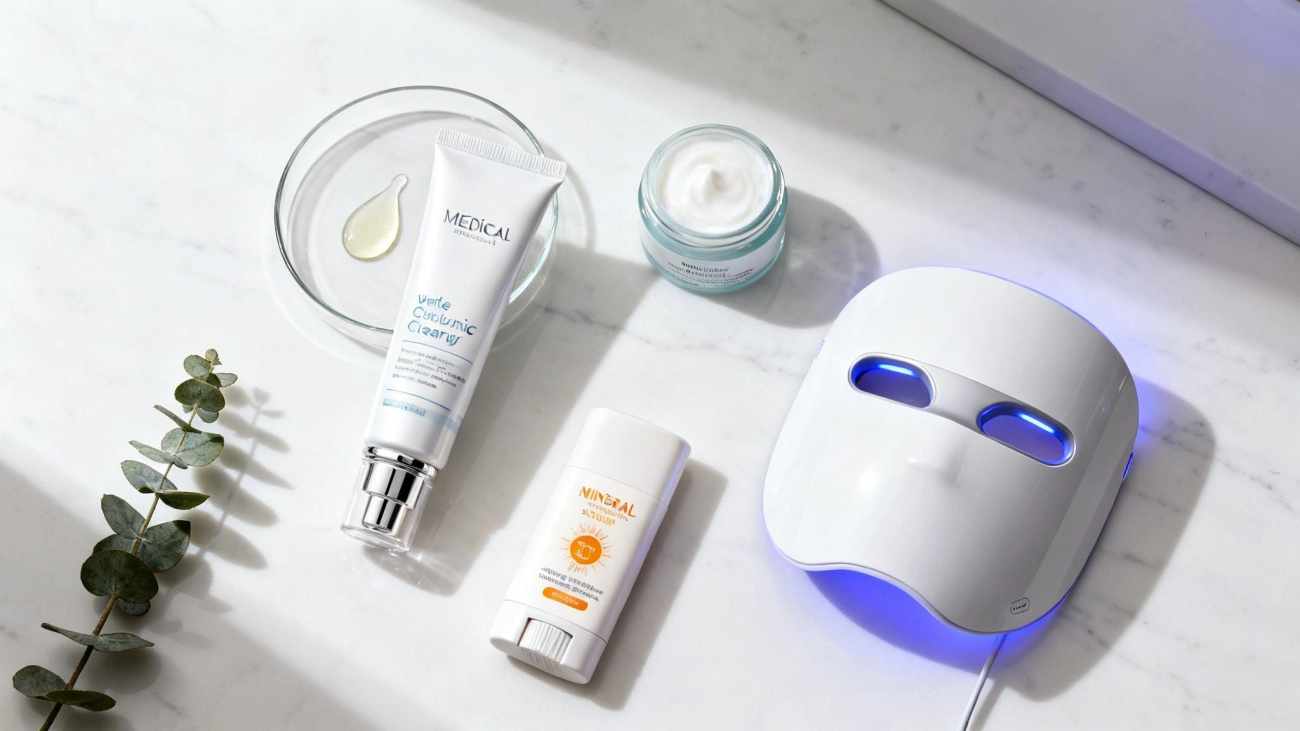
Sensitive skin routine for calming and repair
How to identify sensitive skin at home
You probably have sensitive skin if you notice:
- Burning, stinging, or itching after using basic products
- Redness or blotchiness, especially with weather changes
- Tightness after washing with regular cleansers
- Frequent reactions to new products, fragrance, or harsh actives
If drugstore products often “burn” or “tingle” in a bad way, treat your skin as sensitive.
Ingredients to avoid with sensitive skin
With a sensitive skin routine, less is more. I always avoid:
- Fragrance (perfume, essential oils, “parfum”)
- Drying alcohols (denat. alcohol, SD alcohol high up the list)
- Strong acids in one go (high % AHA/BHA peels)
- Harsh scrubs with big or rough particles
- High-dose retinol (start with low and buffer if you use it)
- Heavy menthol, eucalyptus, peppermint, or cinnamon oils
If a product promises intense “tingling,” it’s usually a no for sensitive skin.
Soothing and barrier-repair ingredients
For calming and repair, I build routines around:
- Ceramides, cholesterol, fatty acids – rebuild the skin barrier
- Niacinamide (2–5%) – calms redness, supports barrier
- Panthenol (vitamin B5) – soothing and hydrating
- Allantoin, madecassoside, centella asiatica (cica) – great for irritation
- Colloidal oatmeal, aloe (simple, non-fragranced) – gentle relief
- Squalane – lightweight, non-irritating hydration
Look for “barrier repair,” “calming,” “soothing,” “for sensitive skin” on the label.
Fragrance-free and minimal-ingredient choices
For sensitive skin in the US, I stick to:
- Fragrance-free, not just “unscented”
- Short ingredient lists (fewer chances for irritation)
- Non-comedogenic, hypoallergenic when possible
- No dyes, no strong essential oils
When I develop or pick products, I keep formulas clean and simple so they play nice with reactive skin.
Gentle morning skincare routine for sensitive skin
Here’s a simple AM sensitive skin routine by skin type:
- Gentle cleanser (or just lukewarm water if you’re very reactive)
- Hydrating serum with glycerin, hyaluronic acid, or panthenol
- Barrier-repair moisturizer with ceramides and fatty acids
- Broad-spectrum sunscreen SPF 30+, mineral or hybrid if chemical stings
Pat, don’t rub. Use soft towels and avoid hot water.
Simple night routine for sensitive skin
Evening is all about repair:
- Non-stripping cleanser (cream or gel, low-foam)
- Optional calming serum (cica, niacinamide at low % , panthenol)
- Richer moisturizer or a barrier cream/ointment on dry or red areas
Skip heavy actives until your skin is consistently calm. If you use retinol, start 1–2 nights a week, over moisturizer (“sandwich method”).
How to introduce new products to sensitive skin
With sensitive skin, I treat every new product like a test:
Patch test first
- Apply a small amount behind the ear or along the jawline
- Wait 24–48 hours
- If no burning, rash, or intense redness, move to full face
Add slowly
- Add one new product at a time
- Use it 2–3x a week at first, then slowly increase
- If you see burning, rash, or new bumps, stop and go back to your core routine
Keeping your sensitive skin routine simple, fragrance-free, and barrier-focused is the fastest way to get it calm, comfortable, and more resilient.
Acne-Prone Skin Routine That Actually Helps
If you’ve got acne-prone skin, you don’t need 15 steps. You need a tight, consistent routine with products that actually work together. Here’s how I build an acne-prone skin care routine that helps clear breakouts without wrecking your barrier.
Signs of Acne-Prone Skin
You’re likely acne-prone if you notice:
- Frequent breakouts, not just an occasional pimple
- Clogged pores: blackheads, whiteheads, tiny bumps (especially on T-zone)
- Oily or combination skin, but yes, dry skin can be acne-prone too
- Pimples that keep popping up in the same zones (jawline, cheeks, forehead)
- Skin reacts badly when you use heavy or fragranced products
If you’re seeing deep, painful cysts, scarring, or constant breakouts, that’s still acne-prone skin—but in the moderate to severe range.
Best Cleansers for Acne-Prone Skin
For acne-prone skin, your cleanser needs to be gentle, non-stripping, and effective at removing oil and sunscreen.
Look for:
- Gel or foaming cleansers labeled non-comedogenic
- pH-balanced formulas (most dermatologist-approved options are)
- Ingredients like:
- Salicylic acid (BHA) – helps clear pores
- Zinc, niacinamide – help reduce oil and redness
- Glycerin – keeps skin from drying out
Avoid:
- Bar soaps
- Cleansers with strong fragrance or essential oils
- Harsh scrubs with big beads or rough texture
Simple rule: after cleansing, your skin should feel clean, not tight or itchy.
Non-Comedogenic Skincare and Makeup
“Non-comedogenic” just means less likely to clog pores—a must for acne-prone skin.
For skincare:
- Choose oil-free or non-comedogenic:
- Moisturizers
- Sunscreens
- Serums
- Avoid thick, waxy balms on your whole face (spot-use only if needed)
For makeup:
- Look for:
- Oil-free foundations and tinted moisturizers
- Non-comedogenic concealers
- Loose, mineral powder if you like a matte finish
- Avoid:
- Heavy cream sticks or super dewy, thick formulas
- Sleeping in makeup—this is huge
Keep it clean:
- Wash makeup brushes and sponges weekly
- Change pillowcases at least once a week
Using Salicylic Acid, Benzoyl Peroxide, and Sulfur
These three are the backbone of a good acne-prone routine when used correctly.
Salicylic Acid (BHA) – great for most acne-prone skin
- What it does: Unclogs pores, helps with blackheads and small pimples
- Use it as:
- Cleanser (daily or almost daily)
- Leave-on toner or serum (2–3x/week to daily, depending on tolerance)
Benzoyl Peroxide (BP) – especially for red, inflamed pimples
- What it does: Kills acne-causing bacteria
- Use it as:
- Spot treatment for individual pimples
- Thin layer over breakout-prone areas (not your whole face if you’re sensitive)
- Start with 2.5%–5% (higher isn’t always better, just more irritating)
- It can bleach towels/pillowcases, so use white ones if possible
Sulfur – solid option for sensitive, acne-prone skin
- What it does: Reduces oil, calms inflamed pimples
- Use it as:
- Spot treatment
- Wash-off mask 1–2x/week
Tip: Don’t introduce all three at once. Start with one active (usually salicylic acid or benzoyl peroxide), then slowly add another if you need it.
Morning Skincare Routine for Acne-Prone Skin
Keep your AM routine simple and protective:
-
Gentle Cleanser
- Non-stripping gel or foaming wash
- If your skin is dry or sensitive, you can splash with lukewarm water and skip cleanser some mornings.
-
Treatment (Lightweight)
- Niacinamide serum (great for oil control and redness; works for most skin types)
- Or a low-strength salicylic acid serum if your skin tolerates it
-
Lightweight Moisturizer
- Oil-free, non-comedogenic, gel-cream or light lotion
- Look for glycerin, hyaluronic acid, and niacinamide
-
Broad-Spectrum Sunscreen SPF 30+
- Oil-free or gel sunscreen for oily/acne-prone skin
- Everyday, even if you’re indoors—especially if you use actives or retinoids
Night Skincare Routine for Acne-Prone Skin
Night is when you target the acne more seriously.
-
Double Cleanse (If You Wear Makeup or SPF)
- Step 1: Gentle cleansing balm or oil (non-comedogenic) to remove makeup/SPF
- Step 2: Gel/foaming cleanser for acne-prone skin
-
Treatment Step
Choose one on most nights:- Salicylic Acid (for clogged pores/blackheads)
- Benzoyl Peroxide (for active red pimples) – thin layer or spot treatment
- Sulfur (spot or mask nights)
- Retinoid (like adapalene) – strong option for acne, but start 2–3x/week and build up
Don’t stack all your strong actives in one night. Rotate:
- Example:
- Mon/Wed/Fri: Retinoid
- Tue/Thu: Salicylic acid
- Weekends: Gentle, barrier-focused (no actives)
-
Non-Comedogenic Moisturizer
- Even if you’re oily, do not skip this—acne treatments are drying
- Look for ceramides, hyaluronic acid, glycerin, niacinamide
- Use a slightly richer texture at night if your skin feels tight or irritated
What to Stop Doing if You Keep Breaking Out
If your acne isn’t calming down, check your habits:
- Stop switching products every week – skin needs 6–8 weeks to respond
- Stop over-washing – 2x/day is enough
- Stop scrubbing your face with rough scrubs, washcloths, or cleansing brushes
- Stop picking and popping pimples – this drives bacteria deeper and causes scars
- Stop using heavy, fragranced products (lotions, oils, hair products on your face line)
- Stop skipping moisturizer and sunscreen – dry, irritated skin breaks out more
Also watch:
- Hair products getting on your forehead and cheeks
- Dirty phone screens pressed to your face
- Sweaty workouts without washing your face right after
When to See a Dermatologist for Acne
You don’t have to “wait it out.” In the U.S., I’d see a derm if:
- You have deep, painful cysts or nodules
- You’re getting dark marks or scars from every breakout
- Drugstore products aren’t helping after 8–12 weeks of consistent use
- Acne is hurting your confidence, work, or social life
- You’re dealing with body acne (back, chest) that won’t calm down
A dermatologist can:
- Prescribe stronger retinoids, topical antibiotics, or oral meds
- Help you build a dermatologist-approved routine tailored to your skin type
- Check for hormonal acne or other underlying issues
For acne-prone skin in the U.S., the goal isn’t perfection—it’s a steady, realistic routine that reduces breakouts, protects your skin barrier, and fits your life so you can actually stick with it.
Key skincare ingredients and when to use them
When I build a skincare routine by skin type, I keep a short list of workhorse ingredients that actually move the needle. Here’s how to use them without wrecking your barrier.
Hydrating ingredients: hyaluronic acid, glycerin, aloe
Use these when your skin feels tight, dull, or dehydrated (any skin type).
Best time to use:
- Morning and night, right after cleansing, on slightly damp skin
Key players:
- Hyaluronic acid (HA) – pulls water into the skin; great for dry, oily, and combo skin
- Glycerin – super gentle, hydrates without heaviness; safe for sensitive skin
- Aloe – soothing, mild hydration; nice for red, irritated, or acne-prone skin
Tips:
- Always seal with a moisturizer so water doesn’t evaporate off your skin
- For oily skin, look for lightweight hydrating serums instead of thick creams
Barrier-support ingredients: ceramides, fatty acids, cholesterol
If your skin feels burny, reactive, or rough, your barrier probably needs help.
Best time to use:
- Night, or both AM/PM if your skin is dry or sensitive
- Ideal in fall/winter or if you overdid actives or exfoliants
Key players:
- Ceramides – rebuild the skin’s barrier; clutch for dry and sensitive skin
- Fatty acids & cholesterol – help lock in moisture and keep skin flexible
Look for:
- Cream moisturizers with “ceramides” on the label
- “Barrier repair,” “barrier cream,” or “replenishing” wording
Brightening & anti-aging: vitamin C, niacinamide, peptides
Use these if you want glow, more even tone, and long-term skin health.
Vitamin C (L-ascorbic acid or stable forms)
- Best time: Morning, under sunscreen
- Helps with: Dullness, dark spots, pollution and sun damage
- Great for most skin types; sensitive skin may prefer gentler, low-% or derivative forms
Niacinamide
- Best time: AM or PM
- Helps with: Redness, oil control, pores, barrier support, brightening
- Works for oily, acne-prone, and sensitive skin; sweet spot is 2–5%
Peptides
- Best time: Mostly PM, but fine for AM too
- Helps with: Fine lines, skin firmness, general “healthy” look
- Nice add-on for anti-aging skincare basics without harshness
Exfoliating acids: AHAs and BHAs explained
Use acids to smooth texture and unclog pores—not as your daily scrub.
AHAs (glycolic, lactic, mandelic)
- Best for: Dry, normal, and dull skin
- Helps with: Texture, fine lines, dark spots
- Use: 1–3 nights a week, not every night (especially at first)
BHAs (salicylic acid)
- Best for: Oily and acne-prone skin, clogged pores, blackheads
- Helps with: Deep pore cleaning, less congestion, smoother T-zone
- Use: A few nights per week or just on oily areas
Rules:
- Never start with strong peels at home
- Avoid layering multiple exfoliants in the same routine
- Always pair with broad-spectrum sunscreen SPF 30 or higher
Retinol and retinoids for anti-aging and acne
Retinoids are some of the most effective anti-aging and acne ingredients—but they’re strong.
Who should consider them:
- Adults with fine lines, uneven tone, or acne-prone skin
- Teens with acne: stick to dermatologist guidance (often adapalene or prescriptions)
Best time to use:
- Night only (retinoids break down in sunlight and make you more sensitive to it)
How often:
- Start 1–2 nights per week, then slowly build to every other night if your skin tolerates it
Tips:
- Sandwich method: moisturizer → retinol → moisturizer for sensitive skin
- Don’t mix with strong exfoliating acids on the same night
How to introduce active ingredients slowly
If you live in the US, where we’re spoiled with options, it’s easy to overdo it. Don’t.
Simple rule: one new active at a time.
- Week 1–2: Add ONE active (like niacinamide or a gentle AHA) 2–3x/week
- Once skin is stable, you can add another (like retinol) on different nights
- Patch test:
- Apply a bit behind your ear or on your jawline for 2–3 nights
- If you see burning, rash, or swelling, stop
Why sunscreen is non-negotiable with active ingredients
If you use vitamin C, AHAs, BHAs, niacinamide, or retinoids, you must protect your skin daily. No exceptions.
Why:
- Actives make skin more sensitive to UV
- Without sunscreen, you’ll undo your progress: more spots, faster aging, more irritation
What to use:
- Broad-spectrum sunscreen SPF 30+, every morning
- Reapply every 2 hours if you’re outside
- For oily or acne-prone skin: choose oil-free, non-comedogenic, lightweight sunscreen
- For sensitive skin: look for mineral, fragrance-free sunscreen
Getting these key skincare ingredients right is how you actually build the perfect skincare routine for your skin type—without wrecking your barrier or wasting money.
Common Skincare Mistakes to Avoid
When you’re trying to build the perfect skincare routine for your skin type, avoiding the wrong moves matters as much as using the right products. Here’s what I see people in the U.S. mess up all the time.
Over-cleansing and over-exfoliating
Doing “more” doesn’t mean “better.”
- Limit cleansing to 2x/day max (morning and night).
- Use gentle cleansers; avoid skin feeling tight or squeaky.
- Exfoliate:
- Oily/acne-prone: 2–3x/week
- Normal/combination: 1–2x/week
- Dry/sensitive: 1x/week or every other week
- Watch for redness, burning, flaking, or stinging – that usually means your skin barrier is mad.
Using too many new products at once
If you add 4 new products and react, you won’t know which one did it.
- Introduce 1 new product every 10–14 days.
- Start every other night, then move up if your skin is fine.
- Patch test first (inner arm or jawline) for 2–3 days.
Skipping moisturizer if you have oily skin
Oily skin still needs hydration; it just needs the right textures.
- Look for lightweight, oil-free, gel or gel-cream moisturizers.
- Choose “non-comedogenic” and “fragrance-free” when possible.
- Well-hydrated skin often produces less excess oil over time.
Relying on SPF in makeup only
Most U.S. foundations and tinted moisturizers with SPF don’t give enough protection on their own.
- Use a broad-spectrum sunscreen SPF 30 or higher as a separate step.
- Apply about 2 fingers’ worth of sunscreen to face and neck.
- For oily skin, choose oil-free sunscreen or matte finish formulas.
Ignoring neck and hands
Your neck and hands show age and sun damage fast.
- Take leftover serum, moisturizer, and sunscreen down to your neck and chest.
- Apply SPF to the backs of your hands daily, especially if you drive a lot.
Lifestyle habits that impact your skin
Skincare products can’t fully cancel out lifestyle choices.
- Sleep: Aim for 7–9 hours.
- Diet: Go easy on high sugar, super-processed, and salty foods.
- Stress: Chronic stress can flare acne, rosacea, and eczema.
- Smoking & vaping: They speed up wrinkles and dullness.
- Hydration: Drink water steadily throughout the day (don’t rely on energy drinks and coffee only).
When to adjust your routine for seasons or age
Your skincare routine by skin type isn’t static.
- Winter (U.S. heating/dry air):
- Switch to creamier cleansers
- Add thicker moisturizers or a face oil for dry spots
- Summer (heat, sweat, humidity):
- Use lighter textures and oil-free sunscreen
- Consider more frequent but gentle cleansing
- Aging / mature skin:
- Add hydrating serums (hyaluronic acid, glycerin)
- Consider niacinamide, peptides, and beginner retinol
- Focus more on barrier repair and daily SPF
Red flags: when to get professional help
Some issues need a dermatologist, not just another serum.
See a dermatologist (or at least urgent care) if:
- You have painful, deep cystic acne or scarring
- Sudden, severe breakouts or rashes that don’t settle in 1–2 weeks
- Burning, peeling, or swelling after starting a new product
- Changing moles, dark spots, or lesions (shape, color, size, bleeding)
- Eczema, rosacea, or psoriasis that keeps flaring despite gentle care
Avoiding these common skincare mistakes makes it much easier to build a simple, effective, dermatologist-approved routine that actually works for your real skin, not just what you see on social media.
4-Week Beginner Skincare Starter Plan
If you’re starting from scratch, this 4-week beginner skincare guide keeps things simple and realistic for everyday US life. You’ll build the perfect skincare routine for your skin type step by step—no overwhelm, no 10-step drama.
Week 1: Build a Basic Routine by Skin Type
Your only goal this week: lock in a simple routine you can actually stick to.
Morning (all skin types):
- Gentle cleanser (or just rinse with water if you’re dry/sensitive)
- Basic moisturizer (normal, dry, oily, combo, sensitive – choose texture that fits)
- Broad-spectrum sunscreen SPF 30+ (oil-free for oily/acne-prone, mineral for sensitive)
Night (all skin types):
- Cleanser (non-stripping face wash)
- Moisturizer (fragrance-free, non-comedogenic)
Keep it minimal:
- Normal: light lotion
- Dry: richer cream
- Oily/acne-prone: lightweight gel or oil-free lotion
- Combination: light lotion, spot-treat dry patches with a bit more
- Sensitive: simple, fragrance-free cream
Your job this week: show up every morning and night. No actives yet.
Week 2: Fine-Tune Cleanser and Moisturizer
Now you dial in comfort for your skincare routine by skin type.
Ask yourself:
- Does my skin feel tight or dry after cleansing? → Switch to a cream or hydrating cleanser.
- Still greasy mid-day? → Try a gel or foaming cleanser labeled non-stripping.
- Burning, stinging, or red? → Go fragrance-free, minimal-ingredient, sensitive-skin formulas.
Adjust your moisturizer:
- Dry skin skincare routine: thicker cream, add a hydrating serum (like hyaluronic acid) underneath at night.
- Oily skin control routine: lighter gel or lightweight moisturizer for oily skin, still daily (don’t skip).
- Combination skin tips: use a lighter layer in the T-zone, more on cheeks.
- Sensitive skin routine steps: keep it basic—cleanser, moisturizer, SPF only.
Stay in “low risk” mode this week—no strong actives yet.
Week 3: Add One Active Ingredient Safely
Now we layer in one targeted active based on your main concern. Only one.
Pick your priority:
- Oily / acne-prone:
- Salicylic acid (BHA) cleanser 2–3x/week or
- Benzoyl peroxide (BP) spot treatment at night
- Uneven tone / dark spots / texture:
- Niacinamide serum (great for almost all skin types)
- AHA/BHA exfoliant 1–2x/week at night
- Fine lines / long-term anti-aging:
- Retinol for beginners 1–2x/week at night (pea-sized, over dry skin, then moisturizer)
- Very dry / barrier issues:
- Hydrating serum (hyaluronic acid, glycerin) + barrier repair skincare (ceramides, fatty acids)
Rules to keep it safe:
- Introduce one new active only.
- Start 2 nights per week, not daily.
- Patch test new skincare products on a small area (like along the jawline) for a few days first.
- Keep sunscreen non-negotiable every morning, especially with AHAs, BHAs, and retinoids.
Week 4: Adjust for Your Skin’s Feedback
This week is about listening to your skin, not forcing the plan.
If your skin feels:
- Balanced, calm, fewer breakouts → You can slowly increase active use (ex: retinol 3x/week instead of 2).
- Tight, flaky, stinging, or extra red →
- Cut actives down or pause for a week
- Focus on hydrating vs exfoliating (more moisture, less acid)
- Add a barrier repair cream at night
- Still very oily or congested →
- Use BHA 2–3x/week
- Make sure all products are non-comedogenic and oil-free
You should still have a simple skincare routine:
- Morning: cleanse → treat (if gentle, like niacinamide) → moisturize → SPF
- Night: cleanse → treat (if it’s your active night) → moisturize
How to Track Progress with Photos and Notes
Make this feel like data, not drama.
Do this:
- Take bare-skin photos: Day 1, end of Week 2, end of Week 4
- Same lighting, same time of day, no filters
- Keep a simple note in your phone:
- Products used
- Any burning, itching, or breakouts
- Oiliness level (AM/PM), dryness, or flaking
- Period, stress, travel, or diet shifts that might affect skin
You’ll start to see what actually works for your glowing skin routine, instead of guessing.
When to Keep Going vs Switch Products
Use this as a quick filter:
Keep going if:
- No major irritation
- Small improvements (less shine, fewer breakouts, smoother texture)
- Breakouts are a bit better or at least not worse after 4 weeks
Consider switching if:
- Burning or stinging that doesn’t calm down
- Intense peeling, rash, or painful cystic acne
- You’ve used a product consistently for 8–12 weeks with zero change
In the US, access to dermatologists and tele-derm is strong—see a dermatologist if:
- You have severe acne, cystic breakouts, or scarring
- Over-the-counter acne-prone skin care steps haven’t helped after a few months
- You have sudden, extreme irritation or swelling
Stick to this 4-week skincare plan, keep your routine minimal, and let your skin tell you what it needs before you buy anything new.