
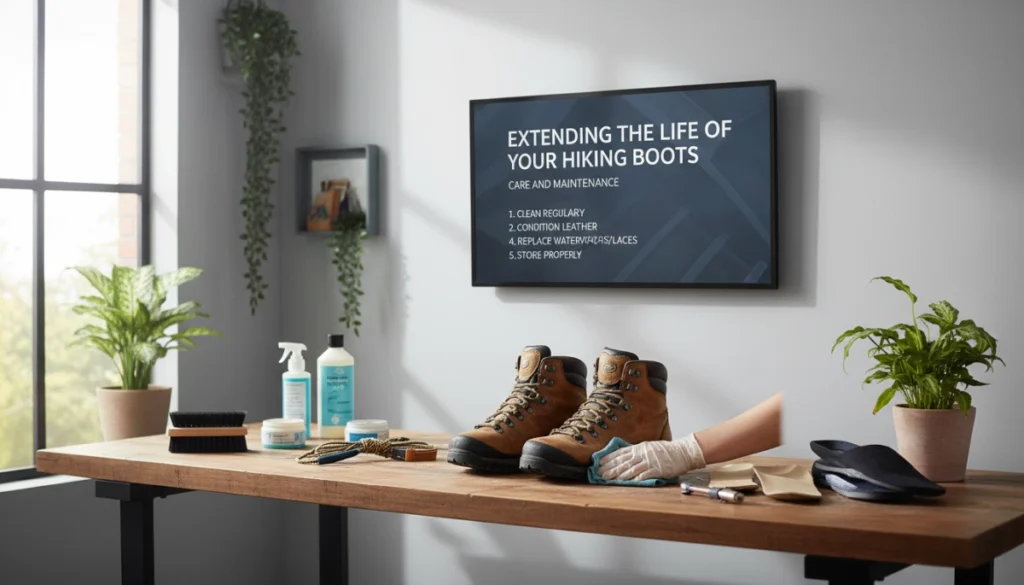
If you’ve invested in a pair of hiking boots, you’ve probably wondered how to extend their lifespan beyond a single season of mud, rain, and rocky trails.
The truth? A simple care and maintenance routine can turn a 300–500 mile boot into an 800+ mile workhorse—without sacrificing waterproofing, comfort, or support. Most boots fail early not because they’re poorly made, but because dirt grinds away at fabrics, leather dries and cracks, and soaked boots are dried the wrong way.
In this guide, you’ll learn exactly how to clean, dry, waterproof, condition, and store your hiking boots so they stay trail-ready for years—whether they’re full-grain leather, synthetic, or Gore‑Tex lined. At megapickly, we build boots for durability; this is the step-by-step routine that helps you protect that investment and keep your favorite pair on your feet, not in the landfill.
Why Proper Hiking Boot Care Matters
If you hike even a few times a year, extending the life of your hiking boots is one of the easiest ways to save money and stay comfortable on the trail. Good boots are an investment; how you clean, dry, and store them decides whether they last one season or five.
How Neglect Destroys Hiking Boots
Neglect isn’t dramatic; it’s slow and sneaky. Here’s what actually kills boots:
| Problem | What Causes It | What It Does to Your Boots |
|---|---|---|
| Moisture | Staying wet, sweaty lining, bad drying | Rotting stitching, mold, warped midsoles, smelly boots |
| Dirt & Mud | Caked-on mud, gritty dust | Sandpaper effect that grinds leather, fabric, and seams |
| Heat | Heaters, campfires, car dashboards, hot trunk | Cracked leather, melted glue, Gore‑Tex delamination |
| Abrasion | Rocky trails, skipping cleaning & conditioning | Thinning leather, worn rands, faster outsole breakdown |
Leave your boots muddy and wet in a hot car and you’re hitting all four at once. That’s how a $200+ pair dies in a year.
Why Regular Boot Maintenance Is Worth It
A simple hiking boot maintenance routine pays off fast:
- More comfort: Clean, conditioned uppers flex better and stop hot spots and blisters.
- Better traction: Mud-free lugs grip rock and loose dirt instead of sliding.
- Reliable waterproofing: Regular waterproofing hiking boots keeps rain and slush from soaking your socks.
- Real savings: Well‑maintained boots can be resoled instead of replaced, stretching your budget over years.
You don’t need fancy routines—just consistent, basic care.
Typical Lifespan: Leather vs Synthetic
Most hikers underestimate how long boots can last with proper care:
| Boot Type | Average Lifespan (With Good Care) | Notes |
|---|---|---|
| Full‑grain leather boots | 5–10+ years | Best for resoling hiking boots, very repairable |
| Nubuck / suede leather boots | 4–8 years | Need more careful cleaning and waterproofing |
| Synthetic / fabric boots | 2–5 years | Lighter but break down faster in midsole and fabric |
| Leather + Gore‑Tex hybrids | 4–8 years | Upper can outlast membrane if cared for correctly |
If someone tells you “boots just don’t last,” what they usually mean is “I never cleaned or conditioned mine.”
How Different Boot Materials React to Wear
Knowing what your boots are made of helps you care for them the right way:
| Construction Type | How It Wears | What It Needs Most |
|---|---|---|
| Full‑grain leather | Stiff, very durable; can crack | Conditioning hiking boots, careful drying |
| Suede / nubuck leather | Softer, scuffs and stains faster | Gentle hiking boot cleaning tips, proper waterproofing |
| Fabric / synthetic uppers | Lightweight but frays and abrades | Frequent mud removal, no harsh detergents |
| Gore‑Tex lined boots | Waterproof, but glue and membrane fail under heat and dirt | Cleaning Gore‑Tex hiking boots gently, no high heat |
Takeaway: Proper boot care—cleaning, drying, conditioning, waterproofing, and smart storage—can literally double or triple the lifespan of your hiking footwear, keep your feet happier, and save you from buying new boots every season.
Step 1: Post-Hike Boot Cleaning
After-hike boot care: what to do right away
Right when I get back to the car or trailhead, I deal with my boots before the mud dries like concrete:
- Knock off mud by gently banging the soles together.
- Brush off dry dirt and trail dust with a boot brush or old toothbrush.
- Undo the laces fully so the boot can open up and breathe.
This quick after-hike boot care keeps grit from grinding into the leather, fabric, and midsoles.
Safe tools for hiking boot cleaning
You don’t need anything fancy to clean hiking boots properly:
- Soft boot brush (or old toothbrush / soft nylon brush)
- Soft cloth or sponge
- Lukewarm water (not hot)
- Mild boot cleaner or non-detergent soap designed for outdoor gear
I avoid stiff wire brushes on uppers—they can shred suede, nubuck, and fabric.
Deeper clean: laces and insoles
For a real reset after a muddy or long hike:
- Remove laces
- Hand-wash in lukewarm water with mild soap.
- Rinse and hang to dry.
- Pull out insoles
- Brush off dirt and grit.
- Wipe with a damp cloth and mild cleaner.
- Let them dry separately for better odor control.
This simple step helps boots dry faster and keeps the inside from smelling like a gym bag.
Cleaning leather hiking boots
For full-grain or smooth leather hiking boot care:
- Brush off loose dirt dry first.
- Mix lukewarm water + a bit of mild boot cleaner (or something like Nikwax Footwear Cleaning Gel).
- Dip the brush or sponge, squeeze excess water, then gently scrub the leather.
- Wipe with a clean damp cloth to remove soap and dirt.
- Let them air dry away from direct heat before conditioning or waterproofing.
Stay gentle—over-scrubbing can strip natural oils from the leather.
Cleaning suede and nubuck hiking boots
Suede and nubuck need a lighter touch:
- Use a suede/nubuck brush or soft nylon brush to lift dirt.
- For stains, use a special suede/nubuck cleaner or eraser-style block.
- Avoid soaking the boot—too much water flattens the nap and can stain.
- If you must rinse, do it lightly, then blot with a towel and air dry.
This keeps that soft, textured look instead of turning suede into a shiny, stiff mess.
Cleaning synthetic and fabric hiking boots
For synthetic and fabric hiking boot cleaning tips:
- Knock off mud and brush off dry dirt.
- Use lukewarm water + a non-detergent cleaner (outdoor gear wash is ideal).
- Gently scrub fabric and mesh with a soft brush or sponge.
- Rinse lightly to remove soap and trail dirt.
- Air dry completely before wearing or storing.
Detergent residue can mess with waterproofing and breathability, so I always go with gear-specific cleaners.
Cleaning Gore‑Tex hiking boots
Cleaning Gore‑Tex hiking boots is about protecting the membrane and outer DWR:
- Use lukewarm water and a cleaner labeled safe for Gore‑Tex (like Nikwax, Granger’s, etc.).
- Do not soak for long periods—short, gentle wash only.
- Rinse just enough to remove cleaner; don’t pressure blast.
- Air dry at room temp—no high heat.
This keeps your Gore‑Tex boot waterproofing and breathability working like it should.
What not to use on hiking boots
If you want your boots to last, avoid:
- Dish soap and strong detergents – strip oils and damage waterproof coatings.
- Bleach or harsh chemicals – can degrade fabric, leather, and Gore‑Tex.
- Pressure washers or car wash sprayers – force water into seams and break down glue.
- Household cleaners with solvents – can dry and crack leather and midsoles.
I stick to cleaners made for hiking footwear. It’s cheaper than replacing boots early.
How often to fully clean hiking boots
I base my hiking boot maintenance routine on terrain and mileage:
- After every muddy, snowy, or sandy hike:
- Quick clean + brush + inside dry.
- Every 3–5 day hikes or 30–50 miles:
- Deeper clean with proper boot cleaner, especially for leather and Gore‑Tex.
- Heavy use (Pacific Northwest rain, East Coast mud, Rockies snow):
- Deep clean more often—any time they’re caked, soaked, or gritty inside.
Consistent post-hike boot cleaning is the easiest way to extend the lifespan of your hiking footwear and avoid paying for new boots before you have to.
Step 2: Drying Hiking Boots Properly
Why improper drying ruins hiking boots
If you want to extend the life of your hiking boots, how you dry them matters just as much as how you clean them. Bad drying habits can destroy boots fast:
- Cracked leather – High heat pulls natural oils out of leather, causing it to dry, stiffen, and crack.
- Delamination – Glues that hold the sole, midsole, and upper together can melt or weaken from heat, leading to peeling and separation.
- Warped midsoles – Excess heat and uneven drying can twist or warp the midsole, which kills support and comfort.
Drying hiking boots properly is one of the easiest ways to avoid early failure—and save money on replacements.
Best way to air-dry hiking boots at home
Here’s how I dry hiking boots at home without ruining them:
- Clean first – Knock off mud, brush off dirt, and wipe with a damp cloth. Dirty boots dry worse.
- Remove insoles and laces – This opens up airflow and helps the boot dry from the inside out.
- Loosen the tongue – Pull the tongue forward so air can get deep into the boot.
- Set in a dry, shaded, ventilated spot – Room temp is perfect. Think: laundry room, mudroom, or near (not on) a vent.
No direct sun. No heat blasts. Just steady, gentle air-drying.
Using newspaper, towels, or boot dryers safely
To dry hiking boots faster without damage, I like to use simple tools:
Newspaper or paper towels:
- Loosely stuff the boots with crumpled newspaper or paper towels.
- Swap them out every 1–2 hours at first, then leave overnight.
- Great for soaking up moisture from deep in the toe box.
Towels:
- Use a small, dry towel to fill the boot if you’re out of newspaper.
- Rotate the towel as it gets damp.
Boot dryers:
- Use a low-heat or “no-heat” boot dryer only.
- Make sure the air is warm at most, never hot.
- Avoid cheap high-heat dryers that blast hot air straight into the boot.
These options speed up drying while still protecting leather, synthetic materials, and waterproof membranes like Gore-Tex.
How to speed up drying hiking boots without high heat
If your boots are soaked and you need them ready for the next day, you can speed things up safely:
- Use a fan – Set a fan so it blows gently across the boots. This boosts evaporation without heat.
- Increase air movement – Crack a window or run a dehumidifier if you live somewhere humid.
- Alternate pairs – If you hike a lot, owning two pairs of hiking footwear lets you rotate while one dries fully.
You never need a hair dryer, space heater, or oven. If it feels “hot” on your hand, it’s too hot for your boots.
Signs your hiking boots are completely dry
Before you throw your hiking boots back on, check:
- Inside feels bone-dry – Slide your hand or a dry tissue deep inside. No cool damp spots.
- Insoles are fully dry – They should not feel spongy or cool.
- No dark, wet patches – The leather, suede, or fabric should look evenly colored.
- No musty smell – Damp boots smell off; dry boots don’t.
If you’re unsure, give them another 6–12 hours. Wearing slightly damp boots is a fast way to get blisters and odor.
Drying hiking boots on the trail or on multi-day trips
Out on backpacking trips or multi-day hikes, drying boots is tougher but still doable:
- Remove insoles and loosen laces every night to let air in.
- Stuff with dry clothing (like socks or a T-shirt) to pull moisture out overnight.
- Hang boots in a breezy, shaded spot – under a tarp, in a tent vestibule, or under a shelter roof.
- Use campfire heat carefully – Keep boots far away from direct heat; if you can feel strong heat on your hand, it’s too close.
In wet climates or on rainforest-style hikes, boots may never get fully dry between days. Focus on slow, gentle drying and good socks instead of forcing heat.
Drying mistakes to avoid
To protect your hiking boots and extend their lifespan, avoid these common drying mistakes:
- No campfire drying – Don’t set boots by open flames or directly over coals. They’ll cook and crack.
- No space heaters or radiators – Direct heat can melt glues and warp the midsole.
- No car dashboards – Sun plus windshield equals oven. This ruins leather and synthetic boots fast.
- No direct, strong sunlight – UV and heat can fade, dry, and crack leather and fabrics.
- No clothes dryers – Machine drying hiking boots can destroy stitching, midsoles, and waterproof linings.
If you stick to air-drying, low heat, and good airflow, your hiking boot care routine will go a long way in extending the life of your footwear and keeping them trail-ready longer.
Step 3: Waterproofing Hiking Boots
When Your Hiking Boots Need Re-Waterproofing
I re-waterproof my boots as soon as I see this:
- Water stops beading on the surface and starts soaking in
- Dark wet spots appear on leather or fabric
- The boot feels heavy and stays damp longer than it used to
- Your socks get damp in light rain or wet grass
If water isn’t beading, your DWR (durable water repellent) is basically done.
Types of Waterproofing Products for Hiking Boots
| Type | Best For | Pros | Cons |
|---|---|---|---|
| Sprays | Fabric, synthetic, suede, nubuck | Easy, fast, even coverage | Needs more frequent reapply |
| Creams | Full-grain leather hiking boots | Deep protection, conditions | Can darken leather slightly |
| Waxes | Full-grain leather, older boots | Very durable, great water block | Can reduce breathability/flex |
| Liquids | Mixed-material / fabric boots | Good penetration, simple use | Follow directions carefully |
Look for trusted names like Nikwax, Gear Aid, Granger’s, etc. Avoid cheap “mystery” sprays.
Waterproofing Leather Hiking Boots (Step-by-Step)
For full-grain leather hiking boots:
- Clean first
- Remove dirt and mud, let boots dry until just slightly damp.
- Choose product
- Use a leather-specific cream or wax (Nikwax Waterproofing Wax for Leather is a solid pick).
- Apply thin and even
- Use a clean cloth or fingers; work it into seams, tongue, and flex points.
- Remove excess
- Wipe off extra product so leather doesn’t feel greasy.
- Let cure
- Air-dry at room temp (see cure times below).
I go light with product—heavy buildup can make boots too soft and hot.
Waterproofing Suede and Nubuck Hiking Boots
Suede and nubuck need a softer touch so you don’t wreck the texture:
- Use a dedicated suede/nubuck spray (like Nikwax Nubuck & Suede Spray).
- Start with boots clean and dry.
- Hold spray about 6–8 inches away and apply a light, even coat.
- Don’t soak the boot—multiple light coats beat one heavy soak.
- After drying, restore the nap with a suede brush if needed.
Never use heavy wax on suede/nubuck—it will flatten and darken the surface permanently.
Waterproofing Fabric and Synthetic Hiking Boots (DWR Refresh)
For fabric, mesh, and synthetic hiking footwear:
- Clean boots with a non-detergent cleaner first.
- While boots are slightly damp, apply a DWR refresher spray (Nikwax Fabric & Leather Proof or similar).
- Focus on seams, flex zones, and toe area where water hits hardest.
- Wipe off any puddles or drips and let them dry fully.
This helps restore the water-beading effect without clogging breathability.
Using Nikwax on Hiking Boots Safely
I use Nikwax constantly in our own gear lineup because it’s:
- Water-based and PFC-free
- Designed specifically for technical outdoor footwear
Basic safety/use rules:
- Always clean first, then waterproof.
- Follow the exact product type for your material (leather vs fabric vs suede).
- Use it in a ventilated area.
- Don’t over-apply; thin, even coats work best.
How Long to Let Waterproofing Cure
General rule for most hiking boot waterproofing:
- Minimum: 12 hours at room temperature
- Ideal: 24 hours before serious trail use
- Keep away from direct heat, car dashboards, and heaters while curing.
If boots still feel slightly tacky or smell strongly of product, they’re not fully cured.
How Often to Reapply Waterproofing Hiking Boots
How often you re-waterproof depends on where and how you hike:
| Usage Style / Conditions | Re-Waterproofing Frequency |
|---|---|
| Weekend day hikes, mostly dry trails | Every 4–6 months |
| Mixed conditions, light rain, wet grass | Every 2–3 months |
| PNW-style rain, Appalachians, soggy trails | Every 1–2 months |
| Long thru-hikes or guiding/working in boots | Check monthly, treat as needed |
I just do a simple “bead test”:
Spray or drip a bit of water on the boot. If it beads and rolls off, you’re good. If it darkens and soaks in, it’s time to reapply.
Keeping up on waterproofing hiking boots is one of the easiest ways to extend the lifespan of your hiking footwear, protect the leather, and stay comfortable on U.S. trails from the Rockies to the Smokies.
Step 4: Conditioning Leather Hiking Boots
Why Leather Hiking Boots Need Conditioning
If you want to extend the lifespan of your hiking boots, conditioning is non‑negotiable for leather.
- Trail dust, mud, and sun dry leather out
- Wet/dry cycles pull natural oils out of the fibers
- Dry leather = cracking, stiffness, and lost waterproofing
A good leather hiking boot care routine keeps the leather flexible, stops cracks before they start, and helps your waterproofing work better.
Choosing the Right Leather Conditioner for Hiking Boots
For conditioning hiking boots, I stick to products made for outdoor footwear, not fashion shoes.
Look for:
- Water-based or wax-based conditioners (Nikwax, Atsko, Granger’s, etc.)
- No heavy shine – you want performance, not dress-shoe gloss
- Labeled safe for full-grain leather hiking boots (and Gore‑Tex if your boots have it)
Avoid:
- Petroleum-based products (they can weaken glue and over-soften leather)
- Generic mink oil or heavy oils unless the boot maker recommends it
- Regular shoe polish on technical hiking boots
How to Apply Leather Conditioner (Without Over-Softening)
Think light, even, and occasional.
- Clean and dry boots first (no mud, no damp spots)
- Use a small amount of conditioner on a soft cloth or sponge
- Work it in with small circular motions – focus on flex points and seams
- Wipe off any excess after a few minutes
- Let boots dry at room temp overnight before wearing
Over-conditioning will make boots mushy and kill support. When in doubt, less is more.
Conditioning Full-Grain vs Nubuck and Suede
Different leather = slightly different hiking boot maintenance routine:
-
Full-grain leather
- Can handle creams, waxes, and water-based conditioners
- Slight darkening is normal and usually improves water resistance
-
Nubuck and suede
- Use special nubuck/suede conditioners and sprays
- Avoid heavy waxes and oils that flatten or smooth the texture
- Expect a bit of color darkening, but you shouldn’t end up with shiny leather
If you’re unsure, follow what your boot brand recommends. It matters, especially for higher-end U.S. favorites like Danner, Lowa, or Asolo.
How Often to Condition Leather Hiking Boots
How often you condition depends on climate and trail type:
- Dry, hot, or desert trails (AZ, NV, SoCal)
→ Every 1–2 months of regular use - Wet, muddy, or Northeast / PNW climates
→ Every 2–3 months, or after several soak/dry cycles - Occasional weekend hikers
→ 2–3 times a year is usually enough
Rule of thumb: if the leather looks dull, dry, or feels stiff, it’s time.
Common Leather Conditioning Mistakes to Avoid
To make hiking boots last longer, skip these:
- Over-conditioning – doing it after every hike will soften the boot too much
- Using petroleum jelly, random oils, or furniture polish
- Heavy mink oil on Gore‑Tex boots (can affect breathability and glue)
- Slathering on thick layers instead of thin, controlled applications
Dial in a simple, consistent hiking boot maintenance routine, and your leather boots will stay flexible, supportive, and trail-ready for years.
Step 5: Advanced Boot Maintenance and Repairs
Inspecting Hiking Boots for Wear and Damage
If you want to extend the life of your hiking footwear, start by doing a quick inspection every few hikes:
- Outsoles (bottom tread):
- Look for flat spots, rounded lugs, and smooth areas.
- If the tread is worn down like a bald tire or you’re slipping more, traction is fading.
- Midsoles (the foam layer):
- Check for deep creases, cracks, or a “mushy” feel underfoot.
- If your boots feel dead, less cushioned, or uneven, that’s midsole breakdown.
- Uppers and stitching:
- Look along the seams for loose threads, fraying, or gaps.
- Check the rand (the rubber strip around the base) for peeling or separation.
- Eyelets and hooks:
- Make sure metal hardware isn’t bent, cracked, or pulling out of the leather or fabric.
This basic hiking boot inspection helps you catch problems early, before they ruin a good pair of boots.
Checking Outsoles and Traction
Outsoles are your grip on the trail. Losing traction is a safety issue.
- If the heel brake is rounded off, descents get sketchy.
- If lugs are half their original depth or less, it’s time to think repair or replacement.
- Uneven wear (one side more worn) can signal gait issues or support problems with insoles.
When the outsole is worn but the upper is still solid, resoling hiking boots is often worth it.
Spotting Midsole Breakdown
Midsole compression is one of the best signs your boots are aging out.
- Press your thumb into the midsole foam:
- If it feels hard, brittle, or cracked, it’s breaking down.
- If it feels flat and dead, the shock absorption is gone.
- Look at the side of the boot under your foot:
- Deep, permanent wrinkles usually mean compressed midsoles.
Once the midsole goes, long backpacking trips in the US West, Appalachians, or Rockies will feel brutal on your knees and back.
Stitching, Eyelets, Hooks, and Rand
These areas fail earlier than most people expect.
- Stitching:
- Fix loose threads early or you’ll end up with open seams and water leaks.
- Eyelets/hooks:
- If one pulls out on trail, it can ruin your lacing and stability.
- Rand:
- A peeling rand lets water and grit get between the sole and upper, speeding up delamination.
Catch and fix small issues now, instead of replacing the whole boot later.
Resoling Hiking Boots: When It Makes Sense
Resoling hiking boots is worth it when:
- You have quality leather or premium synthetic boots (think higher-end brands, full-grain leather, or serious backpacking models).
- The uppers are still in good shape, no major cracking or blown-out fabric.
- You like the fit and don’t want to break in a new pair.
Resoling doesn’t make sense when:
- The midsole is shot, crumbling, or severely compressed.
- The leather is cracked, dried out, or torn.
- The boot is a cheap entry-level model with glued-only construction that isn’t built to be rebuilt.
If you’re in the US, many cobblers and online boot repair shops specialize in resoling hiking footwear and can give you a quick opinion from photos.
What a Cobbler Can Do for Your Boots
A good cobbler can:
- Replace worn outsoles with new Vibram or similar high-traction soles.
- Repair or re-glue loose rands and delaminated midsoles.
- Fix stitching, eyelets, hooks, and small tears.
- Sometimes rebuild the midsole on higher-end boots.
For a well-made pair of leather hiking boots, a quality resole can easily add years of life and is often cheaper than buying a new premium pair.
DIY Hiking Boot Repairs at Home
For small issues, basic DIY hiking boot repairs are enough:
- Loose rand or peeling sole edge:
- Clean the area, let it dry, then use a flexible outdoor shoe glue (like Shoe Goo or Gear Aid Freesole).
- Clamp or tape it in place until cured.
- Small delamination spots:
- Glue, press, and keep dry for the full cure time.
- Minor scuffs and scrapes in leather:
- Clean, let dry, and use a leather conditioner to keep it from cracking.
Avoid rigid super glue on flexing areas—it cracks and usually makes things worse.
Replacing Laces and Insoles
Sometimes the easiest upgrade is also the most effective:
- Laces:
- Swap to strong hiking laces if the stock ones fray, slip, or break.
- Consider slightly longer laces if you use different lacing patterns for downhill or wide feet.
- Insoles:
- Factory insoles are usually thin. Upgrading to supportive aftermarket insoles can help with:
- Arch support
- Heel stability
- Reducing foot fatigue on long US trails
- Factory insoles are usually thin. Upgrading to supportive aftermarket insoles can help with:
New insoles and laces can make older boots feel noticeably more supportive and dialed in.
Cleaning and Freshening the Inside of Your Boots
Inside care is a big part of hiking boot maintenance:
- After hikes, pull out insoles and let them air-dry.
- Shake or vacuum out sand, grit, and trail dirt so it doesn’t chew up the lining.
- Wipe the interior with a damp cloth and a mild, non-detergent cleaner if there’s salt or sweat buildup.
- Let everything fully air-dry before you put insoles back in or store your boots.
This is key if you hike in hot US states (Arizona, Texas, SoCal) where sweat and dust build up fast.
Hiking Boot Odor Control That Actually Works
To stop boots from smelling, don’t just cover the odor—cut the cause:
- Dry boots completely after every hike. Odor-causing bacteria love damp, dark boots.
- Use:
- Baking soda lightly sprinkled inside overnight, then dumped out.
- Activated charcoal or cedar shoe inserts between trips.
- A light spray of boot-specific odor eliminator, not heavy perfume sprays.
- Always wear moisture-wicking socks, not cotton.
If your hiking boots smell bad even after drying, do a focused inside clean + odor control session. It’s cheap, easy, and makes wearing them a lot more pleasant.
This level of advanced hiking boot maintenance and repair keeps good boots on the trail longer, saves money, and gives you more reliable performance when you’re miles from the trailhead.
Step 6: Proper Hiking Boot Storage
Best conditions for storing hiking boots
If you want to extend the life of your hiking boots, how you store them matters as much as how you clean them.
Best storage conditions:
- Cool: Room temp, roughly 55–75°F.
- Dry: Low humidity, no damp walls or floors.
- Ventilated: Some airflow so sweat and moisture don’t get trapped.
- Dark or shaded: Out of direct sun to protect leather, fabric, and glue.
Around most U.S. homes, a bedroom closet or gear room beats a garage, attic, or basement almost every time.
How to prep boots for storage
Before storing hiking boots after a trip or at the end of a season, I always:
-
Clean them:
- Knock off mud and trail dirt.
- Wipe or brush uppers so salt and grime don’t eat the materials.
-
Dry completely:
- Remove insoles and laces.
- Let everything air-dry until the inside feels bone dry.
-
Refresh the inside:
- Light sprinkle of baking soda or a dedicated boot odor control product.
- Make sure there’s no lingering moisture.
-
Re-condition / re-waterproof (for leather):
- Light leather conditioner if needed.
- Waterproofing treatment if you’re putting them away for months.
Using boot trees and stuffing to hold shape
To keep hiking footwear from collapsing or creasing badly:
- Use boot trees (cedar is great for moisture and odor).
- Or stuff with:
- Plain paper or kraft paper
- Clean, dry rags or old t‑shirts
Avoid:
- Newspaper if the ink tends to transfer (rare, but possible on light linings).
- Over-stuffing, which can stretch leather and fabric.
This is especially useful for full-grain leather hiking boots that can crease and crack if stored empty and flattened.
Why not plastic bags or damp basements
If you’re serious about hiking boot care, skip these common mistakes:
-
Plastic bags or bins (unventilated):
- Trap moisture, which leads to mildew, bad odors, and delamination.
- Gore-Tex and other breathable membranes hate this.
-
Damp basements or wet garages:
- Invite mold, rust on eyelets, and rot in leather and glues.
- High heat in garages also speeds up midsole breakdown.
If you must use a bin, choose a vented gear bin and toss in a silica gel pack or other desiccant.
Long-term storage for winter or off-season
For long-term storage (winter, off-season, or when you rotate multiple pairs):
- Store in a cool, dry closet—not an attic or hot garage.
- Keep them off bare concrete floors (use a shelf or mat).
- Use boot trees or stuffing to maintain shape.
- Add desiccant packs in or near the boots in humid areas (Southeast, coastal regions).
- Keep them loosely spaced, not crushed under other gear.
This helps prevent cracking leather, dry soles, and warped midsoles so your boots still feel right when you pull them out months later.
How to “wake up” boots after long storage
When you’re ready to bring your hiking boots back into rotation:
-
Inspect everything:
- Check outsoles for dry cracks or separation.
- Squeeze the midsole—if it feels crumbly or splits, it’s breaking down.
- Look at stitching, eyelets, laces, and the rand for damage.
-
Flex test:
- Gently bend the boot at the forefoot.
- Listen/feel for cracking or popping in the midsole or welt.
-
Quick refresh:
- Light brush or wipe to remove dust.
- If leather looks dry, use a light conditioner (don’t overdo it).
- Reapply waterproofing if water no longer beads on the surface.
-
Short shakedown walk:
- Wear them around the house or on a short local walk.
- Make sure the fit, support, and traction still feel solid before a big trip.
Storing hiking boots properly is one of the easiest ways to make your hiking boots last longer, save money, and avoid mid-trip gear failures.
Seasonal Hiking Boot Care Tips
Season and terrain change how I take care of my boots. If you want to extend the life of your hiking footwear, you can’t treat winter mud, desert dust, and wet rainforest trails the same way.
Winter & Muddy Season Hiking Boot Care (Salt, Slush, Heavy Mud)
Winter in the U.S. is rough on leather and synthetic boots, especially with road salt and constant wet:
-
Rinse salt ASAP
- At home, rinse boots with lukewarm water to remove road salt and de-icer.
- Salt dries and cracks leather and can corrode metal eyelets.
-
Remove heavy mud early
- Let wet mud dry, then knock it off and use a boot brush to clear the tread.
- Packed mud kills traction and holds moisture against the material.
-
Extra protection for winter
- Keep waterproofing hiking boots more often in winter (sprays, wax, or Nikwax).
- Condition leather lightly after repeated wet–dry cycles to prevent cracking in leather boots.
Extra Cleaning After Snow, Road Salt & Wet Trails
After snow or slushy hikes, I treat it like a “deep clean light”:
-
Quick wipe-down
- Use a damp cloth to wipe salt lines, slush, and dirty water off leather, suede, and fabric.
- Don’t let salt dry on the boot.
-
Focused cleaning routine
- For leather: use a mild boot cleaner, then dry and reapply waterproofing.
- For synthetic/Gore-Tex: use a non-detergent cleaner and refresh DWR if water stops beading.
-
Dry thoroughly
- Air dry at room temp with paper or towels stuffed inside.
- Never dry on a heater, near a fireplace, or on a car dashboard.
Caring for Boots on Dusty Desert & Dry Trails
Desert and high-plains trails in places like Utah, Arizona, or West Texas are brutal in a different way:
-
Brush after every hike
- Use a soft boot brush to remove fine dust from seams, laces, and tongue.
- Dust acts like sandpaper and speeds up wear on mesh and fabric.
-
Condition leather more often
- Dry heat pulls oils out of leather. Use a light leather conditioner to keep it from drying and cracking.
- Don’t overdo it or over-soften the boot.
-
Watch your midsoles
- Hot rock and desert temps can lead to midsole breakdown.
- Check for cracks, crumbling foam, or delamination regularly.
Boot Care for Wet Climates & Rainforest-Style Hikes
If you hike a lot in the Pacific Northwest, Appalachians, or Gulf Coast, your boots see constant moisture:
-
Prioritize drying
- After every trip, remove insoles and laces and fully dry boots inside and out.
- Use a boot dryer on low or just airflow and paper stuffing.
-
Stay on top of waterproofing
- Reapply waterproofing hiking boot treatments (Nikwax, sprays, or waxes) as soon as water stops beading.
- Pay extra attention to seams, toe box, and flex points.
-
Fight odor and mildew
- Let boots breathe between trips.
- Use odor control sprays, baking soda, or dedicated boot fresheners to keep mildew and smell in check.
Adjusting Hiking Boot Maintenance by Season & Terrain
My hiking boot maintenance routine changes with where and when I hike:
-
Winter / Mud
- Faster cleaning after each hike
- Frequent salt removal
- More regular waterproofing and occasional conditioning
-
Desert / Dry
- Heavy brushing to remove fine dust
- More conditioning for leather
- Regular checks for midsole breakdown and cracking
-
Wet / Rainforest
- Aggressive drying routine every time
- Consistent waterproofing schedule
- Extra odor control and interior cleaning
Dialing your routine to your local conditions is the easiest way to make hiking boots last longer, keep traction solid, and avoid expensive replacements before you actually need them.
Common Hiking Boot Care Mistakes to Avoid
If you want to extend the life of your hiking boots, avoiding these habits matters more than any fancy product.
1. Over-washing or soaking boots too often
Too much water breaks boots down fast.
- Don’t leave boots soaking in a bucket or sink.
- Skip full “deep cleans” after every short hike.
- Focus on brushing off trail dirt and mud first, then spot clean.
Frequent soaking can cause leather cracking, midsole breakdown, and delamination.
2. Using the wrong cleaner or household detergents
Regular dish soap, laundry detergent, or bleach are bad for leather and Gore‑Tex.
- Use a boot-specific cleaner (Nikwax, Gear Aid, etc.).
- Avoid anything labeled “degreaser” or “antibacterial household cleaner.”
Harsh cleaners strip natural oils and kill waterproof coatings.
3. Drying boots with direct heat sources
This is one of the fastest ways to ruin good boots.
- No campfires, space heaters, radiators, or car dashboards.
- Use room-temperature air, a fan, or a low-heat boot dryer that’s made for footwear.
High heat leads to warped midsoles, brittle leather, and peeling soles.
4. Skipping waterproofing until it’s too late
If water stops beading on the surface, you’ve waited too long.
- Reapply waterproofing hiking boot sprays, waxes, or creams as soon as you see wetting out.
- Once leather soaks up water repeatedly, it’s much harder to bring it back.
Staying ahead of this keeps your boots drier, lighter, and warmer on trail.
5. Ignoring small damage
Tiny issues turn into expensive problems fast.
- Catch loose stitching, peeling rands, and small sole gaps early.
- A quick DIY glue fix or local cobbler can save a $200+ pair of boots.
If you see something starting to fail, deal with it before your next big hike.
6. Storing boots wet or dirty
Tossing muddy, damp boots in the garage or trunk is a boot killer.
- Always dry hiking boots properly before storage.
- Brush off mud, especially from seams and lugs.
- Store in a cool, dry, ventilated space, not a plastic bin.
Wet + dirt = mold, stink, and faster material breakdown.
7. Using regular shoe polish on technical hiking boots
Traditional dress shoe polish isn’t made for technical hiking footwear.
- It can clog leather pores and block breathability, especially on Gore‑Tex boots.
- It may change the finish and interfere with modern waterproofing treatments.
Stick to leather hiking boot care products designed for outdoor use, not office shoes.
Avoiding these common hiking boot care mistakes is the easiest way to make your hiking boots last longer, keep them comfortable, and protect the money you’ve already spent on good gear.
Simple Hiking Boot Maintenance Routine
Keeping up a simple hiking boot maintenance routine is what actually extends the life of your hiking footwear. Here’s how I handle after-hike boot care, weekly checks, and seasonal deep-cleaning so my boots last for years instead of seasons.
Quick Post-Hike Routine (Every Trip)
Right after every hike, I do a fast clean so mud and grime don’t bake into the leather or fabric:
-
Knock off mud and gravel
- Tap soles together and use a boot brush to clear lugs.
- Remove small rocks stuck in the tread so they don’t chew up your outsole.
-
Brush and wipe the uppers
- Lightly brush off dust and dirt (especially on suede, nubuck, and fabric).
- If they’re damp, wipe with a slightly wet cloth—no soap needed for a quick clean.
-
Dry the inside
- Pull out insoles and loosen laces so the boot can vent.
- Let them air-dry indoors in a cool, shaded spot.
This 3–5 minute routine protects waterproofing, prevents odor, and makes deep cleaning a lot easier.
Weekly / Monthly Maintenance Checklist
If you hike a lot—typical for many of us in the US—set a weekly or monthly hiking boot maintenance routine based on how often you’re out:
Every 3–5 hikes (or once a month for frequent hikers):
-
Deep clean
- Remove laces and insoles.
- Use a boot-specific cleaner (like Nikwax or Gear Aid) and a soft brush.
- Rinse with lukewarm water; don’t soak the boots.
-
Check wear and tear
- Look at outsoles for smooth spots or uneven wear.
- Inspect stitching, eyelets, hooks, and rand for early separation.
- Check midsoles for compression lines or “wrinkles” that signal breakdown.
-
Refresh odor control
- Let boots and insoles fully dry.
- Use a light boot deodorizer or sprinkle baking soda overnight, then shake out.
Seasonal Deep-Clean and Waterproofing Schedule
I treat boot care like oil changes—tied to seasons and conditions in the US (winter slush, desert dust, wet spring trails):
At least 2–4 times a year (more if you’re out every weekend):
-
Full deep clean
- Thorough scrub of uppers, tongue, and soles.
- Focus on removing caked mud, trail salts, and fine desert dust that dries out leather.
-
Re-waterproof
- Apply waterproofing for hiking boots (spray, wax, or cream depending on leather/suede/fabric).
- Make sure boots are clean and slightly damp so the product bonds well.
- Let them cure fully overnight before hitting the trail.
-
Condition leather
- For full-grain leather, use a dedicated leather conditioner to prevent cracking.
- Use a light hand so you don’t over-soften backpacking boots that need structure.
This seasonal schedule works well whether you’re dealing with winter hiking boot care (salt and slush) or desert hiking boot maintenance (dust and heat).
Tracking Boot Mileage and Wear
If you want to truly extend the lifespan of your hiking boots, track how much use they’re getting:
-
Log miles
- Use a hiking app (AllTrails, Gaia, Strava) and tag a gear item for your boots.
- Most solid hiking boots last 400–800+ miles, depending on terrain and load.
-
Watch for key wear signs
- Outsole lugs flattened or missing.
- Midsole feels dead, less cushioning, more foot fatigue.
- Heel slipping more, even when laced right.
- Cracks in leather or delamination around the sole.
-
Plan ahead
- If you see midsole breakdown or heavy outsole wear, start planning:
- Resoling hiking boots if they’re high-quality leather boots.
- Replacing budget or heavily worn synthetic boots.
- If you see midsole breakdown or heavy outsole wear, start planning:
Staying on top of mileage and wear saves money long-term, keeps you safer on the trail, and makes sure your boots don’t fail mid-trip.
Hiking Boot Care FAQs
How often should I clean my hiking boots?
For basic after-hike boot care:
- Every hike: Knock off mud, brush off dirt, loosen laces, air them out.
- After muddy / wet trips: Light wash with a boot brush and lukewarm water.
- Deep clean: Every 5–10 hikes, or anytime they’re caked in mud or trail dust.
If you hike a lot (Pacific Northwest rain, Rockies mud), plan a deeper hiking boot cleaning at least once a month.
How often should I waterproof or condition hiking boots?
-
Waterproofing hiking boots:
- Reapply when water stops beading on the surface.
- For most U.S. hikers: every 1–3 months depending on mileage and conditions.
- Wet climates (PNW, Appalachians): more often.
-
Conditioning leather hiking boots:
- Full‑grain leather: about 2–4 times a year.
- Dry, desert, or high-heat states (AZ, NV, UT, CO): a bit more often to prevent cracking in leather boots.
- Nubuck/suede: use light, compatible conditioners if needed, but don’t overdo it.
Can I machine wash or dry my hiking boots?
No. Do not machine wash or machine dry hiking boots. It can:
- Break down glues and midsoles
- Warp the shape
- Damage Gore‑Tex or other membranes
Stick to:
- Hand washing with non-detergent cleaner
- Air drying at room temp, with newspaper or a boot dryer on low/ambient
Can I use regular shoe polish on hiking boots?
For most technical hiking boots, especially with Gore‑Tex, fabric panels, or nubuck/suede:
- Skip regular shoe polish. It can block breathability and change texture.
Use:
- Boot-specific leather conditioners
- Hiking boot waterproofing waxes/creams/sprays (Nikwax, Gear Aid, Granger’s, etc.)
Traditional smooth full‑grain leather boots might take polish, but I still recommend dedicated hiking boot care products instead.
When should I repair hiking boots and when should I replace them?
Repair or resole hiking boots when:
- The leather or upper is still solid
- Outsole is worn but not the upper
- Stitching, eyelets, or rand are just starting to go
- You own a quality pair worth investing in (think mid–high end boots)
Replace when:
- Midsole is crushed or feels “dead” (no cushion, foot aches fast)
- Outsole is bald AND the upper is cracked or separating
- Gore‑Tex or waterproof lining has major leaks
- Multiple layers are delaminating and won’t stay glued
Most U.S. hikers can save money by resoling solid leather boots instead of replacing them, especially if you hike often.
What are the best products for cleaning and waterproofing hiking boots?
Stick with boot-specific products, not random household cleaners. Good categories:
-
Cleaning hiking boots:
- Non-detergent boot cleaners (e.g., Nikwax Footwear Cleaning Gel, Gear Aid Revivex cleaner)
- Soft boot brush and microfiber cloth
-
Waterproofing hiking boots:
- Leather: wax or cream (e.g., Nikwax Waterproofing Wax for Leather)
- Nubuck/suede: spray waterproofers made for rough-out leather
- Fabric/synthetic/Gore‑Tex: DWR sprays (Nikwax Fabric & Leather, Granger’s Footwear Repel)
I build my boot care kits around a simple combo: cleaner + waterproofing + light leather conditioner.
How long should a good pair of hiking boots last with proper care?
With a solid hiking boot maintenance routine, most U.S. hikers can expect:
- Day hikers / casual use: 3–5 years or more
- Regular weekend hikers: ~2–4 years
- Heavy backpacking / guiding / thru-hiking: 1–2 years of hard use
You can extend the lifespan of hiking footwear by:
- Cleaning off mud and trail grit regularly
- Drying boots properly (no direct heat)
- Re-waterproofing and conditioning as needed
- Resoling quality boots instead of tossing them
Take care of them, and your boots will return the favor mile after mile.