
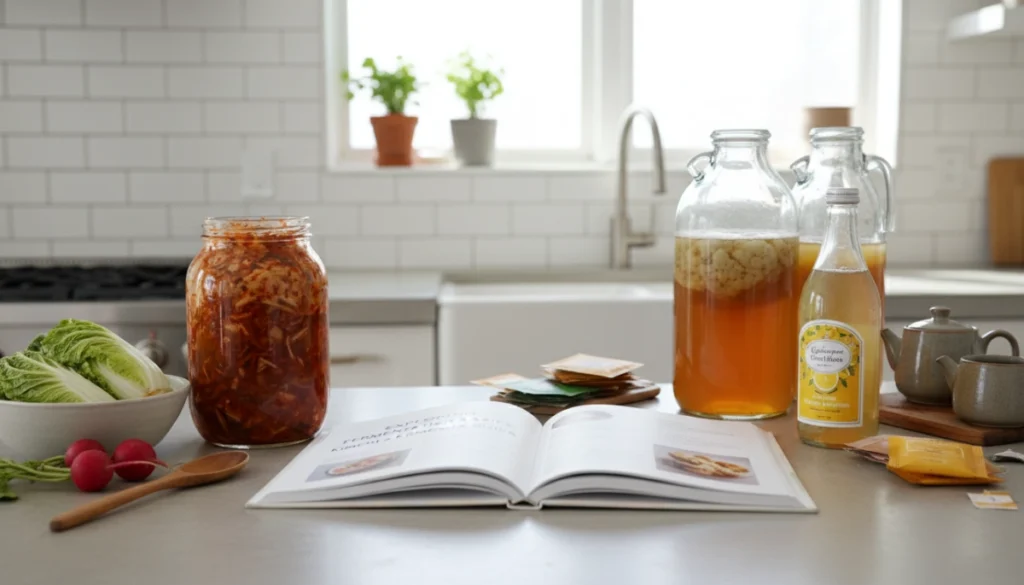
What Is Fermentation? A Beginner’s Overview
If you’re curious about homemade probiotic foods like kimchi and kombucha but a little nervous, you’re in the right place. Let’s break fermentation for beginners down in plain language.
Fermentation Basics: What It Is and Why It Matters
At its core, fermentation is this:
Microbes (good bacteria and yeast) eat sugars and turn them into acids and gases, which preserve food and change its flavor.
In easy terms:
- Microbes eat sugars and carbs
- They produce acids, carbon dioxide, and flavor compounds
- The acids lower the pH, which keeps bad microbes away
- Your food becomes tangy, complex, and naturally preserved
This is why fermented vegetables and drinks like kimchi and kombucha can sit longer than fresh produce and still be safe when made correctly.
Lactic Acid Fermentation vs Kombucha Fermentation
There’s more than one kind of fermentation. For kimchi and kombucha, these are the two big ones:
| Type | Used In | Main Microbes | Main Acid Produced | Oxygen? |
|---|---|---|---|---|
| Lactic acid fermentation | Kimchi, sauerkraut | Lactic acid bacteria (LAB) | Lactic acid | Mostly anaerobic (low oxygen) |
| Acetic/yeast fermentation | Kombucha | Yeast + acetic acid bacteria in SCOBY | Acids + a little alcohol | More aerobic (needs air) |
- Kimchi: Salted veggies + lactic acid bacteria = sour, savory, crisp
- Kombucha: Sweet tea + yeast + bacteria (SCOBY) = tangy, fizzy fermented tea drink
Both are classic easy home fermentation projects.
How Probiotics Form in Kimchi and Kombucha
When we talk about probiotic-rich recipes, we’re talking about live, beneficial microbes that survive in the finished food or drink.
In kimchi:
- Natural bacteria already on the cabbage and veggies wake up in the salty brine
- Salt knocks back unwanted microbes, so lactic acid bacteria can dominate
- As they eat sugars in the vegetables, they multiply and acidify the jar
- Result: a jar full of live probiotic fermented vegetables
In kombucha:
- Yeasts in the SCOBY for kombucha eat sugar and make alcohol + CO₂
- Acetic acid bacteria then turn that alcohol into organic acids
- The living mix in the tea becomes a natural probiotic drink
When consumed regularly, these gut health fermented foods can support a healthy gut microbiome.
Key Microbes: Lactic Acid Bacteria, Yeast, and SCOBY
The main “workers” in your ferments:
- Lactic acid bacteria (LAB) – Star of lactic acid fermentation in kimchi
- Make lactic acid → tangy taste
- Help protect against spoilage organisms
- Yeast – Core in kombucha brewing
- Eat sugar → produce alcohol + carbon dioxide (bubbles)
- Acetic acid bacteria – Also in kombucha
- Turn alcohol into sharp acids → that kombucha bite
- SCOBY (Symbiotic Culture of Bacteria and Yeast)
- A rubbery, jelly-like “pancake”
- Houses the yeast and bacteria that ferment your kombucha first fermentation
Together, they turn simple ingredients into homemade probiotic foods.
How Fermentation Changes Flavor, Texture, and Shelf Life
Fermentation doesn’t just keep food from going bad—it transforms it:
- Flavor
- Kimchi: evolves from salty and fresh to tangy, garlicky, deeply savory
- Kombucha: goes from sweet tea to bright, tart, slightly fruity or vinegary
- Texture
- Kimchi: stays crisp if salted right, softens slowly over time
- Kombucha: stays liquid, but can get light fizz and slight “body” from acids
- Shelf life
- Acids and low pH make it hard for harmful microbes to grow
- Properly fermented, stored kimchi and kombucha last much longer than fresh
That’s the power of anaerobic fermentation basics and simple microbes: better flavor, better keeping quality, and natural probiotics in your kitchen.
Why Start Fermenting at Home?
Health benefits of homemade probiotic foods and gut health
When I make my own kimchi and kombucha, I know I’m getting live, active probiotics that actually support gut health. Store brands are often pasteurized or sitting on shelves too long.
Homemade probiotic foods like kimchi and kombucha can help:
- Support a healthier gut microbiome
- Reduce bloating and support smoother digestion
- Help your body handle certain foods better over time
You’re basically growing fresh probiotics in your own kitchen instead of buying them in a pill.
Fermented foods for digestion, immunity, and energy
Regularly eating fermented foods for digestion and drinking natural probiotic drinks can:
- Support your immune system (a big part of it lives in your gut)
- Help stabilize energy and avoid the heavy, sluggish feeling after meals
- Support better nutrient absorption, which can help overall energy levels
I treat kimchi with meals and kombucha as an afternoon drink instead of soda or energy drinks.
Cost savings vs store-bought kimchi and kombucha
In the U.S., a single jar of kimchi or a bottle of kombucha can cost as much as a whole small batch fermentation at home. When I ferment at home:
- Kimchi: a head of Napa cabbage, salt, and basic seasonings = multiple jars
- Kombucha: tea, sugar, and a SCOBY = gallons of fermented tea drink
You’re getting homemade probiotic foods for a fraction of store prices, especially if your family drinks kombucha regularly.
Customizing flavor, spice, and sweetness
Home fermentation lets you dial in everything the way you like it:
- Kimchi: mild, medium, or nuclear-level spicy; more garlic or less; crunchy or softer
- Kombucha: sweeter or more tart, strong fizz or light, with your favorite flavors (ginger, berry, citrus, herbs)
You’re not stuck with whatever flavor a brand decided to bottle. You control spice level, sweetness, and fermentation time.
Safety myths about home fermentation
A lot of people in the U.S. think home fermentation is risky. In reality, when you follow safe home fermentation practices, it’s very forgiving:
- Salt, acidity, and the right microbes create a hostile environment for bad bacteria
- Lactic acid fermentation in kimchi and a healthy SCOBY for kombucha naturally protect the food
- If something truly goes wrong, it usually smells or looks obviously off, and you toss it
Fermenting at home, with clean tools and basic common sense, is safe, cost-effective, and gut-friendly—and you’re fully in control of what you’re eating and drinking.
Essential Tools and Safety Tips for Home Fermentation
If you’re getting into fermentation for beginners, you don’t need a fancy setup. You just need the right basics and a few safety habits so your homemade kimchi and kombucha stay safe, tasty, and full of probiotics.
Basic Fermentation Tools You Really Need
For small-batch DIY fermented vegetables and drinks, I keep it simple:
- Glass jars (wide-mouth, quart or half-gallon) for kimchi and starter brines
- Fermentation weights (glass/ceramic) to keep veggies under the brine
- Breathable covers (coffee filters, paper towels, or fermentation lids) for kombucha
- Tight lids for storing finished kimchi in the fridge
- Funnel + measuring spoons to keep things clean and consistent
You don’t need a big “kit” to make homemade probiotic foods—a few solid jars and weights are enough to start.
Best Containers for Kimchi and Kombucha (Glass vs Plastic)
For both napa cabbage kimchi recipes and kombucha first fermentation, I always recommend glass:
-
Glass (best choice)
- Non-reactive, doesn’t absorb odors
- Easy to sanitize
- You can see what’s going on (bubbles, color, mold)
-
Plastic (only food-grade and temporary)
- Can scratch and hold bacteria
- Can absorb smells and stains
- I never use it for long ferments with acids (like sour kombucha)
Bottom line: Use glass jars for kimchi fermentation and glass jars or bottles for kombucha brewing and second fermentation kombucha.
Choosing the Right Salt, Tea, Sugar, and Water
Your ingredients matter for safe, consistent easy home fermentation.
Salt for kimchi and fermented vegetables:
- Use: non-iodized salt (sea salt, kosher salt, pickling salt)
- Avoid: iodized table salt (can slow lactic acid bacteria) and salts with anti-caking agents
Tea for kombucha:
- Use: real black tea or a mix of black + green tea
- Avoid: herbal teas only, flavored teas with oils (these can weaken the SCOBY)
Sugar for kombucha:
- Use: plain white cane sugar (best for a healthy SCOBY for kombucha)
- Avoid: artificial sweeteners, low-cal sweeteners
Water:
- Best: filtered or dechlorinated tap water
- Avoid: heavily chlorinated or heavily treated water
Sanitation and Mold Prevention for Safe Ferments
You don’t need to be sterile, but you do need to be clean and consistent:
- Wash jars, tools, and hands with hot soapy water
- Rinse well—no strong soap smell left in jars
- For kimchi and other homemade fermented vegetables:
- Keep everything under the brine
- No floating cabbage, garlic, or spices on top
- For kombucha:
- Use a breathable cover (tightly secured)
- Keep away from houseplants, trash, or open windows
Most “fermentation horror stories” are myths. With simple safe home fermentation practices, mold is rare.
Ideal Temperature Range and pH Basics for Beginners
You don’t need a lab, but knowing the temperature basics helps:
-
Kimchi / lactic acid fermentation:
- Room temp: 60–75°F (16–24°C)
- Warmer = faster, more sour; cooler = slower, milder
-
Kombucha brewing temperature:
- Sweet spot: 68–78°F (20–26°C)
- Too cold = flat, sweet, slow
- Too hot = stressed SCOBY, off flavors
pH (only if you want to measure):
- Kimchi: usually drops below pH 4.0 once it’s nicely fermented
- Kombucha: usually around pH 2.5–3.5 when finished
You don’t have to own a pH meter to start; taste and smell go a long way.
How to Spot a Healthy Ferment vs Spoilage
This is where most beginners stress. Here’s how I check my gut health fermented foods quickly:
Healthy kimchi:
- Smell: tangy, garlicky, sour, maybe a little funky—but not rotten
- Look: bright color, cloudy brine, bubbles are normal
- Texture: crisp to soft-crunchy, not slimy or mushy like snot
Healthy kombucha:
- Smell: tart, vinegary, slightly fruity or tea-like
- Look: new SCOBY forming on top, strands, bubbles—these “floaties” are usually yeast
- Taste: from sweet-tart to sharp-sour, depending on fermentation time
Spoilage red flags (toss the batch):
- Fuzzy mold (green, blue, black, or white fuzzy patches)
- Strong rotten, cheesy, or “garbage” smell
- Pink/orange streaks on kombucha SCOBY or in liquid
If it looks normal and smells pleasant-tart (not rotten), your probiotic rich recipes are usually good to go. When in doubt, don’t “push through”—just toss it and start fresh.
Fermentation Basics for Homemade Kimchi
How lactic acid fermentation works in kimchi
When I make homemade kimchi, I’m using lactic acid fermentation to turn simple veggies into a probiotic-rich food.
Here’s what’s really happening:
- Natural lactic acid bacteria (LAB) living on the cabbage and veggies start eating the sugars in the vegetables.
- As they eat those sugars, they make lactic acid, which:
- Lowers the pH
- Protects the kimchi from harmful microbes
- Gives that classic tangy, sour flavor
- This is the same basic process as sauerkraut and other DIY fermented vegetables.
You’re not “adding probiotics” from a bottle. You’re creating them naturally through fermentation.
Salt brining and the anaerobic environment
For fermentation for beginners, salt is not just about taste; it’s a safety tool.
When I salt and brine napa cabbage for kimchi:
- Salt draws water out of the cabbage, making a natural brine.
- The brine:
- Keeps veggies submerged
- Creates an anaerobic environment (low oxygen), which LAB love
- Slows down bad bacteria while good bacteria take over
To keep it safe and simple:
- Use non-iodized salt (sea salt or kosher is great).
- Pack the kimchi tight and push it below the brine.
- Use a jar weight or a smaller jar inside a larger one to keep veggies under liquid.
No air on the veggies = better anaerobic fermentation and fewer problems.
Time, temperature, flavor, and sourness
Time and temperature control how your kimchi fermentation turns out.
In most U.S. kitchens:
- Room temp (68–75°F / 20–24°C)
- 1–2 days: lighter, fresher, mild tang
- 3–5 days: more sour, more “classic kimchi” flavor
- Cooler temps = slower ferment, milder flavor
- Warmer temps = faster ferment, sharper sourness
What I do:
- Start at room temp.
- Taste daily.
- When the flavor hits the tang level I like, I move it to the fridge to slow the ferment.
You’re in control: shorter time for mild kimchi, longer time for bold and sour.
Understanding bubbles, tang, and smell
During homemade kimchi fermentation, you’ll notice some normal signs that things are working:
Normal signs:
- Bubbles: Tiny bubbles in the brine or around the jar = active fermentation.
- Tangy, garlicky smell: Strong but clean; like pickles, garlic, chili, and cabbage together.
- Slight fizziness on the tongue: Natural carbonation from the lactic acid bacteria.
Warning signs:
- Fuzzy mold (green, black, pink, or blue), especially on veggies above the brine → toss the batch.
- Rotten, cheesy, or putrid smell → not normal, don’t risk it.
If it smells pleasantly sour and “kimchi-like,” and everything stays under the brine, your fermented kimchi is usually on the right track.
Homemade Kimchi: Step-by-Step Guide
Core kimchi ingredients and easy substitutions
For a simple napa cabbage kimchi recipe for beginners, you only need a few basics:
Core kimchi ingredients:
- Napa cabbage
- Coarse sea salt or kosher salt (non-iodized)
- Korean red pepper flakes (gochugaru)
- Garlic
- Ginger
- Green onions
- Sugar (or a little fruit like apple/pear)
- Fish sauce or salted shrimp (for classic flavor)
Beginner-friendly substitutions:
- No fish sauce?
- Use soy sauce, tamari, or extra salt + a bit of miso paste.
- Sensitive to spice?
- Use less gochugaru, or mix in a mild chili powder or smoked paprika.
- No napa cabbage?
- Use green cabbage, savoy cabbage, or a mix of cabbage + carrots + radish.
This keeps your homemade probiotic foods simple, affordable, and easy to customize.
Simple napa cabbage kimchi recipe (small batch)
This small batch is ideal if you’re new to fermentation for beginners.
You’ll need:
- 1 medium napa cabbage (about 2–3 lbs)
- 1/4 cup coarse sea salt or kosher salt
- 4–5 cloves garlic, minced
- 1–2 inches ginger, grated
- 3–4 green onions, sliced
- 2–4 tbsp gochugaru (start lower if you’re spice-shy)
- 1–2 tsp sugar
- 2–3 tbsp fish sauce or vegan substitute
This will fill about a 1-quart jar (a standard mason jar) for easy home fermentation.
Salting and brining cabbage the right way
Getting the brining right is the key to safe, crunchy, homemade fermented vegetables.
Steps:
- Cut napa cabbage into quarters lengthwise, then into bite-size pieces.
- Rinse quickly, then toss with the salt in a large bowl.
- Let it rest 1–2 hours, tossing every 20–30 minutes.
- When the cabbage is bendy but not mushy, rinse 2–3 times in cool water.
- Drain very well (squeeze out excess water gently).
You’re pulling water out of the cabbage and creating the base for an anaerobic fermentation environment that keeps bad bacteria out.
Making the kimchi paste (gochugaru, garlic, ginger, etc.)
The paste brings the flavor and probiotic power together.
Kimchi paste steps:
- In a clean bowl, mix:
- Garlic
- Ginger
- Gochugaru
- Sugar
- Fish sauce (or vegan substitute)
- Stir into a thick, spreadable paste. Add a tablespoon of water if it’s too dry.
- Add green onions (and matchstick radish or carrot if you want extra crunch) into the paste.
Then add the drained cabbage to the bowl and use your hands (gloves help) to massage the paste into every leaf. You want everything evenly coated.
Mixing, packing, and pressing kimchi into jars
To keep your lactic acid fermentation safe, air exposure has to be minimal.
Packing steps:
- Pack kimchi into a clean glass jar a handful at a time.
- Press down firmly with your fist or a spoon to push out air pockets.
- Pour any leftover brine/paste from the bowl into the jar.
- Make sure:
- Vegetables are below the brine line
- Leave about 1 inch of headspace at the top
- Add a fermentation weight or a small clean jar inside the bigger jar to keep everything submerged.
- Close with a loose lid or a fermentation lid that can vent gas.
Submersion under brine = safe anaerobic fermentation basics.
Room temperature fermentation timeline and taste-testing
For most U.S. kitchens, room temperature fermentation usually lands in the 65–75°F range.
Basic timeline:
- Day 1–2: You’ll start seeing small bubbles and a lightly tangy smell.
- Day 3–5: Flavor turns more sour, bubbly, and complex.
- Day 5–7+: Stronger sourness, softer texture.
How to taste-test:
- Use a clean utensil (not your fingers).
- Taste a small piece each day after day 2.
- When it’s as tangy and funky as you like, it’s ready to move to the fridge.
Trust your senses—this is how you dial in your kimchi fermentation time to your taste.
When to move kimchi to the fridge and how long it keeps
Once it hits your ideal sourness:
- Tighten the lid and move the jar to the fridge.
- It will keep developing flavor slowly in cold storage.
- For most people:
- Best flavor: days 7–21
- Safe window: 1–3 months (often longer if it smells and looks normal)
Signs it’s still good:
- Smells pleasantly sour/garlicky (not rotten or cheesy)
- Brine is clear-ish to cloudy, but no fuzzy mold
- Texture is crunchy to soft, but not slimy
Older kimchi is perfect for cooking—stews, fried rice, and savory pancakes.
Vegan and fish-free kimchi options
If you want vegan kimchi or fish-free kimchi without losing flavor:
Swap the umami:
- Use soy sauce or tamari instead of fish sauce.
- Add miso paste for extra depth.
- Toss in a bit of shredded nori or kelp granules for a subtle sea flavor.
Good to know:
- The lactic acid fermentation still works the same without fish.
- You’ll still get a probiotic-rich recipe that supports gut health.
This way you can keep your DIY fermented vegetables friendly for vegans, pescatarians, and anyone avoiding fish, while still enjoying the benefits of kimchi and kombucha in your weekly routine.
Kimchi Variations and Serving Ideas
Easy kimchi variations for beginners
If you’re just getting into homemade kimchi, keep it simple and small-batch. Here are easy kimchi variations that work well in a U.S. kitchen:
- Mild kimchi – Use less gochugaru (Korean chili flakes) or swap part of it with sweet paprika. Great if you’re sensitive to heat but still want lactic acid fermentation and probiotics.
- Spicy kimchi – Add extra gochugaru, a fresh chili or two, and a bit more garlic and ginger. This is the classic “wake you up” fridge staple.
- Radish kimchi (kkakdugi) – Use cubed daikon or Korean radish instead of cabbage. Super crunchy, perfect as a quick fermented vegetable side.
- Simple veggie kimchi – Use what you have: cucumber, carrot, green onion, even kale. Same paste, different veggies. Ideal for DIY fermented vegetables and reducing food waste.
Adjusting spice, salt, and texture to your taste
One of the biggest perks of fermentation for beginners at home is control:
- Spice level –
- Less spicy: cut chili in half, taste the paste before mixing.
- More spicy: add more gochugaru or a bit of fresh jalapeño/serrano.
- Salt level –
- Too salty last time? Shorten the brine time or rinse cabbage longer.
- Not salty enough? Add a light sprinkle of salt when packing the jar.
- Texture –
- Crunchier: ferment a shorter time at cooler temps.
- Softer: ferment longer or keep at slightly warmer room temp.
How to use kimchi in everyday meals
In the U.S., I treat kimchi like a built-in flavor booster. Here’s how I work it into normal weekday meals:
- On the side with any protein and rice
- Mixed into grain bowls (rice, quinoa, or farro)
- On top of avocado toast for a tangy, probiotic kick
- As a topping for burgers, hot dogs, or sandwiches
- Tossed into salads for crunch and acidity
You get homemade probiotic foods without changing your whole routine.
Kimchi in rice bowls, eggs, noodles, tacos, and soups
Kimchi is crazy versatile in American-style comfort food:
- Rice bowls – Add kimchi to rice, fried egg, and leftover meat or tofu.
- Eggs – Stir into scrambled eggs, omelets, or eat on the side of fried eggs.
- Noodles – Toss into ramen, udon, or stir-fried noodles for heat and tang.
- Tacos & wraps – Use kimchi instead of slaw on fish tacos, chicken tacos, or lettuce wraps.
- Soups & stews – Add older, sour kimchi to brothy soups, chili, or a simple kimchi stew with pork or tofu.
This is where gut health fermented foods meet everyday comfort food.
Storing, aging, and cooking with older sour kimchi
As kimchi ages, it gets more sour and funky—but that’s when it shines in cooking:
- Storage
- Keep it in the fridge in a tightly sealed glass jar.
- Use a clean utensil every time to avoid contamination.
- Aging
- Fresh (1–3 days in fridge): crisp, mild, great as a side.
- Aged (2–4 weeks+): sour, deeper flavor, perfect for cooking.
- Best ways to use older kimchi
- Kimchi fried rice
- Kimchi pancakes (jeon)
- Kimchi stew (jjigae) with tofu or pork
- Added to grilled cheese or quesadillas for a sharp, tangy bite
Older kimchi is still a probiotic-rich recipe, but more importantly, it becomes a powerful flavor tool you can plug into almost any savory dish you already make at home.
Fermentation Basics for Homemade Kombucha
What Is Kombucha and How It Ferments
Kombucha is a fermented tea drink made from sweet tea, a SCOBY, and starter tea. When you brew kombucha at home, you’re basically letting friendly yeast and bacteria eat sugar and turn it into:
- Organic acids (tangy, vinegar-like flavor)
- A tiny bit of natural carbonation
- Trace vitamins and beneficial compounds
For beginners, think of kombucha as sweet tea that’s been transformed by microbes into a lightly fizzy, tart, probiotic-rich drink.
Role of the SCOBY and Starter Tea
The SCOBY for kombucha (Symbiotic Culture Of Bacteria and Yeast) is the “living engine” of your ferment:
- Yeast in the SCOBY: breaks down sugar into alcohol and CO₂
- Bacteria: convert that alcohol into acids (like acetic and gluconic acid)
The starter tea (a cup or more of already-fermented kombucha) is just as important:
- Lowers the pH fast, which helps keep bad microbes out
- Gives your new batch a strong, healthy population of the right bacteria and yeast
In my own brewing, I never skip starter tea—it’s one of the core safe home fermentation practices.
Aerobic vs Anaerobic Steps in Kombucha Brewing
Kombucha fermentation has both aerobic (with oxygen) and anaerobic (limited oxygen) phases:
-
First fermentation (F1) – Aerobic
- Brewed in a jar covered with a breathable cloth
- SCOBY sits on top, using oxygen to convert alcohol to acids
- This is where the main fermented tea drink is created
-
Second fermentation (F2) – More anaerobic
- Done in sealed bottles
- Less oxygen, so yeast focus on producing CO₂ for fizz
- This is where you add flavors like ginger, berry, citrus, or herbs
Understanding this aerobic vs anaerobic fermentation basics makes troubleshooting way easier.
How Sugar Turns Into Acids and Fizz Over Time
In a beginner kombucha brewing guide, this is the key flow you want to remember:
-
You add sugar to tea
- The sugar isn’t for you; it’s food for the SCOBY and yeast.
-
Yeast eat the sugar
- Sugar → alcohol + CO₂ (bubbles)
-
Bacteria eat the alcohol
- Alcohol → organic acids (tangy, slightly vinegary taste)
-
Time changes the taste
- Shorter time: sweeter, mild, less acidic
- Longer time: more sour, less sweet, stronger flavor
At home in the U.S., most people hit a 7–10 day window for first fermentation, depending on kitchen temperature. That’s the sweet spot where natural probiotic drinks like kombucha are tangy, not harsh, and easy to drink daily for gut health and digestion support.
Homemade Kombucha: First Fermentation Guide
Best Tea, Sugar, and Water for Kombucha First Fermentation
For a clean, reliable first fermentation kombucha brew, I stick to basics:
-
Tea (no flavors, no oils):
- Best: Organic black tea (English breakfast, Ceylon, Darjeeling)
- Good: Green tea or a black/green blend
- Avoid: Herbal tea, Earl Grey, teas with oils or “natural flavors” (they can stress the SCOBY)
-
Sugar:
- Best: Plain white cane sugar (what the microbes like most)
- Okay: Organic cane sugar
- Avoid: Honey, stevia, coconut sugar, brown sugar for beginners – they can throw off kombucha fermentation
-
Water:
- Use: Filtered or dechlorinated tap water
- Avoid: Distilled (too stripped), strongly chlorinated water (can slow or kill SCOBY for kombucha)
This combo keeps your fermented tea drink consistent, safe, and easy to troubleshoot.
Brewing and Cooling the Sweet Tea Step-by-Step
Here’s a simple beginner kombucha brewing guide for the first ferment:
-
Measure for a 1-gallon batch:
- 3–5 black tea bags (or 2–3 Tbsp loose leaf)
- 1 cup white cane sugar
- 13–14 cups water (leave room for starter tea)
-
Brew:
- Boil about 4 cups of water.
- Turn off heat, add tea.
- Steep 10–15 minutes (longer = stronger, more tannins).
-
Sweeten:
- Remove tea.
- Stir in sugar until fully dissolved.
-
Dilute and cool:
- Add the rest of your cool/room-temp water.
- Let the sweet tea cool to below 85°F (cooler than body temp). Hot tea can damage your SCOBY.
The key for safe home fermentation practices: never add SCOBY to hot tea.
Adding SCOBY and Starter Liquid Safely
Once the sweet tea is cool:
-
Add starter tea:
- Pour in 1–2 cups of unflavored, raw starter kombucha (from a previous batch or store-bought raw kombucha).
- This drops the pH and protects your brew from bad microbes.
-
Add the SCOBY:
- With clean hands, gently place your SCOBY for kombucha on top.
- It might float, sink, or tilt – all normal.
-
Sanitation basics:
- Use clean glass jars and rinsed equipment.
- No soap residue, no bleach smell.
- Rinse hands with water or distilled vinegar before touching SCOBY.
This step sets up your natural probiotic drink to ferment safely and consistently.
Setting Up Your Kombucha Jar and Cover
For small batch fermentation at home, I like a simple setup:
-
Best container:
- Glass jar (half-gallon to 1-gallon) – easy to clean, doesn’t react with acids.
-
Cover (aerobic first fermentation basics):
- Use a tightly woven cloth, paper towel, or coffee filter.
- Secure with a rubber band.
- The goal: air in, dust/fruit flies out.
-
Where to keep it:
- Dark or out of direct sunlight.
- Room with steady temperature.
- Away from trash cans, strong smells, or other active ferments if possible.
Stable conditions = more predictable kombucha brewing temperature and flavor.
First Fermentation Timeline and Temperature
Kombucha first fermentation is mostly about time and temperature:
-
Ideal temp range:
- 70–78°F (21–26°C) is the sweet spot.
- Below 68°F: slower, weak fermentation.
- Above 80°F: faster, sharper, risk of off flavors.
-
Typical timeline (1-gallon batch):
- Days 1–3: Still quite sweet, mild tang.
- Days 4–7: Balanced sweet-tart, most people’s favorite range.
- Days 8–10+: More sour, like apple cider vinegar.
I usually start tasting around day 5 and adjust based on my taste and the season (warmer rooms ferment faster).
How to Taste-Test Kombucha for Readiness
To see if your homemade probiotic drink is ready:
-
Taste without contaminating:
- Wash hands.
- Tilt the jar slightly.
- Use a clean straw or spoon to pull a small sample from under the SCOBY.
- Do not double-dip.
-
What to look for:
- Too sweet: Let it keep fermenting.
- Balanced: Slightly sweet with a gentle tang – perfect for drinking or second fermentation kombucha.
- Very sour: More like vinegar – good as a starter tea for the next batch or for salad dressings.
You’re in control: stop the first ferment when it tastes right for you.
Fixing Common First Ferment Issues (Too Sweet, Too Sour)
Here’s how I troubleshoot kombucha first fermentation:
If it’s too sweet:
- Let it go another 1–3 days, then taste again.
- Check temp – if your room is under 70°F, move the jar to a warmer spot.
- Make sure you used enough starter tea (at least 10–15% of the total volume).
If it’s too sour:
- Use part of that batch as starter tea for the next brew.
- For drinking, dilute with:
- Plain water, or
- Fresh sweet tea during a quick second ferment with flavor.
- Next time:
- Shorten fermentation time (start tasting on day 3–4).
- Brew in a slightly cooler spot.
Dialing in time, temp, and your own taste is how you turn fermentation for beginners into a consistent, easy home fermentation routine.
Second Fermentation Kombucha and Flavor Ideas
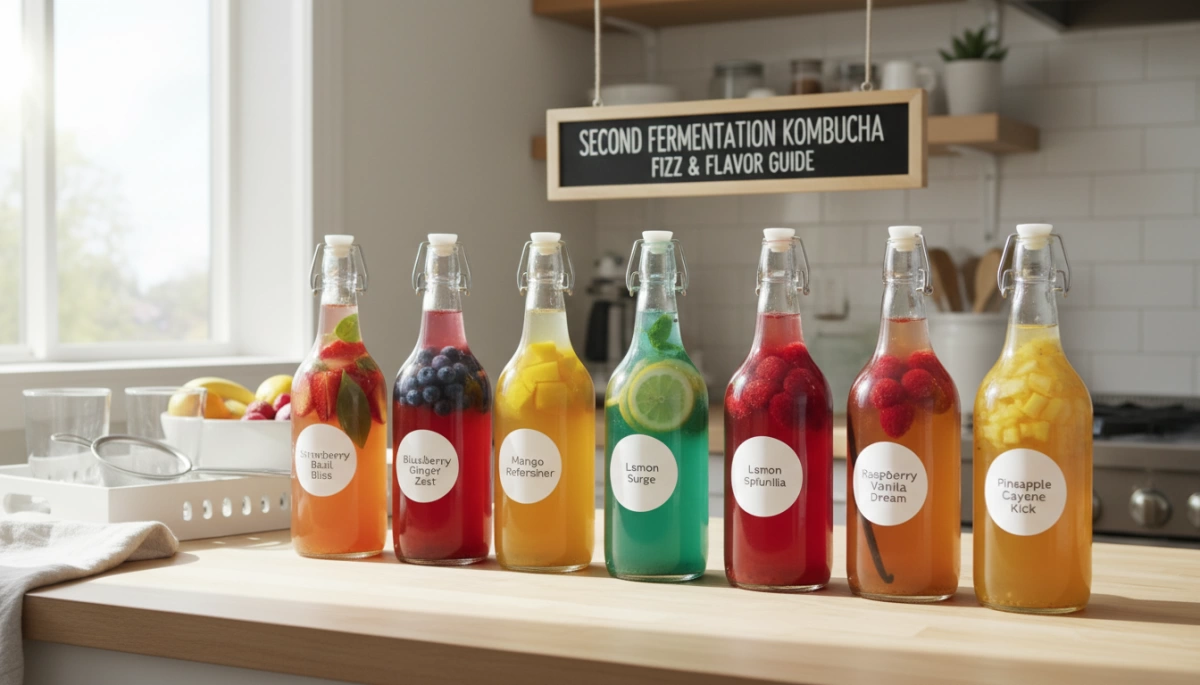
What Second Fermentation Is (and Why It Adds Fizz)
Second fermentation kombucha is when I move finished kombucha from the main brewing jar into bottles, add flavor, cap it, and let it sit so it carbonates.
In first fermentation, the SCOBY and starter tea turn sugar into acids. In second fermentation:
- Yeast eat the remaining sugar in a sealed bottle
- CO₂ gets trapped, creating natural fizz
- Flavors from fruit, herbs, and spices infuse into the drink
That’s how you get a bubbly, soda-like fermented tea drink at home.
Best Bottles, Safety, and Burping for Carbonation
For safe home fermentation practices in the U.S., I stick to:
- Glass swing-top bottles (thick glass, made for carbonation)
- Avoid cheap thin glass, flip-top knockoffs, or reused weak bottles
- Leave about 1–1.5 inches of headspace at the top
To manage pressure (and avoid “bottle bombs”):
- Keep bottles at room temp (68–75°F / 20–24°C)
- “Burp” bottles once a day at first:
- Open slowly over the sink
- Let gas out, then close again
- If your home runs hot, burp more often or shorten the second ferment time
Flavor Ideas: Ginger, Berry, Citrus, Herbs, Spices
This is where homemade kombucha beats store-bought every time. Easy flavor combos:
- Ginger kombucha:
- Fresh ginger slices or grated ginger + a little sugar or honey
- Berry kombucha:
- Frozen or fresh blueberries, raspberries, strawberries
- Citrus kombucha:
- Orange slices, lemon, lime, grapefruit peel (avoid too much white pith)
- Herb kombucha:
- Mint, basil, rosemary, lavender (go light—herbs get strong fast)
- Spiced kombucha:
- Cinnamon stick, clove, cardamom, vanilla bean
Basic rule of thumb for a 16 oz bottle:
- Fruit: 1–3 tablespoons (fresh or frozen, chopped or mashed)
- Ginger: 1–2 teaspoons grated
- Optional: a tiny bit of extra sugar or juice to boost fizz
How Long to Second Ferment for Bubbles and Flavor
Second fermentation time depends on your kombucha brewing temperature and how fizzy you like it:
- At room temp (68–75°F / 20–24°C):
- 1–2 days: light bubbles, mild flavor
- 3–5 days: stronger fizz, fuller flavor
- Taste daily:
- If it’s too sweet, let it go longer
- If it’s getting too sharp or aggressive, chill it
Once you like the taste and carbonation, move bottles to the fridge. Cold slows fermentation and stabilizes the flavor.
Preventing Bottle Bombs and Overcarbonation
To keep second fermentation kombucha safe and controlled:
- Don’t overfill bottles; leave headspace
- Don’t overload with high-sugar juices (they ramp up carbonation fast)
- Start with shorter ferment times if your home is warm
- Burp daily until you learn your setup
- When in doubt, move bottles to the fridge earlier
If a bottle hisses wildly, foams hard, or feels rock-solid tight, chill it first, then open it slowly over the sink.
Dialing in second fermentation is all about balance: enough sugar + enough time + safe bottles = fizzy, flavorful, natural probiotic drinks you actually want to drink every day.
Comparing Kimchi and Kombucha Fermentation
Kimchi vs kombucha: microbes and method
When I look at kimchi vs kombucha, they’re totally different fermentation styles:
-
Kimchi (lactic acid fermentation for beginners)
- Main microbes: lactic acid bacteria (LAB) like Lactobacillus.
- Environment: anaerobic (no air) under brine in a jar.
- Fuel: carbs in veggies; microbes turn them into lactic acid.
- Style: a classic DIY fermented vegetables project.
-
Kombucha (SCOBY fermentation)
- Main microbes: yeast + acetic acid bacteria living in a SCOBY for kombucha.
- Environment: aerobic (needs air) during first fermentation.
- Fuel: sugar in sweet tea; yeast makes alcohol, bacteria turn it into acids.
- Style: a fermented tea drink with natural fizz.
Lactic acid fermentation vs SCOBY fermentation
Here’s the quick comparison at a glance:
| Kimchi (Lactic Acid) | Kombucha (SCOBY) | |
|---|---|---|
| Main microbes | Lactic acid bacteria | Yeast + acetic acid bacteria in SCOBY |
| Oxygen | Low / no oxygen (anaerobic fermentation) | Needs airflow (aerobic top, jar covered) |
| Base | Napa cabbage, veggies, salt | Tea, sugar, starter tea, SCOBY |
| Main acids | Lactic acid | Acetic, gluconic, and other organic acids |
| Texture | Crunchy veggies | Liquid drink with some fizz |
What kimchi and kombucha have in common
Even with different microbes, both homemade probiotic foods follow the same core rules:
- Salt, time, and microbes do the work.
- You control:
- Temperature (room-temp, steady is best).
- Fermentation time (short = mild, long = stronger).
- Both support gut microbiome support when made and stored safely.
- Both are great easy home fermentation projects for small U.S. kitchens.
Flavor, texture, and nutrition
Here’s how they hit different spots:
- Kimchi flavor & texture
- Bold, salty, tangy, garlicky, spicy.
- Crunchy, satisfying bite.
- Rich in fiber, vitamins, and lactic acid bacteria.
- Kombucha flavor & feel
- Tart, slightly sweet, sometimes fruity or gingery.
- Light, refreshing, naturally carbonated.
- Provides organic acids, some B vitamins, and live cultures.
I see kimchi more as a fermented food for digestion, and kombucha as a natural probiotic drink you sip through the day.
Gut-friendly routine: combining kimchi and kombucha
If you’re in the U.S. and just starting fermentation for beginners, here’s a simple, sustainable routine:
-
Daily ideas
- Add simple kimchi to:
- Eggs or breakfast burritos.
- Rice bowls or leftover takeout.
- Noodles, tacos, or burgers.
- Drink 4–8 oz of kombucha:
- With lunch instead of soda.
- As an afternoon pick-me-up instead of energy drinks.
- Add simple kimchi to:
-
Basic tips
- Start small: a spoon or two of kimchi + a few sips of kombucha.
- Increase slowly and see how your digestion and energy feel.
- Rotate flavors: spicy kimchi + berry or ginger kombucha keeps it interesting.
Used together, kimchi and kombucha give you both fermented vegetables and a fermented tea drink—a simple, gut-friendly combo that fits easily into a busy American lifestyle.
Troubleshooting Common Fermentation Problems
Normal vs bad smells in kimchi and kombucha
When you’re exploring fermentation basics at home, smells tell you a lot:
-
Normal kimchi smells: garlicky, oniony, spicy, sour, a little funky but “food-like.”
-
Bad kimchi smells: rotten eggs, sewage, vomit, or anything that makes you pull back fast. Toss it.
-
Normal kombucha smells: tart, vinegary, apple-cider-like, yeasty, tea-like.
-
Bad kombucha smells: strong rotten smell, cheesy or meaty funk, or moldy basement scent. Don’t drink it.
When in doubt: if it smells clearly rotten or “off” in a non-food way, play it safe and throw it out.
Kahm yeast, floaties, and when not to worry
With homemade probiotic foods, not everything on top is mold:
-
Kahm yeast (common in veggie ferments):
- Looks: thin, matte, white/cream, flat film on top.
- Texture: soft, easily wiped off.
- Smell: mild, sometimes a little yeasty.
- Safe: skim it off, push veggies back under brine, keep going.
-
Kombucha floaties and strings:
- Brown stringy bits, cloudy strands, new baby SCOBY forming on top.
- Normal: they’re just yeast and cellulose, part of the fermented tea drink.
If it’s flat, dull, and wipes away easily, it’s usually yeast, not mold.
What real mold looks like and when to toss a batch
Real mold is when you stop experimenting and start dumping:
- Mold signs (kimchi and kombucha):
- Fuzzy or hairy surface.
- Colors: blue, green, black, gray, pink, bright orange.
- Raised, dry patches instead of a thin film.
If you see fuzz on kimchi or your SCOBY, trash the whole batch, including the SCOBY. Don’t try to scrape and save. In home fermentation, once mold hits, I treat it as lost product and move on.
Slow fermentation causes and quick fixes
If your kimchi or kombucha seems “stuck”:
Common causes:
- Room is too cold (below ~65°F).
- Too much salt in kimchi.
- Not enough starter tea or weak SCOBY in kombucha.
- Very chlorinated water (can stress microbes).
Quick fixes:
- Warm it up: move jars to a warmer spot (68–75°F), away from direct sun.
- For kimchi: next batch, use 2–2.5% salt by weight of veggies.
- For kombucha: add more starter tea (up to 20–25% of the jar), and avoid fridge-cold starter.
- Use filtered or dechlorinated water when you can.
Fermentation for beginners in the U.S. often runs slow just because homes are air-conditioned and cool. Slightly warmer space = happier microbes.
Adjusting salt, sugar, and temperature
Dialing in these basics boosts results with simple home fermentation:
-
Kimchi (lactic acid fermentation):
- Salt: too little = mushy, riskier; too much = very slow ferment.
- Aim for: 2–3% salt by weight.
- Temperature: 60–72°F is a good range. Warmer = faster, sourer; cooler = slower, milder.
-
Kombucha (SCOBY for kombucha):
- Sugar: the SCOBY “eats” sugar; you need enough for acids and fizz.
- Standard: about 1 cup sugar per gallon sweet tea.
- Temperature: 70–80°F is ideal. Cooler = slower, sweeter longer; warmer = faster, more sour.
If it’s too sour, shorten fermentation next time or move to a cooler spot. If it’s too sweet, let it go longer or warm it up.
How to reset your SCOBY or start fresh kimchi
Sometimes the best fix is a reset.
Resetting your kombucha SCOBY:
- If it’s:
- Very dark, thick, and rubbery, or
- Has been sitting too long between brews, or
- Your tea is consistently off despite good sanitation
- Do this:
- Brew a fresh batch of sweet tea.
- Use only healthy-looking layers of SCOBY (no mold, no weird smells).
- Add plenty of strong, unflavored starter kombucha (from a previous good batch or store-bought raw).
- If you’ve had any mold before, I’d start with a new SCOBY and fresh starter from a trusted source.
Starting fresh kimchi:
- Toss the batch if:
- There’s mold, rotten smell, or slimy, gray veggies.
- For the next batch:
- Weigh veggies and use consistent salt %.
- Keep veggies fully submerged under brine (use weights).
- Use clean jars and avoid touching with dirty utensils.
Home fermentation is safe when you follow basic sanitation, the right salt/sugar levels, and good temperature control. Once you get a feel for normal smells and textures, troubleshooting kimchi and kombucha becomes second nature.
Advanced Tips and Next Fermentation Projects
Scaling Up Kimchi Batches Safely at Home
If your napa cabbage kimchi disappears fast, it’s time to scale up—without wrecking a whole batch.
Key rules for bigger homemade kimchi batches:
- Use the right vessel:
- 1–2 gallons: glass fermentation crock or wide glass jars
- Avoid cheap plastic; acidic, probiotic-rich foods can pull flavors and chemicals
- Keep the salt ratio steady:
- Stick to roughly 2–2.5% salt by weight of veggies for safe lactic acid fermentation
- Pack tight, keep it anaerobic:
- Press kimchi down so brine covers all veggies
- Use fermentation weights or a smaller jar pushed inside a larger one
- Ferment in small “insurance” jars:
- Split a big batch into multiple jars so if one fails, you don’t lose it all
This approach keeps home fermentation safe while still giving you enough kimchi for rice bowls, noodles, and meal prep all week.
Continuous Brew Kombucha Setup at Home
For kombucha lovers, continuous brew is a game changer: less hassle, steady supply.
Simple continuous brew kombucha system:
- Use a glass jar with a spigot (2–3 gallons)
- Fill with sweet tea + SCOBY + starter tea (like a normal first fermentation)
- Let it ferment until it hits your preferred tang
- Weekly routine:
- Draw off 20–30% of the kombucha for drinking or second fermentation
- Replace that same amount with fresh cooled sweet tea
- Leave the SCOBY and most of the kombucha in the jar
Benefits for U.S. home brewers:
- Constant supply of fermented tea drink
- Less cleaning and setup
- More stable kombucha brewing temperature and flavor over time
Keeping a Simple Fermentation Log or Journal
If you want consistent results with homemade kimchi and kombucha, track what you do.
What I log for each batch:
- Date, room temperature
- Recipe tweaks (salt %, sugar, tea type, kimchi ingredients and steps)
- Fermentation time at room temp vs fridge
- Taste notes: “still sweet,” “perfectly tangy,” “too sour”
Use a notebook, Google Sheet, or phone notes. This makes troubleshooting fermentation way easier and helps you dial in your kombucha brewing temperature, kimchi fermentation time, and flavor.
Next Easy Ferments: Sauerkraut, Pickles, Kefir
Once you’ve nailed kimchi and kombucha, add a few more homemade probiotic foods into rotation.
Good beginner fermentation projects:
- Sauerkraut:
- Just cabbage + salt (lactic acid fermentation), super forgiving
- Lacto-pickles:
- Cucumbers, carrots, or green beans in a salty brine
- Milk kefir or water kefir:
- Fast-fermenting natural probiotic drinks using kefir grains
These are all DIY fermented vegetables and drinks that fit easily into a U.S. kitchen with basic gear.
Building a Simple Home Fermentation Routine for Gut Health
To actually feel the benefits of kimchi and kombucha, consistency beats perfection.
Easy weekly routine for gut-friendly fermented foods:
- Keep small batch fermentation going:
- 1 jar of napa cabbage kimchi or simple kimchi recipe
- 1 jar of kombucha first fermentation or continuous brew
- Plan daily mini servings:
- 2–4 tablespoons kimchi with lunch or dinner
- 4–8 oz kombucha or kefir as an afternoon drink
- Rotate ferments: kimchi, sauerkraut, pickles, kefir, kombucha
This keeps your fridge stocked with gut microbiome support foods and makes fermented foods for digestion, immunity, and energy part of your normal routine—not a project you do once and forget.