

What Makes Turo Different?
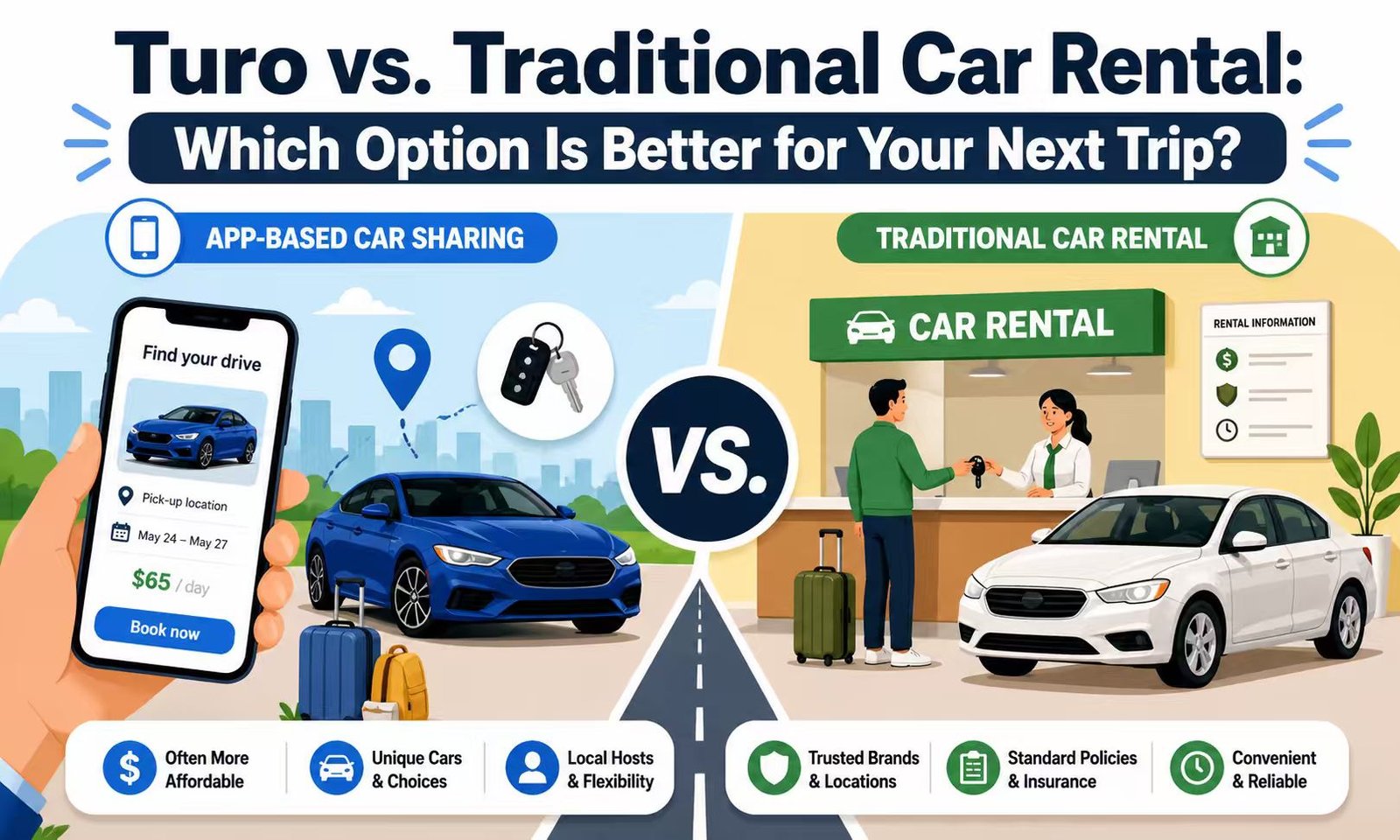
Turo is different because it works as a car rental marketplace rather than a traditional fleet-based rental company. Instead of renting from a company-owned fleet, guests book vehicles listed by local hosts. This creates a more personalized rental experience because each listing usually shows the exact vehicle, photos, features, pickup details, mileage information, and host rules.
Traditional rental companies usually group vehicles by category. For example, you may book an economy car, midsize SUV, or luxury sedan, but the exact model may not be guaranteed. Turo often gives travelers more visibility into the specific car they are booking. For people who care about comfort, appearance, space, fuel type, or driving experience, that difference can be important.
Vehicle Selection: Turo Offers More Personality
One of the biggest advantages of Turo is vehicle variety. Travelers can often find compact cars, SUVs, trucks, electric vehicles, premium cars, convertibles, family-friendly vehicles, and unique models depending on the destination. This makes Turo especially useful when the car is more than basic transportation.
For example, a family heading to a national park may want a spacious SUV. A traveler visiting a busy city may prefer a compact car that is easier to park. Someone planning a special weekend may want a premium vehicle that adds more excitement to the trip. A person considering buying an electric vehicle may want to test one for a few days before making a decision.
Traditional rental companies can also offer many vehicle types, but the experience is usually less specific. You may reserve a class of car rather than an exact model. That works well when you simply need reliable transportation, but it may feel limiting if you want a particular type of driving experience.
Convenience: It Depends on Location
Convenience is one of the most important factors when choosing between Turo and traditional car rental. Traditional rental counters are common at airports, which can be useful for travelers who want a familiar process. However, airport rental locations can also involve lines, shuttle buses, limited availability, and additional time after landing.
Turo may offer more flexible pickup options depending on the host and location. Some hosts offer airport pickup, hotel delivery, neighborhood pickup, or contactless handoff. This can be useful if you want a car near your hotel, home, meeting location, or a specific part of the city. Instead of traveling to a rental office, you may be able to choose a vehicle closer to where your trip actually begins.
However, not every Turo listing offers the same level of convenience. Some cars may require pickup from a fixed location. Others may charge extra for delivery. Before booking, compare the pickup location, delivery fee, check-in process, and return instructions. A cheaper car may not be the best choice if pickup is far from your route.
Pricing: Compare the Total Cost
Many travelers look at Turo because they want a better price, but the lowest daily rate does not always mean the lowest total cost. Both Turo and traditional rental companies can include extra costs depending on the booking. These may include fees, protection options, delivery charges, airport-related costs, young driver fees, extras, taxes, fuel, charging, or mileage-related charges.
The best way to compare pricing is to calculate the full trip cost. Do not compare only the daily rate. Look at the checkout total, pickup convenience, mileage allowance, fuel economy, delivery charges, and return requirements. A traditional rental car may look more expensive at first but include easier airport access. A Turo listing may look cheaper but require more planning. In other cases, Turo may provide better value because you can choose a car that fits your needs more closely.
Pickup and Return Experience
Traditional car rental usually follows a standardized process. You go to the counter or rental lot, provide documentation, inspect the car, and return it to the same or approved location. This consistency can be helpful for travelers who prefer a predictable experience.
Turo pickup and return can vary by host. Some hosts meet guests in person, while others use remote or contactless pickup. This can be very convenient, but it also means the guest must carefully follow instructions. You may need to upload documents, take vehicle photos, confirm mileage, locate a lockbox, or communicate through the app.
For a smooth Turo trip, read the pickup and return instructions before the day of travel. Make sure you understand where the car is located, how to access it, how to document its condition, and what time it must be returned. Good preparation can make the experience easy and efficient.
Which Option Is Better for Business Travel?
For business travel, the better option depends on schedule and company policy. Traditional rental companies may be easier for corporate reimbursement because many businesses already have preferred rental partners. They may also be useful when travelers need standardized receipts or predictable airport pickup.
Turo can still be a strong choice for business travelers who value location flexibility, specific vehicle selection, or a more convenient pickup point. If you are attending meetings in a city and need a car near your hotel rather than at the airport, Turo may be more practical. Before booking for business, check your company’s travel rules and reimbursement requirements.
Which Option Is Better for Vacations?
For vacations, Turo can be especially attractive because the vehicle can match the experience. A beach trip, mountain road trip, national park visit, city weekend, or family holiday may each require a different type of car. Turo allows travelers to browse options that fit the mood and function of the trip.
Traditional rental companies may still be better for travelers who want a simple, standardized, and widely available process. If you are arriving late at night, traveling with a tight schedule, or visiting a destination with limited Turo availability, a traditional rental company may feel easier.
Pros and Cons of Turo
The main advantages of Turo are vehicle choice, local pickup options, specific listings, flexible experiences, and the ability to choose a car that fits your trip. It can be especially useful for travelers who want something more personal than a standard rental car.
The possible drawbacks are variability and the need to read details carefully. Since each car is connected to a host, policies, pickup instructions, mileage limits, and expectations may differ. A good Turo experience depends on choosing the right listing and communicating clearly.
Pros and Cons of Traditional Car Rental
Traditional car rental offers consistency, familiar procedures, airport presence, and standardized service. It may be easier for travelers who do not want to compare individual listings or coordinate with a host.
The drawbacks are limited vehicle specificity, possible counter lines, “or similar” vehicle assignments, and less personalization. You may not always know exactly which car you will receive until pickup.
Final Verdict
Turo is often better for travelers who want more choice, more flexibility, and a specific vehicle for a specific trip. Traditional car rental may be better for travelers who value standardization, corporate travel compatibility, and familiar airport rental procedures.
The smartest approach is to compare both options before booking. Check the total cost, pickup location, vehicle type, mileage rules, protection options, and return process. If the car matters to your travel experience, Turo may be the stronger choice. If simplicity and standardization matter more, traditional car rental may still be the better fit.