
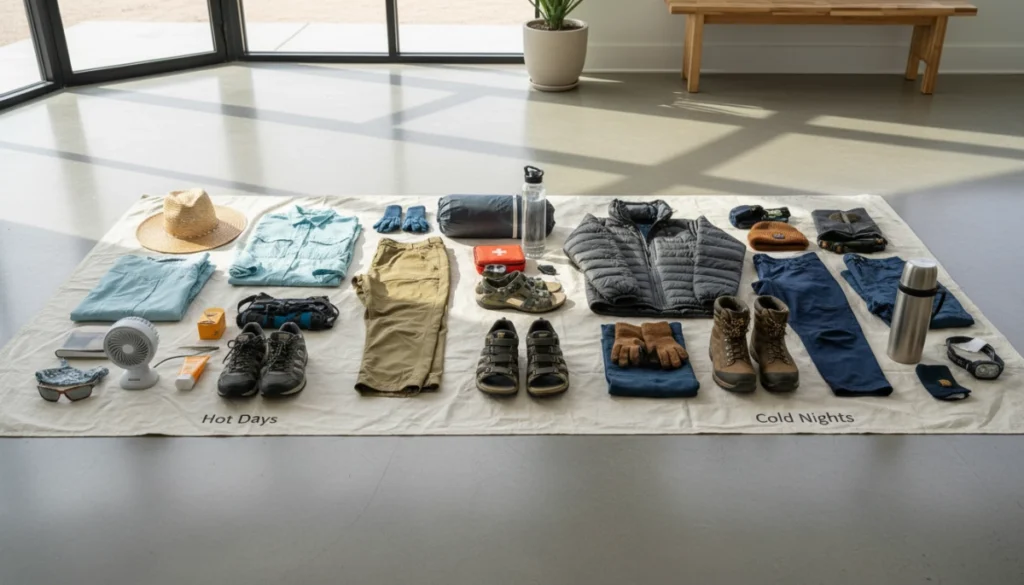
You’re planning a desert trip… but you’re not sure what to wear for desert camping — hot days and cold nights.
Blazing sun at noon, chilly winds after dark, and huge desert temperature swings can turn an epic adventure into a miserable one if you’re dressed wrong.
The good news? With the right desert camping layering system, you can stay cool under intense sun, cozy when the temps drop, and comfortable the entire time.
In this guide, we’ll break down exactly what to wear for desert camping in hot days and cold nights:
the best breathable fabrics for desert, how to use moisture-wicking base layers, which UPF clothing actually works, and the key insulating layers for cold desert nights you don’t want to skip.
If you want a simple, no-BS desert camping packing list (clothing only) that keeps you protected, lightweight, and ready for extreme swings, you’re in the right place.
Understanding Desert Temperature Swings
If you’re not sure what to wear for desert camping in hot days and cold nights, it starts with understanding how wild desert temperature swings can be.
Typical Desert Temperatures: Hot Days, Cold Nights
Most US desert spots (think Joshua Tree, Mojave, Utah canyon country) regularly see:
- Daytime: 85–110°F+ in warmer months
- Nighttime: 30–50°F, sometimes below freezing in shoulder seasons
That means you can go from tank-top heat to puffy-jacket cold in one 24-hour window. Your desert camping outfit has to handle both.
Dry Air, Clear Skies, and Fast Heat Loss
Deserts have:
- Very dry air – no humidity to “hold” warmth
- Clear skies – intense sun by day, rapid heat loss at night
During the day, the sun heats the ground and rocks fast, so everything feels hotter than the air temp. After sunset, that heat radiates straight back into space, and the air cools quickly. If you’re not layered up, you’ll feel it within minutes.
Seasonal Desert Camping Differences
- Spring/Fall: Big swings – mild to warm days, very chilly nights
- Summer: Extremely hot days, nights may stay warm but can still drop more than 30°F
- Winter: Cool to mild days, cold or freezing nights, especially in high-elevation deserts
What you wear for desert camping in summer isn’t the same as early spring in a high desert like Flagstaff or Bishop, but the layering logic is identical.
Why the Desert Feels Hotter in the Sun and Colder at Night
In the desert:
- Direct sun + no shade = brutal radiant heat on your skin
- No humidity + a little breeze = you cool off fast, even when the air is just “cool,” not cold
That’s why you might feel cooked on a 90°F hike, then be shivering in camp at 55°F. The radiant heat and wind change how your body feels, not just the thermometer reading.
Why Layering Beats One Heavy Piece
For extreme temperature camping attire, layering is non‑negotiable:
- Hot daytime: Light, breathable, sun-protective layers you can vent or roll up
- Cool evenings: Add a midlayer (like a fleece jacket) as temps drop
- Cold desert nights: Top it off with an insulating puffy + windbreaker
Relying on a single heavy hoodie or coat doesn’t work in the desert. You need a flexible desert camping layering system so you can:
- Strip down to a breathable, moisture-wicking base layer in the heat
- Build up to multiple thin, warm layers once the sun dips and the cold hits
When you understand these desert temperature swings, it becomes much easier to decide exactly what to wear for desert camping in hot days and cold nights—and to stay comfortable instead of just surviving.
Core Principles for Desert Camping Clothing
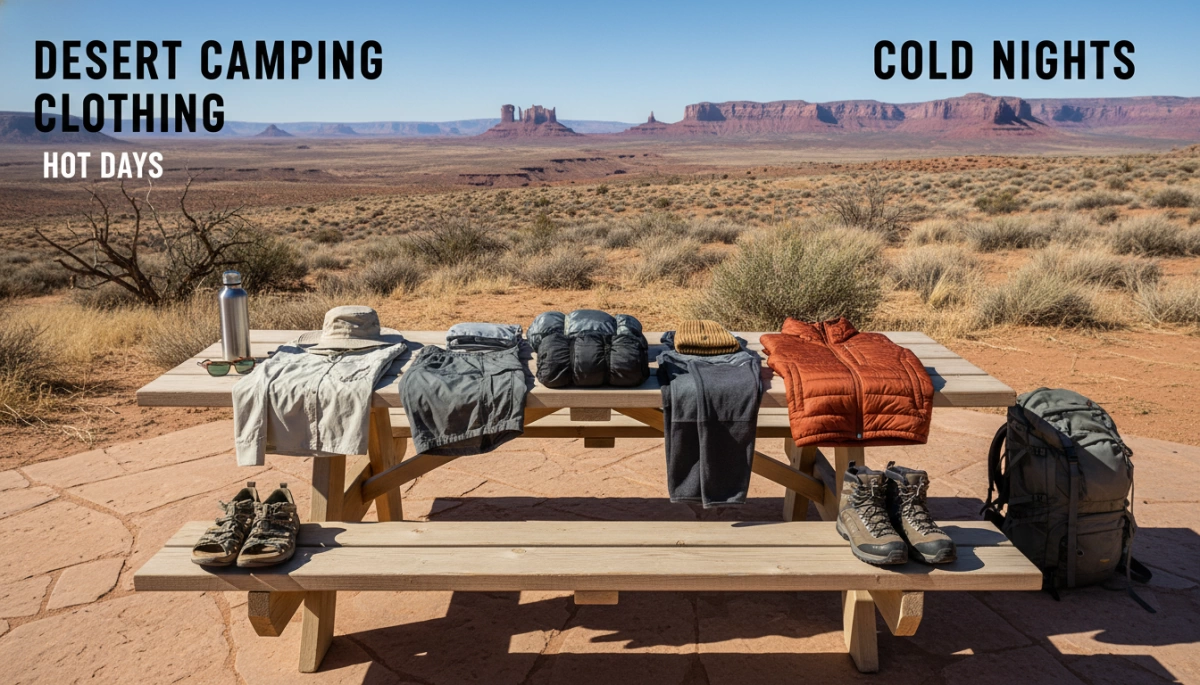
When I pack for desert camping, I always plan for hot days and cold nights. Your clothing system has to handle both extremes without weighing you down.
Desert Camping Layering Basics
For any desert camping layering setup, I stick to three simple layers:
- Base layer: Touches your skin, moisture-wicking, quick-dry.
- Mid layer: Adds warmth when temps drop.
- Outer layer: Blocks wind, light rain, and blowing sand.
I don’t rely on one heavy piece. I use thin, stackable layers so I can adjust fast as the sun moves and temps swing.
Hot Days Cold Nights Clothing Strategy
My hot days cold nights clothing strategy is:
- Day: Light-colored, long-sleeve UPF sun shirt, lightweight hiking pants, breathable hat.
- Transition: Keep a light fleece or thin insulating layer ready as soon as the sun starts dropping.
- Night: Add a puffy or warmer mid layer and swap to thicker socks and beanie.
The goal: never be stuck sweating in the day or shivering after dark.
Prioritizing Sun Protection and UV Blocking
In the U.S. desert, sun exposure is no joke. I treat sun protection camping clothes as critical gear:
- UPF clothing (UPF 30–50+ long sleeve sun shirts, UPF sun hoodie).
- Wide-brim sun hat for desert hiking instead of just a baseball cap.
- Neck gaiter or buff to cover neck, ears, and face.
Covering up with light, breathable fabrics beats slathering sunscreen on every inch all day.
Choosing Breathable Fabrics for Desert Conditions
For breathable fabrics for desert trips, I lean on:
- Polyester or nylon blends – light, quick-dry, tough on rock.
- Merino wool – great for odor control on multi-day trips, still breathable in dry heat.
- A bit of spandex for stretch if I’m scrambling or climbing.
Heavy, non-breathable fabrics trap sweat and make the heat feel brutal.
Moisture-Wicking Base Layers vs Cotton
In desert heat, moisture-wicking base layers beat cotton almost every time:
- Synthetic or merino base layers pull sweat off your skin, so you cool efficiently.
- Cotton holds sweat, stays wet, and makes you clammy when temps drop at night.
The only time I consider cotton is a loose, light shirt for casual camp wear where staying cool and shaded matters more than performance.
Balancing Coverage, Comfort, and Mobility
My desert camping clothing guide focuses on three things:
- Coverage: Long sleeves, long pants, hats, buffs to protect from sun, wind, and brush.
- Comfort: Soft, non-chafing seams, no heavy waistbands, no stiff fabrics.
- Mobility: Stretch fabrics for hiking, climbing, and setting up camp.
You shouldn’t have to choose between sun protection and moving freely on the trail.
Common Clothing Mistakes in Desert Camping
I see the same desert camping gear tips ignored all the time. Avoid:
- All shorts, no pants – your legs cook in the sun and get shredded by cactus.
- Heavy cotton hoodies for warmth – they stay damp and get cold fast at night.
- Black, thick shirts in full sun – they soak up heat.
- No windbreaker for desert camping – windchill at night can cut through a fleece.
- Too few layers – one big jacket instead of a proper layering system for desert trips.
- Cheap socks – leads to blisters; use moisture-wicking socks.
Dial in your extreme temperature camping attire at home first, then trust your system when you hit the desert.
Daytime Essentials for Hot Desert Camping
What to Wear in Extreme Desert Heat (Hot Days, Cold Nights Clothing)
For hot desert camping, I always dress for full coverage, not minimal fabric. The goal is simple: block sun, breathe well, and stay dry.
Core daytime setup for most desert temperature swings:
- Moisture-wicking base layer (top + underwear)
- Long sleeve sun shirt with UPF
- Lightweight hiking pants or convertible pants
- Wide-brim sun hat or sun hoodie
- Breathable trail shoes + moisture-wicking socks
This combo keeps me cooler, protects from UV, and sets me up for those big hot days / cold nights clothing swings.
Moisture-Wicking Base Layers for Hot Days
Skip heavy cotton during the day. I use synthetic or merino base layers that dry fast and don’t cling.
Look for:
- Lightweight, quick-dry shirts
- Moisture-wicking underwear and sports bras
- Flat seams to avoid rubbing under a pack
These base layers are the foundation of a desert camping layering system that can handle sweat, sand, and heat.
Long Sleeve Sun Shirt and UPF Tops
A long sleeve sun shirt or UPF clothing beats a tank top every time in the desert.
What works best:
- UPF 30–50+ rating
- Light colors (tan, light gray, sand) to reflect heat
- Vented back or mesh panels for airflow
- Button-up hiking shirt or UPF sun hoodie
This kind of sun protection camping clothes means less sunscreen, less heat stress, and way less sunburn risk.
Lightweight Hiking Pants for Desert Trails
For most desert hiking outfit ideas, I stick with lightweight hiking pants instead of jeans or heavy cargos.
Key features:
- Thin, breathable, quick-dry fabric
- Some stretch for scrambling on rock
- Good pockets for map, phone, snacks
- Durable enough for brush and sandstone
These lightweight hiking pants for desert give solid coverage without trapping heat.
Convertible Pants for Desert Camping
Convertible pants (zip-off legs) are ideal for desert trips where temps jump all over the place.
Why I like them:
- Start the day as pants for sun and brush
- Zip to shorts during mid-day heat
- Use just the legs as a light wind or bug layer in camp
They’re a flexible base for an extreme temperature camping attire setup.
Shorts vs Long Pants in the Desert
If you’re debating shorts vs long pants in the desert, here’s how I break it down:
-
Shorts work better when:
- You’re on well-groomed trails
- It’s brutally hot, low brush, minimal cactus
- You’re okay reapplying sunscreen constantly
-
Long pants work better when:
- You’re off-trail or in rocky / prickly terrain
- You burn easily
- You want less sunscreen, more fabric
For most US desert camping (Joshua Tree, Moab, Nevada, Arizona), I default to light long pants.
Headwear for Sun Protection and Cooling
A good sun hat for desert hiking is non-negotiable.
Best options:
- Wide-brim hat (3\”+ brim) with chin strap
- Cap + neck cape for full neck coverage
- UPF sun hoodie with a brimmed cap underneath
You can dunk your hat in water whenever you find some—that evaporative cooling helps a lot in hot dry climates.
Neck Gaiters, Buffs, and Sun Hoodies
I always pack something for neck and face coverage:
- Neck gaiter / buff:
- Shields neck, ears, lower face
- Can be soaked for cooling
- UPF sun hoodie:
- Covers neck and head
- Works great with a cap under the hood
These lightweight pieces round out a desert temperature swings outfit without adding bulk.
Sunglasses and Eye Protection
Desert sun is brutal on your eyes, especially with sand and rock glare.
Look for:
- Polarized sunglasses
- UV400 protection
- A shape that wraps a bit to block side glare
Good eye protection is standard for any desert camping clothing guide and desert backpacking clothing list.
Lightweight Gloves for Hot Rocks and Gear
In a lot of US desert spots, rocks and metal gear get too hot to grab bare-handed.
I like:
- Thin, breathable work or climbing gloves
- Fingerless gloves if you want more dexterity
- Light grip on the palm
They help with scrambling, handling cookware, tent stakes, and protect against rough rock.
Breathable Hiking Shoes for Sand and Rock
For most desert trips, I prefer trail runners over heavy boots.
What works well:
- Breathable mesh uppers
- Good grip on slickrock and gravel
- Enough cushion for long days on hard surfaces
Trail runners vs hiking boots:
- Trail runners: lighter, cooler, dry fast, great for hot, dry desert
- Boots: better for heavy loads or super rocky terrain, but warmer
Pair them with gaiters if you’ll be in deep sand or loose rock.
Moisture-Wicking Socks to Prevent Blisters
Socks matter more than most people expect in extreme desert heat.
I use:
- Synthetic or merino wool socks, not cotton
- Light to midweight for daytime hiking
- If it’s a multi-day trip: at least 2–3 pairs
Moisture-wicking socks:
- Keep your feet drier
- Reduce friction
- Help prevent hot spots and blisters
Together, these daytime essentials create a simple, reliable desert camping layering system that works in hot US desert conditions—from Joshua Tree to Utah canyon country.
Nighttime Layers for Cold Desert Nights
How cold desert nights affect your body
Desert temperature swings hit hard. Your body dumps heat fast once the sun drops because of dry air and clear skies. That combo makes desert nights feel way colder than the thermometer shows, especially if you’re tired, dehydrated, or sitting still at camp.
You lose heat fastest from:
- Your head, neck, hands, and feet
- Any spot exposed to wind
- Thin or sweaty clothes that never dried
That’s why a smart desert camping layering system matters more than one big bulky jacket.
Insulating layers for cold desert nights
For hot days cold nights clothing, I always plan a dedicated night setup:
- Base layer (next to skin): light to midweight, moisture‑wicking so sweat doesn’t chill you
- Mid layer: fleece or light insulated layer to trap heat
- Outer layer: windproof shell to block desert gusts
The goal: trap warm air, block wind, and stay dry.
Thermal and fleece base layers for evenings
For evenings around camp, I like:
- Thermal tops and bottoms (synthetic or merino wool) – great as sleep layers
- A light fleece pullover or zip‑up – easy to vent if you start to warm up
Skip heavy cotton here. It holds moisture and makes you feel clammy once temps drop.
Fleece jacket for desert nights
A fleece jacket is my go‑to for cold desert nights:
- Breathable but warm, ideal for that sunset chill
- Durable around rocks, camp chairs, and the truck bed
- Pairs perfectly under a windbreaker for desert camping
Pick something midweight so you can use it alone or as a mid layer under a puffy.
Down vs synthetic puffy jackets
For a true desert camping clothing guide, you need a puffy. Here’s how I look at it:
-
Down puffy jacket
- Lighter and warmer for the weight
- Packs tiny in your daypack
- Best for cold, dry desert nights
-
Synthetic puffy jacket
- Handles a bit of moisture, dew, or surprise drizzle better
- Slightly bulkier, but more forgiving
In most U.S. desert trips (Joshua Tree, Moab, Anza‑Borrego), I lean toward down and pair it with a good shell.
Warm pants, leggings, and sleep layers
Your legs matter more than most people think:
- Warm pants: lined hiking pants or softshell pants for camp
- Leggings/base bottoms: synthetic or merino under your pants when temps really drop
- Dedicated sleep layers: clean, dry base layer you only use inside your sleeping bag
Having separate sleep layers keeps your bag warmer and cleaner, especially on multi‑day trips.
Beanies, neck warmers, and wool socks
If you want a simple desert camping layering win, focus on small pieces:
- Beanie: huge difference for heat retention
- Neck gaiter or neck warmer: blocks drafts and can cover your face if it’s windy
- Wool socks: medium to heavyweight, but not so thick they cut off circulation
These weigh almost nothing but push your comfort way up on cold desert nights.
Windbreaker for desert camping at night
A windbreaker for desert camping is one of the highest‑value items you can pack:
- Blocks cold desert wind that cuts through fleece
- Adds a surprising amount of warmth without bulk
- Works over a fleece jacket or puffy jacket
I keep mine at the top of my pack and throw it on as soon as the breeze picks up.
Layering for sitting around the campfire
You’re usually not moving much at the fire, so build a warmer extreme temperature camping attire setup:
- Base layer + fleece + puffy + windbreaker if needed
- Warm pants with leggings underneath
- Beanie, neck gaiter, and wool socks
- Light gloves so your hands don’t freeze holding a mug or tending the fire
And don’t rely on the fire alone. Your front might feel warm, while your back is cooling off fast.
Adjusting layers for late-night bathroom trips
The fastest way to get chilled at night is a half‑awake walk out of the tent with no layers ready. I always:
- Keep a puffy jacket, beanie, and slip‑on shoes or sandals right by the tent door
- Sleep in a light base layer so I can just toss a jacket and windbreaker over it
- Use thick wool socks so I’m not stepping out with cold feet
Having your desert temperature swings outfit pre‑planned for those late‑night bathroom runs keeps you warmer, safer, and back in your sleeping bag faster.
Complete Desert Layering System for Hot Days and Cold Nights
When I’m camping in the desert, I always plan my desert camping layering like a system, not random pieces. Desert temperature swings are brutal, so every layer has a job.
Three-Layer System for Desert Camping
For extreme temperature camping attire, I stick to a simple three-layer setup:
-
Base Layer (against skin)
- Purpose: Moisture-wicking + comfort
- Fabric: Lightweight synthetic or merino wool
- Use: Wearable day and night, dries fast, doesn’t stay clammy
-
Mid Layer (insulation)
- Purpose: Warmth for cool evenings and cold desert nights
- Options: Light fleece, thin puffy, or merino hoodie
- Use: Goes on around sunset, stays handy all night
-
Outer Shell (protection)
- Purpose: Windbreaker for desert camping + light rain protection
- Options: Ultralight wind jacket or thin rain shell
- Use: Blocks wind chill, great for exposed camps and ridges
This layering system for desert trips keeps you ready for hot days and cold nights without overpacking.
Base Layer for Moisture and Comfort
For hot days cold nights clothing, my base layer does most of the work:
- Day:
- Lightweight moisture-wicking base layers (short or long sleeve)
- Breathable, quick-dry, no heavy cotton
- Night:
- A clean, dry base layer set just for sleep (top + leggings)
- Helps you stay warm and keeps your sleeping bag clean
Mid Layer for Cool Evenings
A good insulating layer for cold desert nights is non-negotiable:
- Light fleece jacket for desert nights
- Thin down or synthetic puffy jacket (depends on how cold it gets)
- Warm leggings or soft joggers over your base layer
This mid layer turns a chilly sunset into a comfortable hang by the fire.
Outer Shell for Wind and Light Rain
Desert = wind. Sometimes surprise showers. I always pack:
- Ultralight windbreaker for desert camping
- Or a slim waterproof shell if the forecast shows any chance of rain
It weighs almost nothing but makes a huge difference when the wind picks up at 2 a.m.
Sample Outfits for a Full Desert Day
Here’s how I build a full desert temperature swings outfit from morning to night.
Daytime Hiking Outfit for Hot Weather
For a desert hiking outfit in strong sun:
- Top: Long sleeve UPF long sleeve sun shirt or UPF sun hoodie
- Bottom: Lightweight hiking pants or convertible pants
- Base: Light moisture-wicking tee or tank if you run hot
- Accessories: Sun hat, sunglasses, light socks, breathable shoes
This combo gives shade, breathability, and sun protection camping clothes in one.
Sunset and Camp Chores Layering Setup
As temps drop:
- Keep your sun shirt / UPF top on
- Add fleece jacket or light puffy as a mid layer
- Throw on warmer pants or thermal leggings
- Keep your wind shell nearby if it’s breezy
You’re ready for cooking, setting up camp, and walking around without freezing.
Nighttime Stargazing and Sleep Clothing
For what to wear in the desert at night:
- Base layer: clean thermal or merino top + bottoms
- Mid layer: fleece or puffy over the top if it’s cold
- Outer shell: windbreaker if there’s wind
- Extras: beanie, wool socks, maybe a light neck gaiter
That’s your nighttime stargazing and sleep system clothing—warm but still easy to move in.
How to Quickly Add or Remove Layers
In the desert, temps change fast. I keep it simple:
- Use zippers and half-zips (sun hoodie, fleece, shell)
- Keep mid layer and shell on top of your pack or in the brain pocket
- Add one layer at a time:
- Windy? Add shell only.
- Cooling off? Add mid layer.
- Really cold? Mid layer + shell.
If I break a sweat, I strip down one layer immediately so I don’t get chilled when I stop.
Storing and Organizing Layers in Your Pack
To keep your desert camping clothing guide practical:
- Top pocket / quick-access:
- Windbreaker
- Fleece or puffy
- Stuff sacks / packing cubes:
- Sleep-only base layers
- Extra socks and underwear
- Inside main compartment:
- Heavier layers you only need at night
- Always accessible:
- Sun hat, sunglasses, light gloves, neck gaiter
This layout keeps you ready for hot days and cold nights without tearing your entire pack apart every time you need a layer.
Fabric Guide for Desert Camping Clothes
Best breathable fabrics for desert camping
For desert camping layering, I stick to fabrics that breathe hard and dry fast:
- Nylon and polyester: light, tough, and great for hot days cold nights clothing setups
- Merino wool: not as tough as nylon, but amazing comfort, breathability, and odor control
If it doesn’t move sweat and heat away from your skin, it doesn’t belong in your desert camping clothing guide.
Synthetic vs merino wool in dry heat
Both work in extreme temperature camping attire, but they shine in different ways:
-
Synthetics (nylon/poly blends)
- Best for: quick-dry camping clothes, lightweight hiking pants desert
- Pros: fast drying, durable, cheaper, great for desert backpacking clothing list
- Cons: can stink faster
-
Merino wool
- Best for: base layer for cold desert nights, tees, socks
- Pros: naturally odor-resistant, comfy in heat and chill, good temp regulation
- Cons: pricier, can wear out faster on rough rock
I usually run synthetics for outer layers and merino for base layers and socks.
When cotton is okay and when to avoid it
In the desert, cotton is a “sometimes” fabric:
-
Okay:
- Loose cotton tee at camp on very hot, dry days
- Short walks where you’re not sweating hard
-
Avoid for:
- Long hikes
- Cold desert nights
- Any situation where sweat + wind = chills
For your main desert camping layering system, stick to moisture-wicking base layers instead of cotton.
UPF clothing for desert camping and hiking
For U.S. deserts like Joshua Tree or Moab, UPF clothing desert camping is non-negotiable:
- Look for UPF 30–50+ on:
- Long sleeve sun shirt / UPF sun hoodie for camping
- Lightweight hiking pants desert
- Sun gloves and neck gaiters
Good sun protection camping clothes let you cover up without overheating and reduce how often you need sunscreen.
Quick-drying fabrics for sweat and rare rain
Desert rain is rare but intense, and sweat is constant. You want quick-dry camping clothes:
- Nylon and polyester blends marked as:
- “Quick-dry”
- “Moisture-wicking base layers”
- Avoid heavy, thick fabrics that stay damp
Fast-drying gear is key for staying comfortable, preventing chills at night, and rinsing clothes on multi-day trips.
Stretch fabrics for scrambling and climbing
For rough trails and boulders, I always pack stretch fabrics:
- Look for:
- 5–15% elastane/spandex in convertible pants desert, shorts, and sun hoodies
- Benefits:
- Better mobility on slickrock and slot canyons
- Less ripping when you slide or scramble
This matters a lot for desert hiking outfit ideas where you’re climbing, crouching, and sitting on rock all day.
Odor-resistant materials for multi-day trips
On multi-day desert camping trips, you don’t want to smell like your pack:
- Merino wool: top choice for odor-resistant materials
- Some synthetics are treated with anti-odor finishes
I usually pack:
- 1–2 merino tees
- Merino or treated synthetic moisture-wicking socks
So I can rotate shirts and keep my desert camping gear simple.
Durability for rough desert terrain
Desert rock, sand, and cactus chew through weak fabrics. For a reliable desert camping clothing guide:
- Choose:
- Nylon over polyester for lightweight hiking pants desert and shells
- Reinforced knees/seat if you sit or scramble a lot
- Skip:
- Super-thin, fashion-only fabrics
For U.S. desert trips, I build my desert backpacking clothing list around durable, quick-dry, UPF-rated nylon and merino basics, then layer from there.
Footwear and Accessory Essentials for Desert Camping Hot Days and Cold Nights
Best Shoes for Desert Camping and Hiking
For desert camping layering to actually work, your shoes have to match the terrain. I always tell people to prioritize:
- Breathable trail shoes with good grip for rock, sand, and loose gravel
- Lightweight, quick-dry uppers so sweat and rare rain don’t linger
- Roomy toe box to handle swelling in extreme heat
If you’re in places like Joshua Tree, Moab, or Arizona, this kind of extreme temperature camping attire on your feet matters as much as your clothing system.
Trail Runners vs Hiking Boots in Sand and Rock
Both work, but for most U.S. desert trips:
- Trail runners
- Better for: hot days, long miles, mixed rock and sand
- Pros: lighter, more breathable, dry faster, cooler
- Cons: less ankle support on heavy loads
- Hiking boots
- Better for: heavy packs, rough off-trail rock
- Pros: more support, durable, toe protection
- Cons: hotter, heavier, slower to dry
If you run warm, trail runners usually win for desert hiking outfit ideas.
Sock Choices for Hot Days and Cold Nights
Your desert camping clothing guide is useless if your feet are wrecked:
- Daytime (hot):
- Lightweight merino wool or synthetic hiking socks
- Moisture-wicking to reduce blisters in dry heat
- Nighttime (cold):
- Thicker wool socks just for sleeping (keep them dry and clean)
Bring at least 3–4 pairs on a multi-day trip so you can rotate and dry them.
Gaiters for Sand and Small Rocks
In sandy deserts, gaiters are a game-changer:
- Keep sand, pebbles, and stickers out of your shoes
- Cut down on hot spots and mid-hike shoe dumps
- Go for low, lightweight gaiters that fit trail runners or boots
They’re small, but they seriously upgrade your desert backpacking clothing list.
Sun Protection Accessories (Hats, Buffs, Sleeves)
For sun protection camping clothes, I always build around these:
- Wide-brim sun hat with dark under-brim to cut glare
- UPF sun hoodie or buff/neck gaiter to protect neck and ears
- Sun sleeves if you prefer short sleeves but still want coverage
These pieces let you stay covered without overheating in hot days cold nights clothing setups.
Sunscreen and Lip Balm with SPF
Clothing does most of the work, but you still need:
- Broad-spectrum SPF 30–50 sunscreen (face, ears, neck, hands)
- SPF lip balm, because desert wind destroys lips fast
- Reapply every 2–3 hours, more if you’re sweating a lot
Think of this as part of your sun protection camping clothes system, not an afterthought.
Lightweight Camp Shoes or Sandals
For camp, I always pack lightweight footwear:
- Sandals or camp shoes that:
- Let your feet breathe and dry out
- Have some tread for walking around camp and to the bathroom
- Can handle a quick walk over rocks or to a water source
This keeps your main shoes dry, cleaner, and ready for the next day.
Gloves for Warmth and Rough Surfaces
Gloves pull double duty in desert camping layering:
- Thin fleece or liner gloves: for cold desert nights and early mornings
- Lightweight work or climbing gloves: for hot rock, scrambling, handling rough gear, and avoiding cactus and sharp edges
You don’t need heavy winter gloves, just light, packable pairs that match the conditions.
Bandanas and Multi-Use Accessories
Simple pieces that upgrade your desert camping gear tips:
- Bandana or buff can be used as:
- Sun protection for neck/face
- Dust mask in wind
- Sweat rag, pot grabber, or quick bandage wrap
- Fold small, weigh almost nothing, and fit easily in your daypack
These multi-use accessories are exactly the kind of quality, multi-use items I prioritize for U.S. desert trips.
Seasonal and Location Adjustments for Desert Camping Clothing
When I’m planning what to wear for desert camping in hot days and cold nights, I always adjust for season, elevation, and trip length. The right desert camping layering changes a lot between Joshua Tree, Moab, and high-elevation Arizona.
Clothing Tips for Different Desert Regions
For most U.S. desert trips (California, Utah, Arizona, Nevada):
-
Sonoran / low-elevation deserts (Phoenix, Joshua Tree)
- Hotter days, milder nights
- Focus on maximum sun protection: UPF sun hoodie, long lightweight pants, wide-brim hat
- Pack one solid warm layer for night: light fleece + thin puffy
-
High desert (Moab, Flagstaff area, Utah plateaus)
- Bigger desert temperature swings and stronger wind
- Go heavier on insulating layers: thicker fleece, warmer puffy, beanie, warm sleep socks
- Bring a real windbreaker for desert camping or light shell
-
Coastal desert / Baja trips
- More humidity, more breeze
- You’ll want quick-dry fabrics, a light wind shell, and an extra mid-layer for damp cool nights
High-Elevation vs Low-Elevation Deserts
High-elevation deserts:
- Expect frosty mornings even after hot days
- Must-have:
- Warm base layer for cold desert nights (merino or synthetic)
- Fleece jacket for desert nights
- Down or synthetic puffy jacket (at least medium weight)
- Warm hat, gloves, and thick socks
Low-elevation deserts:
- Days can be brutal sun + high heat
- Must-have:
- Long sleeve sun shirt / UPF sun hoodie
- Lightweight hiking pants for desert (or convertible pants)
- Breathable trail runners, thin moisture-wicking socks
- Light fleece or thin puffy for night (depending on forecast)
What to Wear in Spring Desert Camping
Spring is one of the best times to test a full desert camping clothing guide:
- Day:
- Long sleeve UPF sun shirt
- Lightweight pants or convertible pants
- Sun hat and sunglasses
- Night:
- Light thermal base layer
- Fleece jacket + light puffy
- Beanie and warm socks
- Spring weather flips fast, so I always pack one extra warm layer beyond what I think I need.
What to Wear in Summer Desert Camping
For extreme temperature camping attire in summer, the priority is not fashion; it’s survival:
- Day:
- Breathable fabrics for desert: light synthetic or merino
- Full coverage: UPF clothing for desert camping (long sleeves, long pants)
- Wide-brim sun hat for desert hiking, neck gaiter, sunglasses
- Night:
- Often just a light long-sleeve and thin pants, but:
- Always bring at least one insulating layer; high desert summer nights can still be cold
- Avoid black, heavy cotton, and anything that doesn’t breathe.
What to Wear in Fall Desert Camping
Fall can feel like spring but with sharper hot days cold nights swings:
- Day:
- Same as spring: UPF sun hoodie, light pants, hat
- Night:
- Step up the warmth: thicker fleece, warmer puffy
- Wool socks and leggings or insulated pants for in-camp and sleeping
- I treat fall more like a “lighter winter” in the desert, especially at higher elevation.
Windy Desert Conditions and Extra Layers
Wind changes everything in the desert, especially at night:
- Add a windbreaker for desert camping on top of your fleece or puffy
- Choose jackets with a hood to keep heat in
- Bring light gloves for both sun-exposed rocks in the day and windchill at night
- For sandstorms or strong gusts:
- Buff or neck gaiter over mouth and nose
- Sunglasses or glacier-style shades for eye protection
Handling Rare Rain and Flash Storms
Deserts don’t get much rain, but when they do, it hits hard:
- Always pack a light waterproof shell even if forecast looks dry
- Choose quick-dry camping clothes for all layers (synthetic or merino, not cotton)
- Avoid heavy jeans or thick cotton hoodies that stay wet and cold
- Use gaiters and solid footwear when trails turn muddy or slick
Adapting Outfits for Different Trip Lengths
How I adjust my desert backpacking clothing list for trip length:
-
Weekend (1–2 nights)
- 1 daytime hiking outfit
- 1 dedicated sleep system clothing (base layer top/bottom + warm socks)
- 1 fleece, 1 puffy, 1 shell
-
3–5 day trips
- Same core system, plus:
- 1 extra shirt
- 1 extra pair of moisture-wicking socks and underwear
- Odor-resistant fabrics (merino) so I can repeat layers
-
Longer trips
- Double up on socks and underwear
- Stick to high-quality, sustainable, multi-use items that layer well
- Plan to re-wear outer layers daily; prioritize comfort and desert temperature swings outfits over variety
Dialing in what to wear for desert camping hot days and cold nights is all about reading the forecast, knowing your region, and building a flexible layering system you can adjust on the fly.
Packing Checklist for Desert Camping Clothing
Desert camping packing list clothing (hot days, cold nights)
For a typical 2–3 day desert camping trip with hot days and cold nights, I stick to this simple desert camping packing list clothing setup:
Tops:
- 2–3 moisture-wicking short sleeve or long sleeve shirts
- 1 long sleeve sun shirt or UPF sun hoodie (core for sun protection camping clothes)
- 1 mid-layer fleece jacket (fleece jacket for desert nights)
- 1 puffy jacket (down or synthetic) for cold desert nights
- 1 clean sleep top (soft, breathable, not your hiking shirt)
Bottoms:
- 1–2 lightweight hiking pants (lightweight hiking pants desert friendly)
- 1 pair convertible pants or 1 pair shorts (if you like shorts mid-day)
- 1 pair warm leggings or thermal bottoms (base layer for cold desert nights)
- 1 clean sleep bottom (lightweight joggers or leggings)
How many tops, bottoms, and layers to bring
For weekend trips (2–3 nights):
- Tops: 3–4 total (2 hiking, 1 sun shirt, 1 warm layer)
- Bottoms: 2–3 total (2 hiking/scrambling, 1 warm/sleep)
- Insulating layers: 1 fleece + 1 puffy + 1 windbreaker for desert camping
For a 4–5 day desert backpacking clothing list:
- Same count, but choose quick-dry, odor-resistant fabrics (synthetic or merino wool for desert camping) and re-wear.
Checklist for hot daytime outfits
For hot days cold nights clothing, your daytime desert hiking outfit should look like this:
- Long sleeve sun shirt or UPF clothing desert camping top
- Lightweight hiking pants or convertible pants desert style
- Wide-brim sun hat for desert hiking (or UPF sun hoodie)
- Sunglasses with UV protection
- Moisture-wicking socks
- Breathable trail runners or hiking shoes
- Neck gaiter or buff for sun and dust
- Optional: lightweight gloves if you’re scrambling on hot rock
Pack 1 full hot daytime outfit to wear + 1 backup shirt and 1 backup underwear in case you get soaked in sweat.
Checklist for cold nighttime layers
For what to wear in the desert at night, I always plan for lower temps than the forecast:
- Base layer top and bottom (merino wool or synthetic)
- Fleece jacket desert nights layer
- Down or synthetic puffy jacket
- Warm pants or leggings
- Beanie and neck warmer
- Wool socks (1–2 pairs just for sleeping)
- Optional: thin liner gloves + warmer gloves for extreme temperature camping attire
Extra socks, underwear, and sleepwear
Minimum for most U.S. desert trips:
- Socks: 3–4 pairs
- 2 for hiking (moisture-wicking, blister-resistant)
- 1–2 for sleeping only (stay dry and clean)
- Underwear: 3–4 pairs, all quick-dry
- Sleepwear:
- 1 dedicated sleep top
- 1 sleep bottom (leggings or soft pants)
Keep sleepwear sacred—don’t hike in it. That’s how you stay warm and comfortable at night.
Stuff sacks and compression bags for clothes
To keep your desert camping layering system organized:
- Use 1 stuff sack for daytime clothing (sun protection camping clothes, hiking outfits)
- Use 1 waterproof/dry bag for nighttime insulating layers
- Use 1 small bag for socks and underwear
Compression bags help with bulk (especially puffy jackets), but don’t compress down long-term if you care about loft.
What to keep in your daypack vs in your tent
In your daypack (always on you):
- Long sleeve sun shirt or UPF sun hoodie
- Lightweight windbreaker for desert camping (for gusty ridges)
- 1 spare layer (light fleece or thin puffy in shoulder seasons)
- Extra socks
- Sun hat, buff, sunglasses, sunscreen, SPF lip balm
- Light gloves (if scrambling or temps swing)
In your tent / at camp:
- Main insulating layers (fleece + puffy)
- Warm pants/leggings
- Sleepwear and extra wool socks
- Backup tops and bottoms you don’t need during the day
Backup items for unexpected weather
Desert weather can flip fast. I always add these backup desert camping gear tips to my list:
- Emergency lightweight rain shell (even in “dry” forecasts)
- Extra warm hat and gloves for colder-than-expected nights
- 1 extra base layer top for multi-day trips
- Bandana or extra buff (multi-use: shade, sweat rag, dust mask)
- Thin thermal layer if you’re going higher elevation or shoulder season
If you build your desert camping packing list clothing around layers, sun protection, quick-dry fabrics, and backup warmth, you’ll be covered for most U.S. desert spots—from Joshua Tree camping to Utah canyon trips.
Final Desert Camping Clothing Tips
Test Your Desert Camping Layering System
Before you commit to a trip with hot days cold nights clothing demands, test your setup:
- Wear your full desert camping layering system on a local hike in heat and in the evening chill.
- Try quick changes: can you add a fleece jacket for desert nights and windbreaker for desert camping in under a minute?
- Sleep in your planned base layer for cold desert nights at home or in your yard when temps drop.
If something feels annoying, tight, or clammy in testing, it’ll be worse in the desert. Swap it now.
Check Weather and Desert Temperature Swings
Desert temperature swings can be brutal, so I never pack blind:
- Check daytime highs, nighttime lows, and wind for your exact area (Joshua Tree, Moab, Big Bend, etc.).
- If the high is 90°F+ and the low is under 45°F, you need a real layering system for desert trips, not just a hoodie.
- Add one “just in case” layer if you’re unsure – especially a light puffy or extra insulating layers for cold desert nights.
Adjust Layers to Your Comfort
Everyone runs hot or cold differently. Build your desert camping clothing guide around you:
- If you overheat easily, lean into lighter moisture-wicking base layers and a thinner midlayer.
- If you run cold, upgrade your fleece jacket desert nights and merino wool for desert camping base layers.
- Dial in fit: nothing too tight, nothing flapping so much it drives you crazy in the wind.
Stay Safe from Heat, Cold, and Sun
Your desert camping clothing list should always protect you first:
- Heat: Use a long sleeve sun shirt, UPF sun hoodie for camping, and sun hat for desert hiking instead of relying only on sunscreen.
- Cold: Pack a down or synthetic puffy, warm hat, and wool socks so you’re covered when temps crash.
- Sun: Combine UPF clothing desert camping, sunglasses, and SPF lip balm to prevent burns and cracked lips.
Care for Clothes on Multi-Day Trips
Simple habits keep your quick-dry camping clothes working:
- Shake out sand every night from lightweight hiking pants desert, socks, and shoes.
- Air out base layers and insulating layers in the shade to reduce odor.
- Rinse salt and sweat from key pieces like merino wool and synthetics when you can; they’ll dry fast in the desert air.
Prioritize Quality and Multi-Use Items
For the US market, where folks often mix car camping and backpacking, I design and choose gear that does double duty:
- A UPF long sleeve sun shirt that works for hiking, driving, and camp chores.
- Convertible pants desert that swap between shorts and pants without packing two pieces.
- One solid windbreaker for desert camping that also sheds light rain and cuts evening gusts.
Fewer, better items beat a bag full of cheap, single-use pieces.
Sustainable Desert Camping Gear Choices
I build and choose desert camping gear with long-term use in mind:
- Pick durable breathable fabrics for desert that won’t shred on rock or cactus.
- Go for odor-resistant materials (like merino blends) so you can pack less.
- Repair small rips and busted zippers instead of tossing gear.
- Avoid fast-fashion “camping” clothing that falls apart after one trip; invest in pieces that last years of desert backpacking and car camping.
Dial in your extreme temperature camping attire once, treat it well, and it’ll handle every desert temperature swings outfit you throw at it—from quick Joshua Tree weekends to longer Southwest road trips.