
Why Ultralight Backpacking Apparel Matters
When you’re hiking 15–25 miles a day, your clothing isn’t “just clothes” — it’s part of your life-support system. Ultralight backpacking apparel is about maximizing comfort with minimum weight, so you move farther with less fatigue and still stay warm, dry, and protected.
Weight vs. Comfort on Long Miles
Every ounce on your body matters. Studies and real-world thru-hiker experience line up:
1 lb on your feet can feel like 5–6 lbs on your back, and heavy, soggy clothing has a similar effect over long days.
If your ultralight hiking clothing is dialed in, you:
- Hike with a natural, efficient stride
- Sweat less and overheat less on climbs
- Recover faster in camp because you didn’t fight your gear all day
But comfort still wins. If you’re shivering in camp or sweltering in the sun because you cut too much, those “saved ounces” become a bad trade.
How Clothing Weight Impacts Energy and Fatigue
Heavier apparel drains energy in three ways:
- Movement cost: Thick, stiff fabrics fight every step and scramble
- Water weight: Slow-drying cotton or heavy knits hold sweat and rain
- Thermal penalty: Overbuilt pieces cause sweating, then chilling when you stop
Well-chosen breathable ultralight fabrics let you:
- Stay in your three-season hiking outfit longer each day
- Reduce “layer on, layer off” stops
- Arrive in camp less wrecked and more comfortable
Common Mistakes Cutting Weight Too Far
Going ultralight doesn’t mean going stupid light. The most common mistakes:
- No real insulation layer: Fine while moving, miserable the second you stop
- No wind or rain protection: Great pack weight, terrible morale in a storm
- Too few clothing pieces: No backup when you get soaked or temps drop
- Chasing grams, ignoring fit: Chafing, hot spots, and constant fidgeting
If your minimalist backpacking wardrobe leaves you cold, soaked, or sunburned, it’s not ultralight — it’s unfinished.
The Sweet Spot for Three-Season Trips
For most US three-season hikes (roughly 30–80°F with some wind and rain), the sweet spot is:
- Light enough that your ultralight backpacking clothing system doesn’t slow you down
- Complete enough that you’re safe and reasonably comfy in camp, on ridgelines, and in surprise weather
Think in terms of systems, not single items: base layer, wind/shell, insulation, sun protection, and sleep clothes working together.
Ideal Total Apparel Weight Targets
These are realistic total apparel weight targets (worn + carried, not including footwear) for most hikers:
- Beginner UL goal: 4.5–6.5 lbs total clothing
- Dialed three-season UL: 3.5–4.5 lbs
- Aggressive but realistic UL: 3.0–3.5 lbs (for experienced hikers who know their limits)
Within that, your packed clothing (not worn) for three-season trips often lands around:
- 1.5–2.5 lbs for most hikers
If you’re far above these numbers, you probably have redundant or overbuilt pieces. If you’re far below them, you might be gambling with warmth, weather, or sun/bug protection.
The goal isn’t the lowest number on a spreadsheet — it’s ultralight backpacking apparel that keeps you moving strong and sleeping well, day after day.
Understanding Ultralight Backpacking Apparel Search Intent
When people in the U.S. search for ultralight backpacking apparel, they’re usually not counting grams for fun. They want to hike farther, feel better, and stay safe without dragging extra weight they don’t actually use. My job is to cut through the noise and help you pick ultralight hiking clothing that fits real trail life, not just gear lists.
What hikers really want from ultralight clothing
Most hikers looking for ultralight backpacking clothing systems are chasing a mix of:
- Comfort on long days – No chafing, no swampy fabric, no stiff seams.
- Low weight without babying gear – Light, but not so fragile you’re scared to sit on a rock.
- Fast drying, breathable fabrics – Especially for humid East Coast summers, the Pacific Northwest, and shoulder-season trips in the Rockies and Sierra.
- Simple, repeatable systems – A minimalist backpacking wardrobe that works for weekend trips and thru-hikes with just a few pieces on rotation.
They want sun hoodies, quick-dry backpacking shirts, lightweight hiking pants, shorts, and comfortable ultralight socks that feel good all day and don’t stink after a couple of days on trail.
Informational vs transactional goals when researching gear
When someone searches for ultralight hiking clothing or a backpacking layering system, they’re usually in one of two modes:
-
Informational
- “What’s better, merino wool vs synthetic base layers?”
- “How light is ‘light’ for ultralight rain gear?”
- “Do I really need a ultralight wind shirt if I already have a shell?”
They want comparisons, temperature ranges, and real-use advice for three-season backpacking clothes.
-
Transactional
- “Best sun hoodie for hiking in 2026”
- “Lightweight puffy jacket for hiking under 10 oz”
- “Trail runners for backpacking with wide toe box”
Here they’re ready to buy, and they want shortlists, weight targets, and best-value picks that won’t fail halfway through a thru-hike.
I write for both: simple education first, then clear recommendations when you’re ready to pull the trigger.
How real trail conditions shape clothing choices
Search results don’t show it, but where you hike in the U.S. completely changes what “ultralight” looks like:
-
Hot, high sun (desert Southwest, Utah, SoCal)
- Priority: lightweight sun protection clothing, breathable UPF hiking clothing, wind protection.
- Thin sun hoodies, airy quick-dry hiking underwear, and lightweight hiking pants or shorts with serious ventilation win here.
-
Cool and wet (PNW, Appalachians, New England)
- Priority: breathable hiking rain jackets, legit wind protection, fast-drying synthetics.
- Durable ultralight rain gear, lightweight wind pants, and bug protection ultralight clothing matter way more.
-
High elevation Rockies/Sierra
- Priority: strong layering, reliable active insulation for backpacking like Alpha Direct fleece, and a real lightweight puffy jacket for hiking that can handle surprise cold.
Real trail use also decides things like:
- Trail runners vs hiking boots for ultralight hikers
- If you can skip camp shoes, or if water crossings make them worth the weight
- How many comfortable ultralight socks you actually need in rotation
Balancing performance, durability, and cost in 2026 gear
For U.S. hikers, price is real. You want performance, but you’re not buying museum pieces. I build and recommend ultralight backpacking clothing systems around three tradeoffs:
-
Performance
- Breathability, drying speed, odor-control, real warmth-to-weight from your lightweight puffy jacket, active insulation, and base layers.
- Smart multi-use backpacking clothing (like a sun hoodie that’s also your bug layer and light mid layer).
-
Durability
- Fabrics that handle granite in the Sierra, sandstone in Utah, and blowdowns back East.
- Not the absolute lightest on paper, but tough enough that you’re not rebuying gear mid-season.
-
Cost
- Spend more on: ultralight rain gear, footwear, and your main insulation layer.
- Save money on: quick-dry backpacking shirts, ultralight hiking base layers, and simple lightweight hiking gloves and hats.
- Use secondhand, cottage brands, and selective upgrades for the pieces that drop the most weight from your backpacking apparel without wrecking your budget.
My approach is simple: design a minimal clothing list for backpacking that works hard, packs small, and earns every ounce—built around how people in the U.S. actually hike, not just how brands market their gear.
Core Principles of Ultralight Backpacking Clothing Systems
When I build an ultralight backpacking clothing system, I’m not chasing the lightest possible number—I’m chasing comfort per ounce. Ultralight hiking clothing has to work as a system, not as random “cool” pieces.
Worn Weight vs Carried Weight
In ultralight backpacking apparel, I always separate:
- Worn weight – what’s on my body while hiking (sun hoodie, shorts, socks, trail runners).
- Carried weight – what lives in the pack until I’m cold, wet, or in camp (puffy, rain jacket, extra socks).
My rules of thumb:
- Prioritize comfort and function for worn weight. I’ll accept a tiny bit more weight if it prevents chafing, blisters, or overheating over 20-mile days.
- Be ruthless with carried weight. If a clothing item spends most of the trip in the pack and doesn’t solve a real problem, it’s gone.
Layering for Three-Season Backpacking Comfort
For three-season backpacking in the U.S. (think Rockies, Sierras, Appalachians, PNW), a smart backpacking layering system usually follows this pattern:
- Base layer: next-to-skin tee or sun hoodie that manages sweat and dries fast.
- Active layer / light mid layer: thin fleece or Alpha Direct for moving in cooler temps.
- Insulation: lightweight puffy jacket for camp and cold starts.
- Shell: ultralight rain jacket or wind shirt for wind, light precip, and quick weather swings.
I layer for the coldest likely scenario, but still stay within ultralight weight targets.
Multi-Use Pieces to Cut Redundancy
To keep a minimalist backpacking wardrobe, I look for pieces that do double or triple duty:
- Sun hoodie for hiking that’s also my bug layer and light warmth layer.
- Ultralight wind shirt that boosts warmth for every other layer and adds emergency rain protection.
- Running-style shorts that work for hiking, swimming, and in-camp wear.
- Buff/neck gaiter that acts as sun protection, light beanie, and sleep mask.
Every piece has to earn its spot by solving more than one problem.
Prioritizing Breathability, Fast Drying, and Mobility
For three-season backpacking clothes, especially in the U.S. where humidity and heat can hit hard, I value:
- Breathable ultralight fabrics – I’d rather vent heat than stew in sweat.
- Fast-drying materials – synthetics or light merino blends that dry within a few hours on the trail.
- Stretch and mobility – full range of motion for steep climbs, blowdowns, and scrambling.
- Low water absorption – so clothes don’t feel like sponges in a surprise storm.
If a piece is “technical” but feels swampy or restrictive, it doesn’t belong in an ultralight system.
Think in Systems, Not Single Items
I always judge my ultralight backpacking clothing system as a whole:
- Can I stay warm, dry enough, and protected across the full range of temps I expect?
- Do my layers stack well without bunching, rubbing, or trapping sweat?
- Does each new piece replace something else, or is it just extra?
The goal isn’t to own every trending fabric. The goal is a tight, dialed kit that covers your real conditions with minimal weight and maximum comfort.
Building a Three-Season Ultralight Layering System
A solid three-season ultralight backpacking clothing system is just smart layering with no extras. I think about it in four parts: base, mid, insulation, shell. Every piece has a job, and every ounce has to earn its place.
Simple ultralight layering breakdown
-
Base layer (next-to-skin)
- Main hiking top + underwear/shorts
- Focus: moisture management, comfort, sun protection
- Examples: sun hoodie for hiking, lightweight tee, quick-dry hiking underwear
-
Mid layer (active warmth)
- Light fleece or Alpha Direct fleece style piece
- Worn while moving in cool temps
- Focus: breathable ultralight fabrics, fast drying, no overheating
-
Insulation layer (stop-and-go warmth)
- Lightweight puffy jacket for hiking (down or synthetic)
- Mostly for camp, breaks, chilly mornings
- Focus: warmth-to-weight, packs small
-
Shell layer (weather protection)
- Ultralight wind shirt + ultralight rain gear
- Wind shirt for breezy ridges; rain jacket for real storms
- Focus: wind block, basic waterproofing, still breathable
Temperature ranges to plan for (three-season)
For most US three-season trips, I plan around this comfort window:
- Daytime hiking: ~40–75°F (4–24°C)
- Evenings/mornings in camp: ~25–50°F (-4–10°C)
- Wind chill & wet: can make 45°F rain feel like low 30s
My system has to keep me:
- Comfortable while moving from about 40–70°F
- Safe and reasonably warm at rest down to about 30–35°F with my sleep system
Adjusting for different US regions and climates
I tweak the same basic ultralight layering system depending on where I’m hiking:
-
Hot, dry desert (AZ, SoCal, UT)
- Prioritize: sun hoodie, light wind shirt, very light shorts
- Often drop the mid layer or go with the thinnest fleece
- Lighter puffy, but still bring one for cold desert nights
-
Cool, wet forest/coastal (PNW, Appalachians)
- Slightly warmer mid layer (grid fleece or light Alpha Direct)
- More reliable breathable hiking rain jacket
- Quick-dry backpacking layering system with synthetics over heavy merino
-
High elevation Rockies/Sierras, shoulder season
- Warmer puffy, possibly heavier mid layer
- Wind shirt becomes almost mandatory
- More conservative on temps: assume it can drop into the 20s
Sample three-season ultralight clothing system weights
These are typical packed + worn weight ranges I aim for (not counting sleep clothes):
Weekend 3-season trip (US Rockies/Appalachians example)
- Worn:
- Sun hoodie: 5–7 oz
- Shorts: 3–5 oz
- Underwear: 1–2 oz
- Socks: 1.5–2.5 oz
- Carried:
- Light fleece or Alpha-style mid layer: 4–7 oz
- Ultralight puffy jacket: 7–11 oz
- Wind shirt: 2–3.5 oz
- Ultralight rain jacket: 5–8 oz
- Total apparel (worn + carried): ~35–50 oz (2.2–3.1 lb)
Thru-hike focused system (AT, PCT, CDT three-season)
- Slightly more durable but still ultralight pieces
- Similar structure, a few ounces heavier for durability and weather
- Total apparel (worn + carried): ~40–60 oz (2.5–3.75 lb)
The goal with ultralight hiking clothing is simple: hit those temps, stay safe in bad weather, and keep total clothing weight low without sacrificing real comfort on long miles.
Ultralight Base Layers: Next-to-Skin Comfort
When I build an ultralight backpacking clothing system, I treat base layers as “non‑negotiable comfort.” They ride against your skin all day, so they need to disappear on your body while still working hard in the background.
What makes a good ultralight hiking base layer
A solid ultralight base layer for three-season backpacking should:
- Dry fast – Sweat should leave your skin and evaporate quickly so you don’t get chilled on breaks.
- Breathe well – You should be able to hike uphill in the sun without feeling swampy.
- Stretch and move – No rubbing in the armpits, shoulders, or hips when you’re scrambling or using trekking poles.
- Resist stink – For U.S. hikers doing 3–7 day trips, odor control really matters.
- Feel good next to skin – No scratchy seams or harsh tags when you’re putting in 15–20 mile days.
For most ultralight hiking clothing systems, I look for:
- Fabric: lightweight merino wool, high-quality synthetics, or merino/synthetic blends
- Weight: 90–150 gsm (grams per square meter) for tops, 120–170 gsm for cooler trips
- Fit: trim but not tight; enough room to move, no loose fabric flapping under your pack straps
Fabric weights and cuts that work for long days
Here’s what tends to work well for three-season ultralight backpacking in the U.S.:
- Hot / humid (East Coast summers, desert heat)
- Fabric weight: 90–120 gsm synthetic or very light merino blend
- Cut: relaxed tee or sun hoodie with dropped shoulders for pack comfort
- Mild temps (Rockies, Sierras, shoulder season)
- Fabric weight: 120–150 gsm merino or merino blend
- Cut: athletic fit that layers cleanly under a wind shirt or rain jacket
- Cool mornings / high elevation
- Fabric weight: 150–170 gsm if you run cold
- Cut: long sleeve with thumb loops or longer cuffs for a bit more coverage
I keep all my ultralight hiking base layers tagless or with tear-away tags, flatlock seams, and no heavy prints that trap sweat.
When to hike in a tee vs long sleeve vs sun hoodie
I decide between a tee, long sleeve, or sun hoodie based on sun, bugs, and humidity, not just temperature:
-
T-shirt (short sleeve) – “Simple and hot-weather friendly”
- Best for: very hot, low-bug days; dry desert sections; fast-paced day hikes
- Pros: max airflow, easiest to vent heat
- Cons: weaker sun and bug protection, more sunscreen needed
-
Long-sleeve base layer – “Versatile workhorse”
- Best for: mixed weather, cooler mornings, light sun, light bugs
- Pros: more coverage without much weight penalty, great for layering
- Cons: can feel warm on steep climbs in direct sun
-
Sun hoodie for hiking – “My default ultralight backpacking top”
- Best for: strong sun (Southwest, high Sierra, CO, UT), long days above treeline, bug season
- Pros:
- Built-in hood replaces a separate sun hat in many cases
- Protects neck, ears, and often hands (with long cuffs)
- Cuts sunscreen use on thru-hikes and weeklong trips
- Cons: can be too warm in dead-still, humid forests if the fabric isn’t very breathable
If I had to pick just one for a three-season ultralight backpacking clothing system in the U.S., I’d go with a light, breathable sun hoodie in the 100–140 gsm range. It gives me maximum comfort, solid UPF sun coverage, and minimal weight, which is exactly what I want from my ultralight base layers.
Merino Wool vs Synthetic Base Layers for Ultralight Backpacking Apparel
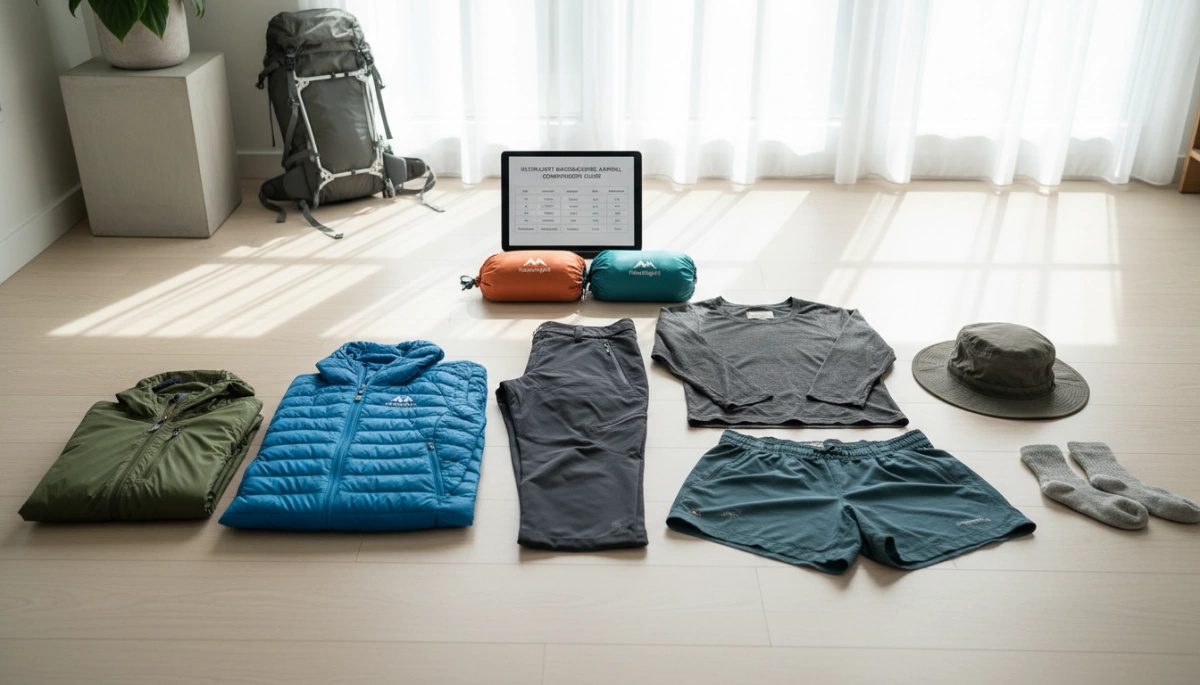
When I’m dialing in an ultralight backpacking clothing system, base layers are where comfort and stink control are won or lost. Here’s how I look at merino wool vs synthetic base layers for real three-season miles in the U.S.
Pros and Cons of Merino Wool for Backpacking
Why merino works:
- Excellent odor control: You can wear a merino ultralight hiking base layer for days without smelling awful, which matters on thru-hikes and long weekends.
- Comfort next to skin: Soft, low itch (if you buy decent stuff), great for sensitive skin.
- Good temp regulation: Handles cool mornings and warm afternoons without feeling swampy as fast.
- Safer when damp: Still feels warm even when it’s not fully dry.
Where merino falls short:
- Durability: Lightweight merino (150–170 gsm) can snag, hole, and thin out faster than synthetics.
- Price: Quality merino base layers cost more up front.
- Drying speed: Dries slower than pure synthetic, especially in humid Eastern forests or coastal trips.
Merino is ideal if you want minimal funk, all-day comfort, and easier multi-day wear in your ultralight backpacking clothing system.
Pros and Cons of Synthetic Base Layers
Why synthetic works:
- Fast drying: Polyester and nylon base layers dry noticeably quicker after sweat or a creek crossing.
- Durable: Better at taking abuse from brush, granite, and repeated pack rub.
- Budget-friendly: You can build a minimalist backpacking wardrobe for less.
- Light and stretchy: Great mobility and often a bit lighter at the same warmth level.
Where synthetics lag:
- Odor build-up: They smell faster. On day 2–3 of a hot, humid hike, you’ll notice.
- Comfort when damp: Can feel clammy in shoulder-season chill.
- Environmental concerns: Microfiber shedding is an issue, especially with cheap fabric.
Synthetic base layers shine if you hike hot, sweat hard, and want quick-dry performance at a lower cost.
Blended Fabrics: When They Make Sense
Blends (like merino + synthetic) try to hit the middle ground:
- Better durability than 100% merino.
- Improved odor control vs full synthetic.
- Faster drying than pure merino.
I like blends for:
- Thru-hikes and long sections where I want fewer clothing failures.
- One-shirt setups for ultralight gear lists where a single top has to do it all.
If you’re unsure where to start, a merino/synthetic blend sun hoodie or tee is usually the most forgiving choice for three-season backpacking clothes.
Odor Control and Multi-Day Wear on Trail
On real trips, odor control matters more than lab specs:
- Merino: Best for wearing the same shirt 3–5 days straight, especially in dry Western climates.
- Synthetics: Plan more frequent rinses in creeks, baby wipe wipe-downs, or swapping between two shirts.
- Blends: Usually good for 2–4 days before stink becomes a problem.
If you’re building an ultralight hiking clothing kit for thru-hiking or long road trips between trails, merino or blends earn their spot just by smelling human longer.
Drying Times and Moisture Management in Real Use
Here’s how the fabrics really behave when you’re sweating up climbs and dealing with random storms:
-
Merino wool base layers
- Slower to fully dry, but stay comfortable while damp.
- Great for cooler temps, mountain mornings, and mixed conditions.
-
Synthetic base layers
- Fastest to dry in both sun and body heat.
- Can feel sticky when soaked with sweat, but they bounce back quickly once you stop or hit a breeze.
-
Blends
- Land in between: good enough drying, better feel when damp than pure synthetic, more durable than ultralight merino.
For most U.S. hikers running an ultralight backpacking apparel setup:
- Hot, humid Southeast or Midwest: I lean synthetic or blends for quicker dry times.
- High desert, Rockies, Sierras, shoulder season: I lean merino or blends for comfort and warmth when damp.
The bottom line: pick your ultralight hiking base layers based on your sweat level, climate, and how many days you plan to wear the same shirt.
Ultralight Hiking Shirts and Sun Hoodies
Sun Hoodie for Hiking vs T-Shirt vs Button-Up
When I’m building an ultralight backpacking clothing system, tops do a ton of work for comfort and protection:
-
Sun hoodie for hiking
- Best for: long days above treeline, desert, exposed ridgelines.
- Pros: built-in hood, neck and hand coverage, great with a hat, strong UPF sun protection, no greasy sunscreen on arms.
- Cons: can feel warmer if the fabric isn’t very breathable.
-
T-shirt
- Best for: shaded trails, dry climates, short trips, running hot.
- Pros: lightest, simplest, super breathable, easy to layer with a wind shirt.
- Cons: less sun coverage, more sunscreen, more skin exposed to bugs.
-
Button-up hiking shirt
- Best for: mixed town/trail use, buggy forest, people who burn easily.
- Pros: venting via buttons, collar for neck protection, long sleeves with roll tabs.
- Cons: usually heavier and bulkier than a sun hoodie; more parts to fail.
For most ultralight hikers in the U.S., a breathable sun hoodie is the best “one shirt” solution for three-season backpacking.
Key Features in a Breathable Ultralight Sun Hoodie
When I design or pick an ultralight hiking shirt or sun hoodie, I want it to disappear on body:
- Fabric weight: sweet spot is 90–150 gsm (grams per square meter) for three-season use.
- Breathability: open-knit or “air-perm” fabrics that dump heat fast.
- Fast drying: true quick-dry backpacking shirts should go from wet to dry in a couple hours in camp.
- Stretch: at least 5–10% spandex or mechanical stretch for pole use and scrambling.
- Hood design: snug enough to stay on in wind, big enough to fit under/over a cap.
- Minimal seams: flatlock stitching and no bulky shoulder seams under pack straps.
If I can hike all day without thinking about my shirt, it’s doing the job.
UPF Ratings and Real Sun Protection Needs
In the U.S., UV is harsh in the desert, high Sierra, Rockies, and Southeast summers. I treat UPF like real gear, not marketing:
- UPF 30–50+ is what I aim for in lightweight sun protection clothing.
- Darker colors and tighter weaves help, but can be warmer; I like light colors with proven UPF.
- A sun hoodie for hiking + brimmed hat + sunglasses is usually more reliable than constantly reapplying sunscreen.
If you burn easily, don’t mess around: choose UPF hiking clothing that clearly lists its rating.
Quick-Dry Backpacking Shirts for Hot and Humid Trips
For the Southeast, Appalachians, and Gulf states, humidity is brutal. Here’s what I look for in quick-dry backpacking shirts:
- 100% synthetic (polyester/nylon) or blends with very low cotton.
- Ultra-thin, airy knit that doesn’t cling when soaked in sweat.
- No big cotton-blend panels that hold moisture and cause chafing.
- Anti-odor treatments help, but fast-drying hiking layers are more important than fancy tech.
In sticky climates, I’d rather have a light synthetic sun hoodie or tee than heavy merino.
Recommended Weight Ranges for Tops in Three-Season Use
For an ultralight backpacking clothing system, I keep tops in these weight ranges (men’s M / women’s M):
- Sun hoodie for hiking: 4–7 oz (113–198 g)
- Ultralight hiking T-shirt (base layer): 2.5–5 oz (70–140 g)
- Long-sleeve hiking shirt/button-up: 5–8 oz (140–227 g)
If a three-season hiking shirt is much heavier than this, it better bring serious durability or multi-use value. Otherwise, you’re just carrying extra ounces every single mile.
Ultralight Underwear and Sports Bras
Best fabrics for quick-dry hiking underwear
For ultralight backpacking apparel, underwear has to be fast-drying, breathable, and low-chafe:
- Top picks: lightweight synthetic blends (nylon + spandex or polyester + spandex)
- Avoid: heavy cotton and thick “everyday” underwear
- Look for:
- Mesh or micro-mesh panels for airflow
- Flatlock seams or bonded seams
- Wide, soft waistband that won’t roll or dig in
Merino wool underwear can work for odor control, but for most US hikers in warm, humid conditions, synthetic dries faster and handles sweat better.
How many pairs to carry for multi-day trips
For a minimalist backpacking wardrobe, you don’t need much:
- Weekend (2–3 days):
- 2 pairs of quick-dry hiking underwear (1 worn, 1 backup)
- Weeklong (4–7 days):
- 2–3 pairs max
- Thru-hikes:
- 2 pairs is usually enough if you rinse and rotate
Plan to wash a pair in camp, wring it out, and hang it to dry on your pack the next day.
Chafing prevention and fit tips
Chafing ruins days fast, especially in hot U.S. summers. I focus on:
- Fit: snug but not compressive; no sagging, no bunching
- Cut:
- Men: briefs or boxer-briefs with legs that don’t ride up
- Women: briefs/bikini/hipster that stay put under shorts or tights
- Seams: avoid big seams in the inner thigh and crotch
- Extra help:
- Anti-chafe balm (inner thighs, waistband, under sports bra band)
- Test on local hikes before a long trip
If you’re prone to thigh rub, longer-leg boxer briefs or light trail tights can be worth the extra ounces.
Sports bra considerations for high-mile days
For sports bras in an ultralight hiking clothing system, I want support, comfort, and fast dry times:
- Fabric: synthetic with good stretch; light mesh panels; no thick padded cups that stay wet
- Support level:
- A/B cup: light–medium support is usually enough
- C+ cup: medium–high support with wider straps and band
- Design:
- Racerback or cross-back to prevent straps slipping
- Soft, wide band that won’t dig under a hipbelt or sternum strap
- Minimal hardware (no big clips or hooks rubbing under the pack)
For multi-day trips, most hikers in the U.S. do well with 2 sports bras (1 worn, 1 drying). Keep it simple, keep it light, and make sure every piece earns its spot in your ultralight backpacking apparel kit.
Lightweight Hiking Bottoms and Shorts
Ultralight Hiking Shorts vs Pants vs Tights
When I’m dialing in ultralight backpacking apparel, my hiking bottoms are one of the easiest places to save real weight without killing comfort.
Shorts (most US three-season trips):
- Best for: late spring–early fall, high-output days, trail runners
- Pros: max airflow, less sweat, fewer chafing issues if they fit right
- Cons: no bug or sun protection, colder in wind and at camp
Pants:
- Best for: brushy trails, sun-baked desert, buggy forests, shoulder seasons
- Pros: built-in sun protection, better against ticks, mosquitoes, and scratchy brush
- Cons: hotter, can feel restrictive if there’s not enough stretch
Tights/leggings:
- Best for: cooler temps, high-mile days, people who hate fabric flapping
- Pros: great range of motion, low bulk, work well as a sleep or camp layer too
- Cons: easier to snag and tear, less durable in rough terrain
For most three-season US hikers, I run shorts as my main hiking bottom and add a lightweight wind pant or thin hiking pant for bugs, wind, and evenings.
Built-In Liners vs Separate Underwear
This is a comfort game more than anything, but it affects your minimalist backpacking wardrobe and total weight.
Shorts with built-in liners:
- Pros: 1 less item to pack, lighter overall, dries fast as a single piece
- Cons: if the liner chafes or stretches out, the whole short is ruined
Separate quick-dry hiking underwear:
- Pros: easier to wash/rotate, more sizing options, better for multi-day trips
- Cons: a bit more weight, more pieces to manage
For weeklong and thru-hiking, I prefer separate quick-dry hiking underwear so I can rotate and wash easily on trail.
Ideal Fabrics for Durability and Comfort
For ultralight hiking clothing, fabrics matter more than logos. I look for:
- Nylon blends (or nylon with a little spandex):
- Best mix of durability + abrasion resistance
- Great for rocky trails, desert scrub, blowdowns
- Polyester blends:
- Often a bit softer and faster drying
- Good for hot, humid East Coast and Southeast trips
- 4-way stretch:
- Critical for steep climbs, big steps, and scrambling
- DWR or tight weave:
- Helps shed light drizzle and morning dew
- Adds a bit of wind resistance without adding weight
Stay away from heavy canvas, thick cotton, or stiff hiking pants. They hold water, stay wet, and wreck your comfort on long miles.
Recommended Weights for Three-Season Bottoms
For a three-season backpacking clothing system in the US, I keep my weight targets tight:
- Ultralight hiking shorts:
- 3–5 oz (85–140 g) is a sweet spot
- 5–7 oz is fine if they’re durable and fit perfectly
- Lightweight hiking pants / wind pants:
- 3–6 oz (85–170 g) for wind pants
- 6–10 oz (170–285 g) for true hiking pants with pockets and stretch
- Tights/leggings:
- 4–8 oz (115–225 g) depending on warmth and fabric
If your combined hiking shorts + spare long bottom (pants or tights) are over 16 oz (1 lb), you usually have some easy weight savings in backpacking apparel without giving up comfort.
Ultralight Hiking Pants, Wind Pants, and Convertible Options
Ultralight hiking clothing isn’t just about tops. Your legwear can make or break long days on trail, especially in the U.S. where you move between hot sun, brush, and bugs in a single day.
When Full-Length Ultralight Hiking Pants Make Sense
I reach for full-length lightweight hiking pants when I need:
- Sun protection: High UV, desert, Sierra, and Rockies trips
- Brush & rock protection: Scrubby trails, blowdowns, talus, off-trail travel
- Bugs: Mosquito season in the PNW, Northeast, Upper Midwest, Southeast
- Cool mornings & evenings: Shoulder-season three-season backpacking
Key features for ultralight hiking pants:
- Fabric: 90–120 gsm nylon or nylon/spandex mix
- Weight: 4–8 oz (113–227 g) is the sweet spot
- Details: DWR finish, soft waistband, zip pockets that don’t rub under a hipbelt
Wind Pants as a Minimal Weight Warmth Boost
Ultralight wind pants are one of the highest value pieces in a minimalist backpacking wardrobe.
Why I like them:
- Fast warmth: Throw over shorts when temps drop or wind picks up
- Crazy light: Many are 1.5–3 oz (40–85 g)
- Versatile: Extra warmth at camp, in your quilt, or on windy ridges
- Dry fast: Great backup when your main pants are damp
They shine on:
- High, exposed ridges
- Shoulder-season trips
- Runners and fast-packers who hike in shorts most of the day
Convertible Pants Pros and Cons for Backpacking
Convertible ultralight hiking pants are a love-or-hate item, and I treat them like a specific-use tool.
Pros:
- Pants + shorts in one piece
- Great for variable temps and mixed bug/sun zones
- Easy to vent without changing clothes
Cons:
- Extra zippers = extra weight and bulk
- Zippers can rub under hipbelts or on long climbs
- Usually less comfortable and less streamlined than true ultralight hiking pants
If you go convertible:
- Keep them under 12 oz (340 g)
- Make sure the zipper hits above the boot cuff so you can remove legs without taking shoes off
Bug Protection and Sun Protection from Legwear
Legwear is often your most reliable bug protection ultralight clothing and sun shield on trail.
Look for:
- Tight weave nylon to block mosquitoes and blackflies
- Insect Shield / permethrin-treated options for high-bug areas
- UPF 30–50 labeled pants for all-day sun hikes
- Light colors for heat management in desert trips
Simple combo that works across most U.S. climates:
- Lightweight hiking pants + wind pants or rain pants as backup =
- Sun coverage
- Bug defense
- Flexible warmth without much weight
Fit, Stretch, and Range of Motion on Steep Terrain
With lightweight hiking pants, if the fit is wrong, nothing else matters.
I focus on:
- Stretch: 5–10% spandex or mechanical stretch
- Crotch gusset + articulated knees: Better movement on big steps
- Comfort waistband: Sits clean under a hipbelt, doesn’t roll
- Trim but not tight:
- Too tight = chafing, limited mobility
- Too baggy = snagging on brush, extra flapping fabric
Quick Comparison Table
| Legwear Type | Best Use | Target Weight | Main Benefits |
|---|---|---|---|
| Ultralight hiking pants | Daily three-season hiking | 4–8 oz | Sun, bug, brush protection, all-day wear |
| Ultralight wind pants | Warmth boost, wind, ultralight setups | 1.5–3 oz | Huge warmth per ounce, layer over shorts |
| Convertible hiking pants | Variable temps, on/off bug & sun exposure | 10–12 oz max | Pants + shorts in one, flexible coverage |
Dial your legwear so you can move freely, stay covered, and keep weight low. That balance is where ultralight backpacking apparel really pays off.
Mid Layers for Ultralight Backpacking Warmth
Ultralight backpacking apparel lives or dies on your mid layer. This is the piece that keeps you warm while you’re moving in cool weather without turning you into a sweaty mess.
Role of Mid Layers in an Ultralight System
In a three-season ultralight backpacking clothing system, a mid layer is your “workhorse warmth” while hiking:
- Takes the edge off wind and chill when a base layer and sun hoodie aren’t enough
- Bridges the gap between light hiking layers and your puffy jacket
- Stays breathable and fast-drying, so you’re not soaked with sweat on climbs
- Often doubles as camp wear when it’s not quite cold enough for your full insulation layer
For most U.S. hikers, a good mid layer is more important than an overbuilt heavy puffy.
Choosing Warmth Levels for Shoulder Seasons
For shoulder-season trips in the U.S. (spring/fall in the Rockies, Sierra, Appalachians, and PNW), I dial mid-layer warmth based on expected lows and wind:
- Mild (high 40s–50s °F, low wind):
- Thin grid fleece or light synthetic pullover (around 5–7 oz)
- Cool (mid 30s–40s °F, moderate wind):
- Medium-weight fleece or Alpha Direct fleece (7–9 oz range)
- Colder shoulder-season (below mid 30s °F, windy ridges):
- Warmer Alpha Direct / active insulation plus a solid wind or rain shell
The key with ultralight hiking clothing is not overbuilding the mid layer. Let your puffy handle true cold at camp; let the mid layer handle “moving warmth.”
Layering Mid Layers with Shells and Insulation
To get the most out of lightweight trail apparel, I treat my mid layer as part of a system, not a standalone hero piece:
- While hiking in cool wind:
- Base layer or sun hoodie + mid layer + ultralight wind shirt
- Cold, wet, and moving slow:
- Base + mid layer + breathable hiking rain jacket
- At camp in cold temps:
- Dry base layer + mid layer + lightweight puffy jacket for hiking
I aim for mid layers that:
- Play nice under a shell (no bulky seams, decent stretch)
- Dry fast after sweat or light drizzle
- Weigh under ~8–9 oz for three-season backpacking clothes
When you dial this in, you get real warmth, real comfort, and you still keep your ultralight backpacking apparel system lean.
Alpha Direct Fleece and Active Insulation
What is Alpha Direct fleece and why hikers love it
Alpha Direct fleece is an ultralight, very open-knit insulation that’s crazy breathable and dries fast. For ultralight backpacking apparel, it acts like a “heat regulator” instead of a simple warm blanket.
Why I keep reaching for Alpha Direct on trail:
- Warm while moving, not swampy
- Insanely breathable – dumps heat on climbs
- Dries fast after sweat or light mist
- Great warmth-to-weight for a three-season backpacking layering system
For most U.S. hikers putting in long days in the Rockies, Sierra, AT, or PNW, Alpha Direct hits a sweet spot between comfort, breathability, and low weight.
Alpha Direct vs classic fleece vs thin grid fleece
Here’s how Alpha Direct stacks up against other ultralight hiking clothing:
| Type | Warmth While Moving | Breathability | Bulk | Wind Resistance | Typical Use |
|---|---|---|---|---|---|
| Alpha Direct fleece | High | Very high | Low | Low | Active hiking, big climbs |
| Classic fleece | High | Medium | High | Medium | Car camping, cold town wear |
| Thin grid fleece | Medium | High | Low | Low | Versatile, all-around mid layer |
- Alpha Direct fleece: Best if you run hot and move a lot
- Thin grid fleece (e.g., R1-style): Good middle ground for most three-season hiking outfits
- Classic fleece: Cheap but heavy and bulky for ultralight backpacking clothing systems
Best use cases for active insulation while moving
Active insulation like Alpha Direct shines when you’re on the move, not sitting in camp:
- Cold mornings on trail (mid 30s–40s °F with light wind)
- Steep climbs where you don’t want to stop and swap layers
- Windy ridge walks when a full puffy would be overkill
- Stop-and-go hiking days where you’re frequently adjusting pace
In a minimalist backpacking wardrobe, Alpha Direct can replace:
- A heavier fleece and sometimes a light wind shirt, depending on your climate
- A midweight base layer you’d otherwise sweat through
How to avoid overheating in breathable mid layers
Even breathable ultralight hiking base layers and mid layers can cook you if you don’t manage them right. With Alpha Direct or other active insulation:
- Start colder: Begin moving slightly chilled; you’ll warm up fast
- Use front zips: A full or half zip dumps heat quickly
- Pair with a wind shirt: Use a ultralight wind shirt over Alpha Direct; zip/unsnap it instead of stripping layers
- Rotate sleeves and hood: Push sleeves up, drop the hood, open cuffs
- Vent your shell: If you throw a rain jacket over Alpha Direct, open pit zips and front zip whenever you can
The goal: fine-tune with zips and wind layers instead of constantly stopping to change clothes.
Weight targets and real trail performance examples
For three-season ultralight backpacking apparel in the U.S., realistic weight ranges:
- Alpha Direct fleece hoodie: ~5–8 oz (140–225 g)
- Thin grid fleece top: ~7–11 oz (200–310 g)
- Classic fleece jacket: 12–16+ oz (340–450+ g)
How I’d use it in a lightweight trail apparel system:
-
High-output hikers (Rockies, Sierra, desert shoulder seasons):
- Sun hoodie or light synthetic base
- Alpha Direct fleece hoodie (5–7 oz)
- Ultralight wind shirt (2–3 oz)
- Light puffy for camp (8–12 oz)
-
Cool, wet U.S. forest/PNW setups:
- Synthetic or merino wool vs synthetic base layers
- Alpha Direct fleece or thin grid fleece
- Breathable hiking rain jacket (3-layer, 8–12 oz)
Used right, Alpha Direct and other active insulation pieces let you cut total clothing weight while staying comfortable over long miles, instead of hauling heavy mid layers you only wear in camp.
Ultralight Insulation Layers for Camp and Cold
When I talk ultralight backpacking apparel for camp and cold, I’m really talking about one thing: the puffy. This is the core warmth piece in a three-season ultralight backpacking clothing system, and it has to earn every ounce.
Down vs Synthetic Puffy Jackets for Backpacking
For most three-season trips in the U.S., I treat it this way:
-
Down puffy (9–13 oz)
- Best warmth-to-weight, packs tiny
- Great for dry cold (high desert, Rockies, Sierra, fall in the Appalachians)
- Ideal if you protect it from constant rain and heavy condensation
-
Synthetic puffy (11–16 oz)
- Heavier for the same warmth
- Still insulates better when damp
- Better for cool, wet forests, coastal trips, shoulder-season rain
If I expect mainly dry weather and can manage moisture, I go down. If I expect days of drizzle and can’t keep things dry, I go synthetic.
Fill Power, Baffles, and Treated Down Basics
To keep it simple for ultralight hiking clothing:
-
Fill power
- Aim for 800–900 FP down for ultralight backpacking
- Higher fill power = more warmth per ounce, smaller packed size
-
Baffle design
- Sewn-through: lighter, good for three-season use
- Box baffles: warmer but heavier; more for shoulder-season snow or winter
-
Treated (hydrophobic) down
- Resists moisture better than untreated down
- Still not “waterproof,” but buys you time in humid or damp conditions
- Good match for wet-but-not-monsoon style trips in the U.S.
When Synthetic Insulation Wins in Wet Conditions
Synthetic insulation wins when you can’t realistically keep your gear dry:
- Long stretches of cold rain and humid forests (PNW, coastal New England)
- Trips where you won’t see the sun to dry gear
- Heavy sweaters who soak their layers from the inside
In those cases, I’ll accept a few extra ounces for a reliable synthetic puffy that still warms when damp.
Hooded vs Non-Hooded Puffy Jackets
For a minimalist backpacking wardrobe, I strongly lean hooded puffy:
- Hooded puffy
- Replaces a separate beanie for camp
- Seals heat around the neck and head
- Works better with a quilt or hoodless sleeping bag
- Non-hooded puffy
- Slightly lighter, packs a bit smaller
- Only makes sense if you already carry a warm hat and want redundancy
Most ultralight backpackers in the U.S. are better off with one good hooded puffy instead of a non-hood plus extra heavy hat.
Recommended Warmth-to-Weight for Three-Season Trips
For three-season backpacking clothes (down to roughly freezing at night):
-
Down puffy jacket
- Weight: 8–12 oz
- Fill: ~3–4.5 oz of 800–900 FP down
- Use: Most three-season trips in the West and drier Eastern shoulder seasons
-
Synthetic puffy jacket
- Weight: 10–16 oz
- Use: Cool, wet, or coastal three-season hikes where getting damp is almost guaranteed
My rule: if I’m regularly cold at camp in that 8–12 oz jacket, I don’t add another jacket—I move up to a slightly warmer puffy and keep the rest of my ultralight backpacking clothing system as lean as possible.
Ultralight Shell Layers: Rain and Wind Protection
Ultralight backpacking apparel lives or dies on your shell layers. My rule: carry the lightest shell that actually matches your real weather, not the worst-case storm you’ll never see.
Rain Jackets vs Wind Shirts
Rain jacket (ultralight rain gear):
- Goal: Keep you dry in real rain
- Fabric: Waterproof / breathable (2, 2.5, or 3-layer)
- Use: Cold rain, all-day storms, exposed ridgelines
- Typical weight: 6–10 oz for ultralight hiking clothing
Wind shirt (ultralight wind shirt):
- Goal: Block wind, add a bit of warmth
- Fabric: Highly breathable, water-resistant, not truly waterproof
- Use: Windy ridges, cool mornings, light mist
- Typical weight: 2–4 oz
| Shell Type | Best For | Not Great For | Typical Weight |
|---|---|---|---|
| Rain Jacket | Steady rain, cold storms | Hot, dry trips | 6–10 oz |
| Wind Shirt | Wind, light drizzle | Heavy sustained rain | 2–4 oz |
When You Actually Need a Full Rain Shell
I bring a full rain jacket when:
- Forecast shows real rain, not just “chance of showers”
- I’m in the Pacific Northwest, Appalachians, Rockies shoulder season, or coastal trips
- Temps could drop below 50°F with wind and rain (hypothermia zone)
- I’ll be above treeline with no shelter options
I skip it (and rely on a wind shirt or alternative system) only on short, hot, low-risk summer trips with easy bail-out.
Breathability vs True Waterproofing
You can’t have it all. Even the “best breathable” shells get clammy when you’re climbing hard.
- More waterproof = usually less breathable
- More breathable = often wets out faster in heavy rain
For most US three-season backpacking:
- Aim for a light 2.5- or 3-layer breathable hiking rain jacket
- Accept that you’ll sometimes be damp from sweat, not rain
- Use zippers and venting as much as the fabric itself
Pit Zips, Vents, and Smart Design
On ultralight rain gear, design matters as much as fabric:
- Pit zips or side zips: Huge for dumping heat on climbs
- Mesh hand pockets: Can double as vents
- Adjustable hood: Must move with your head, not block vision
- Hem + cuff adjusters: Seal out wind, keep heat in
- Simple, low-bulk zippers: Fewer failure points, lighter
I’d rather carry a 7–8 oz jacket with pit zips than a 5 oz sauna with no venting.
Ponchos, Umbrellas, and Alternative Rain Systems
If you’re serious about weight savings in backpacking apparel, alternatives can work, especially for US thru-hiking:
Ponchos:
- Pros: Crazy light, covers pack, great airflow
- Cons: Flappy in wind, fussy in brush, weaker in cold sideways rain
Umbrellas:
- Pros: Great for sun and light to moderate rain, breathable, instant deploy
- Cons: One hand occupied, rough in high wind, not ideal in dense trees
Hybrid strategy I like:
- Wind shirt + small umbrella for summer hikes with scattered showers
- Full rain jacket for mountain or shoulder-season trips
- Skip rain pants often; pair jacket with ultralight wind pants or just accept wet legs in warm weather
The key with ultralight backpacking clothing systems is to match your shell to your climate, not to what’s trending.
Ultralight Rain Gear Strategies
Ultralight rain jackets: weight & key features
For ultralight backpacking apparel, I treat rain gear as insurance: light, compact, but still usable in a real storm.
Target weights (men’s M):
- Ultralight rain jacket: 5–8 oz (140–225 g)
- Standard lightweight: 8–11 oz (225–310 g)
Features that actually matter:
- Good hood with stiffened brim + rear/side cinches
- Real hem + cuff adjustment to seal out wind and spray
- Pit zips or core vents if breathability is mediocre
- Hand pockets that sit above hip belt (or no pockets at all)
- Simple, durable zippers (YKK, not no-name)
If a “ultralight hiking clothing” shell is under 5 oz and has zero adjustability, I treat it as an emergency shell, not a daily driver.
2-layer vs 2.5-layer vs 3-layer
You’ll see this on most breathable hiking rain jacket marketing. Here’s the real-world breakdown:
-
2-layer
- Cheaper, softer, often clammy
- Fine for weekend trips and casual use
- Not my first choice for long wet stretches
-
2.5-layer (most ultralight rain gear)
- Best weight-to-cost for most US hikers
- Packs small, good for three-season backpacking clothes
- Can feel “plasticky,” and inner print can wear over time
-
3-layer
- Most durable and comfortable against skin
- Better for cold, wet, all-day storms
- Heavier and pricier; I use it for PNW, Appalachians in shoulder season, and long thru-hikes with weeks of rain
If you mostly hike in drier Western states, 2.5-layer is usually the sweet spot.
Rain pants vs rain skirt vs nothing
For ultralight backpacking clothing systems, leg coverage is where you can save serious weight.
Options:
-
Rain pants (5–8 oz ultralight, 8–12 oz standard)
- Best for cold, windy, bushy, or buggy conditions
- Great for Alaska, Rockies shoulder season, PNW shoulder season
- Look for simple elastic waist, ankle zips, and durable cuffs
-
Rain skirt/kilt (2–4 oz)
- Awesome for warm, wet summer trips
- Super breathable, easy bathroom breaks
- Pair with lightweight hiking shorts and warm tights if needed
-
No dedicated bottom
- Works in hot, low-elevation desert where rain is brief
- Use fast-drying hiking pants or shorts and accept getting wet
- Not ideal for long cold rain where hypothermia is a risk
My rule: if cold + wet is possible for more than a couple hours, I carry some kind of leg protection, even if it’s just a skirt.
How often rain gear is worn vs carried
For most US three-season backpacking:
- Rain jacket is worn maybe 5–20% of the trip
- The rest of the time, it’s dead weight in your pack
That’s why I keep my ultralight rain gear:
- As light as I can while still trusting it in a real storm
- Good enough to use as a wind shell on cold ridgelines (multi-use)
In drier regions (SoCal, Utah, Arizona), the jacket is almost always “just in case”. In the Pacific Northwest, Appalachians, and New England, expect to wear it a lot more, which justifies a more comfortable, durable shell.
Care, maintenance, and reproofing
Ultralight waterproof fabrics don’t last if you abuse them. To keep your ultralight hiking clothing and shells working:
-
Wash regularly
- Use a tech wash or mild detergent (no fabric softener)
- Gently clean sweat, oils, and dirt that clog pores
-
Restore DWR (durable water repellent)
- When water stops beading, use a spray-on or wash-in DWR
- Low-heat tumble dry (if allowed) can re-activate existing DWR
-
Field care
- Avoid leaning against rough rock or sitting on sharp logs
- Use tape patches (Tenacious Tape) on small tears ASAP
-
Retire when needed
- If the membrane delaminates or wets out no matter what, it’s time to replace
- I upgrade rain jackets and pants before most other clothing because staying dry is a safety issue, not just a comfort perk
Dialed-in ultralight rain gear strategies let you carry less, stay safer in storms, and keep your entire minimalist backpacking wardrobe working better for more seasons.
Footwear for Ultralight Backpacking Comfort
When I’m dialing in ultralight backpacking apparel, footwear is where comfort can completely make or break long days. Your shoes are part of your overall ultralight backpacking clothing system, and the weight on your feet matters more than almost anything else.
Trail Runners vs Hiking Boots for Ultralight Hikers
For most US hikers running a three-season backpacking outfit, I push trail runners over traditional boots:
- Trail runners (most ultralight choice)
- Lighter, more flexible, dry faster
- Better for high-mile days and thru-hiking
- Great with lighter packs (sub 25–30 lb total)
- Hiking boots
- More ankle structure, better in sharp rock, snow, or heavy loads
- Slower to dry, hotter, usually heavier
- I only use boots for off-trail, shoulder-season snow, or very rough terrain
If your pack is light and you’re staying on trail, trail runners are usually the clear win for ultralight hiking clothing.
How Shoe Weight Impacts Fatigue Per Mile
Every ounce on your foot hits harder than an ounce in your pack. A common rule:
1 lb on your feet ≈ 4–5 lb on your back in terms of energy cost.
- Swapping from heavy boots (2.8–3+ lb pair) to light trail runners (1.4–1.8 lb pair) can:
- Save serious energy over 15–25 mile days
- Reduce foot and leg fatigue by the afternoon
- Help your joints and make recovery easier
If you’re chasing weight savings in backpacking apparel, footwear is one of the biggest performance upgrades.
Stack Height, Support, and Rock Protection
To keep lightweight trail apparel from turning into sore-feet misery, I look at:
- Stack height (cushion)
- Low: more ground feel, less cushion, better on smooth trails
- Medium: sweet spot for most hikers and most US trails
- High: plush, great for long days but can feel unstable on rocky sidehills
- Support
- Look for a stable platform, not just “stiff”
- Wider toe box lets your feet swell and reduces blisters
- Rock plate / rock protection
- Thin plastic or composite layer in the midsole
- Critical for rocky trails (Colorado, Sierra, Northeast)
- Lets you stay in lighter shoes without bruising your feet
When Sandals or Camp Shoes Are Worth the Weight
In a minimalist backpacking wardrobe, camp shoes are optional, not default. I only bring them when they earn their spot:
- Worth bringing if:
- You’ll be fording lots of rivers
- You’re in hot, wet, or swampy areas (PCT Sierra in melt, parts of the AT)
- Foot funk or skin issues get bad without a break from closed shoes
- Good options:
- Ultralight sandals (5–8 oz pair)
- Foam clogs or flip-flops (cheap and light)
- Or just use your trail runners and skip camp shoes entirely
If you’re really focused on ultralight backpacking comfort, I’d cut camp shoes first, then upgrade to lighter, better-fitting trail runners for backpacking before spending weight elsewhere in your three-season hiking outfit.
Comfortable Ultralight Socks and Blister Prevention
When I dial in ultralight hiking clothing for long days on U.S. trails, socks are non‑negotiable. Comfortable ultralight socks matter more for energy and morale than almost any other piece of gear.
Merino vs Synthetic Socks for Backpacking
For most three‑season backpacking in the States, I stick with these rules:
-
Merino wool socks
- Pros: Naturally odor‑resistant, comfy, handle a wide temp range, feel good when damp.
- Cons: Wear out faster, usually pricier, can feel “squishier” when soaked.
- Best for: Thru‑hikes, multi‑day trips, people with sweaty or smelly feet.
-
Synthetic socks (nylon/poly blend)
- Pros: Very durable, dry fast, cheaper, good for very wet conditions.
- Cons: Hold more stink, can feel “slick” and cause rubbing if the fit is off.
- Best for: Shorter trips, budget setups, super wet or muddy regions.
-
My take: For an ultralight backpacking clothing system, merino or merino‑blend socks are usually worth it for comfort and odor control, especially on long trails.
Sock Thickness and Cushion for Long Mile Days
You don’t need thick, heavy socks for three‑season comfort:
- Ultralight / light cushion (most people)
- Best for: trail runners and modern lightweight shoes.
- Great for: 15–25 mile days, hot and dry or mixed conditions.
- Medium cushion
- Best for: Rocky terrain, cooler temps, sensitive feet.
- Heavy cushion
- Mostly overkill for ultralight hiking clothing; I skip these for three‑season trips.
I aim for light to medium cushion merino socks in the 35–60 g (1.2–2.1 oz) per pair range.
Liner Socks, Toe Socks, and Blister Hot Spots
If you fight blisters, your ultralight backpacking apparel should include a foot strategy:
- Liner socks
- Thin synthetic or wool liners reduce friction and help with sweat.
- Good for: Heel blisters, general hotspot prevention, high‑mile days.
- Toe socks
- Wrap each toe individually, stopping skin‑on‑skin rub.
- Great for: Between‑toe blisters, humid Southern trails, sweaty feet.
- Other blister tips
- Lock in fit: No bunching, no sliding—your shoes and socks should feel like one unit.
- Hit hot spots early with tape (Leukotape), blister patches, or toe socks before they blow up.
How Many Pairs of Ultralight Socks to Carry
I keep this simple in my minimalist backpacking wardrobe:
- Weekend (1–3 days):
- 2 pairs: 1 hiking, 1 dry “sleep/emergency” pair.
- Weeklong (4–7 days):
- 2–3 pairs: 2 hiking rotation + 1 sleep pair.
- Thru‑hike (multi‑week/months):
- 3 pairs: 2 hiking + 1 sleep pair (kept truly dry).
Don’t overpack. Extra socks are sneaky weight.
Sock Rotation, Drying, and Trail Washing Tips
Good habits make ultralight socks last longer and prevent blisters:
- Daily rotation
- Swap into a dry pair at camp.
- Air out your used pair by hanging them on your pack while hiking next day.
- Drying tricks
- Clip damp socks on your backpack with a small carabiner.
- Sleep with slightly damp socks under your quilt to finish drying (not soaked ones).
- Trail washing
- Rinse socks in a ziplock with a little water away from streams; dump gray water on soil.
- Squeeze, wring, then clip to your pack to dry while you hike.
- Non‑negotiable:
- Protect your sleep socks as part of your ultralight camp clothing. They should stay clean and dry—always.
Dialed‑in, comfortable ultralight socks and simple blister prevention will do more for your daily comfort than shaving a couple more ounces off your pack.
Ultralight Accessories That Boost Comfort
Ultralight backpacking apparel isn’t just shirts and pants. The right ultralight accessories can make long days on trail way more comfortable without killing your base weight.
Must-have small items that earn their spot
For most U.S. hikers, these tiny pieces pull real weight in a ultralight backpacking clothing system:
- Ultralight sun hat or cap (1–2 oz) – Better than squinting all day; doubles as light rain protection.
- Neck gaiter / Buff (1–1.5 oz) – Sun, wind, light warmth, and dust protection in one piece.
- Thin liner gloves (1–1.5 oz) – Sunrise starts, chilly filter breaks, and wind on ridgelines.
- Ultralight wind shirt (2–3 oz) – Huge comfort boost in wind and light chill for almost no weight.
- Thin beanie or hood (1–1.5 oz) – Keeps you warm in camp and helps you sleep warmer.
- Light camp socks (1.5–2 oz) – Dry, clean pair only for camp and sleep = warmer, happier feet.
Every item has to answer: “Do I use this daily or does it replace something heavier?” If not, it’s dead weight.
How tiny weight adds up across your kit
A few “just-in-case” pieces at 1–2 oz each seem harmless. But:
- 5 extra items × 2 oz = 10 oz
- 10 oz is over half a pound you feel on every climb.
- That half pound could’ve gone to a warmer lightweight puffy jacket or better ultralight rain gear.
I always tell folks to lay out every accessory and ask:
- Did I use this last trip?
- If not, was the weather extreme enough that I would have used it?
- Can another piece of lightweight trail apparel do the same job?
Choosing versatile pieces that solve multiple problems
In a minimalist backpacking wardrobe, accessories need to be multi-use:
- Buff / neck gaiter
- Sun protection
- Light beanie
- Face cover for wind, dust, or bugs
- Wind shirt or ultralight wind pants
- Extra warmth when moving
- Protects fragile base layers
- Helps with bugs and light drizzle
- Sun hoodie for hiking
- Replaces separate sun hat (hood up) and sometimes a neck gaiter
- Ultralight gloves
- Camp warmth
- Handle cold, wet trekking poles or bear can lids
- Sleep gloves on cold nights
The goal: fewer items, more jobs. When I build a kit for U.S. trails—whether it’s the Sierra, Rockies, or East Coast—these small, smart accessories let me stay comfortable, protected, and still keep my ultralight hiking clothing weight in check.
Hats, Gloves, and Neck Protection for Ultralight Hiking
Ultralight backpacking apparel isn’t just shirts and shorts. The right hats, gloves, and neck protection can add a ton of comfort and warmth for just a few ounces.
Sun hats vs caps vs hoods for UV coverage
For U.S. hikers dealing with strong sun (desert, high altitude, open ridgelines), I look at:
-
Wide-brim sun hat
- Best full UV coverage for face, ears, and neck
- Great for desert, SoCal, Colorado, Utah, and summer in the Rockies
- Aim for 2–3 oz, crushable, with solid UPF and a chin strap
-
Cap + sun hoodie combo
- My go-to ultralight hiking clothing setup
- Cap blocks sun + hood covers neck and ears
- More versatile for three-season backpacking and windy ridges
-
Just a sun hoodie hood
- Lightest option, but less brim coverage
- Works if you like a minimalist backpacking clothing system and don’t mind a bit more sun on your face
If you burn easily, lean toward wide-brim + UPF hiking clothing over just a cap.
Beanies vs hoods for cold evenings
For chilly nights and shoulder season trips in the States:
-
Beanie
- Dialed warmth for camp and sleep
- Easy on/off without messing with your layers
- Look for 1–1.5 oz in synthetic or merino
-
Insulated or fleece hood
- Built into your lightweight puffy jacket for hiking or mid layer
- Saves weight by skipping a separate hat
- Works well if your puffy has a good, close-fitting hood
I usually carry one: beanie OR hood, not both, in a minimalist backpacking wardrobe.
Lightweight gloves for shoulder seasons
Hands get cold fast when you stop moving. I treat gloves as a must-have for three-season trips:
- Thin fleece or softshell gloves (1–2 oz)
- Just enough for chilly mornings and windy passes
- Still let you use trekking poles and phone
- Water-resistant or wind-resistant gloves if you hike in wet, windy areas (PNW, Northeast shoulder season)
Keep them simple, light, and easy to stuff in a hipbelt pocket.
Neck gaiters, buffs, and bug nets
For ultralight backpacking comfort, neck and face coverage pulls a lot of weight:
-
Neck gaiter / Buff
- Sun protection, light warmth, dust blocker, and sleep mask in one
- Perfect multi-use piece in a minimal clothing list for backpacking
- Great with ultralight wind shirts and sun hoodies
-
Bug net for your head
- Essential in mosquito-heavy areas (Upper Midwest, Northeast, Sierra in early season, Alaska)
- Pairs with a cap or sun hat and weighs about an ounce
- Way better than being eaten alive at camp
These small pieces are classic ultralight accessories: tiny weight, big comfort, and they round out a smart ultralight backpacking clothing system.
Bug Protection Ultralight Clothing
Ultralight backpacking apparel has to handle bugs without adding bulk. In most parts of the U.S., I plan insect-focused clothing anytime I’m in wet forests, lake country, marshy sections, or peak mosquito/black fly season (late spring through mid-summer). If you’re hearing “clouds of mosquitoes” in recent trail reports, you need a real bug strategy, not just hope and DEET.
Insect Shield vs Bug Spray
Both work, but they play different roles in an ultralight backpacking clothing system:
-
Insect Shield / permethrin-treated fabrics
- Built into ultralight hiking shirts, pants, sun hoodies, and hats
- Long-lasting (often 50–70 washes) and no greasy feel
- Great “always on” protection when you’re sweating or forget to reapply spray
- Perfect for thru-hikes, buggy Eastern forests, and the Upper Midwest
-
Bug spray (DEET, picaridin, etc.)
- Flexible – use on hands, neck, face, ankles
- Needs regular reapplication, can feel greasy, and some types can damage gear
- I treat clothing first, then use a small bottle of spray just for exposed skin
For most U.S. hikers, the best compromise is permethrin-treated ultralight hiking clothing + a tiny bottle of picaridin for skin.
Long Sleeves, Pants, and Head Nets
When bugs are bad, coverage beats suffering. I still keep it ultralight:
-
Long-sleeve sun hoodie or hiking shirt
- Light color, breathable ultralight fabric, and UPF protection
- Insect-treated if you’re in serious mosquito or tick terrain
-
Lightweight hiking pants or ultralight wind pants
- Slim but not tight, quick-dry, and bug-resistant weave
- Better than shorts when ticks and biting flies are active
-
Head net
- Weighs about an ounce, but can save your sanity in camp
- Works best over a brimmed hat or hood for space
This setup keeps your minimalist backpacking wardrobe simple while still giving real bug protection.
Full Coverage in Hot Weather
In hot, humid U.S. summers, you’ve got to balance ventilation with full coverage:
- Choose breathable ultralight fabrics over heavy canvas or thick nylon
- Go for loose, airy cuts so air can move under sleeves and pant legs
- Pair a sun hoodie for hiking with ultralight hiking pants instead of heavy jeans or thick tights
- Use zips, snaps, and roll-up sleeves to dump heat when bugs calm down
My rule: cover up first, then cool down with fabric choice, not bare skin. That way I stay protected from insects and sun while keeping weight and heat under control.
Dialing In a Minimalist Ultralight Backpacking Wardrobe
When I build a minimalist backpacking wardrobe, my goal is simple: maximum comfort with minimum weight. You don’t need much if every piece earns its spot.
How Few Clothing Items You Can Bring and Still Be Comfy
For most three-season backpacking in the U.S., a true minimalist backpacking wardrobe can look like this:
Worn:
- 1 ultralight hiking shirt or sun hoodie
- 1 pair lightweight hiking shorts or pants
- 1 sports bra (if needed)
- 1 pair quick-dry hiking underwear
- 1 pair comfortable ultralight socks
- 1 sun hat or cap
Carried:
- 1 warm mid layer (light fleece or Alpha Direct hoodie)
- 1 ultralight puffy jacket
- 1 ultralight rain jacket
- 1 extra pair socks
- 1 extra pair underwear
- 1 lightweight beanie or buff (shoulder season)
For most U.S. three-season trips, that’s enough to stay warm, dry, and decent without hauling a closet.
Core Ultralight Pieces That Stay in Every Kit
No matter the trip, these ultralight backpacking clothing system pieces almost never leave my pack:
- Sun hoodie or UPF hiking shirt – all-day sun and bug protection
- Lightweight hiking shorts or pants – breathable, stretchy, quick-dry
- Merino or synthetic base layer top – sleep shirt + backup if needed
- Ultralight puffy jacket – camp warmth and cold mornings
- Breathable hiking rain jacket – wind and storm protection
- Comfortable ultralight socks – blister prevention is non-negotiable
These are the backbone of a minimalist backpacking wardrobe for U.S. trails from the AT to the PCT.
What to Leave at Home to Cut Real Weight
Most people don’t go ultralight because they’re cold. They struggle because they carry too many “just in case” items. I skip:
- Extra shirts (one hiking top + one sleep top is enough)
- Extra pants/shorts (1 bottom is usually plenty)
- Multiple mid layers (pick one that actually works)
- Heavy cotton pieces (they’re slow to dry and add dead weight)
- Thick “camp clothes” that duplicate what your puffy can do
If it doesn’t add warmth, protection, or serious comfort, it probably stays home.
Editing Your Wardrobe by Trip Length and Conditions
I adjust my ultralight hiking clothing based on where and how long I’m hiking in the U.S.:
Weekend trips (2–3 days):
- 1 hiking outfit
- 1 sleep top + sleep socks
- 1 mid layer, 1 puffy, 1 rain jacket
- 1 spare underwear, 1 spare socks
Weeklong trips:
- Same as weekend, maybe 1 extra underwear and socks
- Slightly warmer mid layer for high elevation or shoulder season
Thru-hikes:
- Still just 1 hiking outfit + 1 sleep set
- Focus on fast-drying hiking layers and odor-resistant hiking clothes
- Upgrade high-use pieces (sun hoodie, shorts, socks) to more durable, ultralight options
I treat my minimalist backpacking wardrobe like a tool kit: tight, simple, and tuned to the forecast, terrain, and my own comfort needs.
Three-Season Ultralight Backpacking Clothes by Climate
Hot and Dry Desert Ultralight Setups
For desert miles in the Southwest, I keep my ultralight backpacking apparel focused on sun protection and fast-drying comfort:
- Top: Ultralight sun hoodie for hiking (3–6 oz), light color, high UPF, very breathable
- Bottoms: Loose lightweight hiking pants or shorts with a long UPF liner tight
- Head/Neck: Wide-brim sun hat or cap + neck gaiter/buff
- Feet: Breathable trail runners + thin merino or synthetic socks that dry fast
- Extras: Ultralight wind shirt for cool mornings, no heavy mid layer
Key goals:
- Max UV coverage without overheating
- Fabrics that breathe, don’t cling, and dry in minutes
- Minimal dark colors that soak up heat
Cool and Wet Forest / Coastal Ultralight Clothing
In the PNW, Appalachians, or coastal ranges, staying dry enough matters more than staying perfectly dry:
- Base layer: Synthetic or merino ultralight hiking base layer that still insulates when damp
- Mid layer: Thin fleece or Alpha Direct fleece for active warmth
- Shell: Highly breathable ultralight rain gear (2.5–3-layer jacket) you can actually hike in
- Bottoms: Quick-dry lightweight hiking pants, optional light rain pants or rain kilt
- Feet: Trail runners that drain well + 2–3 pairs of comfortable ultralight socks
Key goals:
- Prioritize fast-drying hiking layers over heavy “waterproof” fabrics
- Avoid cotton; everything should handle daily moisture
- Add bug protection clothing in buggy forests (Insect Shield shirts, head nets)
High-Altitude and Shoulder Season Clothing
For the Rockies, Sierra, Cascades, and early/late-season trips, I build my ultralight backpacking clothing system around warmth and wind:
- Base: Long-sleeve synthetic or merino top + light long johns if you run cold
- Mid: Grid fleece or Alpha Direct active insulation
- Insulation: Lightweight puffy jacket (down or synthetic) with a hood
- Shells: Ultralight wind shirt + reliable rain jacket
- Bottoms: Wind pants or light soft-shell pants for colder days
Key goals:
- Enough insulation to sit in camp in the 30s °F and not shiver
- Layers that still work if temps drop 10–15°F lower than forecast
- Backup warmth that doesn’t blow away your weight savings
Adjusting Layers for Wind-Exposed Ridgelines
Wind turns a mild day into a cold one fast. I plan my three-season hiking outfit assuming at least one exposed ridge:
- Always pack:
- Ultralight wind shirt (2–3 oz)
- Light beanie or hood + thin gloves
- Puffy jacket in shoulder season or above treeline
- On ridges:
- Block wind first (wind shirt + hood)
- Add insulation only if you’re still cold after that
This is where weight savings in backpacking apparel pay off: a couple of 2–4 oz layers can be the difference between cruising and suffering, without pushing your clothing system over ultralight targets.
Budget vs Premium Ultralight Hiking Clothing
When I build an ultralight backpacking clothing system, I don’t just chase the lightest thing—I chase the best value per ounce. Some pieces are worth paying up for, others are absolutely fine on a budget.
Where to spend more for real performance
I recommend investing in these pieces first:
-
Ultralight rain gear (jackets especially)
- Premium: better breathability, longer-lasting waterproofing, lighter weight.
- Worth it if you hike in wet climates (Pacific Northwest, Appalachians, Rockies shoulder seasons).
-
Insulation layers (down/synthetic puffy)
- Higher fill power down = more warmth for less weight.
- Better baffling and fabric = fewer cold spots, longer life.
- This is your “don’t shiver in camp” layer; it’s worth paying for.
-
Footwear and socks
- Trail runners from reliable brands + comfortable ultralight socks (merino or synthetic) are worth the cost.
- Direct impact on fatigue, blisters, and daily mileage.
-
High-use tops (sun hoodie / hiking shirt)
- A good sun hoodie for hiking with real UPF, fast-dry fabric, and good fit will get worn nonstop.
- Spend a bit more here for comfort in heat, sun, and sweat.
Where cheaper ultralight gear works fine
You can save money in these categories without killing performance:
-
Base layers and underwear
- Budget synthetic base layers and quick-dry hiking underwear from mainstream brands work well.
- You don’t need a $90 merino tee to be comfortable.
-
Wind shirt and wind pants
- As long as they’re light, block wind, and fit over your layers, you’re good.
- Simple designs often perform just as well as pricey cottage pieces.
-
Hats, gloves, buffs
- Lightweight beanies, sun hats, and lightweight hiking gloves don’t need to be premium.
- Focus on coverage and comfort, not brand.
Secondhand, cottage brands, and DIY
If I were rebuilding a minimalist backpacking wardrobe on a budget in the US, I’d lean hard on:
-
Secondhand gear
- Gear swaps, online marketplaces, outlet stores, and REI Used.
- Great for rain jackets, mid layers, and hiking pants.
-
Cottage brands (small US makers)
- Often better ultralight hiking clothing designs: dialed fits, lighter fabrics, smart features.
- Especially strong in alpha direct fleece, wind shirts, and UL rain gear.
-
DIY and semi-DIY
- Cut out liners, trim extra straps, swap heavy cord locks, or sew simple stuff sacks and liners.
- Easy way to get weight savings in backpacking apparel without buying all-new gear.
Avoiding hype gear that doesn’t add comfort
I see a lot of US hikers burning cash on “ultralight” clothing that doesn’t actually improve the experience. I avoid:
- Overbuilt “tech” fabrics that are barely lighter but cost 2–3x more.
- Pieces with too many features (pockets, zips, panels) for simple three-season trips.
- Trendy colors or collabs that don’t change how the backpacking layering system performs.
- Redundant items—like carrying two mid layers or multiple shirts “just in case.”
Bottom line:
- Spend on rain gear, insulation, footwear, and your main hiking top.
- Save on basics, accessories, and anything that stays in your pack most of the time.
That’s how I build a lightweight trail apparel setup that’s truly ultralight, functional, and still makes sense for a normal US budget.
Top Ultralight Backpacking Apparel Picks for 2026
When I build an ultralight backpacking clothing system, I’m looking for three things: low weight, high comfort, and real-world durability. Below are the ultralight backpacking apparel picks I’d actually recommend for U.S. hikers in 2026—stuff that earns its spot in a minimalist backpacking wardrobe and fits a three-season layering system.
Standout Sun Hoodies and Hiking Shirts
For most three-season hiking in the U.S., a sun hoodie for hiking is the MVP top. It gives UV protection, bug coverage, and cuts down on how much sunscreen you need.
Top ultralight hiking shirts and sun hoodies I like for 2026:
-
Outdoor Research Echo Hoody
- Very light, super breathable, quick-drying
- Great for hot and humid trails in the Southeast and Mid-Atlantic
- Solid as a core piece in any ultralight hiking clothing system
-
Black Diamond Alpenglow Sun Hoody
- Higher UPF sun protection, good for desert and high-altitude trips
- Comfortable fit under a backpack, dries fast
-
Budget / value pick: LightTrail Sun Hoody (our own line)
- Ultralight, breathable fabric with UPF 30+
- Cut for mobility with a roomy hood that fits over a hat
- Ideal for thru-hikers who want durable, quick-dry backpacking shirts without paying premium brand prices
Best-Value Ultralight Shorts and Pants
In a three-season backpacking layering system, lightweight hiking pants and shorts should be simple, tough, and fast drying.
Ultralight hiking shorts and pants that hit the weight/comfort sweet spot:
-
Patagonia Strider Pro Shorts
- Great for long-mile days, trail runners, and hot climates
- Built-in brief means you can skip extra underwear if you want to cut weight
-
LightTrail Trek Shorts (our own)
- ~3–4 oz range depending on size
- Quick-dry, durable enough for rocky trails, elastic waist for comfort
- Designed for ultralight hikers who want minimal weight with real pocket storage
-
Outdoor Research Ferrosi Pants
- Light, stretchy, and tough enough for scrambling and bushwhacking
- Good for Western U.S. trips with mixed weather and cooler nights
-
LightTrail WindLite Pants (our own wind pants)
- Ultra-packable, worn as wind pants or bug protection over shorts
- Ideal for hikers who want warmth and wind-blocking with minimal added ounces
Recommended Mid Layers and Alpha Direct Pieces
For ultralight backpacking clothing systems, the mid layer is your “moving warmth” piece. In 2026, Alpha Direct fleece and similar active insulation still sits at the top for comfort on the move.
Mid layers that work well for three-season use:
-
Senchi Designs Alpha Direct Hoodies
- Extremely breathable, insanely light
- Perfect as an active insulation layer under a wind shirt
-
LightTrail Alpha Grid Hoodie (our own active mid layer)
- Uses a light grid/active fleece for better durability than raw Alpha
- Designed to pair with a wind shirt or ultralight rain gear
- Ideal for shoulder-season hikes in the Rockies, Sierra, and Northeast
-
Arc’teryx Delta or similar grid fleece
- Slightly heavier than pure Alpha Direct
- More abrasion-resistant, good for hikers who are rough on gear
Go-To Puffy Jackets for Three-Season Backpacking
Your lightweight puffy jacket for hiking is your main camp warmth and “oh-crap-it-got-colder” layer. For most three-season trips in the U.S., you want a hooded puffy in the 8–13 oz range.
Solid insulation picks:
-
Montbell Plasma 1000 or Superior Down series
- High fill-power down, excellent warmth-to-weight
- Great for thru-hiking and serious weight savings in your backpacking clothing weight targets
-
Enlightened Equipment Torrid (synthetic)
- Ultralight synthetic insulation—still warm if damp
- Good for wet climates like the Pacific Northwest or Appalachians
-
LightTrail Loft Hooded Jacket (our own)
- Built for three-season backpacking comfort with premium down and a simple feature set
- Packs tiny, designed to work inside a tight layering system with base layer + mid layer + shell
Trusted Brands for Durable Ultralight Rain Gear
A breathable hiking rain jacket is mostly carried, not worn, but when the weather hits, you need it to work. In 2026, I still lean on light shells from proven brands plus a few ultralight standouts.
Ultralight rain gear that’s earned trust on U.S. trails:
-
Zpacks Vertice Rain Jacket
- Very light, good breathability for a 3-layer shell
- Favored by thru-hikers who track every ounce
-
Outdoor Research Helium Rain Jacket
- Simple, reliable, good for weekend and week-long trips
- Strong balance of durability and weight
-
LightTrail StormShell (our own ultralight rain jacket)
- 2.5–3-layer construction, pit zips for venting
- Designed as a core piece of an ultralight rain gear setup, not just an emergency shell
- Pairs well with a wind shirt if you hike in windy, mixed-weather locations
When you’re dialing in an ultralight backpacking clothing system for 2026, these picks give you a strong starting point: breathable ultralight fabrics, real sun and rain protection, and weight savings that actually show up in your base weight—without sacrificing comfort on long American trails.
Weight Targets and Checklists for Ultralight Backpacking Apparel
When I dial in an ultralight backpacking clothing system, I’m always looking at total weight, not just single items. The goal is maximum comfort with minimum weight, not suffering to hit some arbitrary number.
Realistic Ultralight Apparel Weight Targets
For three-season trips in the U.S., here are solid total apparel weight goals (worn + packed, not counting footwear):
- Weekend (2–3 days):
- Target: 3.0–4.5 lb total clothing
- Packed “extra” apparel: 1.0–1.8 lb
- Weeklong (5–7 days):
- Target: 3.0–5.0 lb total clothing
- Packed apparel: 1.2–2.0 lb
- Thru-hike (multi-week / multi-month):
- Target: 3.5–5.5 lb total clothing
- Packed apparel: 1.5–2.5 lb (slightly more durability & weather margin)
If you’re well above these ranges, you’re carrying comfort you don’t actually need. If you’re far below, you’re probably underdressed for real mountain weather.
Sample Ultralight Clothing Checklists
These minimalist backpacking wardrobe lists assume you’re already in trail runners, socks, and a basic hiking outfit.
Weekend Ultralight Apparel Checklist
Packed apparel only (what lives in the pack):
- 1 x lightweight puffy jacket (8–12 oz)
- 1 x ultralight rain jacket (5–8 oz)
- 1 x wind shirt or wind pants (optional, 2–4 oz each)
- 1 x sleep socks (1–2 oz, dry only)
- 1 x beanie or fleece hat (1–2 oz)
- 1 x thin gloves (1–2 oz)
Weeklong Ultralight Apparel Checklist
Everything above, plus:
- 1 x extra underwear (1–2 oz)
- 1 x extra hiking socks (1.5–2.5 oz)
- Optional: lightweight base layer top or bottom for sleep (4–6 oz total)
Thru-Hike Ultralight Apparel Checklist
For long-distance ultralight hiking clothing on U.S. trails (AT, PCT, CDT):
- Worn:
- Sun hoodie or quick-dry hiking shirt
- Hiking shorts or lightweight pants
- 1 x sports bra (if needed)
- 1 x underwear
- 1 x hiking socks
- Sun hat / cap
- Packed:
- 1 x puffy jacket (warmer model if shoulder season)
- 1 x ultralight rain jacket
- 1 x wind shirt or wind pants (high value per ounce)
- 1 x sleep / camp base layer top
- 1 x extra socks
- 1 x extra underwear
- 1 x beanie + light gloves
That’s a lean, three-season backpacking clothes list that works for most U.S. conditions with smart layering.
How to Weigh and Track Your Ultralight Hiking Clothing
If you want real weight savings in backpacking apparel, you have to treat it like data, not guesses.
How I do it:
- Use a digital kitchen scale
- Weigh every piece in ounces and grams
- Round to 0.1 oz so you see real differences
- Split “worn weight” vs “packed weight”
- Worn weight: shirt, shorts/pants, socks, underwear, hat, shoes
- Packed weight: rain gear, puffy, spare socks, sleep clothes
- Track in a simple sheet or gear app
| – Columns: Item | Category | Worn/Packed | Season | Weight |- Tag things as “always bring,” “weather dependent,” or “luxury”
- Re-check after upgrades
- Anytime you buy new ultralight hiking clothing, update the list and see actual savings, not vibes
Prioritizing Ultralight Apparel Upgrades That Drop Real Ounces
Not all upgrades are worth your money. I focus first on big, easy wins in my ultralight backpacking clothing system:
High-impact upgrades (start here):
- Rain jacket
- Replace heavy 14–16 oz shells with 5–8 oz ultralight rain gear
- Bonus: better breathability in many modern models
- Puffy jacket
- Swap bulky 18–20 oz jackets for a 10–13 oz lightweight puffy jacket for hiking
- Look for high fill power down or modern synthetic
- Hiking pants / shorts
- Move from 12–14 oz hiking pants to 6–9 oz lightweight hiking pants or shorts
- Mid layer
- Replace heavy fleece with Alpha Direct fleece or thin grid fleece in the 5–8 oz range
Medium-impact upgrades:
- Sun hoodie vs heavy long sleeve
- Choose a breathable ultralight sun hoodie in the 5–7 oz range
- Wind shirt / wind pants
- Add a 2–3 oz ultralight wind shirt instead of carrying a second heavy mid layer
Low-impact upgrades (nice, but later):
- Shaving 0.5–1 oz off socks, underwear, or hats
- Swapping tiny accessories that don’t move the total much
If you’re on a budget in the U.S. market, start with rain gear and insulation, then bottoms, then mid layers. Those changes shift your three-season hiking outfit from “normal” to truly ultralight without giving up comfort.
Testing and Tuning Your Ultralight Backpacking Clothing System
Dialing in an ultralight backpacking clothing system is all about testing before you commit to a long trip. I treat clothing just like any other piece of ultralight hiking gear: test, tweak, repeat.
How to Test Gear at Home
You don’t need a big trip to test ultralight hiking clothing:
- Home heat test: Wear your full three-season hiking outfit (base layer, mid layer, shell) indoors while doing chores or climbing stairs.
- Shower test for rain gear: Put on your breathable hiking rain jacket and rain pants, stand under a shower or garden hose for 5–10 minutes. Check for leaks, clamminess, and mobility.
- Overnight chill test: Sit outside at night in your puffy jacket, wind shirt, and ultralight hiking pants. If you’re cold in your backyard, you’ll be colder at camp.
Backyard, Local Trail, and Day Hike Shakedowns
Before any big mileage, I run quick shakedowns with my ultralight backpacking clothing system:
-
Backyard:
- Walk around with your full kit, including sun hoodie, hat, and lightweight gloves.
- Test how fast layers dry after a light spray with water.
-
Local trail:
- Do a 3–6 mile day hike in your full three-season hiking outfit.
- Use your actual pack weight to see how your lightweight trail apparel handles sweat and shoulder friction.
-
Day hike shakedown:
- Push the pace like a real backpacking day.
- Swap between wind shirt, rain shell, and mid layer to see how quickly you overheat or cool down.
Take Notes on Hot Spots, Cold Spots, and Sweat
Don’t guess. Track what’s working and what isn’t:
-
Hot spots:
- Chafing at waistband, underarms, between thighs, or sports bra straps.
- Note which ultralight hiking shorts, underwear, or base layers are causing it.
-
Cold spots:
- Neck, hands, lower back, and thighs are common weak points.
- If you’re cold while sitting still, your camp clothing system is underpowered.
-
Sweat issues:
- Does your sun hoodie or quick-dry hiking shirt stay wet too long?
- Does your breathable ultralight rain jacket trap sweat on climbs?
Keep simple notes on your phone after each hike: temps, wind, what you wore, and what felt off.
Adjusting Layers After Each Trip
Use each shakedown to tune your minimalist backpacking wardrobe:
-
If you’re always cold:
- Upgrade to a warmer lightweight puffy jacket for hiking and camp.
- Add a thin fleece or Alpha Direct mid layer instead of carrying extra shirts.
-
If you’re always sweaty:
- Drop heavier fabrics for more breathable ultralight fabrics.
- Swap to a lighter sun hoodie or wind shirt instead of living in your rain jacket.
-
If you’re chafing or uncomfortable:
- Change cuts, not just fabrics—better waistbands, longer shorts, flatter seams.
- Try different quick-dry hiking underwear or sports bras designed for long-distance hiking.
Every local hike is a chance to fine-tune your ultralight backpacking clothing system so that, when you finally hit a thru-hike or long trip, your three-season hiking outfit already feels like second skin.
Common Ultralight Apparel Mistakes and Fixes
Ultralight backpacking apparel is supposed to make miles easier, not miserable. Most issues I see come from cutting weight in the wrong places or buying “it” gear instead of what actually fits your body and trip.
Over-minimizing and Ending Up Cold or Soaked
Going too aggressive on weight is the fastest way to hate ultralight hiking clothing.
Typical mistakes:
- No real insulation for camp or early mornings
- No true rain shell, just a wind shirt or trash bag poncho
- Too little leg coverage in shoulder seasons
Simple fixes:
- Always bring one legit warm layer (lightweight puffy jacket or solid fleece) for three-season trips
- Carry a real rain jacket (breathable hiking rain jacket, not just “water-resistant”)
- Use long pants, wind pants, or a base layer bottom whenever lows dip under ~45–50°F
If you’re shivering at camp or soaked to the skin, you’ve gone past “minimalist backpacking wardrobe” into “bad decisions.”
Overpacking Backup Clothing You Never Use
On the flip side, a lot of folks new to ultralight hiking clothing bring a full closet.
Common extra weight:
- Second hiking shirt “just in case”
- Extra pants or shorts
- More than 2–3 pairs of socks, more than 2 pairs of underwear
- Extra mid layer that never leaves the pack
Simple fixes:
- For three-season trips, most US hikers can run:
- 1 hiking top, 1 camp/sleep top
- 1 bottom for hiking, optional sleep tights in cooler climates
- 2–3 pairs of socks, 2 pairs of underwear
- Track what you actually wear. If it never gets used on two trips, pull it from your system.
Wrong Size = Chafing and Hot Spots
Ultralight backpacking clothing that doesn’t fit right will wreck long-mile days, no matter how “premium” it is.
Fit problems to watch:
- Shorts that ride up or waistbands that dig under a hip belt
- Base layers too tight in the shoulders or underarms
- Socks or underwear that bunch and create hot spots
- Tights or pants that pull at the knees on climbs
Simple fixes:
- Size for movement, not vanity – try squats, high steps, and big reaches in the mirror
- Look for flatlock seams, wide waistbands, and stretchy fabrics
- For trail runners and socks, allow a little toe room for downhill swelling
- If you feel rubbing on a day hike, it’ll be 10x worse on a thru-hike
Chasing Trends Instead of Comfort
It’s easy to get sucked into hype gear and cottage-brand buzz, especially in the US ultralight scene.
Trend traps:
- Buying the “it” alpha direct fleece, but you run hot and never use it
- Paying extra for ultralight wind shirts in climates where you really need solid rain shells
- Copying someone’s desert setup for a cool, wet Appalachian spring
Simple fixes:
- Build your ultralight backpacking clothing system around your home climate and body, not Instagram
- Ask: “Will this piece replace something heavier, or is it just an extra toy?”
- Focus on breathability, fast drying, and mobility before chasing exotic fabrics
Simple Swaps That Solve 80% of Problems
A few smart changes can upgrade your three-season backpacking clothes fast:
- Swap heavy cotton → quick-dry synthetics or merino wool
- Swap bulky fleece → lighter grid fleece or alpha direct fleece sized correctly
- Swap thick hiking pants → lightweight hiking pants or shorts with stretch and good pockets
- Swap cheap rain jacket that wets out fast → trusted ultralight rain gear with decent breathability
- Swap extra “just in case” clothing → one tighter, dialed-in minimalist backpacking wardrobe
If I can’t explain exactly when I’ll wear a piece and what it replaces, it doesn’t earn a spot in my ultralight backpacking clothing system.
Care, Maintenance, and Longevity of Ultralight Clothes
Taking care of ultralight backpacking apparel is how you keep comfort high and costs low. If I’m spending on a dialed ultralight backpacking clothing system, I want every piece to last as long as possible.
Washing Merino Wool and Synthetic Ultralight Hiking Clothing
Treat base layers, sun hoodies, and ultralight hiking shirts gently so they don’t blow out early.
Merino wool care:
- Use cool water, gentle cycle, and wool-safe detergent
- Avoid fabric softener and bleach (they wreck fibers and odor control)
- Lay flat or hang dry; avoid high heat in the dryer
- Turn garments inside out to reduce pilling and snags
Synthetic base layers and quick-dry backpacking shirts:
- Wash cold or warm, gentle spin
- No fabric softener (it kills wicking and breathability)
- Low heat tumble dry or hang dry to protect elastic and printed logos
- Wash sun hoodies and UPF hiking clothing frequently if you’re sweating and using sunscreen – it keeps the fabric breathing
Protecting DWR on Ultralight Rain Gear and Wind Shirts
Durable Water Repellent (DWR) is what makes water bead up on your ultralight rain jacket, wind shirt, and lightweight hiking pants.
To keep DWR working:
- Wash shells when they start wetting out; dirty fabric stops DWR from working
- Use a tech-wash made for waterproof/breathable gear
- Dry on low heat or warm air to reactivate DWR (check label first)
- When beading is gone even after washing, use a spray-on or wash-in DWR treatment on rain jackets, ultralight wind shirts, and rain pants
Field Repairs on Ultralight Hiking Clothing
Stuff will rip. Planning for quick fixes keeps your three-season backpacking clothes functional without carrying backups.
Pack:
- Tenacious Tape or similar repair tape for shells, wind pants, and puffy jackets
- A small needle and strong polyester thread or a mini sewing kit
- A couple of safety pins for emergency shorts/waistband fixes
- A tiny tube of gear glue or seam sealer for seams and high-stress areas
Common field fixes:
- Zippers:
- If sliders are failing, pinch gently with pliers to tighten
- If the pull breaks, tie cord or a small loop as a temporary pull
- Holes in puffy jackets or Alpha Direct fleece:
- Clean and dry area, then tape both sides if possible
- Seams:
- Quick whip stitch to get through the trip, reinforce at home later
When to Retire Ultralight Backpacking Apparel
Ultralight gear has limits. Knowing when to retire pieces keeps you safe and comfortable on trail.
Retire or demote to day-hike/lawn duty when:
- Puffy jackets: Down is leaking everywhere, cold spots are obvious, or baffles are blown
- Ultralight rain gear: Even after washing and reproofing, the jacket or pants still soak through fast
- Base layers and sun hoodies: Fabric is thin, transparent, or permanently funky even after proper washing
- Shorts and pants: Fabric is worn shiny, fraying, or has blown-out crotch seams
Replace in this order for most US hikers:
- Ultralight rain jacket or main shell – key to safety in wet, windy conditions
- Insulation layer (puffy jacket) – core warmth at camp and on cold mornings
- Primary hiking bottoms and sun hoodie/shirt – the pieces you wear all day, every day
- Socks and underwear – cheap, high-impact comfort upgrades
Dialed maintenance means your ultralight hiking clothing, minimalist backpacking wardrobe, and three-season backpacking clothes stay reliable for more miles, not more money.
Building Your Personal Ultralight Backpacking Apparel System
Dialing in an ultralight backpacking clothing system is personal. My goal is always the same: maximum comfort for the miles I actually hike, with the minimum weight I’m willing to tolerate.
Match Clothing to Your Hiking Style
Before buying anything, I look at how I actually hike:
- Fast & long-mile days (20+ miles):
- Prioritize breathable ultralight fabrics, sun hoodies, wind shirts, and shorts.
- Go lighter on insulation, heavier on ventilation and quick-dry layers.
- Slow, scenic trips / lots of camp time:
- Slightly heavier but warmer mid layer and puffy jacket.
- More focus on ultralight camp clothing and comfort.
- Thru-hiking vs weekend trips:
- Thru-hikes: durability, odor-resistant hiking clothes, easy washing.
- Short trips: you can get away with a bit more “fragile” but lighter gear.
If a piece doesn’t match your style, it won’t earn its spot.
Plan Around Your Local Weather and Terrain
For U.S. hikers, conditions vary a ton. I always build my ultralight backpacking clothing system around where I actually hike:
- Desert Southwest:
- Sun hoodie for hiking, airy shorts, UL wind shirt, very breathable ultralight rain gear.
- Priority: UPF hiking clothing, airflow, and fast-drying layers.
- Pacific Northwest / Appalachians:
- Reliable breathable hiking rain jacket, light mid layer, lightweight hiking pants or shorts with good dry times.
- Priority: staying warm while damp, not fully dry.
- Rockies / High Sierra / High desert:
- Bigger temp swings: alpha direct fleece or grid fleece, legit lightweight puffy jacket for hiking, wind shirt.
- Priority: wind protection, cold mornings, hot afternoons.
Know your normal temp range, wind, rain frequency, and bugs, then build around that.
Track What You Actually Wear
I treat my kit like a business: anything that doesn’t get used is dead weight.
- After each trip, I ask:
- What never left the pack?
- What did I wish I had more/less of (warmth, coverage, ventilation)?
- I keep a simple list or spreadsheet:
- Worn weight vs base weight
- What I wore daily vs what was “just in case”
- If I don’t use an item on 3–5 trips in the same season, it gets cut or replaced with something lighter/more versatile.
This is how you move toward a minimalist backpacking wardrobe that actually works.
Build a Long-Term Upgrade Plan (On a Real Budget)
You don’t need to buy a full kit of premium ultralight hiking clothing in one shot. I upgrade in stages:
- Fix the biggest comfort problems first:
- Constantly wet? Upgrade ultralight rain gear or base layers.
- Always cold in camp? Upgrade your puffy jacket or mid layer.
- Blisters and chafing? Upgrade comfortable ultralight socks and quick-dry hiking underwear.
- Tackle heavy, high-impact items next:
- Rain jacket, puffy, mid layer, main hiking top and bottoms.
- Look for multi-use backpacking clothing (hooded mid layer, wind shirt that doubles as light bug/sun layer, etc.).
- Then refine the small stuff:
- Gloves, hats, bug protection ultralight clothing, wind pants.
I favor trusted cottage brands and proven international brands, and I’ll happily buy secondhand if the design is right. Over time, this turns into a dialed, personal ultralight hiking clothing system that fits both how you hike and what you actually want to spend.